
How photographers presented the people of Queensland
Photography was a relatively new art in the 1860s and 1870s in Queensland. There were enthusiastic amateur snappers, like G.H. Verney, and professionals who journeyed through the Colony, capturing the people they met.
Sometimes group photos have individual details that fascinate the modern eye. Here’s a selection of brave souls who grouped together before that confounded camera contraption.
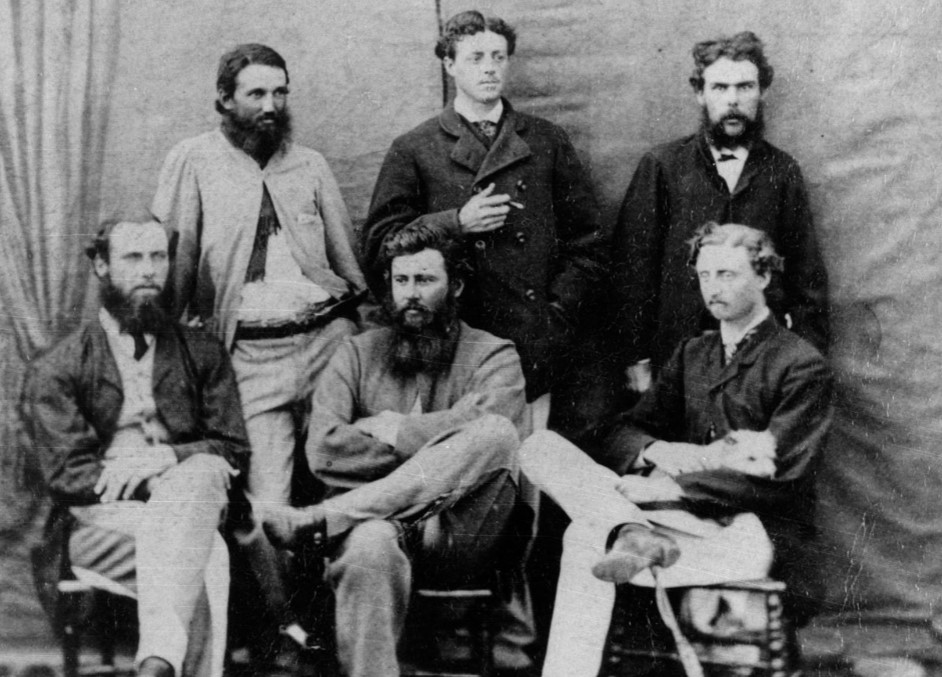
Sitting: C. Thompson, G.P.M. Murray, Charles S. Dicken
This photograph shows the many moods of group photography. Two of the men at the back slouch, the men in front have various leg-crossings. None look comfortable. Their facial expressions are priceless.
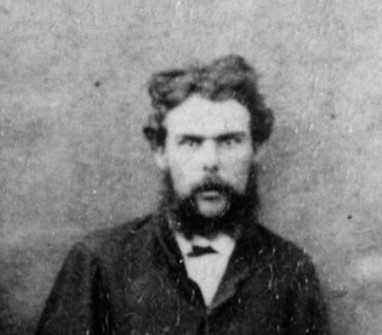
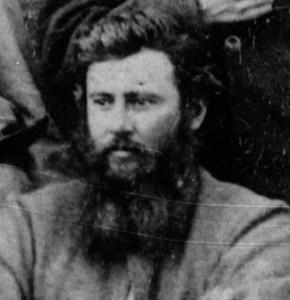
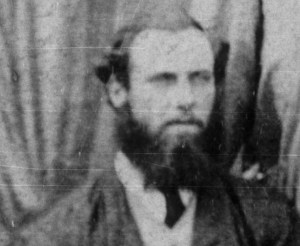
Impressive beard.


John and Mary Nicholson arrived in Brisbane from Essex in 1864. Here they are in front of their cottage. Mary Nicholson annotated the photograph, explaining that the gent behind them is “Arthur,” who is posed that way to get all three in focus.
Mrs Nicholson noted that “John’s ship stool” and “my workbasket” were included in the picture. No mention of the firearm resting just outside the window. Perhaps she didn’t feel it was noteworthy. Was it the norm to have firearms on the verandah, alongside the fruit baskets and handcrafts? Possibly. Grovely, now a suburb, was way out in the bush in the 1860s. Mrs Nicholson looks like she might well use that gun on whomever she was eyeing off.
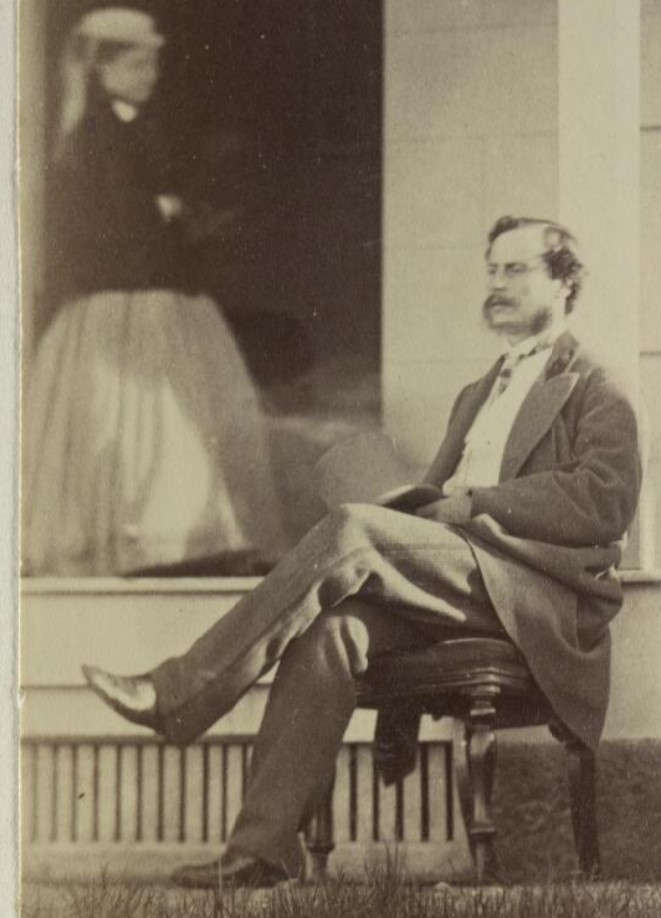
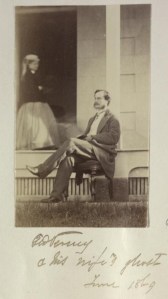
The title of the photograph startled me rather. Was it serious? Could that really be a ghost? Mr Verney does look suitably solemn. But although out of focus, the female figure looks, well, corporeal. But what would a ghost actually look like?
It turns out Mrs Verney was alive at the time, and she appears in proper focus in other photos in this post. Mind you, I did perform a few harried searches, just to make sure. Mr Verney was on the staff of Governor Blackall.
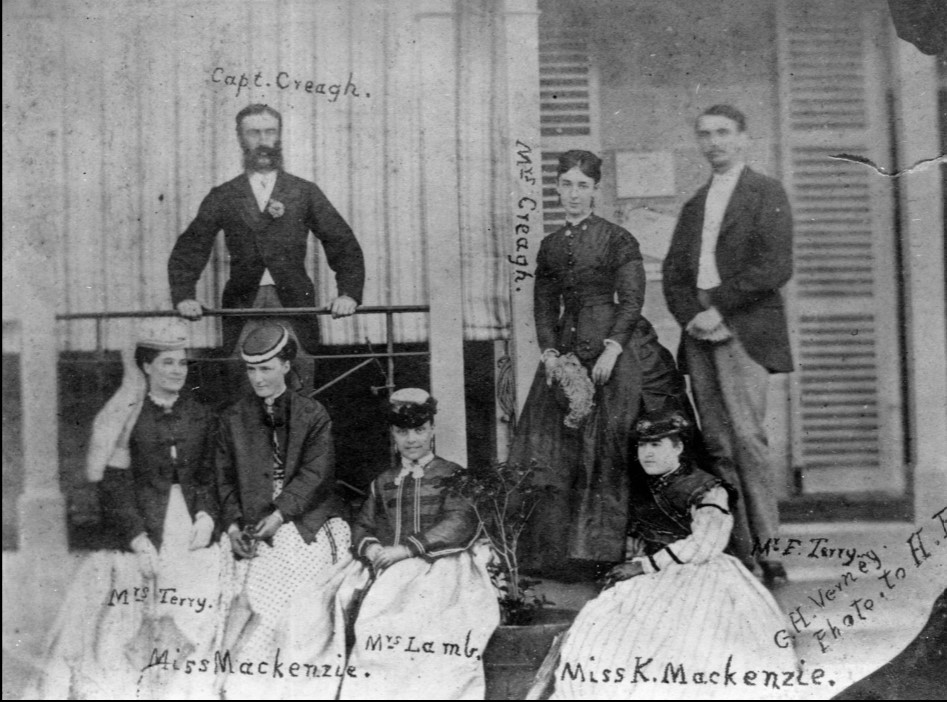

Photographs in the 1860s and 1870s tend not to present women as sombre figures, posed with husbands and children, and with very little discernable personality. Perhaps these ladies have some vivacity of expression because the photograph was intended for a friend and colleague as a keepsake.


Presumably the good Captain was recreating the tender moment when Mrs Creagh consented to become Mrs Creagh. I wonder if the original moment involved being driven bodily into a potted plant by the sheer ardour of his declarations. Poor Mrs Creagh, she looks desperate to escape her bewhiskered suitor.

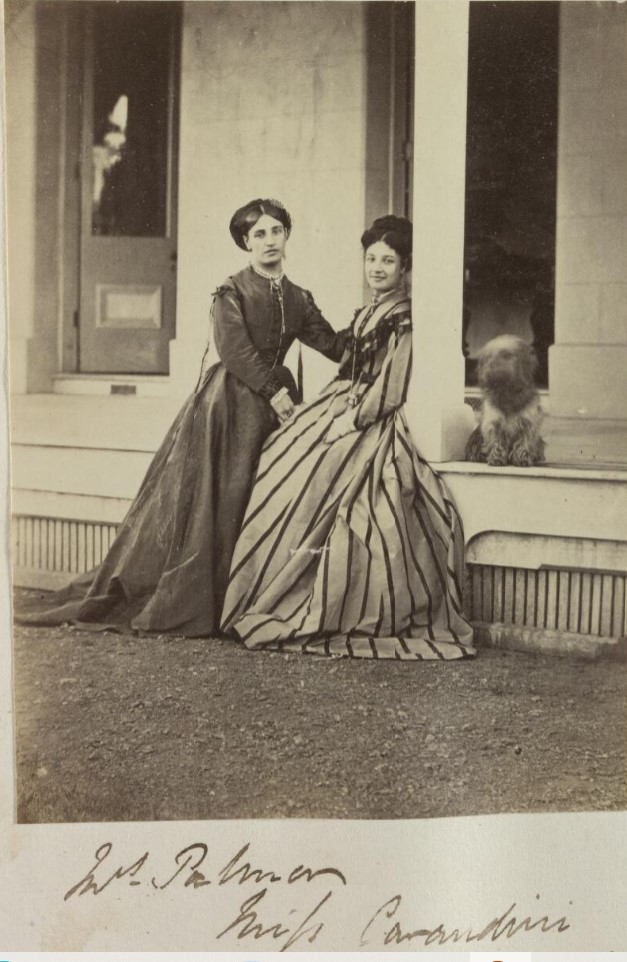
These two beauties were noted Italian opera singers, and, of course, sisters. Miss Carandini is the most relaxed and natural looking person in any of the group portraits. I’ll include the full view, which contains a slightly blurred puppy and something mysterious in the window. Another ghost? Or just an indoor light?

Governor Blackall, already quite ill-looking, sits in his garden with Mrs Verney (very much alive) and Mrs Terry, who was also pictured in the staff photo. This is the idyllic, outdoor group portrait style.
Mrs Verney went on to present her husband with a couple of little Verneys. They returned to England after Governor Blackall passed away.
More photographic posts to come.
All photos from the collections of the State Library of Queensland and the National Library of Australia. (All are out of copyright.)
 Moreton Bay and More