
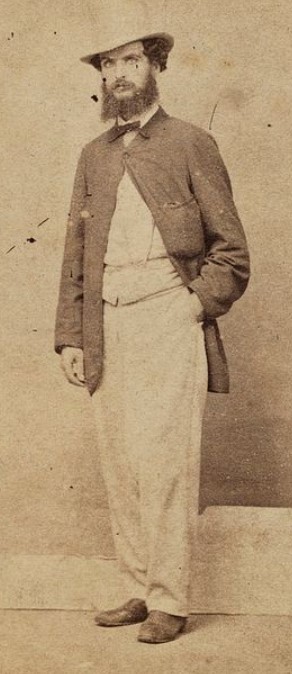
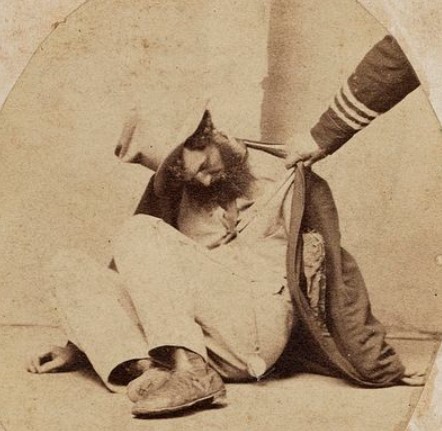
The court reporters of the 19th century had a distinctive turn of phrase. Flowery and humorous when describing the fairly harmless activities of the town tosspots, their penny-a-lining output is best illustrated by “The Five Stages of Inebriation,” a series of photographs taken in the 1860s by Charles Percy Pickering. (These gems, currently reposing the State Library of NSW, were designed to promote temperance, but turned out to be so funny that they failed miserably in that aim.)
Charles Crawley, apparently an old, but by no means frolicsome looking devotee of Bacchus, made a very polite bow to the bench for failing to keep his legs steady whilst perambulating the public streets. His grog was accordingly stopped to the extent of 5s, with the alternative of 24 hours solitary meditation on the miseries of life.
Moreton Bay Courier, 20 September 1860
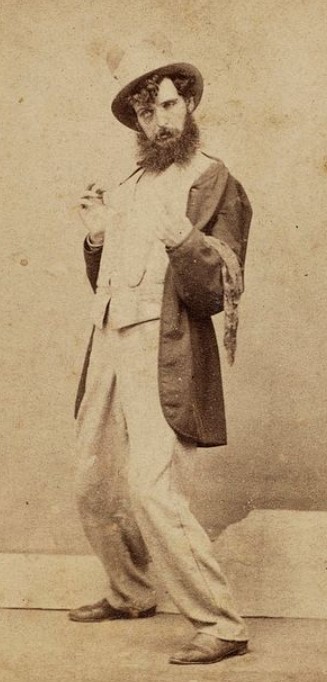
Philosophical retirement.
Johnny and Tommy, two aborigines, were fined for drunkenness, the one 10s. and the other 5s., with the alternative of 24 hours’ philosophical retirement under the distinguished patronage of her Majesty.
Moreton Bay Courier, 4 December 1860
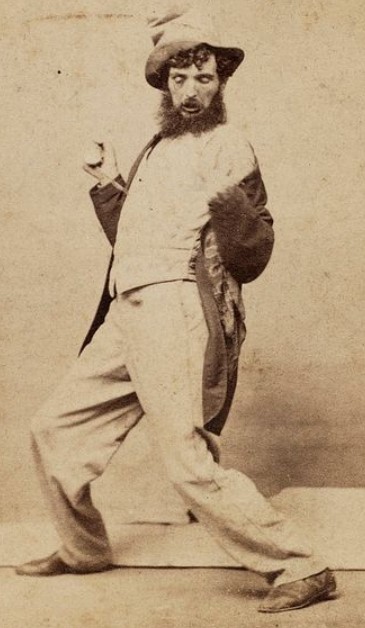
Stage 3: “I never quite got the hang of this quadrille business until now.”
Too much love for Bacchus.
Luther Naunzslang, a German, was fined 5s. or 24 hours in the lock-up, for being drunk and disorderly at Kangaroo Point. The defendant, in his German-English gibberish, explained that he “had lived four years at Kangaroo Point,” but how that offered any defence for getting drunk and tearing P.C. Walker’s coat, did not appear to be answered.
Samuel Buckley, for the like offence, was fined 20s. or 48 hours in “durance vile.” It was whispered in Court that the defendant discusses theology when he is drinking, and distributes tracts when he is sober. His theory, it is to be hoped, is better than his practice, which savours too much of love for the heathen god Bacchus.
Moreton Bay Courier, 28 August 1858
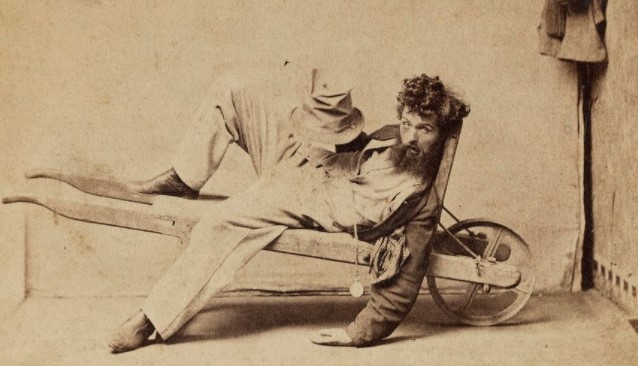
‘Bob the Blower’
At the Police Office, Drayton, on the 3rd instant. Robert Pippett alias ‘Bob the Blower’ appeared before A. W. Manning, Esq., P.M., charged with being drunk and disorderly on the night previous, in the town of Drayton, it appeared from the evidence Master Robert had been imbibing certain strong liquors rather freely, and being in light spirits, was determined that his fellow-townsmen should be the same, he therefore perambulated certain houses cheering its inmates with the melodious sounds of his flute, of which instrument I am given to understand Bob is a professor. Pippett being an industrious man, was admonished by the Bench, and discharged.
North Australian, Ipswich and General Advertiser, 3 March 1857

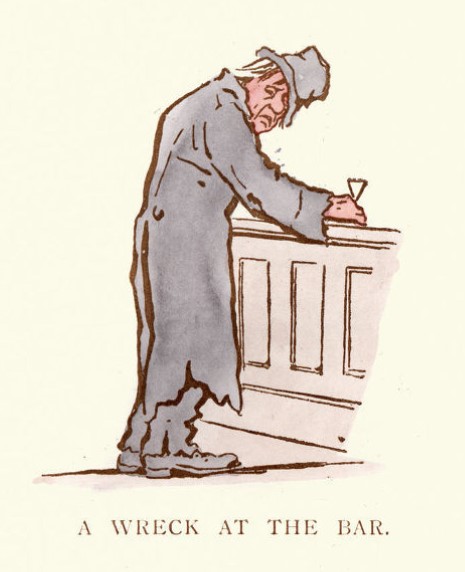
Peter Mulveay was again brought up charged with drunkenness and vagrancy. Upon the first charge he was reprimanded, and upon the second he was sentenced to 14 days hard labour in Brisbane gaol. His Worship appeared to be somewhat puzzled on beholding Peter’s well-known visage in the dock and diluted his sentence with the rosewater advice he has so frequently given to this old vagabond to seek employment in the bush.
Hereupon incorrigible Peter whined as usual about his “bundle” which was packed for his departure into the bush before the first of the round dozen of summary punishments which have been administered to this troublesome offender, who begs, starves, and drinks, when he has liberty, and goes to gaol to feed himself up.
His worship began evidently to melt under the influence of Peter’s seductive whine, but at length resolved that he should “spend his Christmas” in gaol. We are not aware whether public charity provides a mess of roast beef and plum pudding for the prisoners at the Yule season; perhaps not. Possibly, however, his worship may send Peter a dish of advice with turkey and pudding to follow.
Much as we rejoice to see that charity which “covereth a multitude of sins” and greatly as we desire that “mercy should temper justice,” we are not willing to see an old offender enacting a farce with it. This man is a public nuisance. His conduct is an evil example to the young who hear his profane language and see his drunkenness and idleness in the street. It is dangerous for them to see professional beggary practiced by an old scoundrel who is able if he would to earn his livelihood. We hope his worship will deal a sterner measure of justice on the next occasion, which will be speedily afforded. A sojourn at Cockatoo would be beneficial. The public are much to blame for showing to this prisoner a charity which he so grossly abuses. The Police Magistrate intends to have a prohibit issued to the publicans, which will prevent Mulveay obtaining grog. This is judicious and notwithstanding the reluctance he feels to punish an old man, his worship would be justified in exercising greater severity. Such commiserate tenderness is due only to virtuous old age.
Moreton Bay Courier, 19 December 1857
 Moreton Bay and More