
Brisbane and Queensland Postcards through the years
Ah, postcards. Memories of the luridly-coloured “Greetings From Sunny (insert own sunny destination here),” sent from faraway places like Caloundra and Burleigh Heads. Well, it took us half the day to get there, what with the ancient Fiat’s radiator overheating as we trundled along behind slow caravans, and no passing lanes in sight.
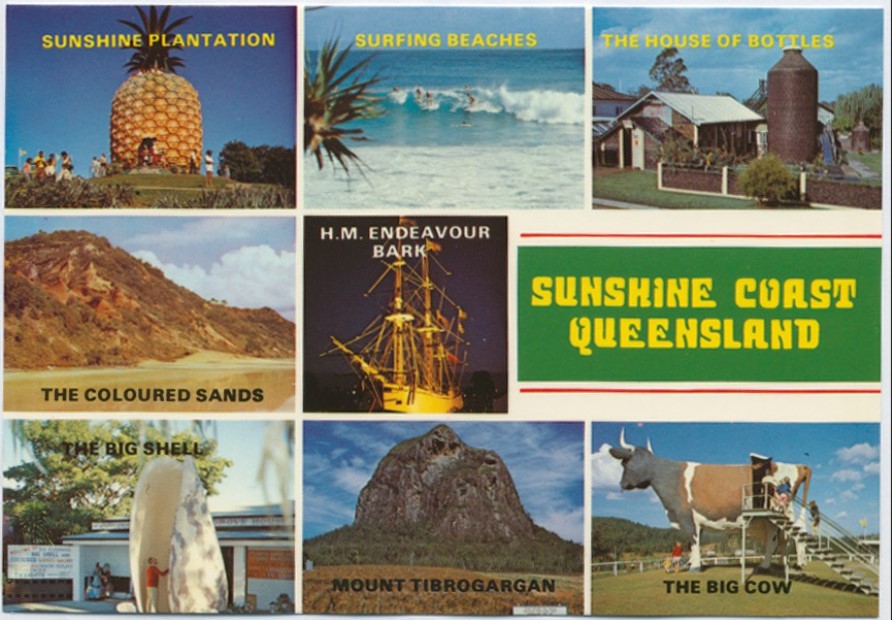
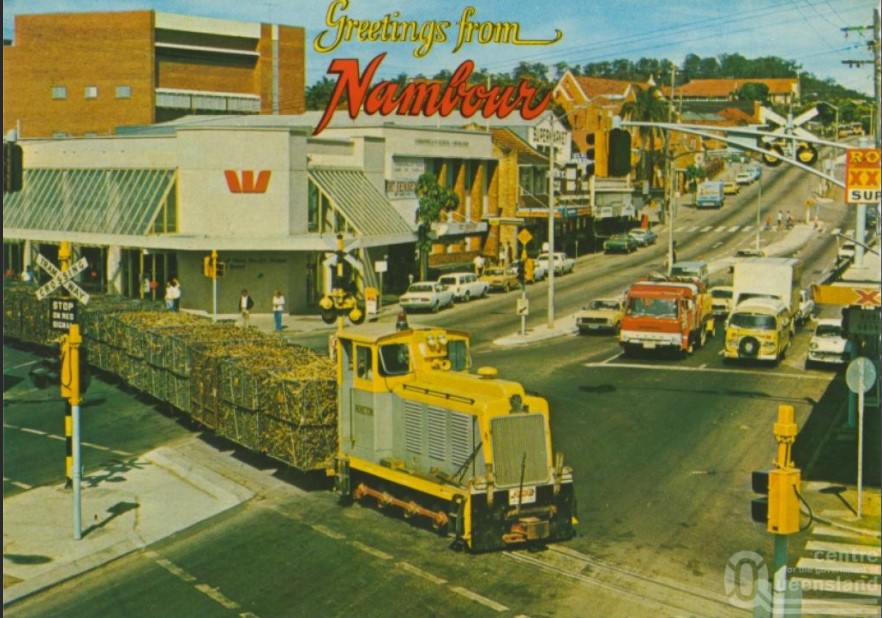

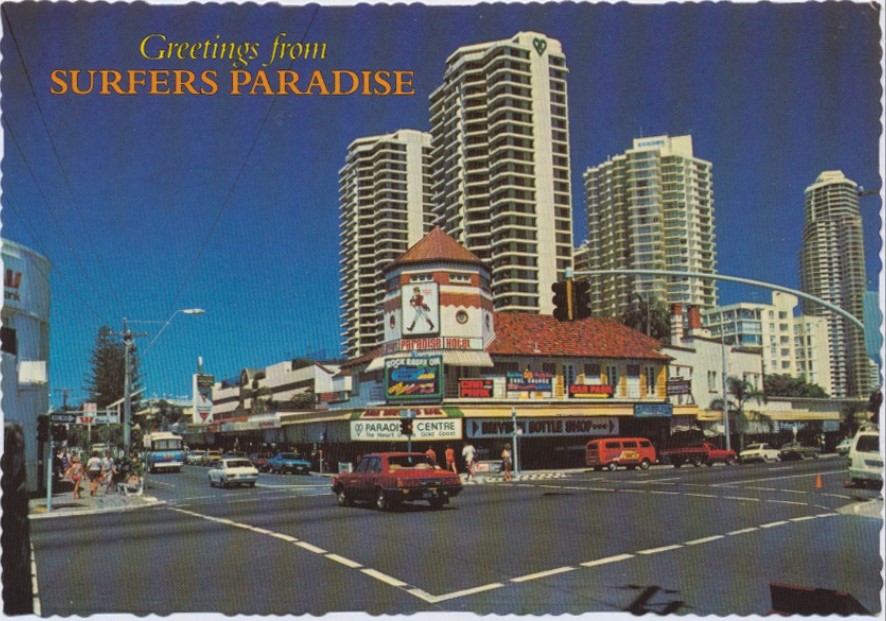

It’s hard to avoid the conclusion that the postcard photographer of the 1970s was tasked with just taking a photo of anything. Don’t worry about composition, angles, shadows or posing. It doesn’t matter if some chap in budgie smugglers is bent double in the right foreground, there’s a beach in the picture, right? And who doesn’t want to send home an image of a large sugarcane transport inconveniencing people in a VW Kombi?
THE EARLY QUEENSLAND POSTCARD
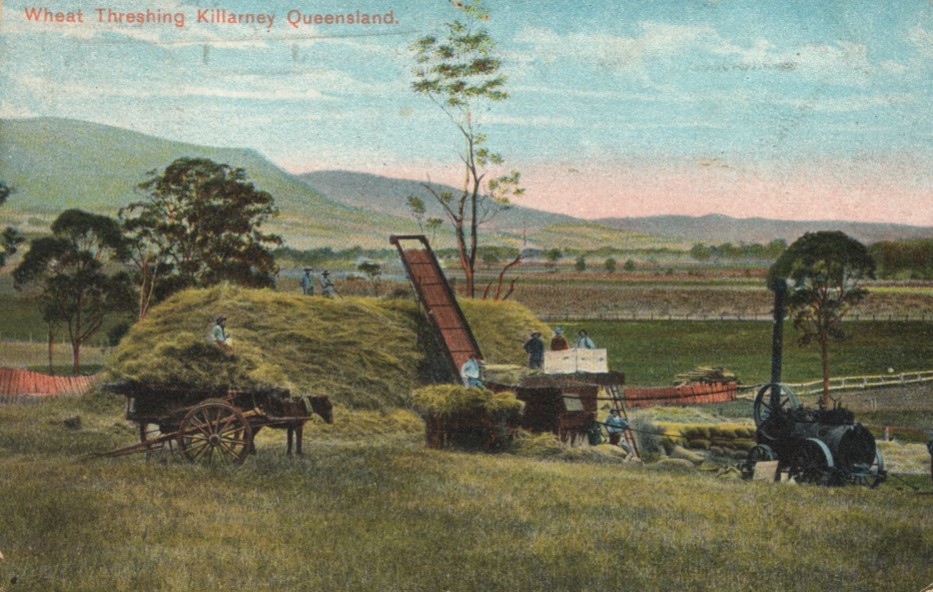
Our forebears had a different approach to postcards. They could be decorative – genuine keepsakes. They could show Improving Subjects – churches and rural industry. They could be charming – painted and idealised views of Brisbane, hand-coloured photographs of seaside towns. They could be puzzling – imagine sending the relatives a postcard of a flood, or the smokestack of a mine, or a cherubic child ready to lay down his young life to defeat the Kaiser.
The Decorative Postcard
The decorative postcard, richly illustrated, is best represented by the Christmas Postcard below from 1891.


Advertising Postcards
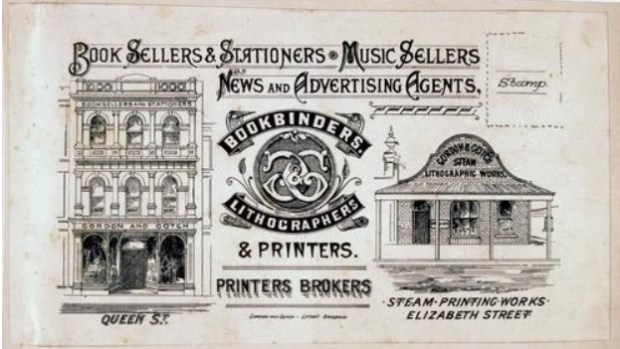
Gordon & Gotch Postcard, 1885. The perennial stationers of Brisbane – in the 1880s there were two big locations.
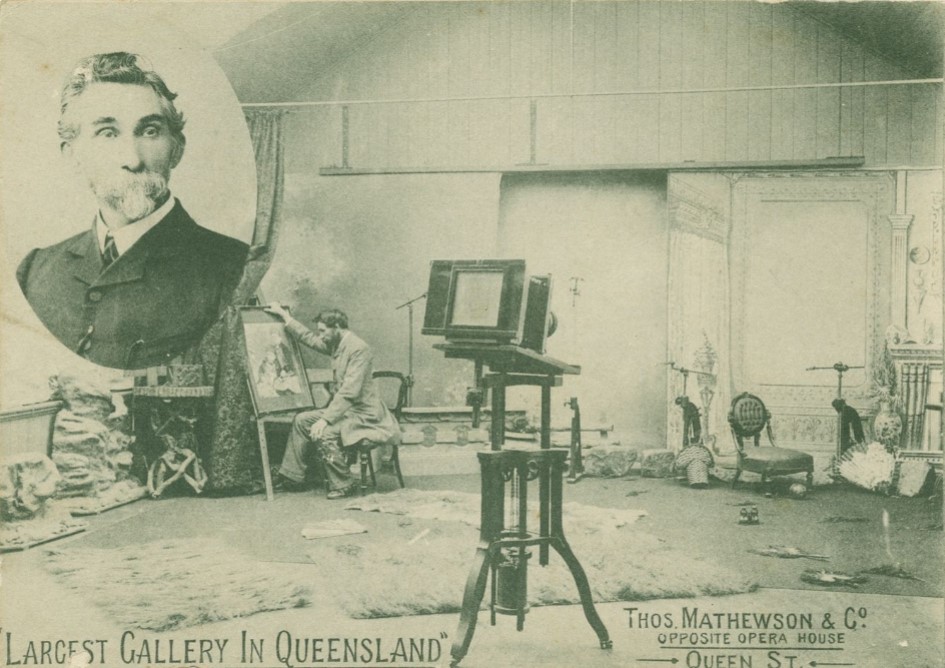
This rather startled-looking chap will take your picture in his centrally-located studio. Perhaps this is the expression one wears when one realises that the studio was photographed on the maid’s day off.
Hand-painted charm in old Brisbane Town

Eagle Street, now a skyscraper-rich commerce and legal hub, never looked this good again. I love that the Chinese carter is included in the image. And the puppy.
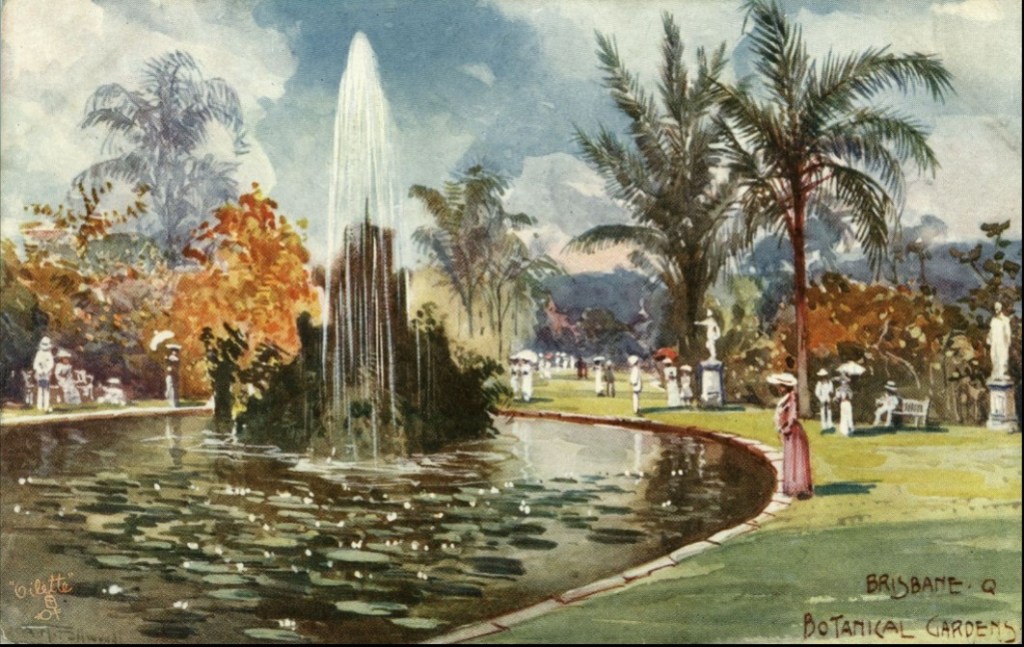
A moment at the City Gardens. Colourful larrikins were prone to loafing about on the benches, but were not – sadly – depicted in this view.

The first Brisbane Town Hall, where “Old Tom” Dowse had been Town Clerk in the early days.
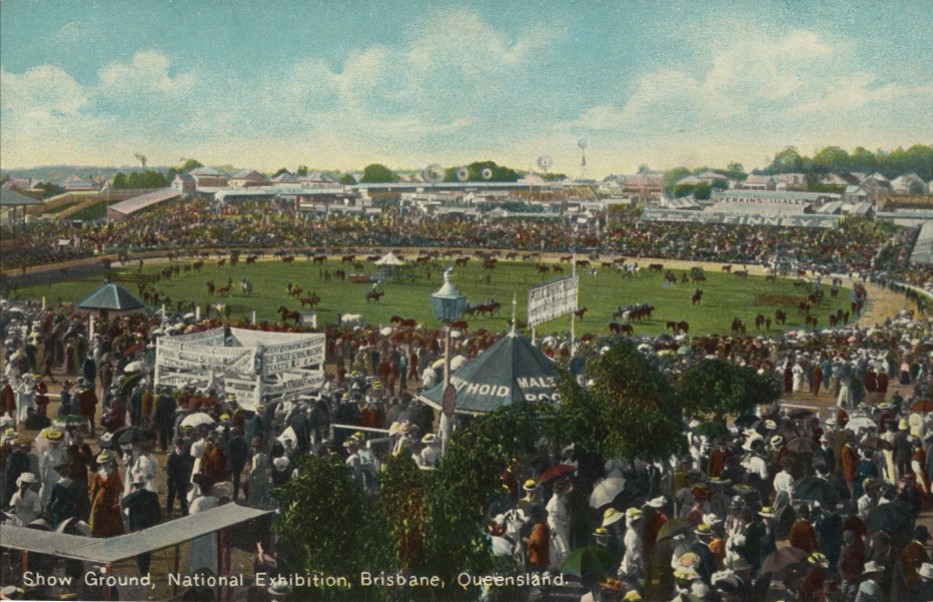
The Grand Parade at the “Ekka” (Royal National Association Exhibition). c. 1900
Beside the Seaside
The precursors of the brightly-coloured 1960s and 1970s postcards were these hand-tinted beachside photos. Southport was shown as a place of uncluttered seaside refinement, with a kiosk, hitching post and jetty photographed from the first floor of a seaside home.

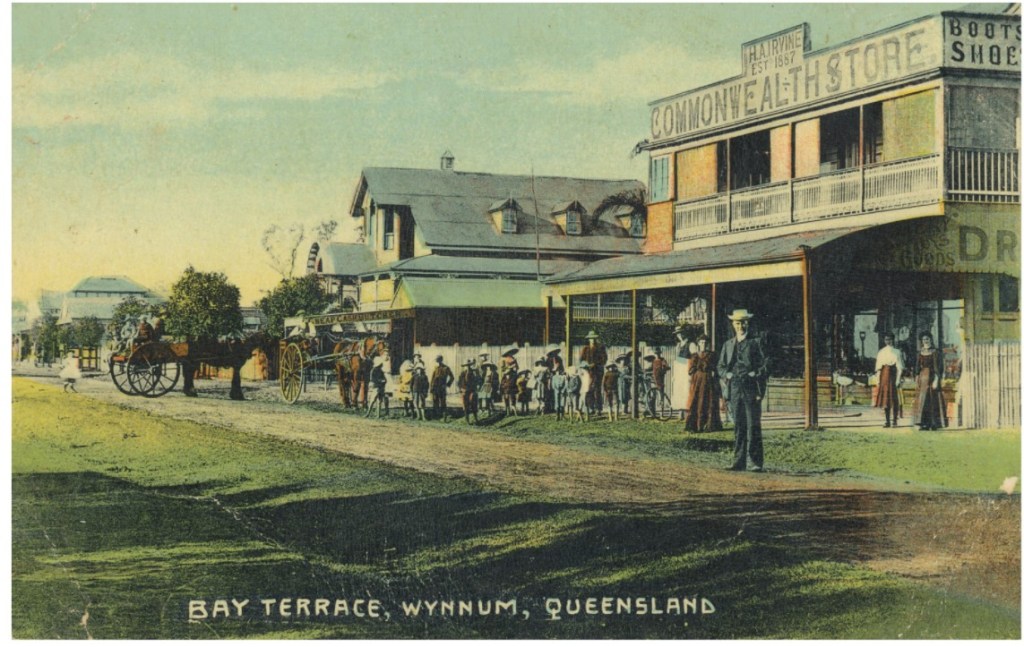
And here’s the entire population of Wynnum, ready to make you feel welcome. And possibly block your exit with that strategically placed horse and buggy.

Wynnum camping grounds. Ample parking for the horseless carriage. Also, tents, thunderboxes and lots of fences. And the bay, of course.

Cleveland, now a bayside suburb, was largely rural at the turn of the century, and rather than depict any inviting Moreton Bay views, we have the rural buggy track.
Postcards from the Country
Rockhampton

Roller skating at Rockhampton. A jolly good excuse to hold hands with one’s young lady. All in the name of safety, of course. Nice moves, gentleman in the centre!
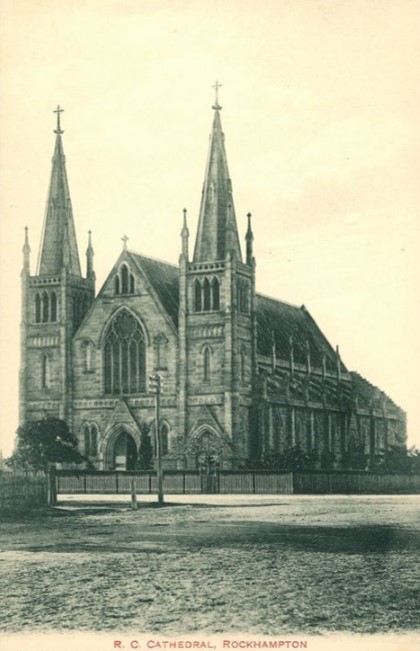
And if you want to remind the folks at Home that you’re still a Christian soul, despite your visit to the tropics, send them this.

Or you could wax lyrical about the Venetian charm of living on the Fitzroy River.
The Downs
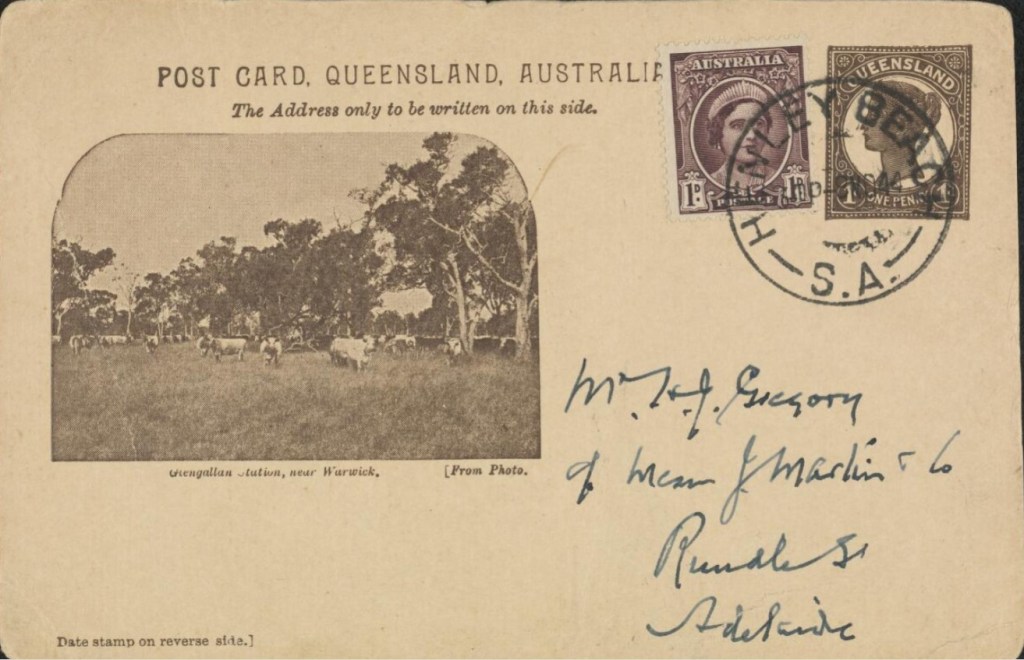
In the 1880s, you could attempt to inspire envy in your South Australian friends with this view of, uh, cows and trees at the celebrated Glengallan Station.
Mount Morgan

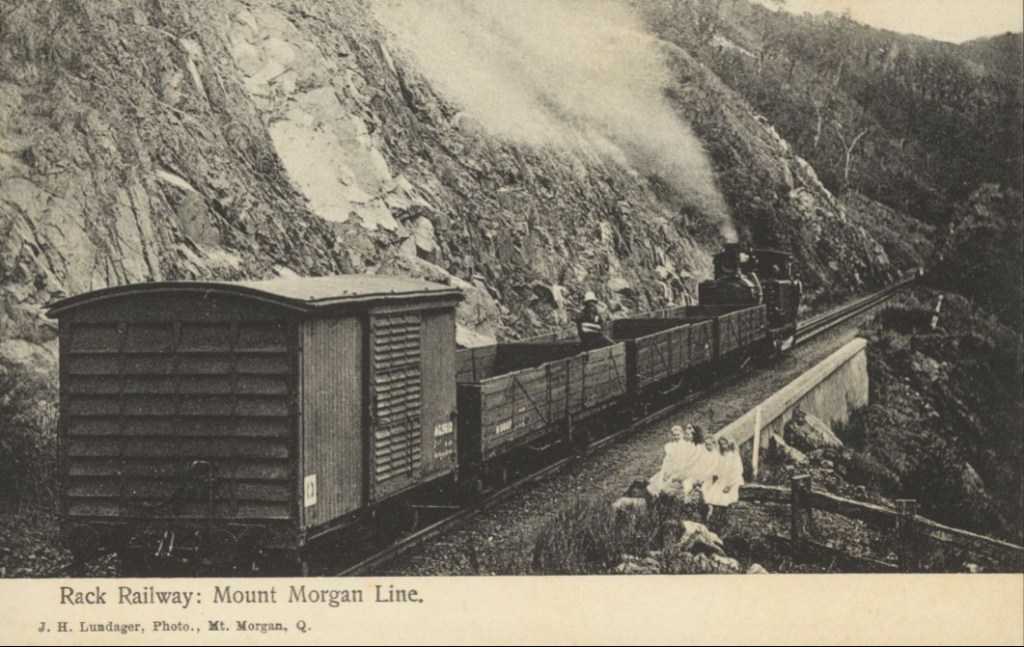
Now with added Ladies!! And infant Soldiers!!!
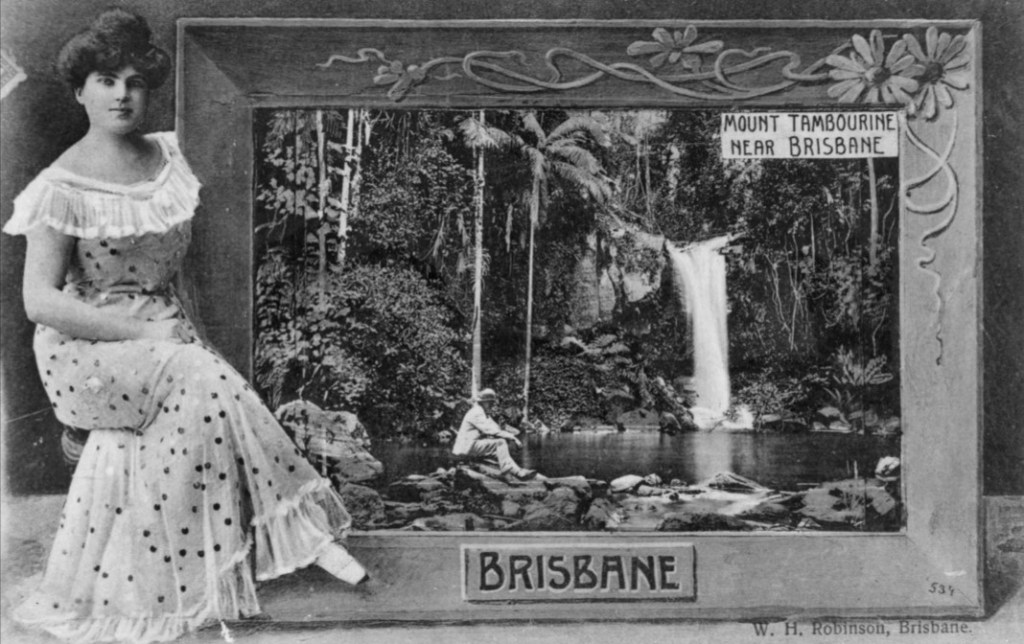


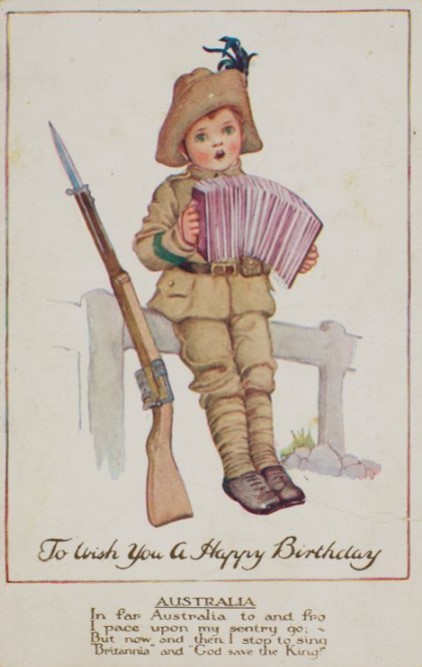
Imagine how thrilled you would be to receive this. A child with an adult-sized bayonet and an accordion, singing about how willing he was to rush off and fight for England. (From the collection of Frederick James Bassett, at the State Library of Queensland.)
 Moreton Bay and More