
How did people live in a certain time and place? What were their homes and lives like? Thanks to the invention of photography, we can see some of colonial Queensland, from the slab and bark huts built by Europeans as they started their lives on the land they had claimed, to the substantial and class-defined dwellings they established later.
HOME IS WHAT (AND WHERE) YOU MAKE IT


Herberton (far north Queensland) had been established a decade before this photograph was taken, in order to exploit the local tin deposits. (Gold was sought, but tin was found.) Permanent housing was being built, but a number of slab huts still remained. Imagine living in one – the roof would barely keep out the rain, and the bark and slab “walls” would provide little protection from vermin.

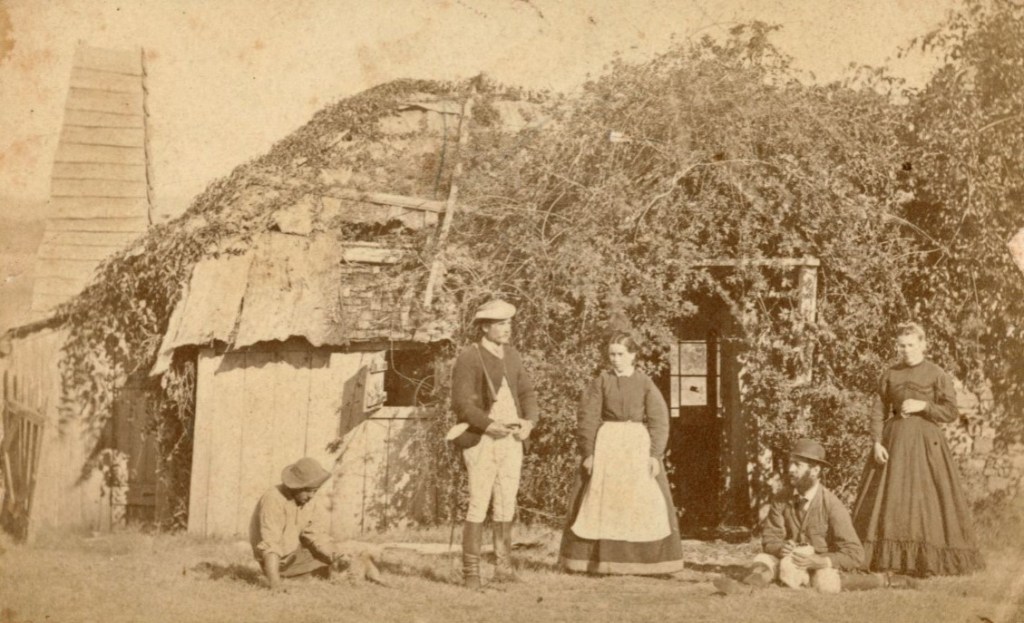
The image on the left is one of Richard Daintree’s evocative painted photographs. That’s a much better standard of bark and slab housing (the original glass plate at the National Library – much degraded by time – bears out the accuracy of the painting).
The pioneer family on the right are making do with bark and what looks like bougainvillea to create a starter home. Judging by the subjects’ clothing, they were used to a more genteel standard of living and were roughing it on their selection with a view to establishing a proper home.
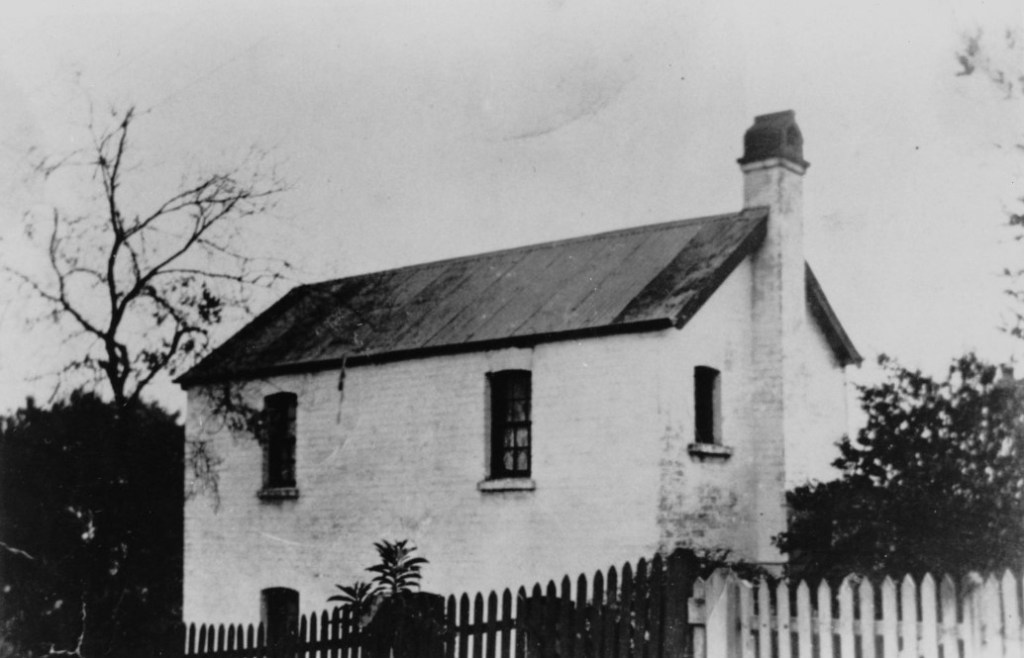

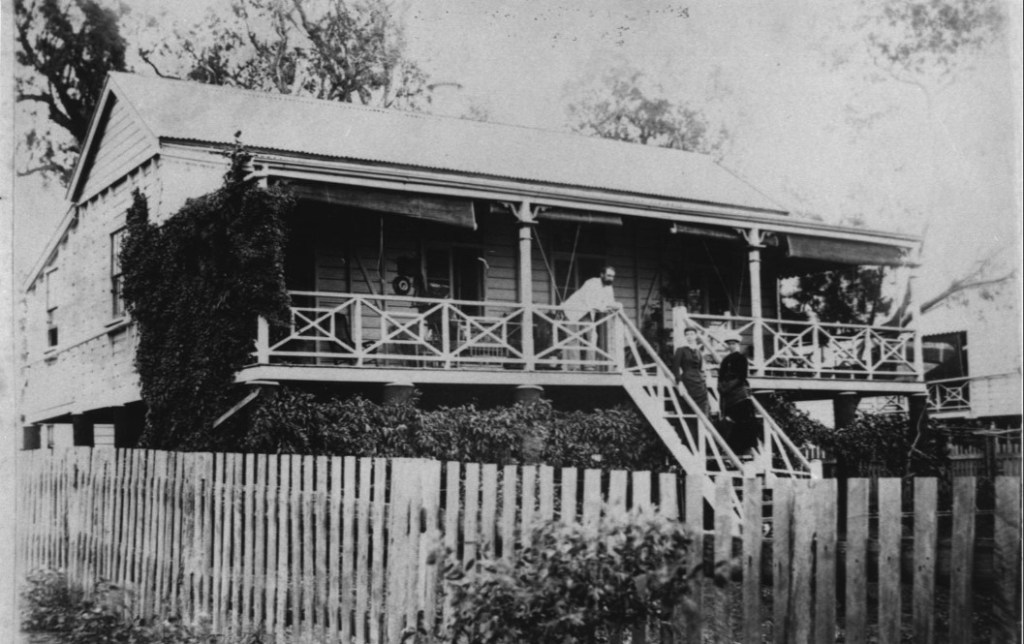
Middle-class housing is not as frequently depicted in colonial photography. Photographers seemed to favour the pioneer types coping in huts, and those who had built imposing mansions to show their success.
The brick cottage in Confederate Street, Red Hill, survived until the 1920s, and was built by Henry Hancox in the 1870s. The Hancox family had a sound tin roof and a chimney, but not much in the way of adornment.
In Spring Hill, a charming stone cottage stood out among the weatherboard workers’ cottages that dotted the hillsides.
In 1880s Cairns, a family are photographed in front of a classic high-set Queenslander with a verandah. Awning blinds are rolled up here but can be dropped to create a semi-enclosed room on the verandah.
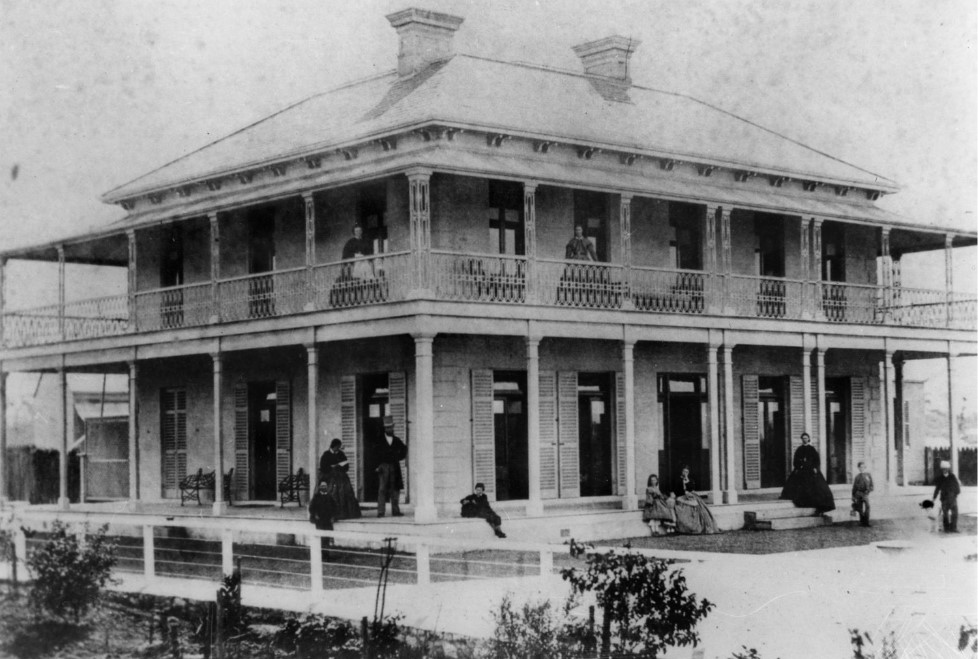


Beaumont House, in Ipswich, would have been a delightful home for the very large Wilson family. It featured a wrap-around balcony on the second floor, and endless shuttered French doors allow breezes to circulate through the house. The verandah on the ground floor had wrought-iron benches, as well as columns and steps. Sadly, the house suffered the fate of many beautiful old homes – it was turned into flats, then aged care accommodation, and was finally demolished in the 1970s.
interiors – knick-knacks, wicker and books
The interiors photographed here show how people passed their free time with no television, radios or even gramophones (yet). Books, hobbies and musical instruments provided the entertainment.
The 19th century being what it was, no-one’s bedchamber or bathroom was going to be photographed, thank you very much, and the kitchen was something that the cook slaved away in. The idea of dream kitchens and luxe bathrooms would have astonished our ancestors. Drawing and sitting rooms were front and centre of home photographs.


In the Dawson Valley, a photographer captured a fairly modest sitting room, with horse and deer paintings, a bookcase, a cheeky bottle of something tucked away, and a bell for summoning the help. I suspect it’s a gentleman’s sitting room, given the decor. On the other hand, floral wallpaper and bric-a-brac run riot in a sitting room in the North. The original caption advises that the sheet music on the piano is the Ariadne Waltz.

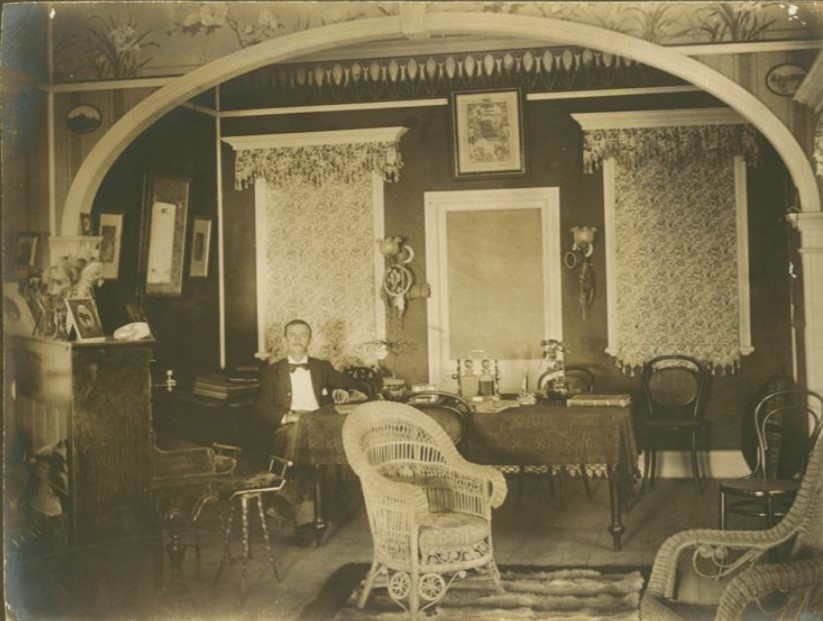
The Mt Spencer house has cosy decor, but of the intellectual variety. This was the residence of someone who collected, loved, and read books.
The Tunbridge family of Townsville owned Wolverton, and its dining room has been recorded for posterity. According to the original caption, it featured tasseled window valances, and the decorative strip above the picture rail. The large windows and the wicker chair are a nod to the tropical climate.

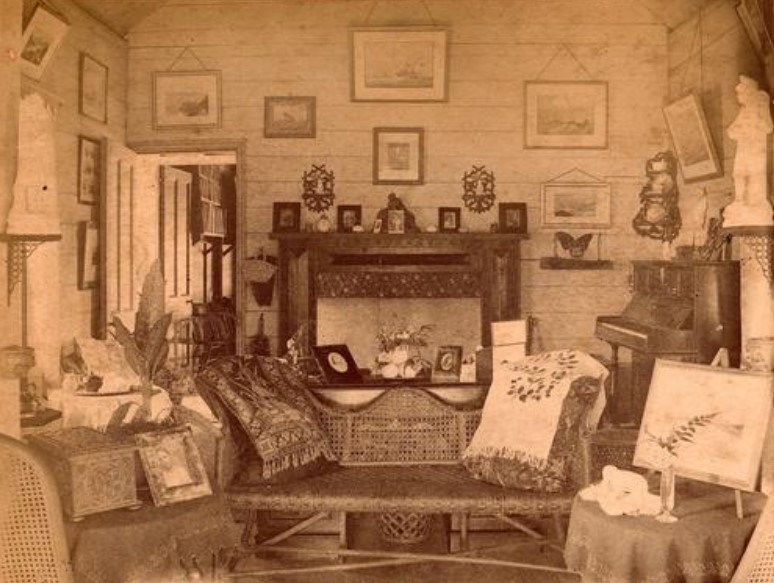
In temperate Toowoomba, a fireplace was required, together with a selection of profoundly uncomfortable-looking chairs and a small table groaning with twee-ness. Further north, at The Hollow, ornaments march two by two, and someone has a mania for embroidery.

This drawing room at Bowen shows that the owners understood that they were firmly in the tropics and let in the breeze through enormous windows. The widely spaced wicker chairs were both decorative and sensible for the climate. Someone was at pains to show that they were of an artistic bent when the photographer came calling.


The Rawson family built The Hollow, near Mackay. Their interior decoration style, shown in the drawing room picture, might be Antimacassar Hell, but the nursery room and fowl house are quite charming. The Rawsons’ geese had better accommodation than the early settlers of Herberton.
Gardens – from tropical to formal
And finally, the garden. If you weren’t a hardscrabble settler trying to grow some carrots and potatoes, a garden was a status symbol. The middle class created comfortable gardens, usually planted and arranged in the English style. The wealthy, who had rather more land to play with, created glorious monuments to the outdoors – pathways, riots of colourful bougainvillea and ponds.
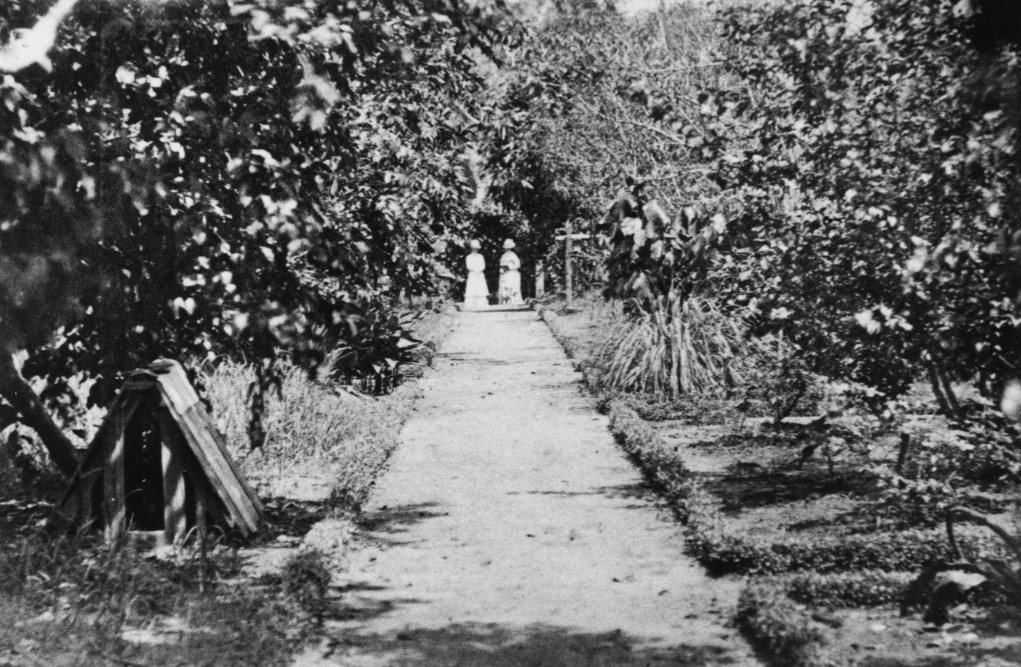
The Rawson family loved to photograph and draw their lives at The Hollow, near Mackay. Here, daughters Winifred and Decima, take a walk along their garden path. The edges of the path are formal, but tropical plants have been encouraged to add lushness to the garden.

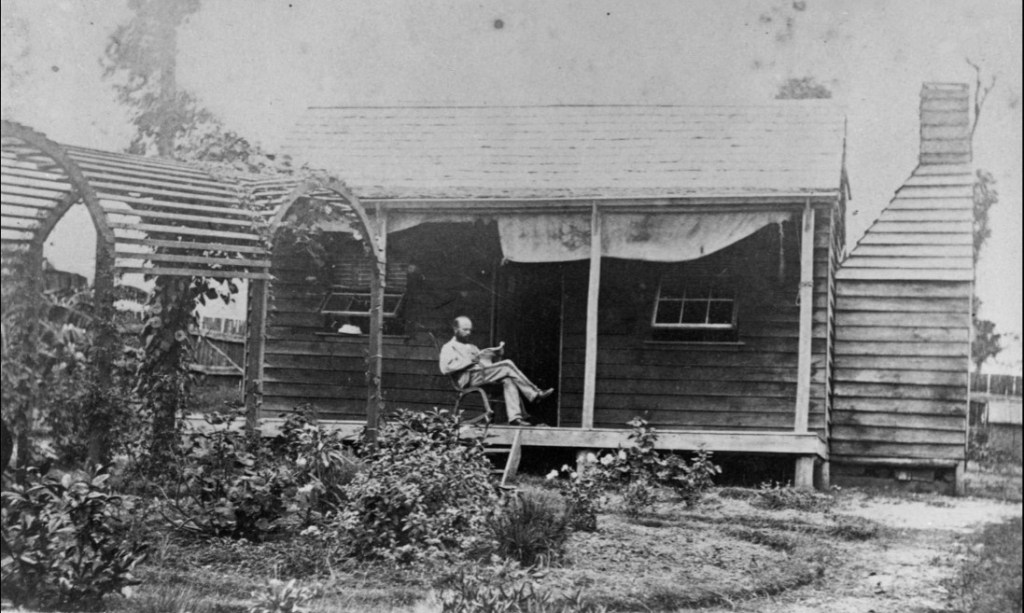
In Toowoomba, the homeowner wanted order. Neatness. As little native plant nonsense as possible. This attitude to gardening would be reflected across Queensland for generations to come.
In Gympie, shrubs and roses create a relaxed cottage garden for Father to read his paper in peace. This garden probably sums up the ideal Queensland back yard – there were flowering plants, but in a casual setting; there was some lawn, and a simple verandah to enjoy.


 Moreton Bay and More