
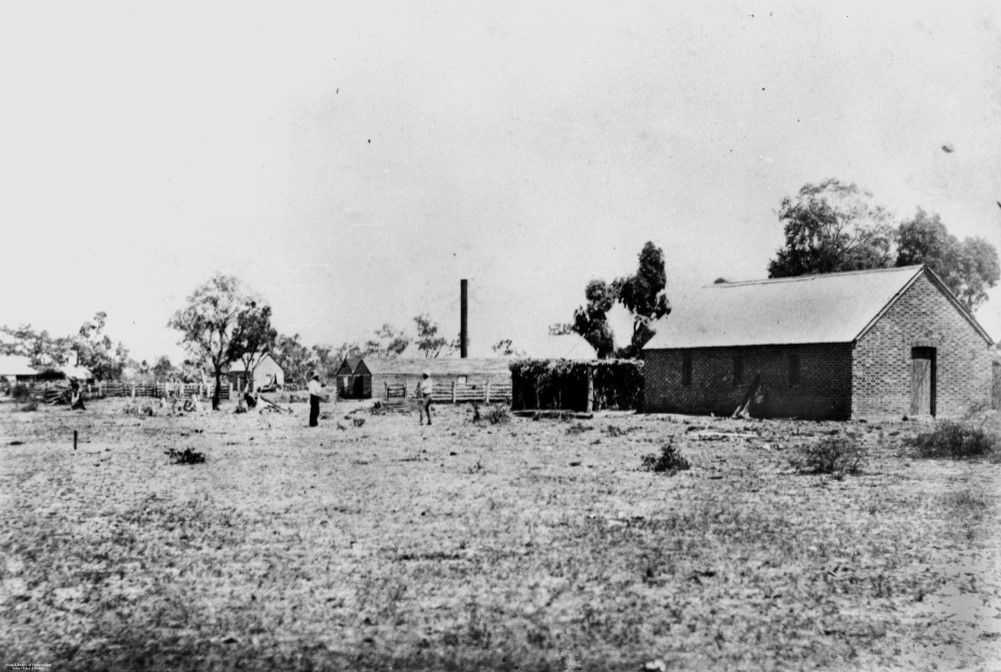
James Barry was a labourer who made his way around Queensland in the 1870s. The term “labourer” might be a bit of an exaggeration – Mr Barry did not care to undertake much physical labour. He preferred to spend his time drinking, failing to pay for his board, and comforting the wives of men who had left to go on the wallaby track. His work-shy ways, combined with a particularly florid type of Irish self-expression, made him a figure of fun about the stations he frequented. Until his attentions to one woman led to her death.
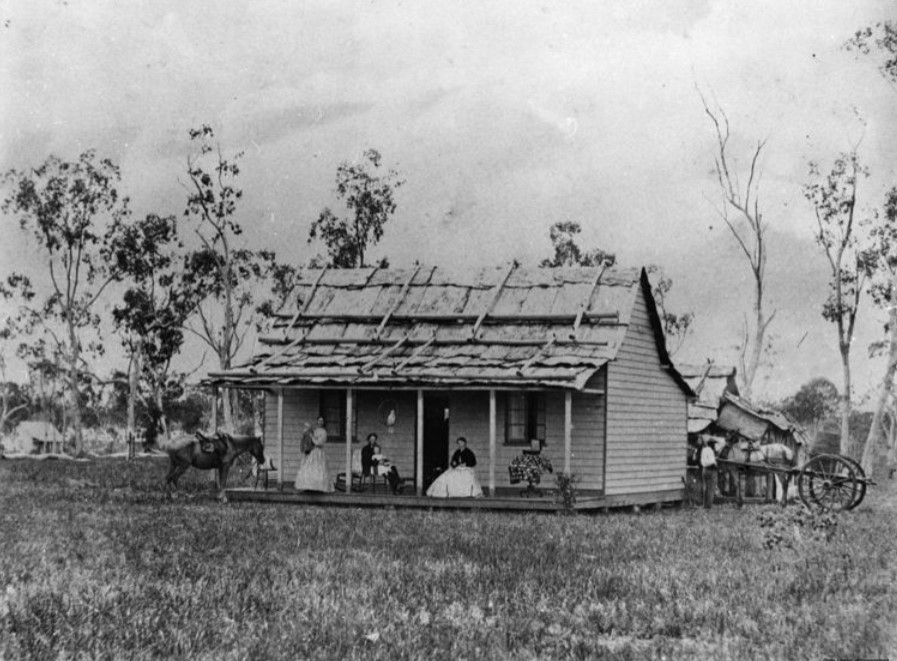
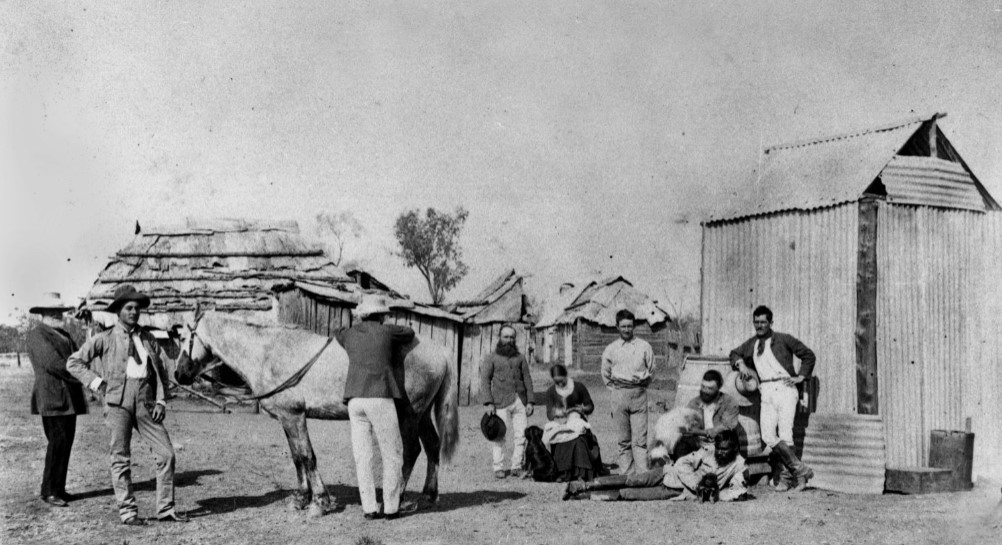
In 1871 and 1872, Barry was loafing about Roma. He spent a great deal of time visiting Mrs Mary Jane Chick, whose husband John worked on the stations around the region. Mrs Chick’s neighbours were of the opinion that James Barry had more or less moved in; when his help was required to get a bogged horse from the creek, they knew to send for Barry at Mrs Chick’s hut.
On 24 March 1872, John Chick came home unexpectedly from Hammond’s Station. Whether he found James Barry in his hut at the time depended on whose evidence was believed. There was a violent argument between husband and wife that ended when James Barry (conveniently nearby, minding his own business) saw something shiny and knife-like in Chick’s hand, which descended upon Jane Chick’s head or neck. Mrs Chick staggered out of the hut with blood down the front of her dress – her throat had been cut. Mr Chick left his hut not long after.
Barry took the injured woman to Mrs Gatehouse’s hut, and got that lady to tend to her wounds. A doctor was sent for, but by the time Dr Moran arrived, hours later, all he could do was stitch up Jane Chick’s wound and take a dying declaration from her. (Dr Moran was a Magistrate of the territory as well as a GP.) Jane Chick identified her killer as her husband, John, before passing away.
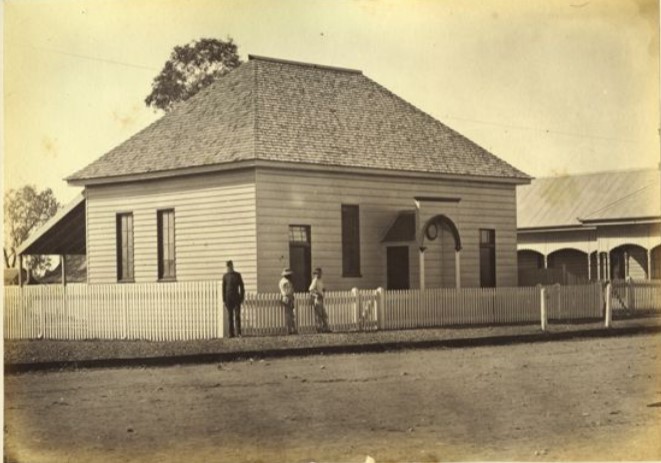
John Chick made his way to the Roma Police Station and surrendered himself into custody. He had some blood on his clothing, but no visible wounds. Hours later, Doctor Moran was called to the lockup to treat John Chick for a severe cut to his neck. He claimed that his wife had done it.
John and Mary Jane Chick had three daughters – Elizabeth, Susan and Alice. Five-year-old Susan and twelve-month-old Alice were too young to be taken in locally and were sent to the Diamantina Orphanage. On the journey, little Susan innocently offered up the information that Mr Barry always had his tea at their place and went to bed with mother. Her horrified adult audience duly noted this information for the trial.
When the murder case came to trial, James Barry was the principal witness for the Crown. He identified John Chick as the killer and told a tale of his own blameless life. He was a mere acquaintance of the deceased lady, who had once kindly given him a glass of water.
Mr Blake, acting for John Chick, submitted that James Barry was “morally responsible” for the killing, having taken up residence with the defendant’s wife. Justice Lutwyche directed the jury to consider whether the situation had provoked John Chick to the point where the charge might well be manslaughter. The jury agreed, and Chick received a sentence of fifteen years’ imprisonment. When asked what he had to say about the verdict and sentence, Chick replied that “everything had occurred through Barry.”
James Barry went on his roguish way. Several months after the trial, he fetched up in Brisbane, where he was charged as a rogue and vagabond, having no visible means of support. Barry had been staying with the Kents at their boarding house under the name James Henry Burke. He had impressed his hosts with a bank book that apparently showed that he had hundreds of pounds in the bank. After taking up residence, he had neither paid nor left.
The Brisbane police had been interested in this new arrival for some weeks. Detective Mooney had been watching Barry (who also gave his name as Keowe), and observed him in the company of prostitutes. That was enough for Mooney to take the man into custody, where the man gave his real identity, and swore on any number of sacred oaths that he was not a vagrant. He was, he claimed, living on remittances from friends at Home while he sought a proper situation. He owed money to no-one, apart from the Kents, who he fully intended to see right. One of these days.
At the Police Court the following day, Barry’s identity was sworn to by Constable Quinlan, who had known him back in Roma. There he was called “Barry the loafer,” and was not known to have ever been engaged in lawful employment. Quinlan refreshed the Court’s memory about the circumstances of the murder of Mary Jane Quick, and Barry’s role as a provocateur.
Prisoner here asked witness how it was possible for him to put a stay to the bitter tongue of malice which had maligned him and said that he hardly could expect to be free from such slanders, seeing that Christ himself was also similarly persecuted whilst on earth.
The Brisbane Courier.
His Worship was not impressed by the stories of remittances and situation-seeking, and sentenced James Barry as a rogue and a vagabond to six months in Brisbane Gaol. With hard labour.
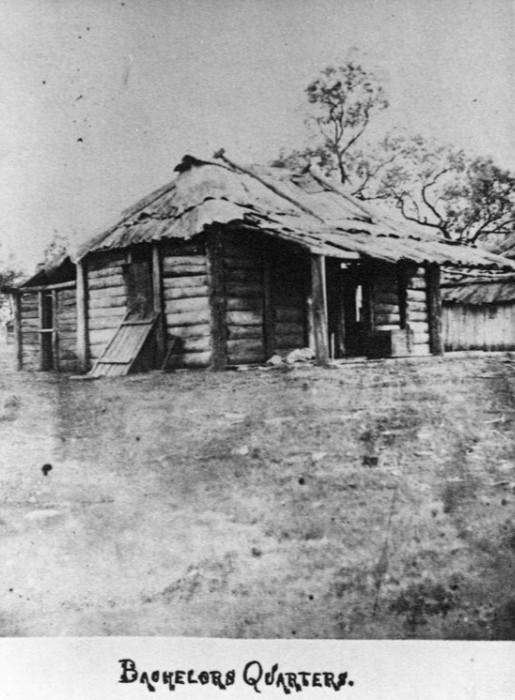
The Charleville correspondent of the Queensland Times, seeing Barry’s case reported in the Courier, recalled fondly the days when Barry “worked” as a shepherd at Mitchell Downs. Barry was told to slaughter a sheep if he wanted a meal of mutton, whereupon he “howled for twenty minutes in a manner which frightened the native dogs away for three weeks,” and cried out “Och! thin is it for me to slaughter me own ovine quadthrenpids; for me which was tinderly rared, had a gintilman’s education, and have a brother a praist! For me whut niwver siled my fingers wid a menial act, for me to kill, whin in the beautiful counthry from whence I came profishional gintilsmin are always kept to do such dirthy work entirely, &c.” Mr Barry was, understandably, let go from that situation. Quite promptly.
Epilogue:
John Chick was sent to St. Helena Penal Establishment to serve out his fifteen years. He died there on 6 December 1874.
Susan Jane Chick was admitted to the Diamantina Orphanage on 1 May 1872, where the Register brusquely noted her circumstances as “Mother dead. Father in gaol.” She remained there until she was old enough to be sent out into service in 1879. She kept being returned by her employers, and was sent to Woogaroo Asylum at the age of fifteen. (Hardly surprising, given the trauma she had experienced as a child.) After discharge, she was shuffled back and forth between employers and the Orphanage until she was able to fend for herself. She lived a long, and hopefully good life, dying at the age of 86 at Eventide Nursing Home in 1954.
Alice Chick also entered the Orphanage on 1 May 1872, barely thirteen months old. She died at the Orphanage on 4 June 1872.
The oldest child of the Chick family, Elizabeth, who had not been put into the Orphanage, lived until the age of 79, passing away in 1943.
 Moreton Bay and More
Hi, Great history piece! My understanding of Bowen Downs Station is that it is not near Roma. It is located about 49 kilometres east of Muttaburra and 61 kilometres northwest of Aramac.
LikeLike
Hi Ian, you’re absolutely correct – I had it in my head that Bowen Downs was near Roma because of the Readford Trial at the Roma Circuit Court. In terms of where the Court sat, Roma was the place that Readford was tried, being a large-ish place with a District Court. I will make adjustments to the post. (I looked at the map, and yes, Bowen Downs is a heck of a hike from Roma. Mind you, I get lost in my own suburb.) Karen
LikeLike