
The 1860s and 1870s.
Few Queensland towns have had their infancy as carefully recorded in photographs as Maryborough. The State Library of Queensland’s digital collection has included a wealth of historical photographs from the Fraser Coast Regional Libraries, and we can now see Maryborough grow over the years in pictures.
Early Homes.
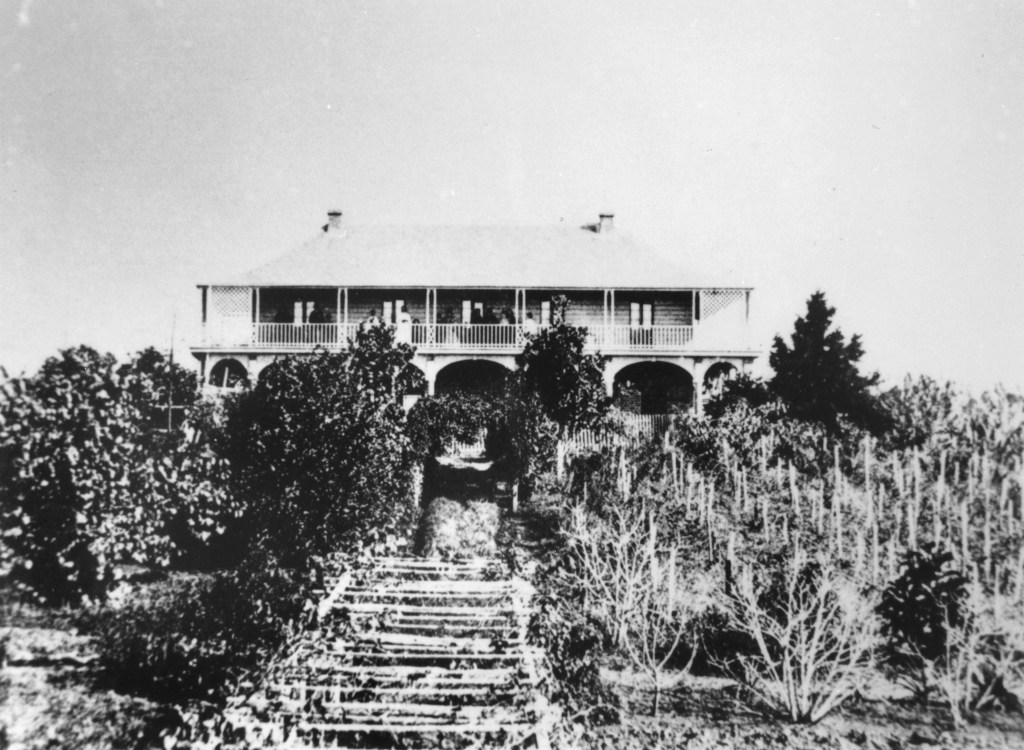
The contrast between these two 1860 images is stark. The young man and his children in front of a primitive humpy, and the kind of dwelling that someone with established wealth could erect. Perhaps the young father aspired to a home like Rosehill, if hard work and luck won out.

Transport and the River.
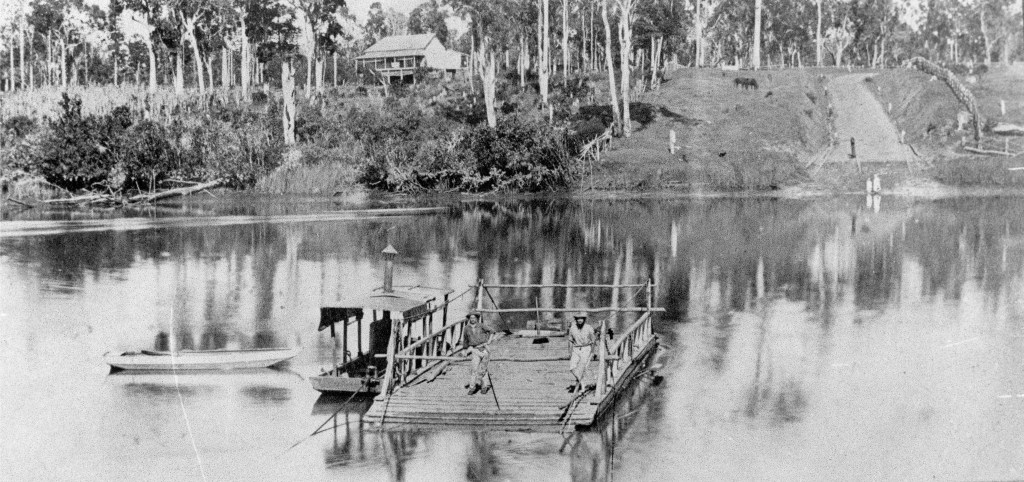
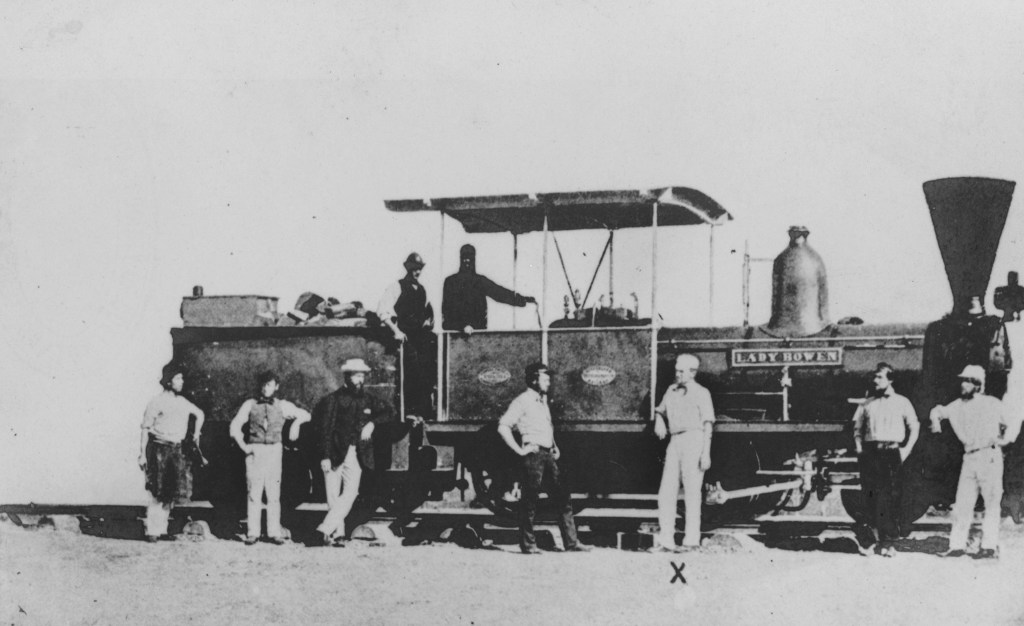
In the 1860s, Prince’s Ferry was a handy way of getting over the Mary River. By 1875, the bridge was under construction, and the following year, it was finished and ready for all horses, carts and carriages. The 1860s saw the opening up of the railway system in Queensland, and by 1865, Maryborough had its own locomotive. It was named, of course, for the adored Lady Bowen, wife of the first Queensland Governor. (Anything in Queensland that is named Roma, Countess, Diamantina or Lady Bowen will refer to the quiet, aristocratic Italian lady who enchanted the new Colony.)


“Sir, could you please prevail upon your good lady wife to remain still while the picture is being taken? Sir?”
Views
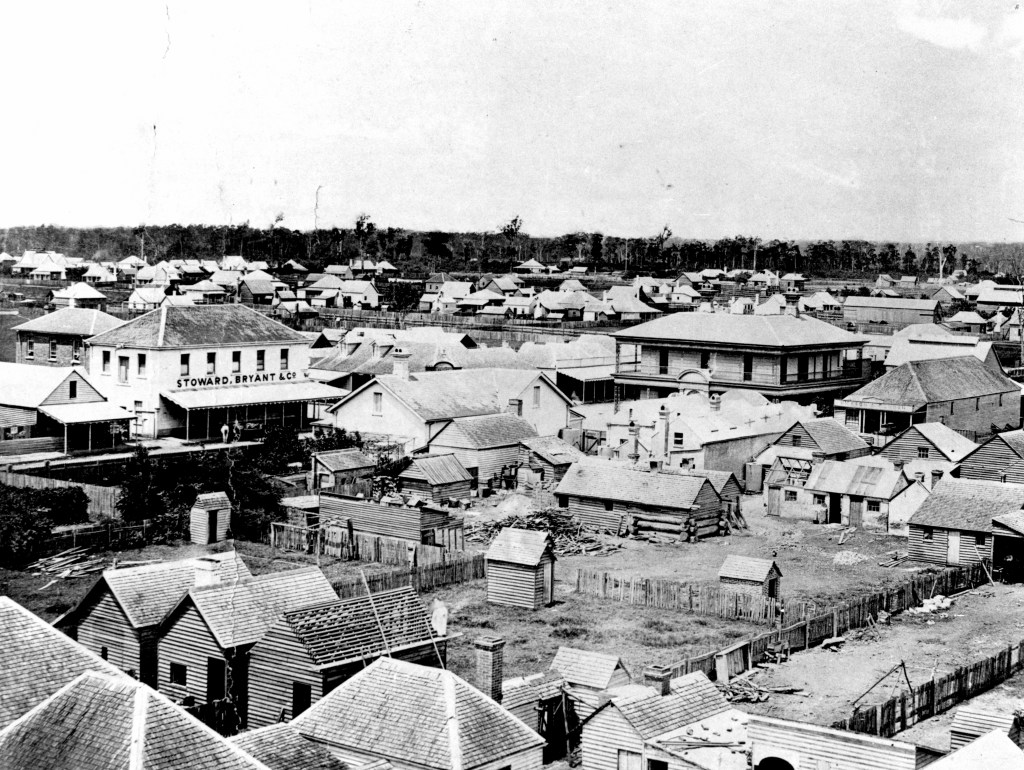
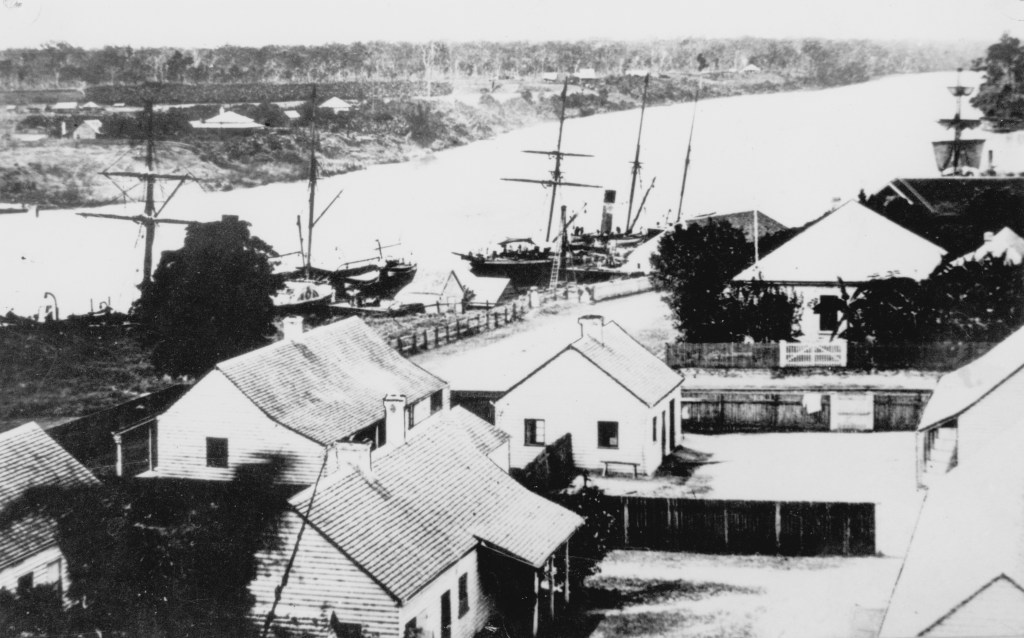
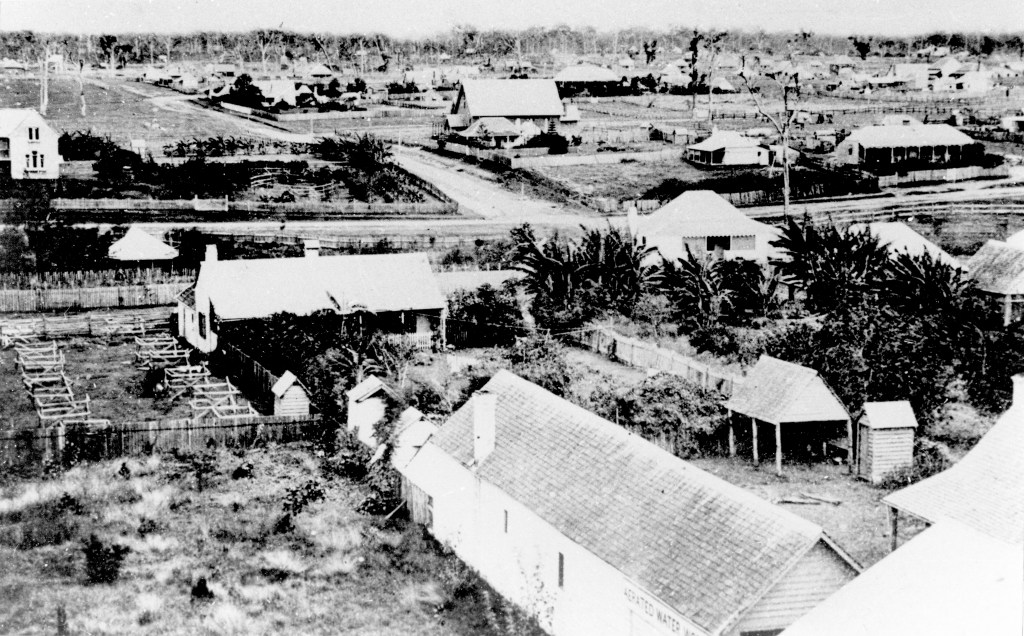
The enthusiastic photographer or photographers who laboured up the stairs of the Post Office Tower with their cumbersome camera equipment provided us with an invaluable record of the town as it grew between the 1860s and 1870s.
Here are two views of the corner of Kent and Richmond Streets, five years apart. The second set of photographs show the wharves and the river, as well as the development of the north sector of the town.

Industry.
Scott’s Sawmills, pictured first in 1875, was a going concern. A year later, a fire had destroyed the business.


The Union Foundry Works, picture in 1868 at their Grand Opening and at such a distance as to show the entire building, damnit, was a hardier operation. On a smaller scale, there was Carl Schulz and his wife Caroline, showing off their steam-powered fire engine. The first of its kind in town.


The Town Develops.
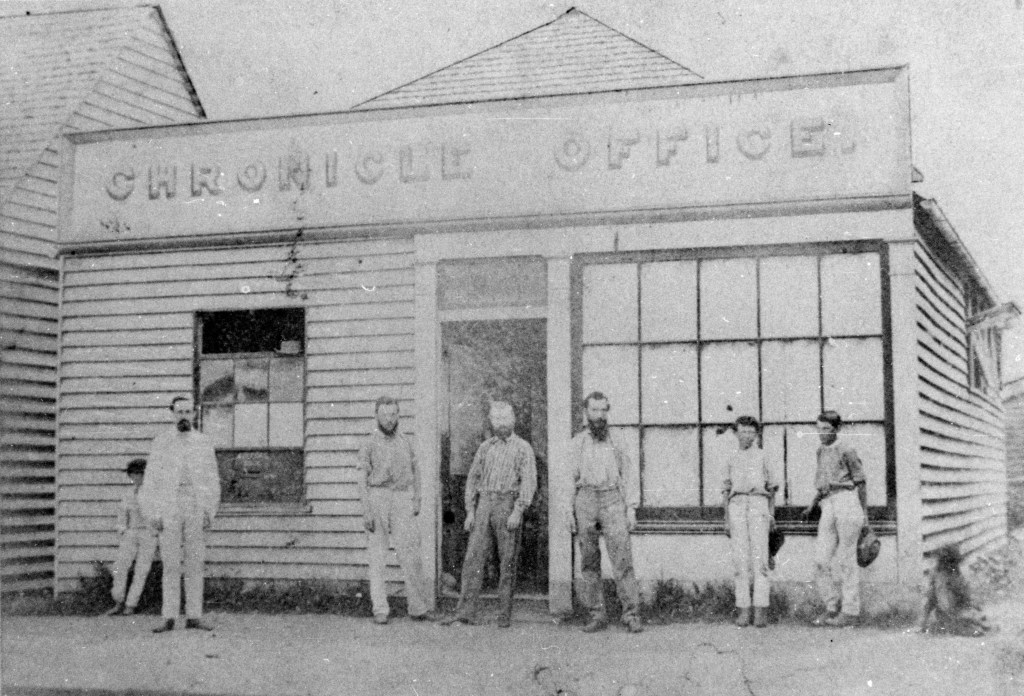
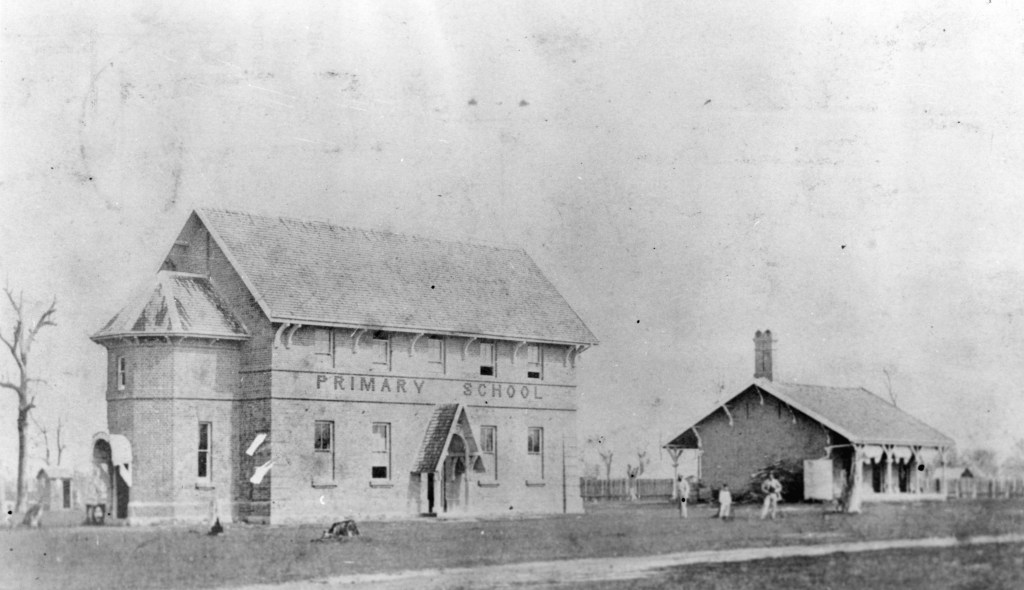
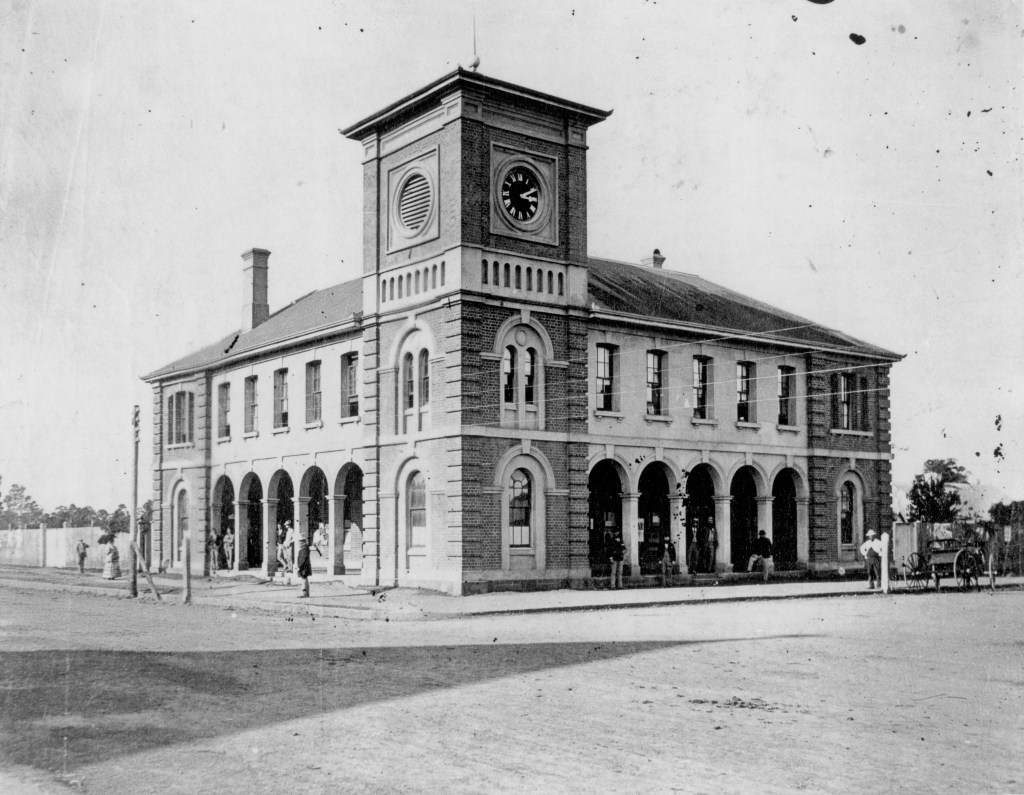
A go-ahead town needed public buildings and businesses, and Maryborough had some of the best public buildings in Colonial Queensland. The Primary School is a solid, two-story structure – striking in its contrast to the ramshackle school houses with bark roofing that dotted small towns in the regions. The Post Office, so useful for the local photographers, was impressive and gave the town an air of permanence.
The first courthouse was a small affair that would require rebuilding several times over the years. Crime, the only industry certain to grow with time and population, has caused a lot of infrastructure to become obsolete very quickly.
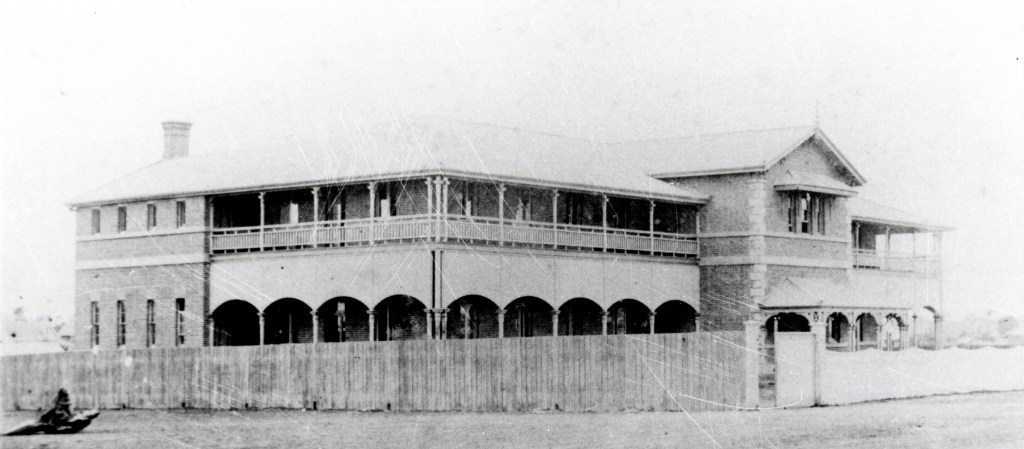
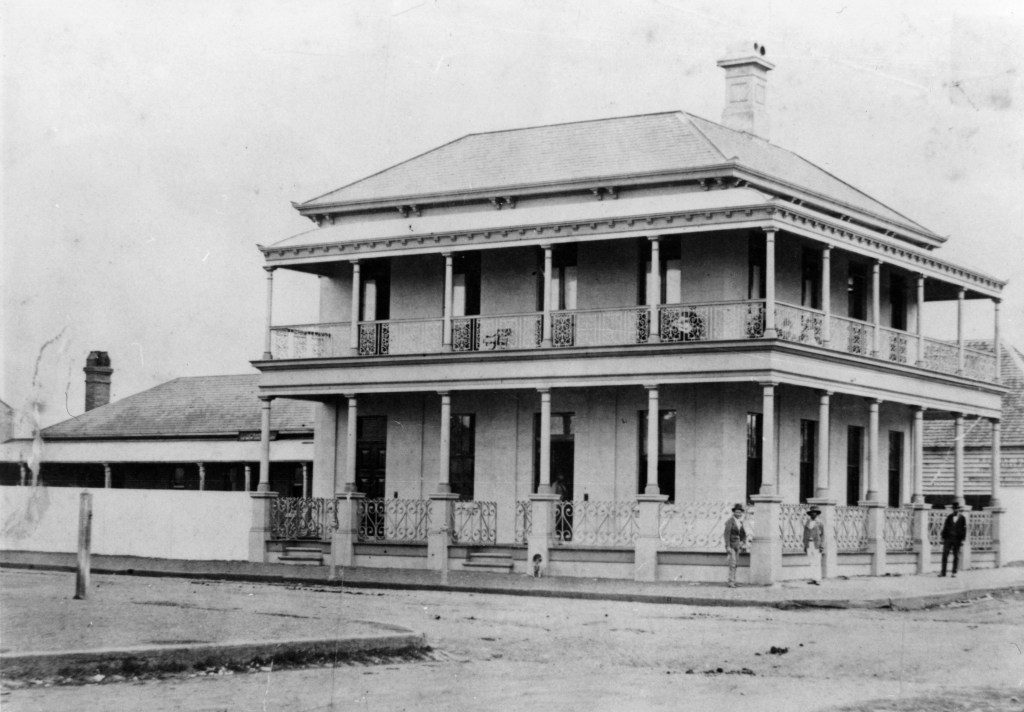
The Immigration Barracks and Bank of New South Wales both ran to two stories, with the shaded verandahs so necessary in tropical architecture.

By 1880, an impressive town with wide, well-ordered streets had been carved out. The next decades will be recorded in another post.
All photographs are from the collection of the State Library of Queensland, including those from the Fraser Coast Regional Libraries. All are out of copyright.
 Moreton Bay and More