
On this day – August 11.
Two distinguished gentlemen were due in Brisbane on August 11, 1871. One was the sole named passenger (with suite, mind) on the HMSS Clio, which bore 18 guns. This gentleman was George Augustus Constantine Phipps, 2nd Marquess of Normanby GCB GCMG PC, Viscount Normanby and Earl of Mulgrave. His mission, and he chose to accept it, was to be the Governor of the Colony of Queensland.

The second man, better known to history, was almost lost in the passenger list of the City of Brisbane. The author of more than 25 works of fiction, Anthony Trollope.
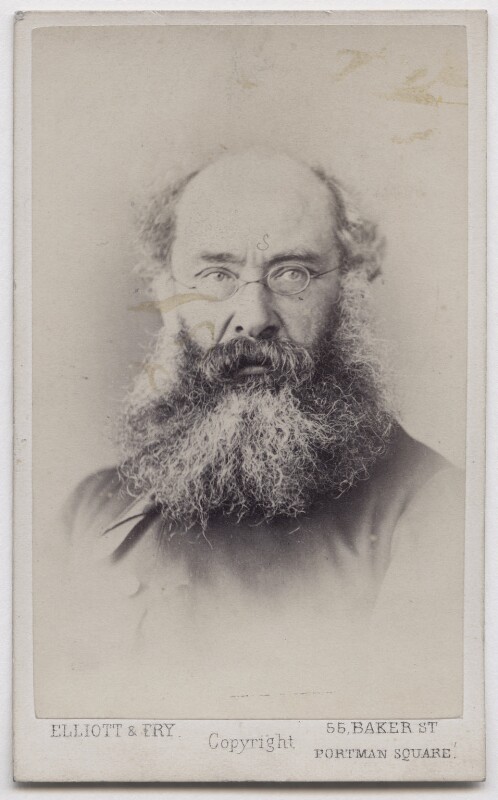
Among the “distinguished arrivals” announced in Saturday’s Courier we observe the names of His Excellency the Marquis of Normanby, Mr A. Trollope, Chang (the Chinese giant), and Kin Foo, a lady of Japan and “a child of the great Tycoon.”
The Darling Downs Gazette.
The author had travelled through the southern colonies, and was wisely scheduling a visit to Queensland before the heat of summer. A southern writer summed up the appearance of the visiting lion:
Without desiring to be personal, I may say that Mr Trollope has not been well used by the London photographers. These counterfeit presentments have been counterfeit – mostly. Mr Trollope’s appearance is bluff, hearty and genial, and he has been usually sun-pictured as a bilious valetudinarian[i].
“Ægles” in the Australasian. Reprinted in the Queensland Times, Ipswich Herald and General Advertiser.
Please don’t make us look bad, Mr Trollope.
It wasn’t his appearance that concerned Queenslanders. It was his profession. It was a social coup to meet, greet and entertain such a distinguished man. But there was real anxiety – what would he think of us? And what would he write about us?
The Gympie Times fretted that an unfavourable review might have Consequences. It recalled the observations of Dickens following that author’s American visits, and the resentment felt there by the perceived slights directed towards America. There was, thought the Times, a lingering unfriendliness between England and America “causing the deepest anxiety to the advocates of Peace!” (President Ulysses S Grant had thus far shown no inclination to send a gunboat – perhaps the Gympie Times was being a tad too sensitive.)
Trollope’s Brisbane reception was quiet and (presumably) dignified – a private dinner with Chief Justice Sir James Cockle. After this interlude, the lion ventured north.
The first major stop in Trollope’s journey would be Rockhampton, where a capital “D” Dinner was held in his honour at Joyce’s Leichhardt Hotel. The occasion was chaired by EP Livermore, Esq., Mayor of the town, who gave what he imagined to be a rousing speech of welcome.
The Chairman concluded by saying that they ought to feel both proud and pleased that Mr. Trollope should have thought it worth his while to visit this outlying corner of the world, which but a few years since was a wild waste, the home only of the kangaroos, the opposum, and the emu.
Presumably, the Chairman had forgotten that there were hundreds of thousands of people who had called that “wild waste” home, long before the English had arrived.
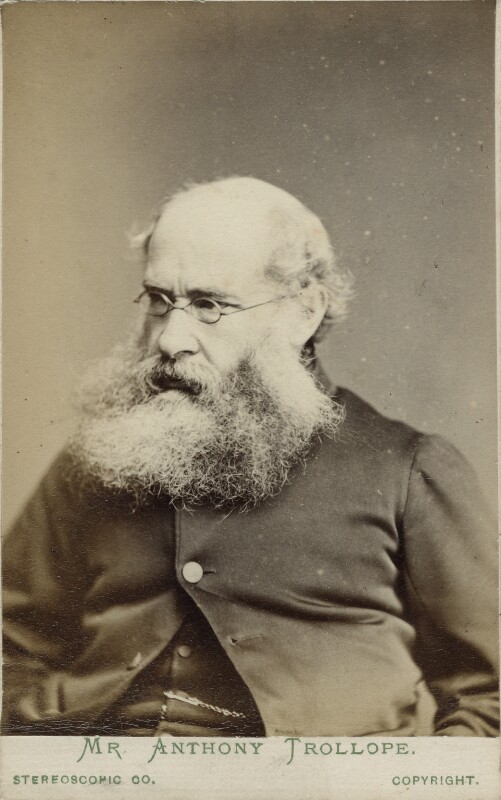
Mr Trollope rose and gave a very long, gracious and self-effacing speech. It became clear that he was going to write about his Australian experience, but he ventured that it would be a considered and thoughtful account.
In fact, so long was Trollope’s speech that those who were still fully awake must have felt much less anxious at the prospect of Mr Trollope’s Views. The table groaned with barramundi, turkeys, ducks, chickens, hams, tongues and vegetables in season. The pastries were praiseworthy, and endless toasts were drunk in “wines as fine as could be procured in the colonies.” That would be a sore point later on.
I have drunk fairly good wine made in Australia, but none made in Queensland.
Anthony Trollope.
The author would travel to the tropics, then through Gympie and the Darling Downs, before retiring to the more civilised climes of Sydney and Melbourne, and then Home.
“New South Wales and Queensland,” by Anthony Trollope.
One can imagine that “New South Wales and Queensland” was rather anxiously consumed by Mr Trollope’s former hosts. It was a very thorough and considered examination of Australia, full of information and statistics. It discussed land ownership, the economy, social structure, legislation, politics and society.
Okay, there were a few quite small barbs. But on the whole, he was kind to his hosts.
Rockhampton:
Rockhampton is a a town lying exactly on the line of the tropic of Capricorn, some miles up the Fitzroy River, with about seven thousand inhabitants, which considers itself to be the second town of the colony, and thinks a good deal of itself. It has been seized with the ambition to become a capital, and therefore hates Brisbane. It is so hot that people going from it to an evil place are said to send back to earth for their blankets, finding that evil place to be too chilly for them after the home they have left.
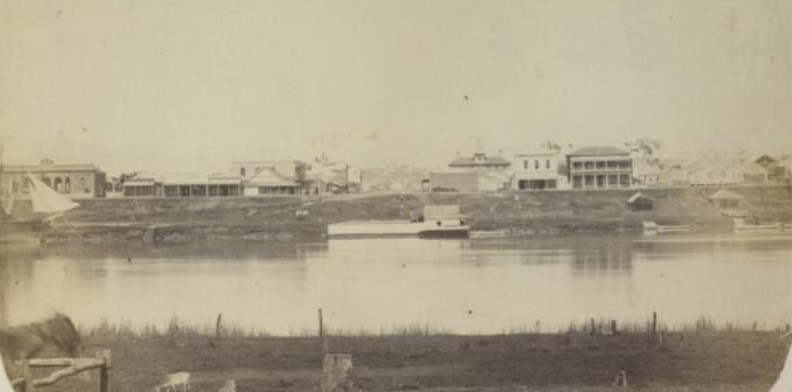
Warwick:
Thence I went to the little town of Warwick, which in that part of the world is held to be the perfection of a town. “You will think Warwick very pretty,” everybody said to me. I did not think Warwick at all pretty. It is unfinished, parallelogrammical, and monotonous; and the mountains are just too far from it to give it any attraction, – as is also the sluggish Condamine River.
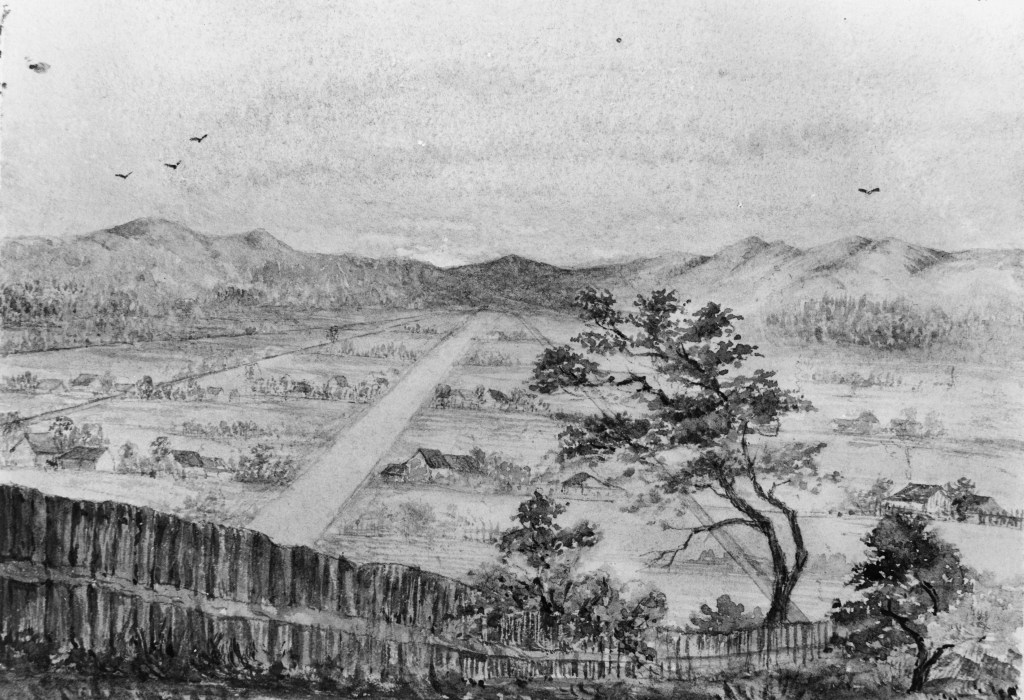
Gympie:
Gympie as a town was a marvellous place, and to my eyes very interesting, though at the same time very ugly.
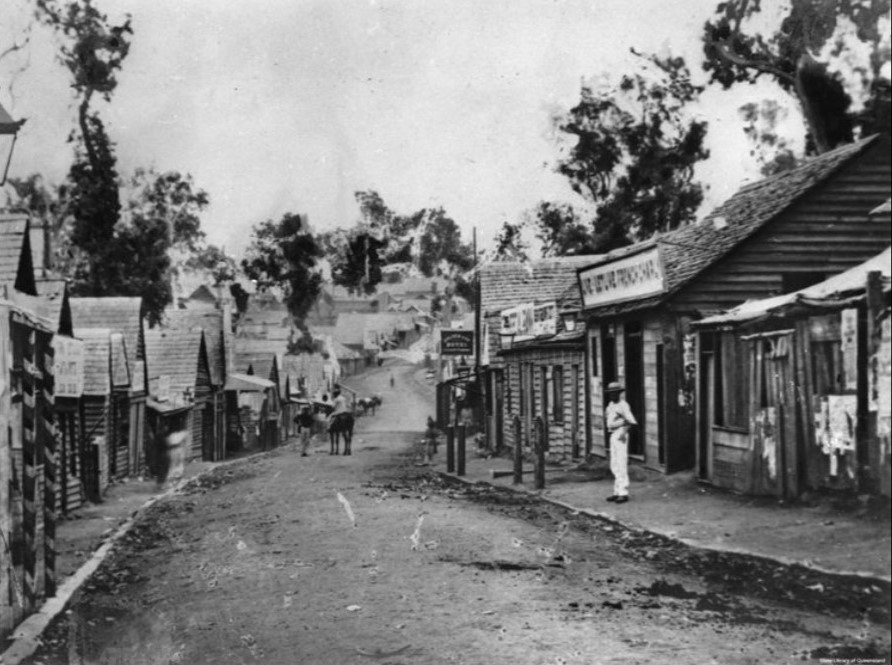
State Library of Queensland Digital Collection.
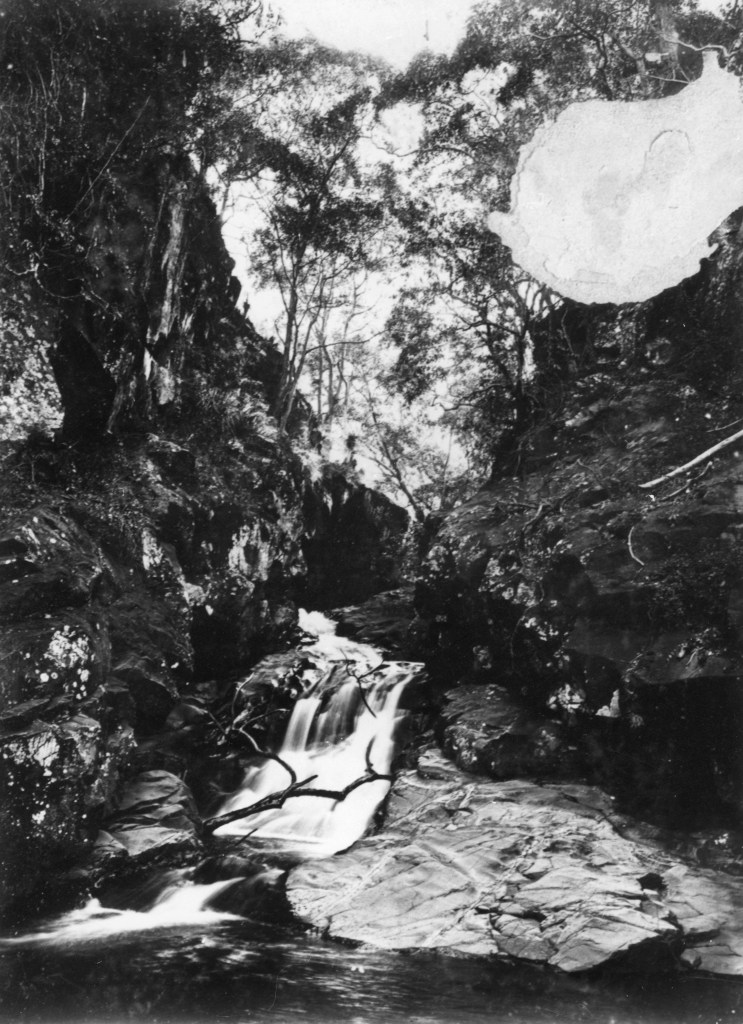
Cunningham’s Gap:
I am inclined to think that this was the prettiest scenery that I saw in Queensland. Anyone who may visit Queensland as a tourist should certainly pass through Cunningham Gap.
Brisbane:
Brisbane is a commodious town, very prettily situated on the Brisbane River.
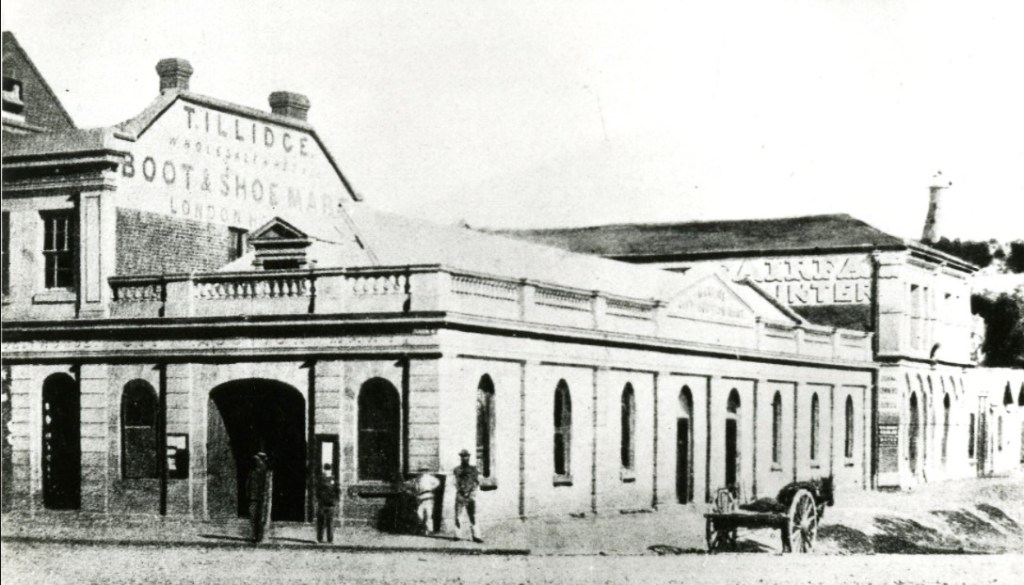
Hmm. Oh well, faint praise is still praise, I guess.
[i] showing undue concern about one’s health: “the valetudinarian English”
 Moreton Bay and More