
1871 Edition.
The go-to man for oyster parties.
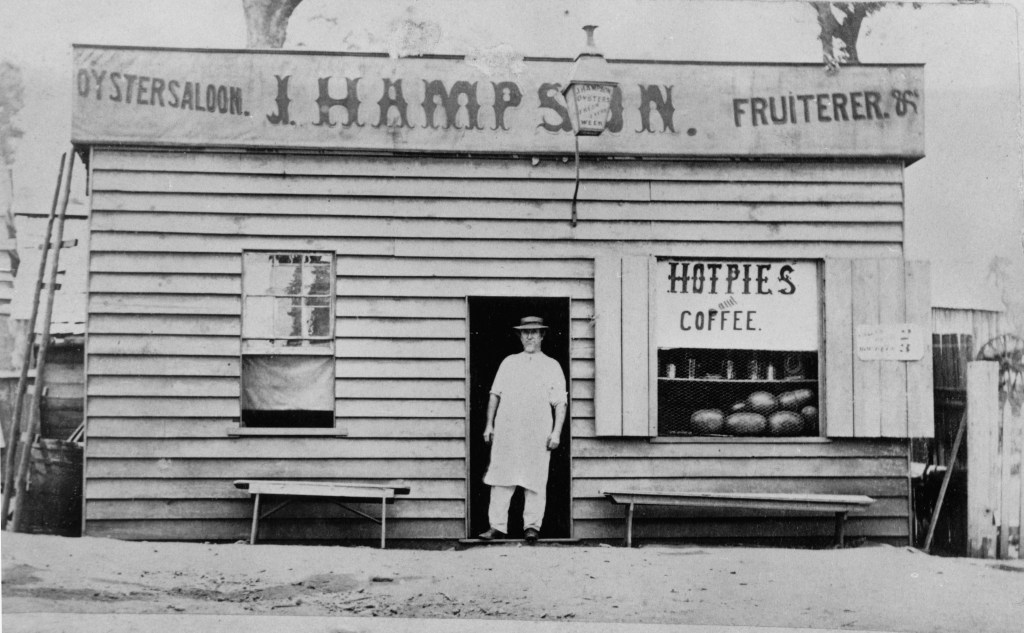
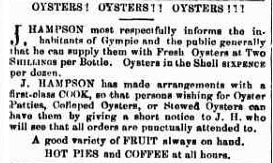
J Hampson sold fruit, coffee and hot pies, but above all, he sold OYSTERS!!! Bottled oysters, stewed oysters (an acquired taste, presumably), collapsed oysters (what?). Oh, and fresh ones in the shell. That’s a relief. J Hampson was also prepared to cater for Oyster Parties. Whatever that means.
Perhaps it was a Gympie thing. My maternal grandmother grew up in Gympie, and had a lifelong secret passion for bottled oysters. She kept a stash of these bottles, with their evil-looking floating contents, in the darkest corners of the kitchen dresser, under her tea cosies and Mother’s Union cookbooks. Perhaps she feared that other family members might consume them all if they were kept out in the open. It’s fair to say that this wasn’t a realistic concern.
The Grocery Store.
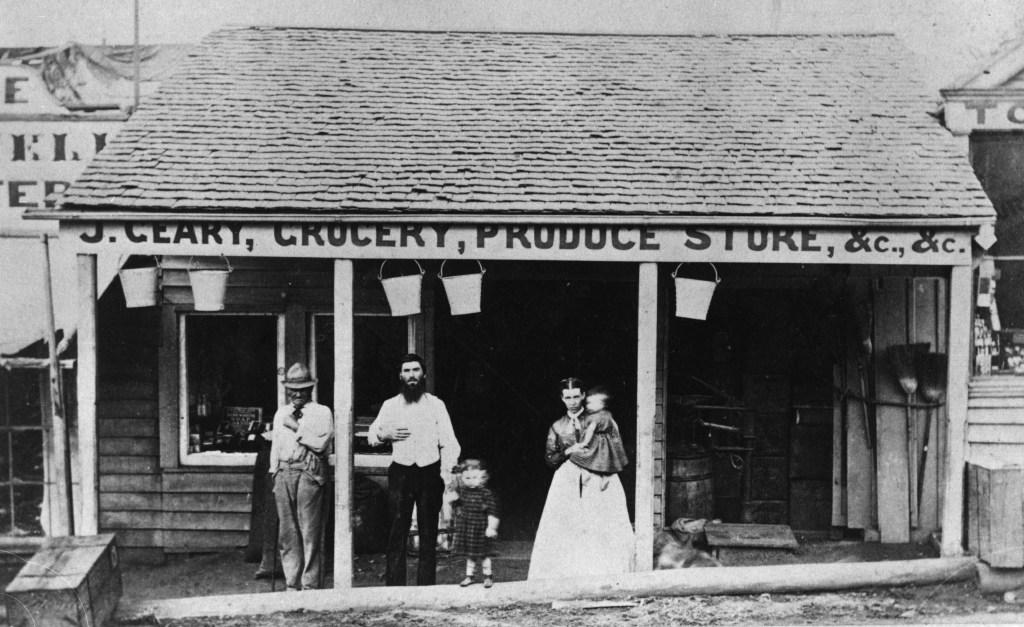
J Geary posed with his charming young family outside his store in 1871. (The adults were able to wait and watch the birdie, but the little ones couldn’t help moving their heads, resulting in two tiny blurs.) Clearly, the family stood ready to meet the requirements of the most exacting bucket and broom purchaser.
Sadly, a year after this photograph was taken, John Geary had to sell his entire stock in trade, together with a light cart, well-bred horse and harness, and a large cask of treacle. He entered into insolvency shortly afterwards.
Poplinettes and Saxony wincies.
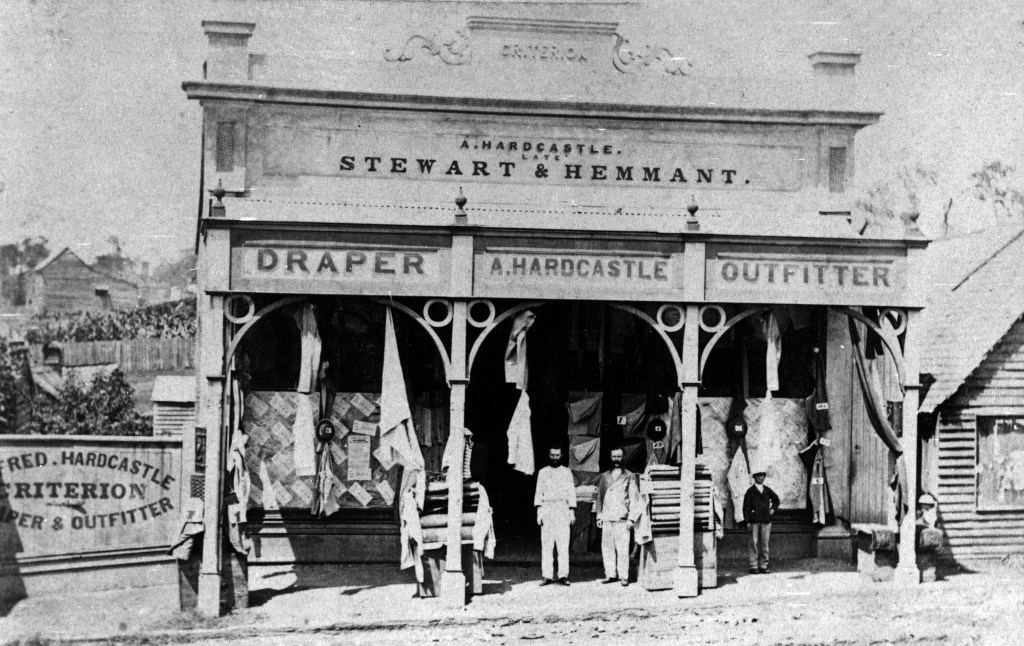
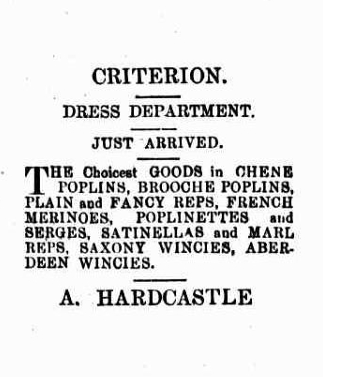
Virtually all of the Dress Department’s advertised goods would puzzle modern shoppers. What was one supposed to do with a marl rep or an Aberdeen wincey? The latter was a form of twilled fabric, suitable for warm clothing, apparently. (There is a small, scholarly and slightly intense corner of the internet devoted to historical fabric and clothing.)
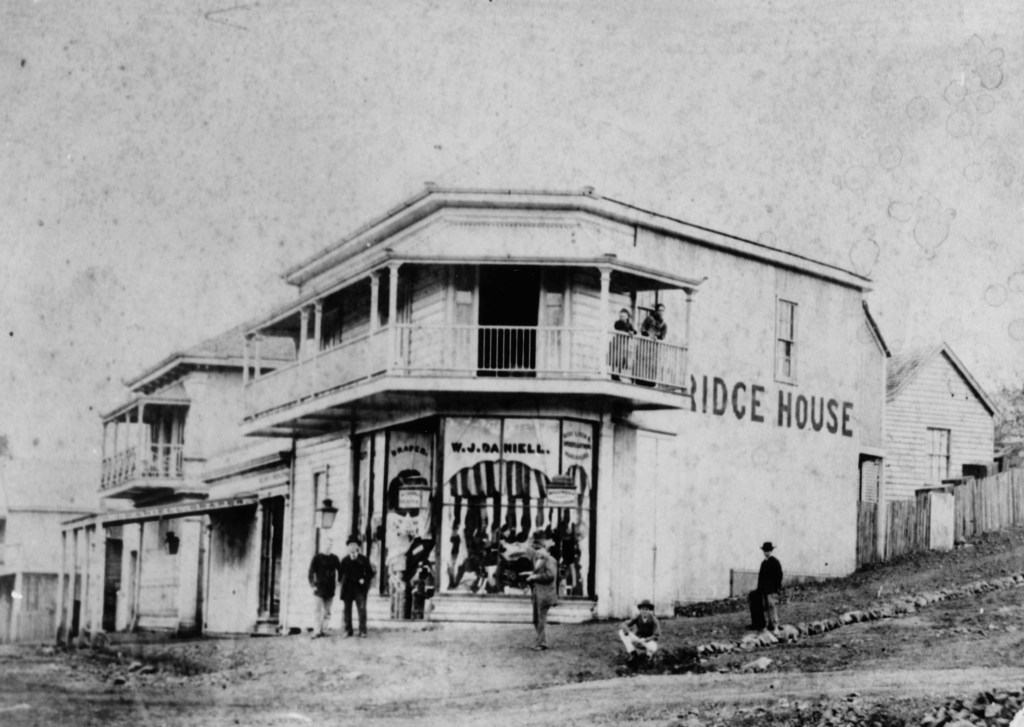
A. Hardcastle advertised loudly and he advertised often. He had to, because Mr Finney (late of Finney, Isles Brisbane) loomed on the retail drapery horizon with all of his city mercantile savvy. And a Mr W Daniell took over a rival store, and was advertising high quality at low prices.
Boots galore.
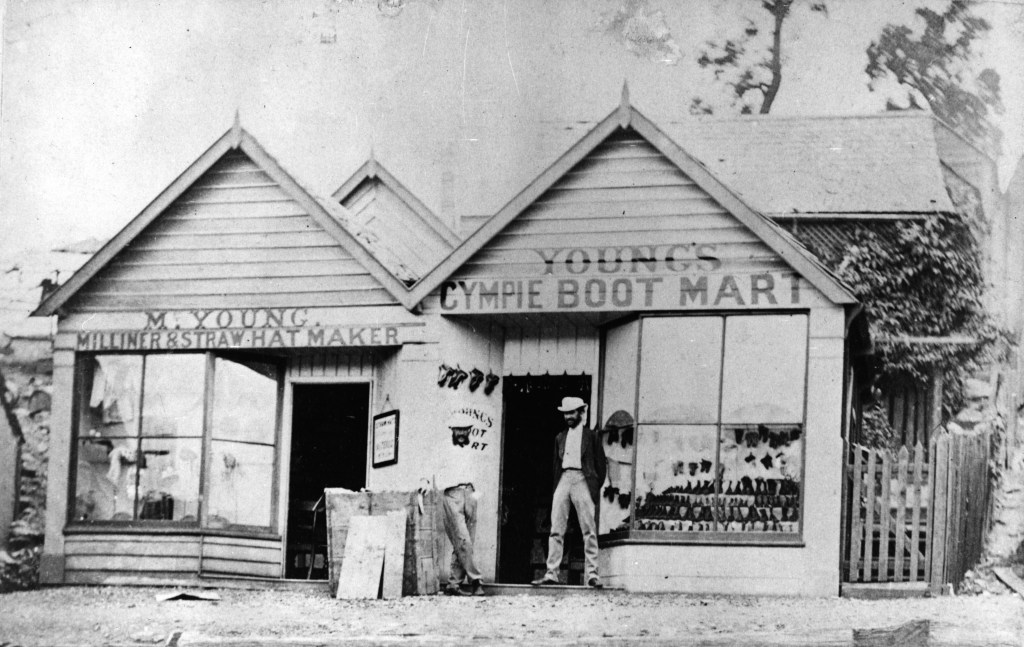
Young’s took care of a fellow’s extremities. A straw hat to keep the sun off the parts of the head that a beard couldn’t cover, and a sturdy pair of boots for a man to stride freely across the dusty streets. Bootmakers were plentiful in Gympie, and this one has a dazzling array of foot coverings in his window.
Let there be (lamp) light.
W Kidman supplied household furniture, and lamps in order to avoid tripping over it in the dark. Electric light was a long way off, and quite a stock of lamps were required to light a house. A local success story, Kidman also had an ironmongery business, and over the decade, became a local worthy.
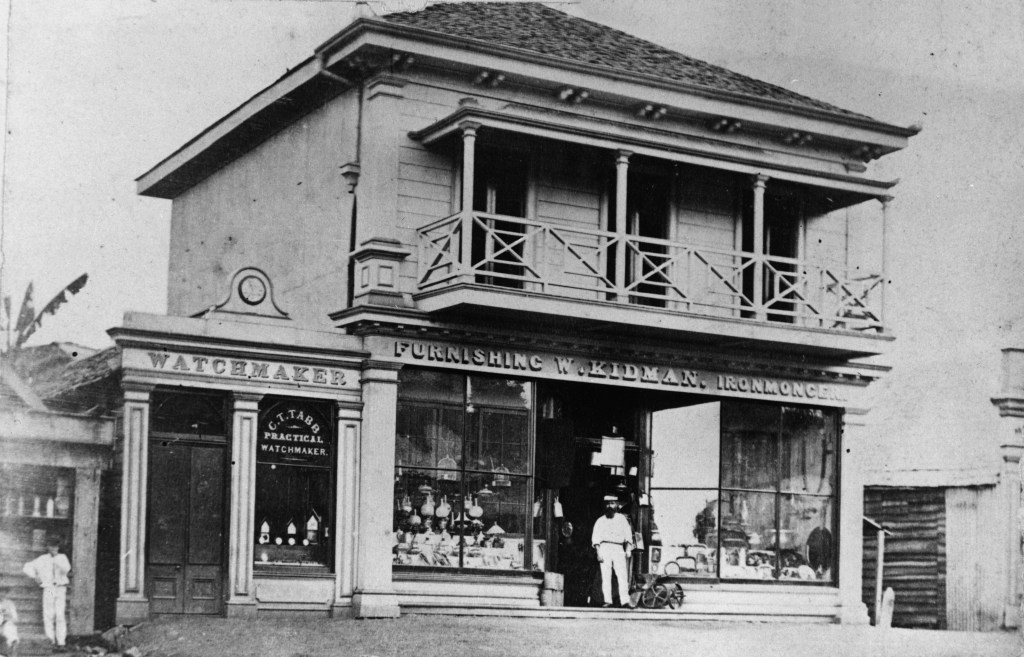
In Mary Street, another shopkeeper supplied lamps and brushware. By the looks of things, he was successful enough to keep his four young children in the complicated costumes that middle-class children were expected to wear at the time. Perhaps the fabrics had come from Mr Hardcastle. The three axes leaning against the wall are a bizarre contrast to the otherwise genteel air of the establishment.
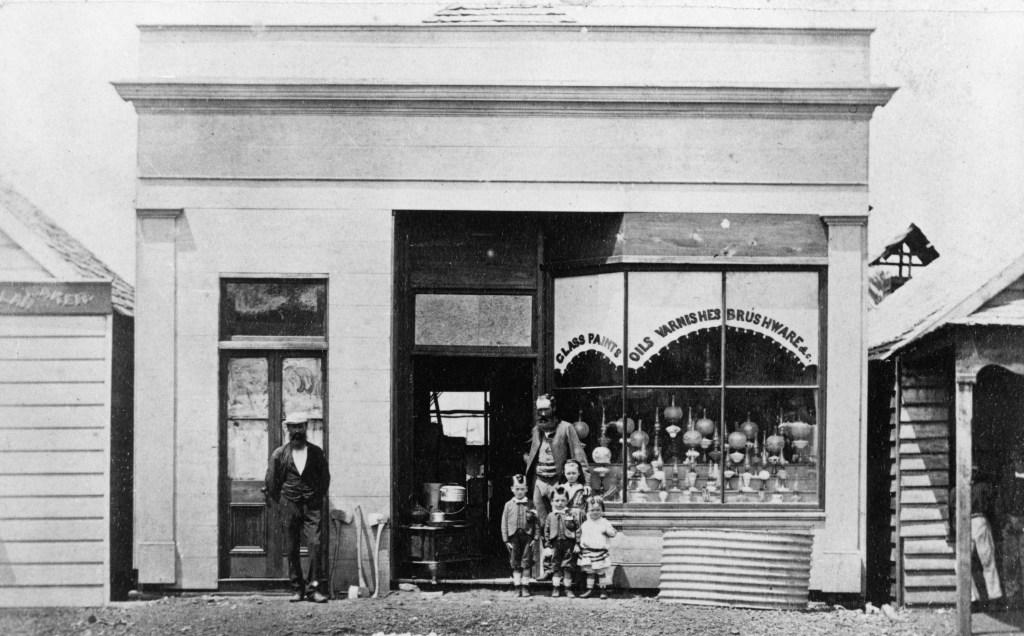
Tobacco, toys and (yet more) boots.
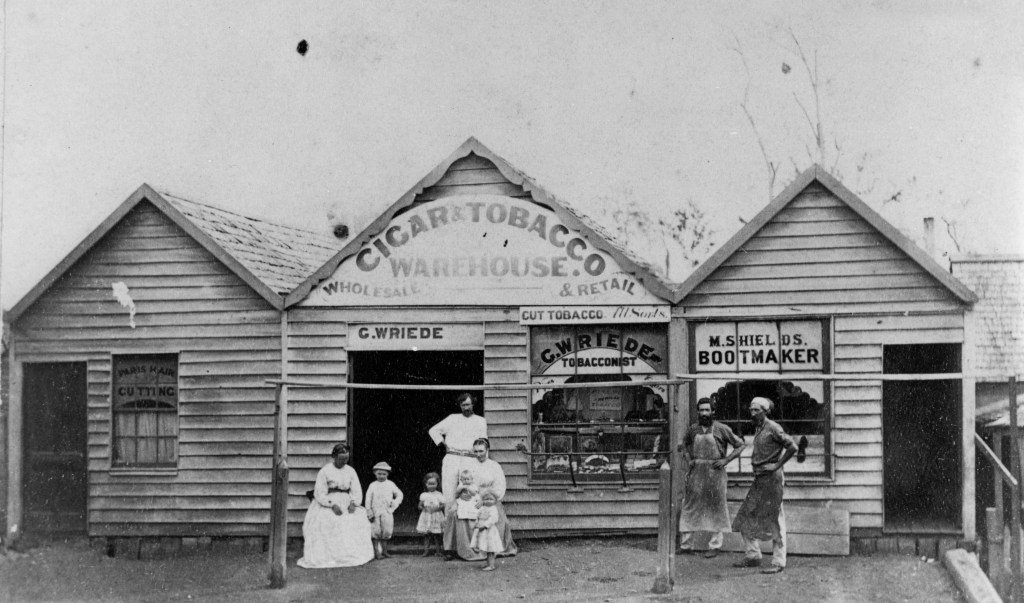
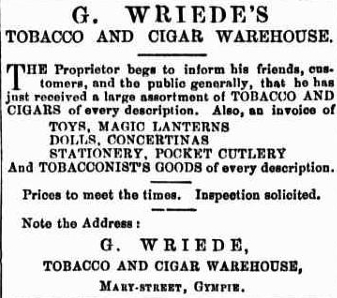
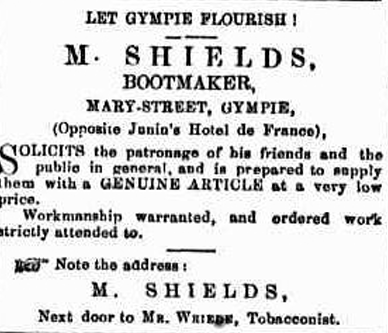
Location, location, location. G Wriede was a successful tobacconist and local worthy. Shields, the bootmaker, occupied the shop next door, and the two businesses grew with each other. Their goods did not compete for business, and they became friends and allies. “Prices to meet the times,” sounds like the business plan of a town accustomed to boom and bust.
Same street, different decade.
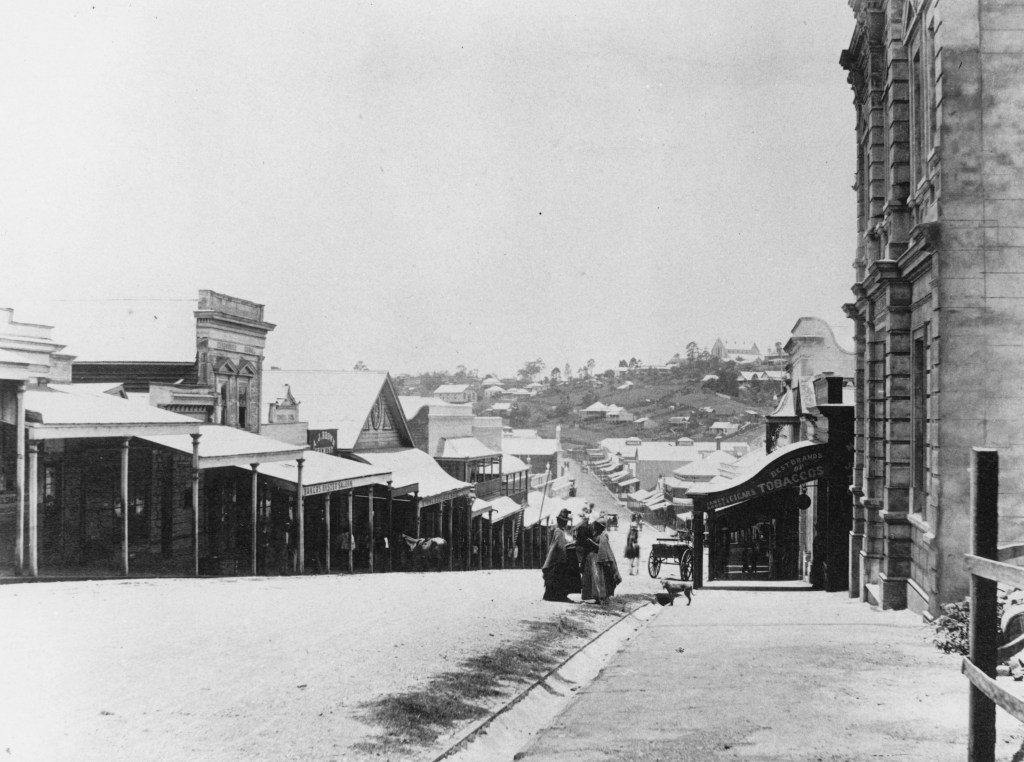
Twenty years after the businesspeople of Gympie posed stiffly in front of their shops, Mary Street had transformed. Solid buildings had been built, and stores boasted deep, shady verandahs and awnings.
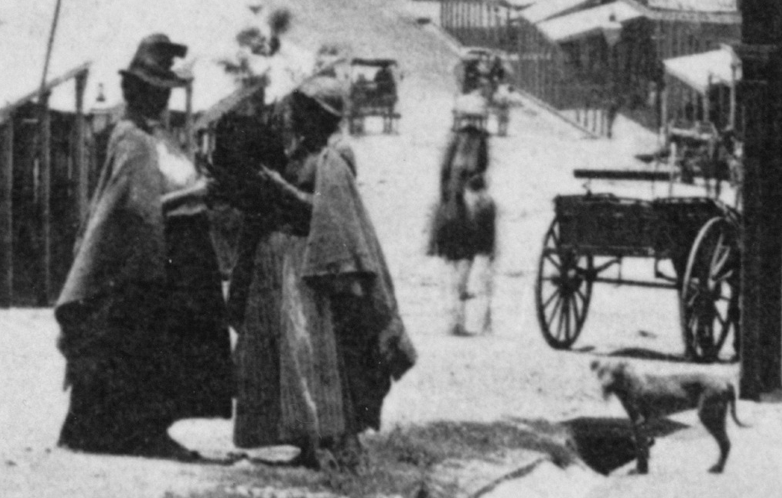
Two ladies, dressed for a deep winter in the sub-tropics, pause to talk in front of a tobacconist. They may be about to inconvenience a horseman proceeding up the hill in a blur, while a local doggo is the only one looking at the photographer. Everyone else is too busy.

 Moreton Bay and More