
Brisbane Race Days.
The Moreton Bay Races, 1846.
The first edition of the Moreton Bay Courier contains the first-ever account of the local race day. Four years after the Settlement was opened to people other than soldiers and convicts, the local ‘gentry’ raced their horses at New Farm.
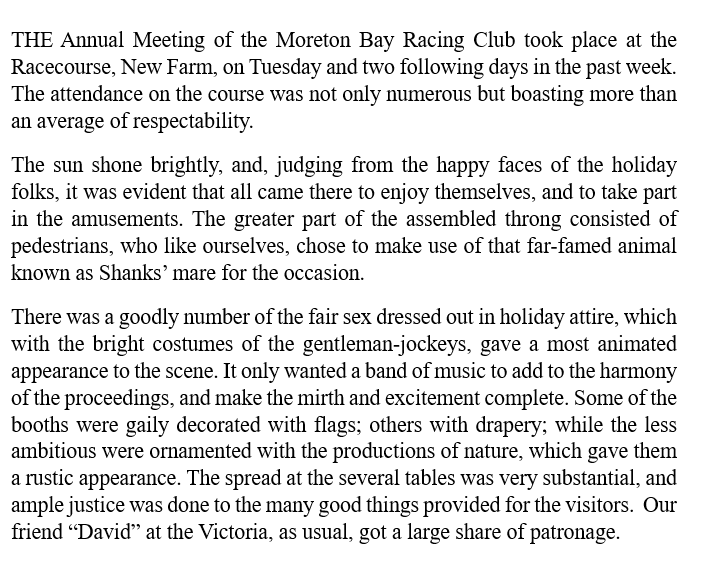
“Boasting more than an average of respectability!” A reminder of the rough-and-ready beginnings of our town. The “David” referred to is David Bow, who ran the Victoria Hotel, and who was then at the height of his success. Not long afterwards, David Bow lost his wife to what sounds like a stroke, then, as the colony grew, competition and poor business decisions lost him his business.
Post-Separation Festivities.
In 1859, Queensland became (for better or for worse) Queensland, and we had our very own Governor, Sir GF Bowen, GCMC (God Calls Me God). What better use for a Governor than to be patron of the Brisbane Steeple Chases and Races? The Stewards were drawn from the great and the good, and the Judge was Dr Kearsey Cannan, Esq. Who was, perhaps coincidentally, at that time in charge of a place officially known as the Woogaroo Lunatic Asylum.

1863 was the year that Brisbane’s Eagle Farm racecourse was established, although not at the suburb of Eagle Farm, but at neighbouring Ascot on Racecourse Road.
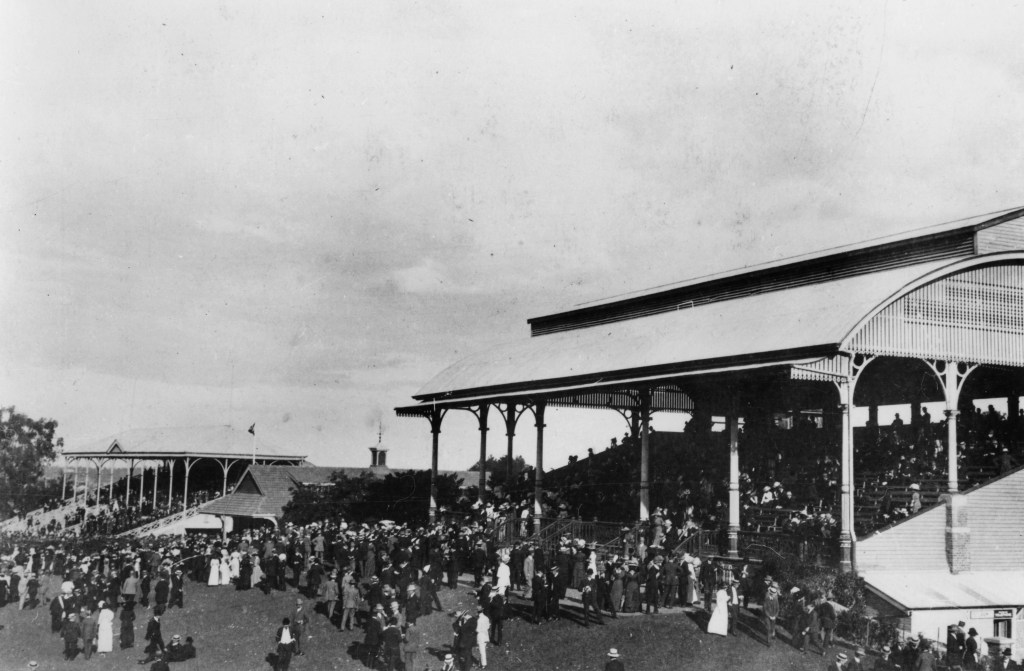
In the late 1880s and early 1890s, grandstands and official buildings were erected.


Country Race Meets
Some Accounts of Race Days
Longreach – a dusty track and a pedantic starter.
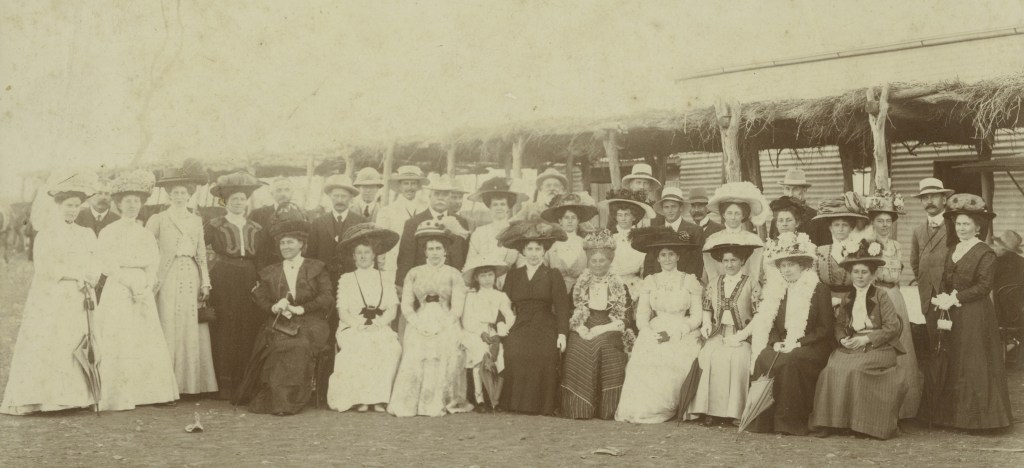
The racing was a great success. The attendance numbered 1000 people, including visitors from Rockhampton and the neighbouring stations and towns. the weather was clear and bright but rather hot. The course was dry and dusty. A number of police were present, but the utmost order prevailed. Mr Conway started well in most of the events, but was rather too desirous of having all the horses in a line.
Mr Conway as a starter was not an unqualified success, simply because he was too conscientious. He wanted the horses in line, and of course failed to get them so. For patience, Job was not a circumstance to Mr Conway, and not a single jockey was fined, though a good many deserved it. If Mr Conway will only let his horses away when all are fairly on their legs, even if not in a line, he will give as much satisfaction as a starter can ever hope to do.
Winton – went off without a hitch, or a policeman.
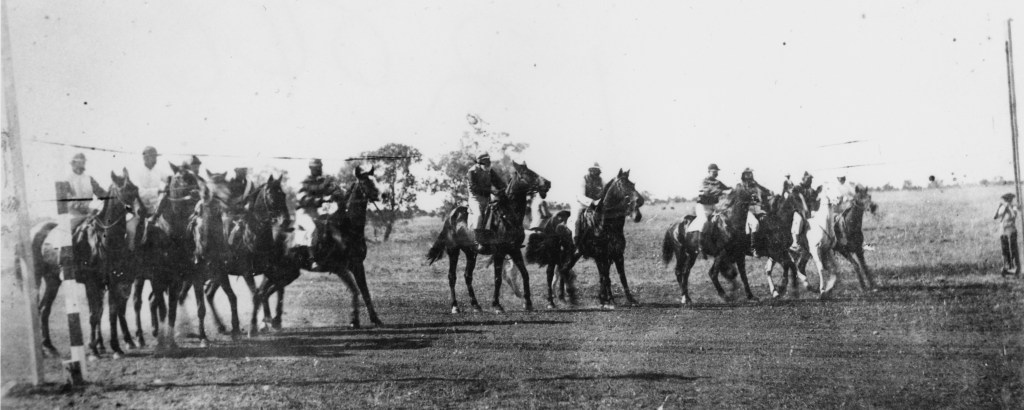
The second meeting under the auspices of the above-named club came off at the Winton race-course on the 25th and 26th instant. The weather was all that could be desired, neither too hot nor too cold, but just sufficiently warm to make all things pleasant. The attendance was not quite as good as it would have been had the meeting not been postponed. The racing men came in good force, and the list for each event was well filled, and every race was fairly contested. Considering the absence of police at Winton, everything passed off in a very orderly manner.
Charleville – two days of a circus band.

Bright weather favoured the races on Wednesday and Thursday. The long drive out, however, was not to be appreciated, for the dust hung in a danse cloud over the roadway. The vicinity of the saddling paddock presented a lively appearance. Many picnicking parties were formed on the flat, where the ladies assemble, and which is the gayest part of the course. The circus band played both days.
Surat – a pleasant break in the dull routine of bush life.

The amount of pure bosh that is written about horse-racing is simply pitiable. It affords an outing where one meets neighbours and acquaintances, and is a pleasant break in the dull routine of bush life. Our wives and sisters in their war paint enjoy the opportunity of seeing and being seen at their best even to their own dear hearts’ content.
At the Surat Races, the wealth of the district may have been present, but the beauty and fashion were conspicuous by their absence, not a buggy even. Everybody knew everybody, money seemed plentiful, and all seemed to enjoy themselves in a quiet way.
Around the grounds in pictures.
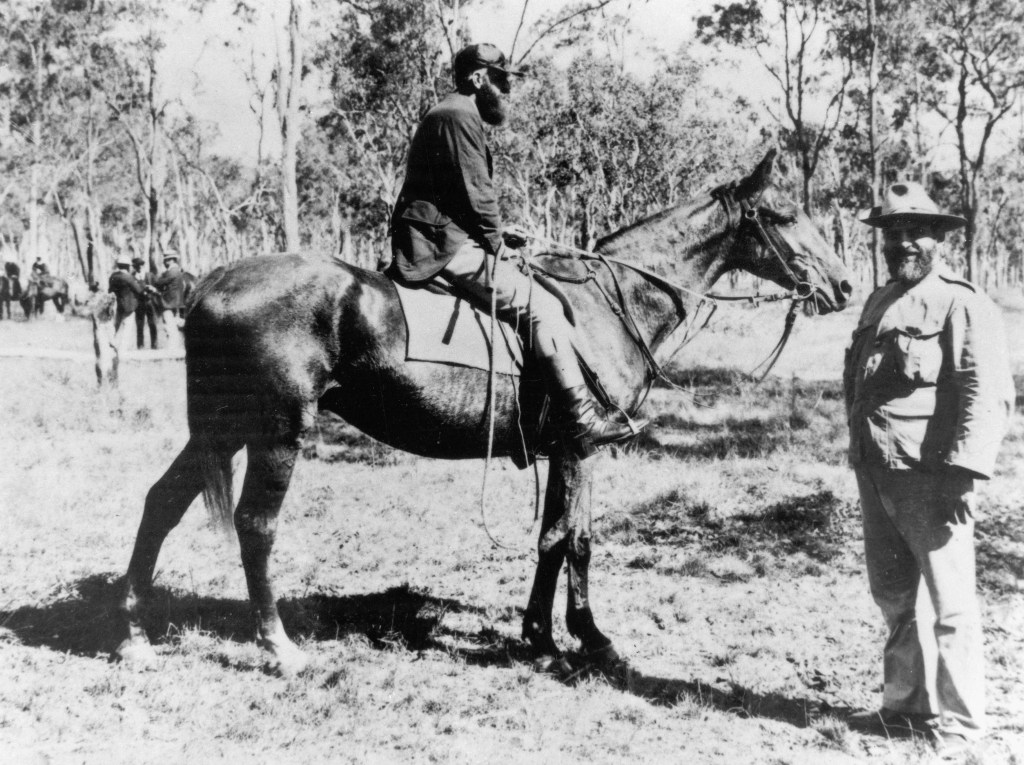
Miriam Vale
A big turnout at Charters Towers

True Blue

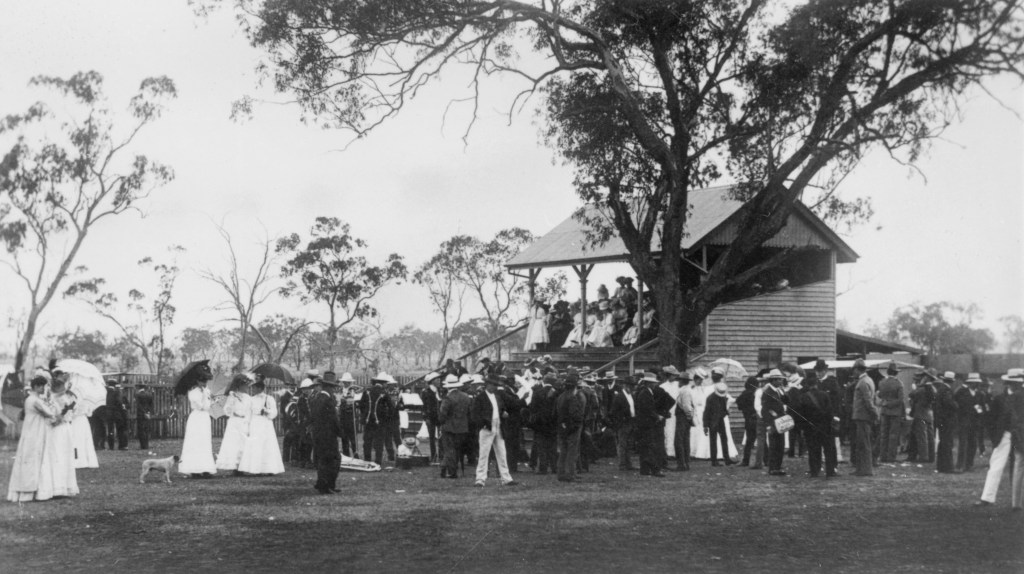
Luncheon under the grandstand at Inglewood

Pittsworth Race Day


 Moreton Bay and More