
Ruffles, flounces and tiny waists never went out of style.
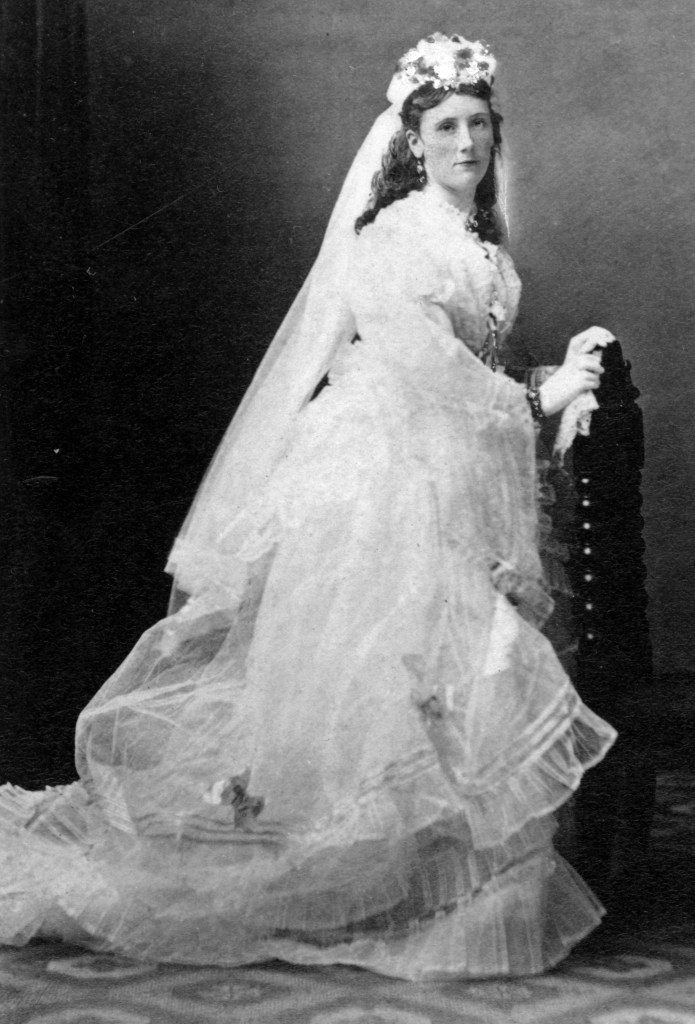
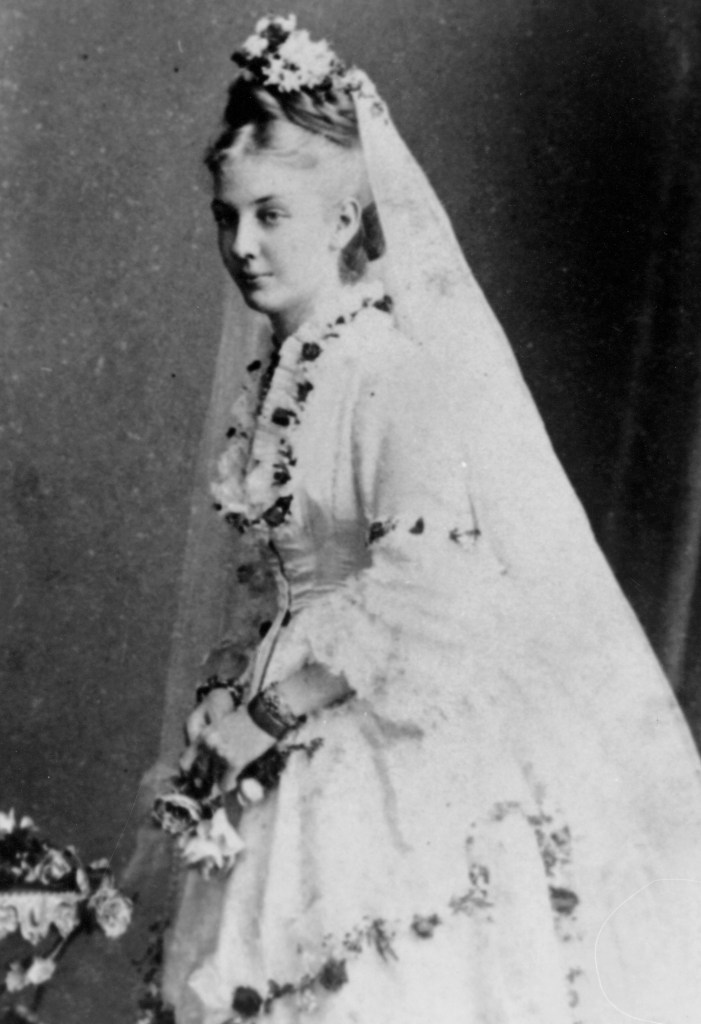
Miss Hirst, pictured on her wedding day in 1872, is the very picture of the Victorian bride. She is veiled and ruffled, with butterflies embroidered on the netting over the skirt. In the original photograph, her headpiece had details hand-painted in, and I suspect that similar effects were added to give her rosy cheeks. (No respectable woman wore rouge at that time.)
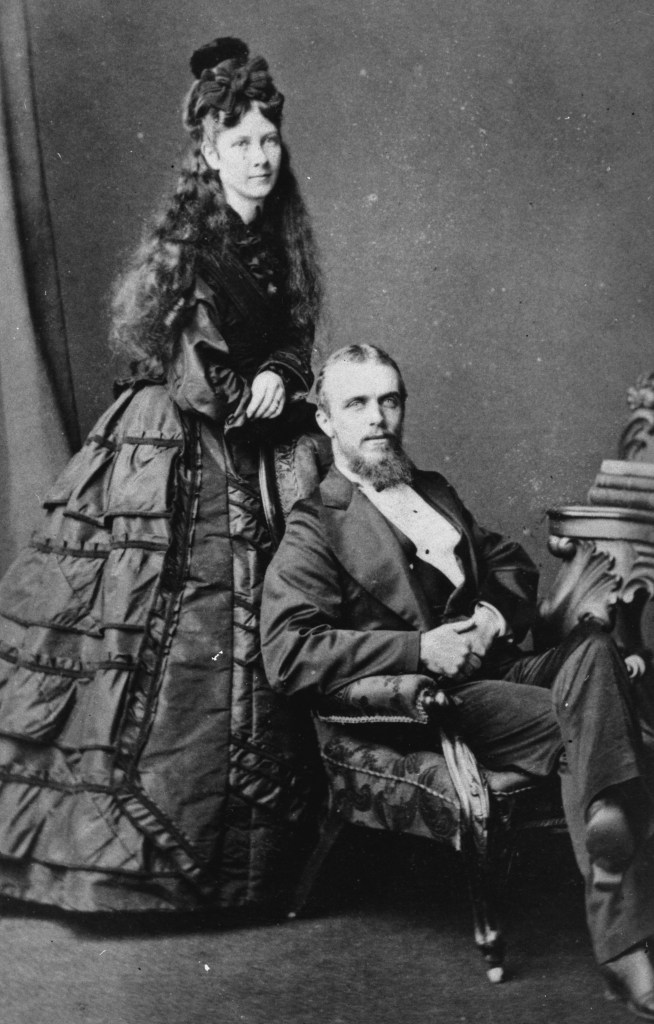
Thomas Bridson Cribb was the son of noted businessman Benjamin Cribb. Marian was the daughter of John Clarke Foote. The two families were intertwined through marriage, business, religion and politics, which is why the couple look so comfortable together in their wedding photo. Marian is certainly not following the bridal tradition of white clothing, with the sombreness of the gown suggesting mourning. Her loose natural curls add a charming touch. The Cribbs had seven children before Thomas’ death in 1913. Marian became a semi-invalid after her husband’s death, and passed away in 1932.
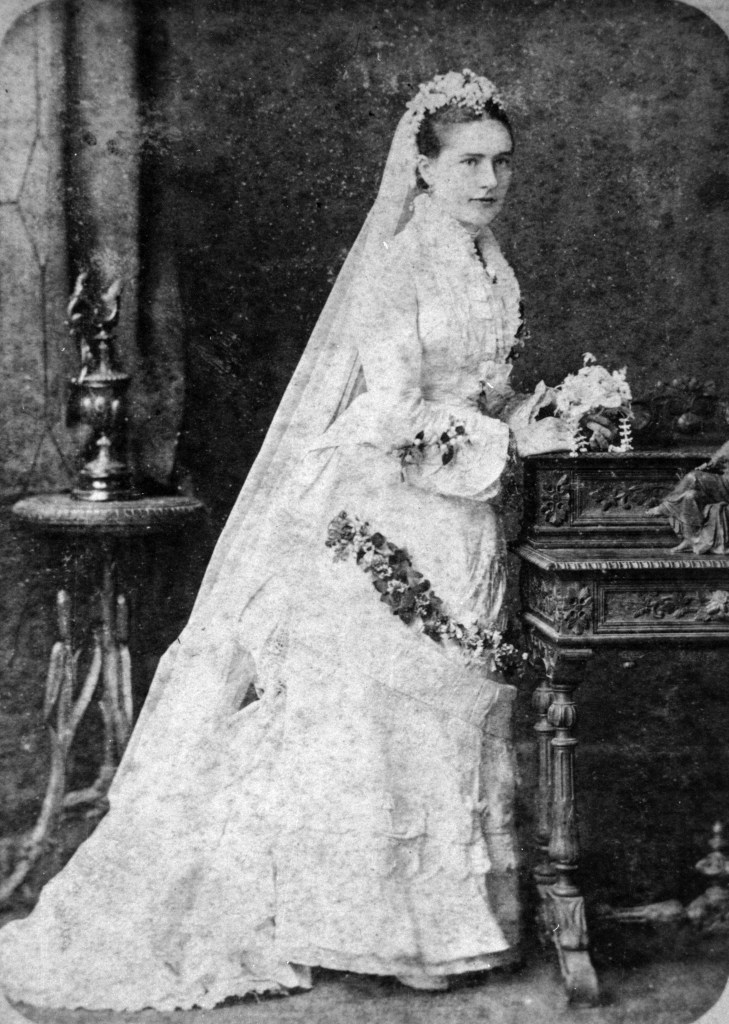
Jennie H Power wore a (for the time) simple wedding outfit. Her only concession to the bridal excess of the time is the embroidered ruffles on the skirt. Miss Power kept the power and the money in the family when she married her second cousin, Virgil Power, in Maryborough. The Power family were a force to be reckoned with in the legal profession.
Mrs Rome was noted for her beauty and style in the 1880s, and this photograph illustrates why.
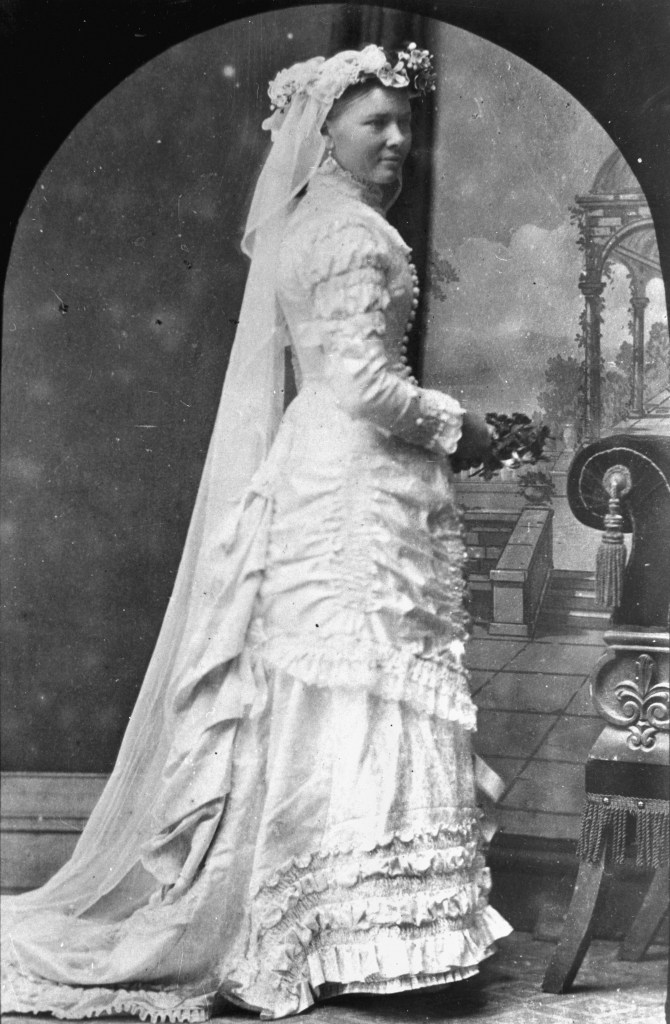
If you want to look charming on your wedding day, marry your photographer. Even if you’re wearing a wedding cake, your natural fresh-faced looks will shine through. That’s what Mathilde Helene Biltoft did, and her wedding photo was taken by her husband, photographer Jens Hansen Lundager.
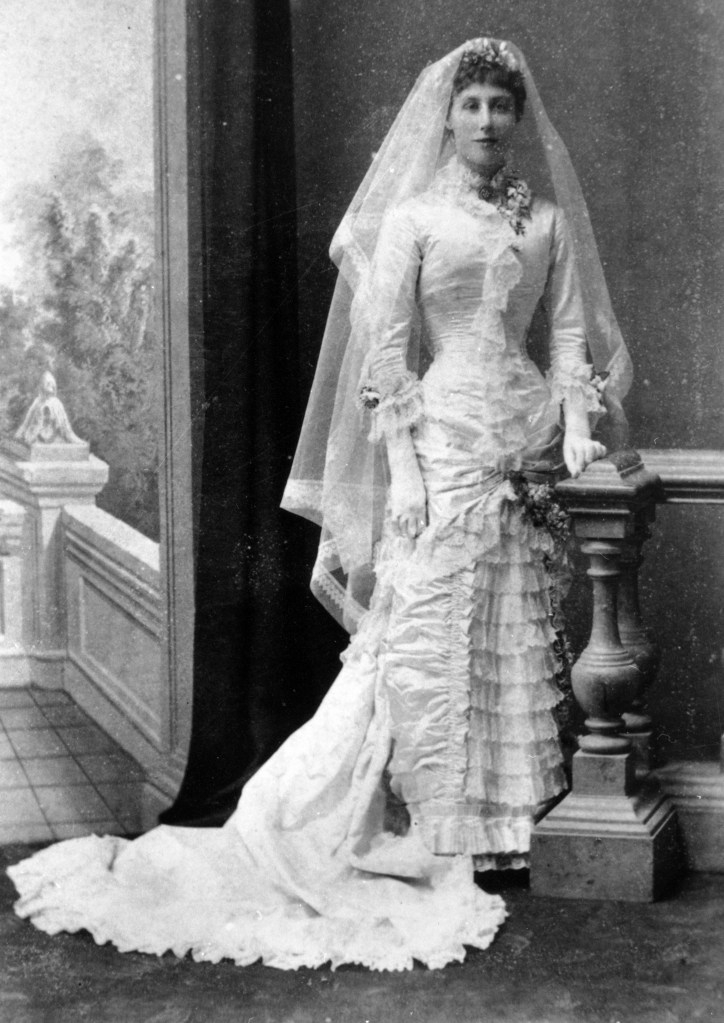
Margaret Murray-Prior, a vision in ruffles, corsets and veiling, only had a few years with her husband before his death aged 31 in 1887. Hervey Murray-Prior had been unwell as a result of an earlier fall from a horse, and became unwell and disoriented while riding home. His death was the result of a heart condition, heat and exposure. The Courier, in its report on Hervey Murray-Prior’s death, rather unkindly mentioned that he was by then a rather portly chap, who had “dined” at an inn prior to insisting on riding home. (By dined, they meant consumed alcohol.)
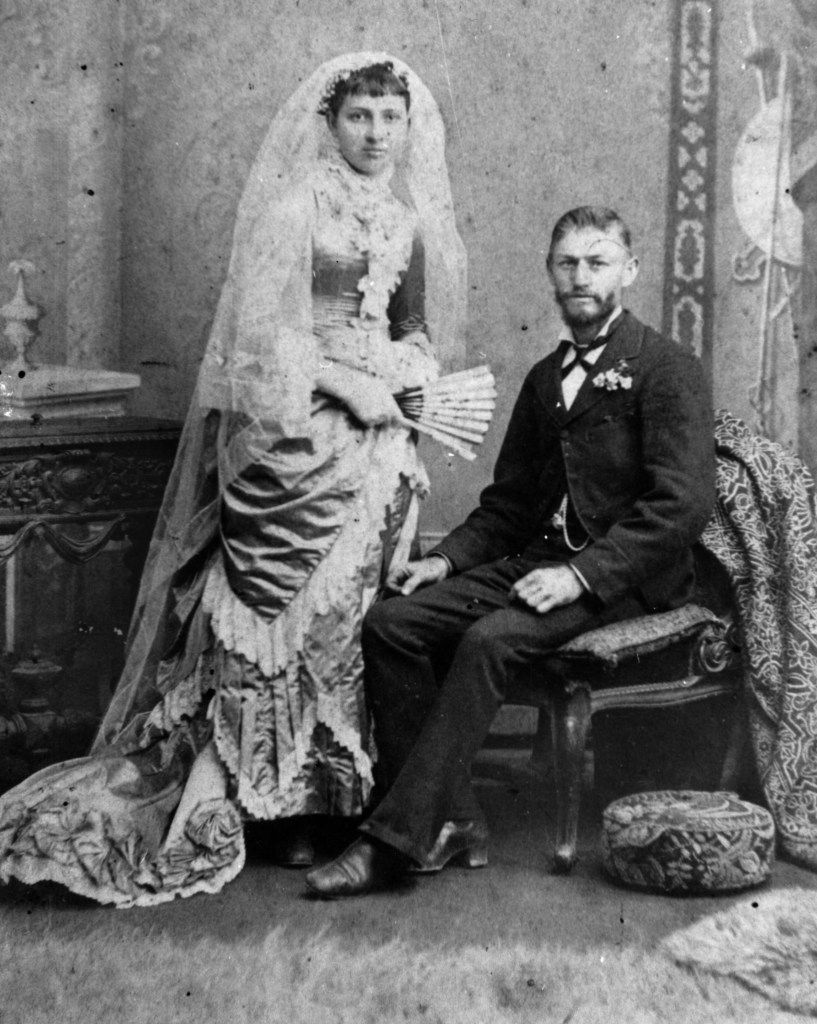
Amelia Seanigar wore a lot of bridal fashions all at once when she married Christoph Murr in 1886. She has ruffles and flounces, a wasp waist, a train, a veil and a fan. The wedding waltz would have been seriously impeded by this costume.
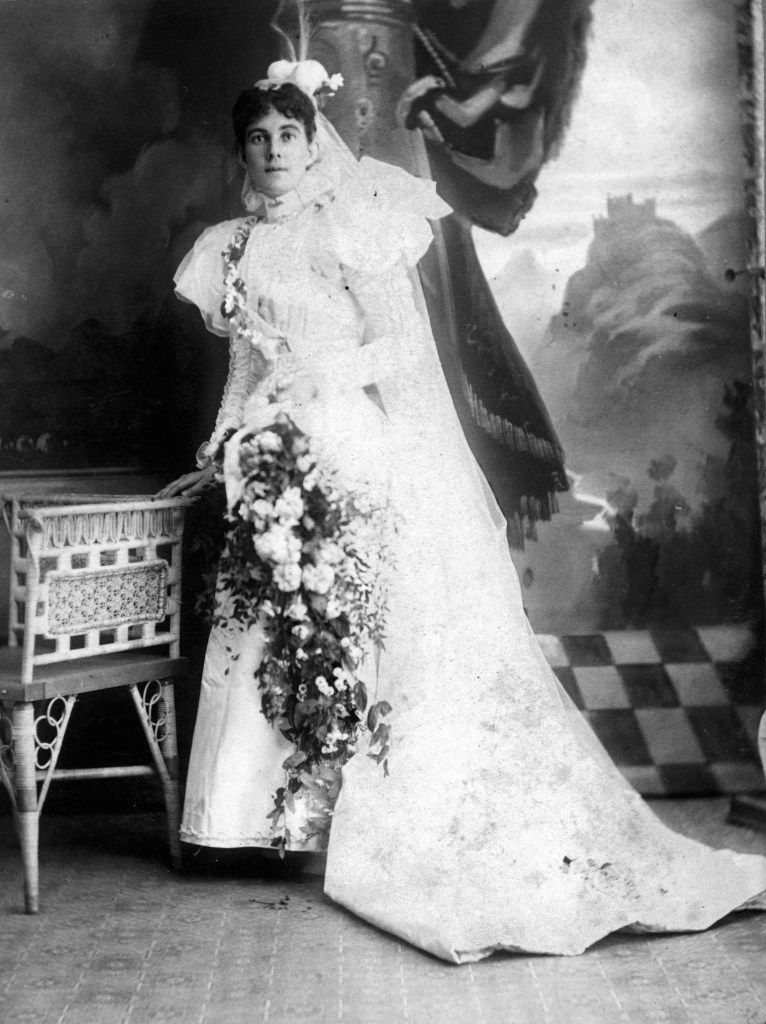
Doris Harris dispensed with the inconvenience of a long train, but made up for this restraint with the rest of her garment – puffed and ornate sleeves, embroidery, a clinched waist, high collar, and quite the most extraordinary veil-securing arrangement on top of her head.
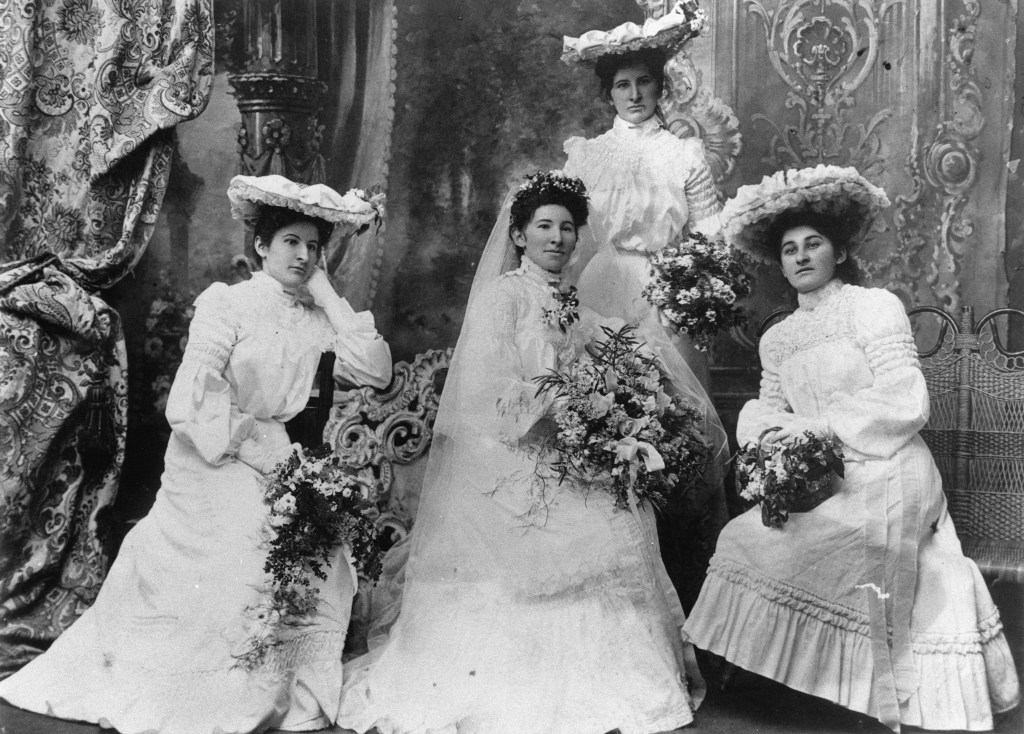
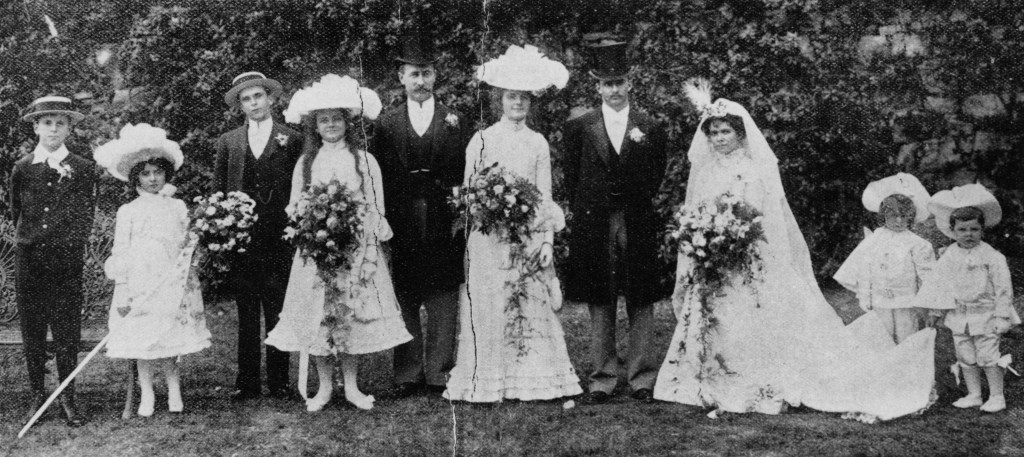
Whoever these ladies were, they were in the accepted fashion of 1900. The skirts were becoming more streamlined, and the waists less tortured. ‘Tortured’ would be a good word for the expressions of the bridesmaids under their floral flying saucer hats. The bride’s expression is that of a lady who won the arguments over the bridesmaid’s dresses.
 Moreton Bay and More