
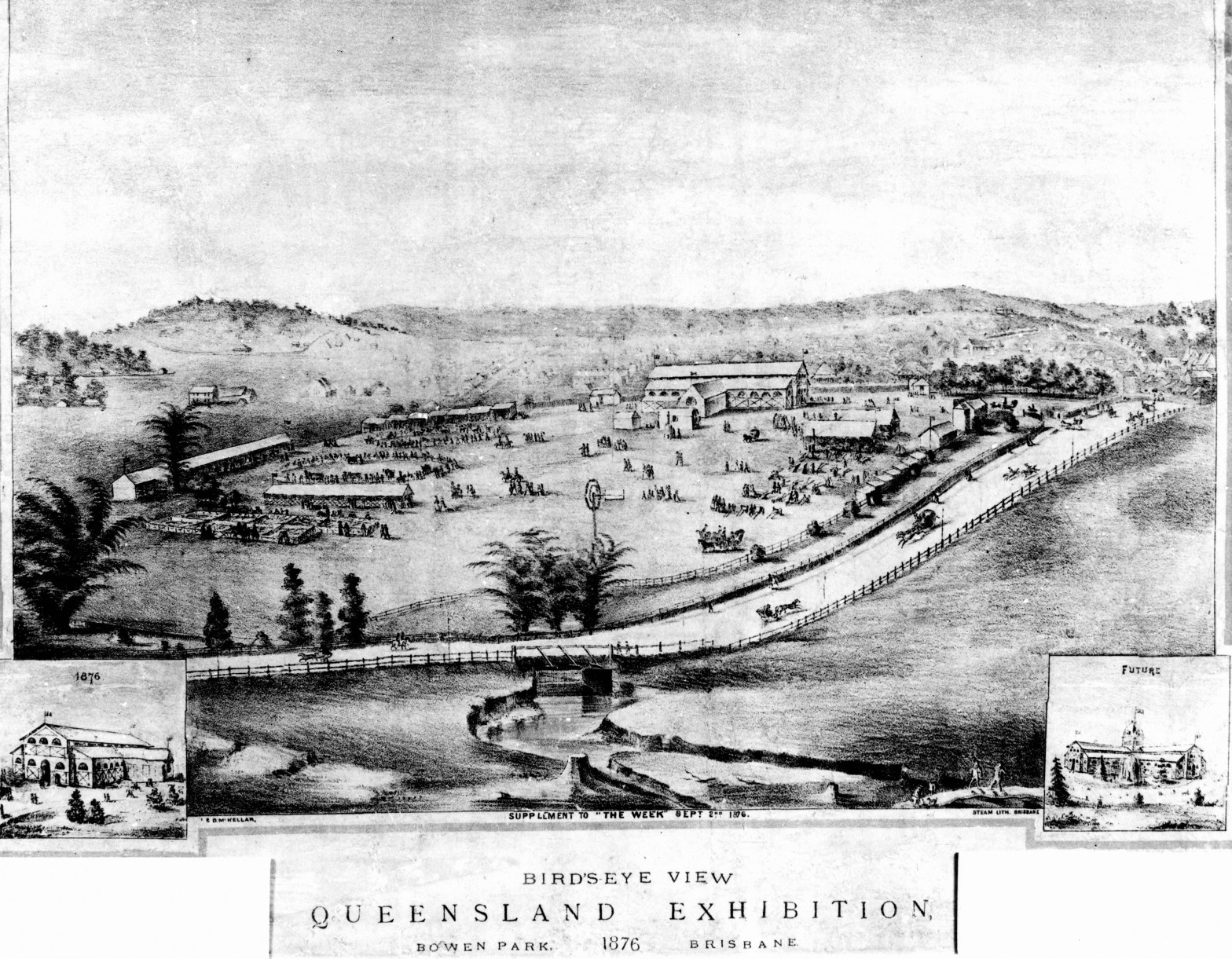
(Translation for non-Queenslanders: A visit to the Royal National Association Exhibition, an annual city-country fair held in Brisbane. It attracts hundreds of thousands of visitors over its fortnight of operation. Sort of like a State Fair. Because Australians in general and Queenslanders in particular have to shorten names, it became “the Ekka.” In my family, it was always just called it “the Show.”)
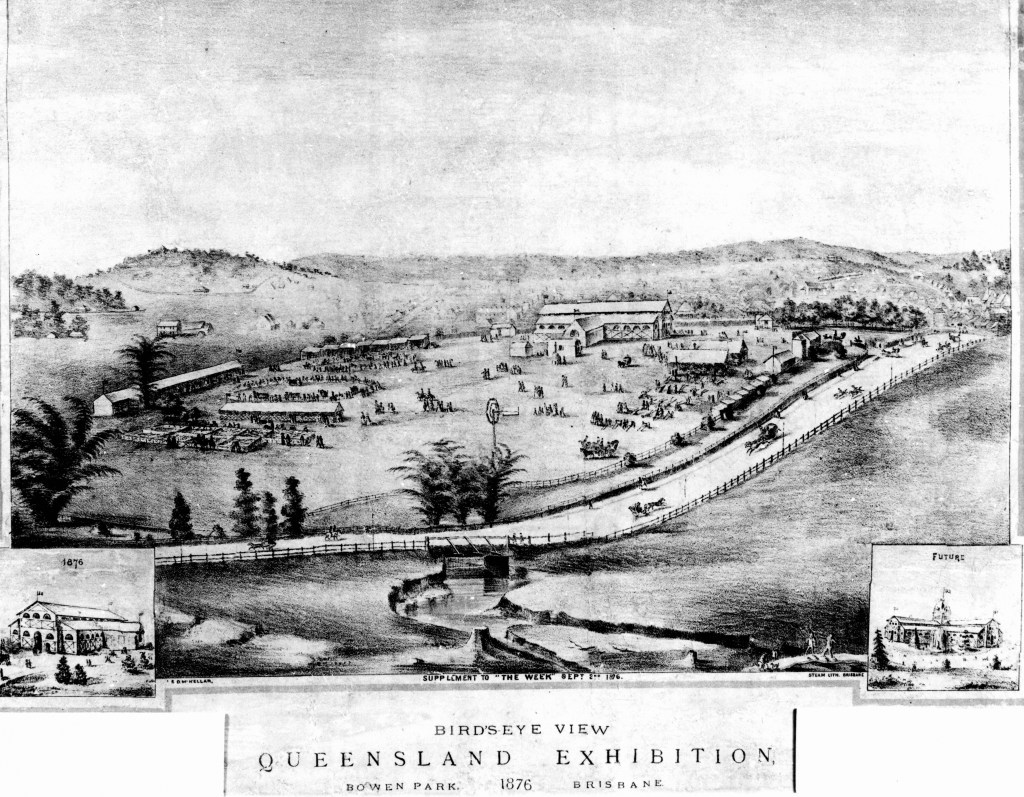
The Show started in 1876 as the Intercolonial Exhibition, and was held in Bowen Park. It still takes place in the same area of Bowen Hills, sprawled over a couple of large city blocks.
The Show started as an opportunity for Queensland rural and urban inventors and manufacturers to exhibit their goods. Samples of produce were given out, and they were actually free. Now, there’s an entire pavilion devoted to selling costly sample bags. A look at the RNA website shows a bewildering range of confectionary and promotional tie-ins (sporting teams, movie franchises and the like). Then there are the kids’ bags, which tell you everything you need to know about marketing and gender roles – the boys are offered fatigues, plastic hand grenades and assault rifles; the girls are offered bath bombs, eyeliner and hair clips. Bless.
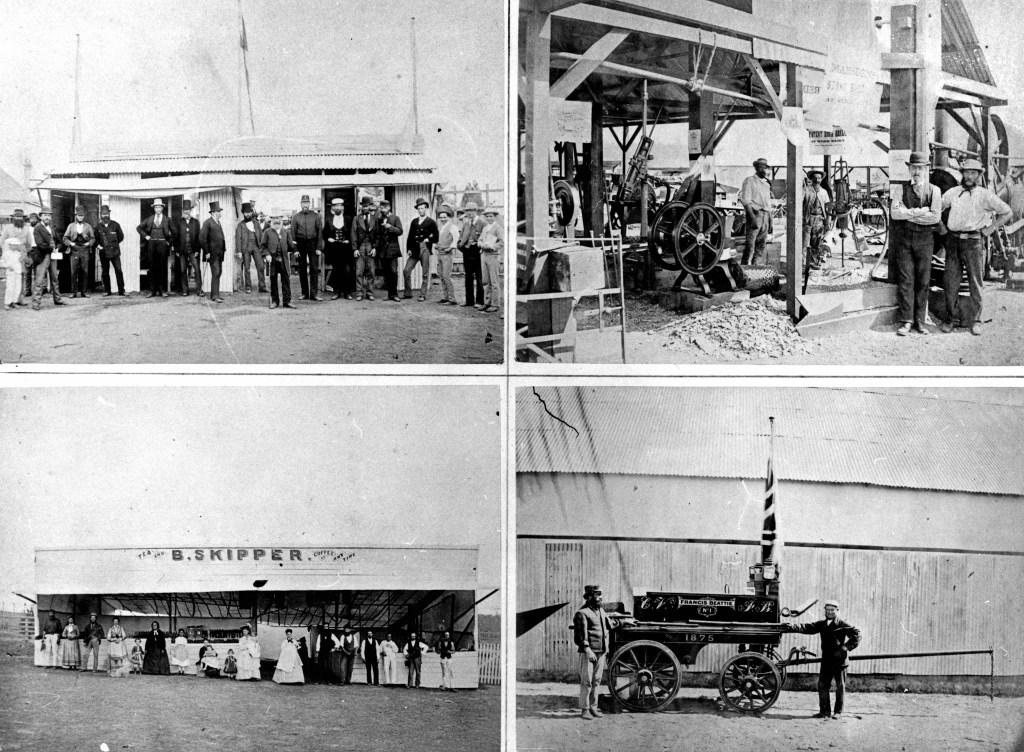
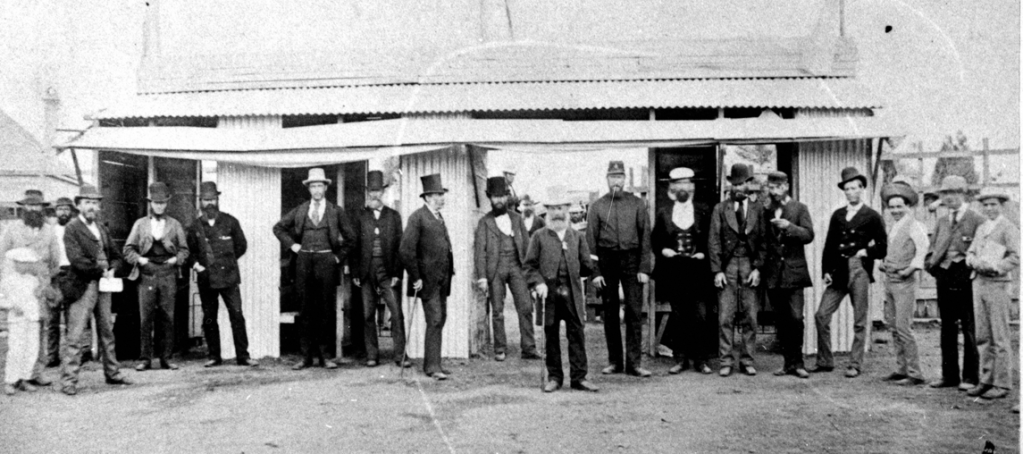
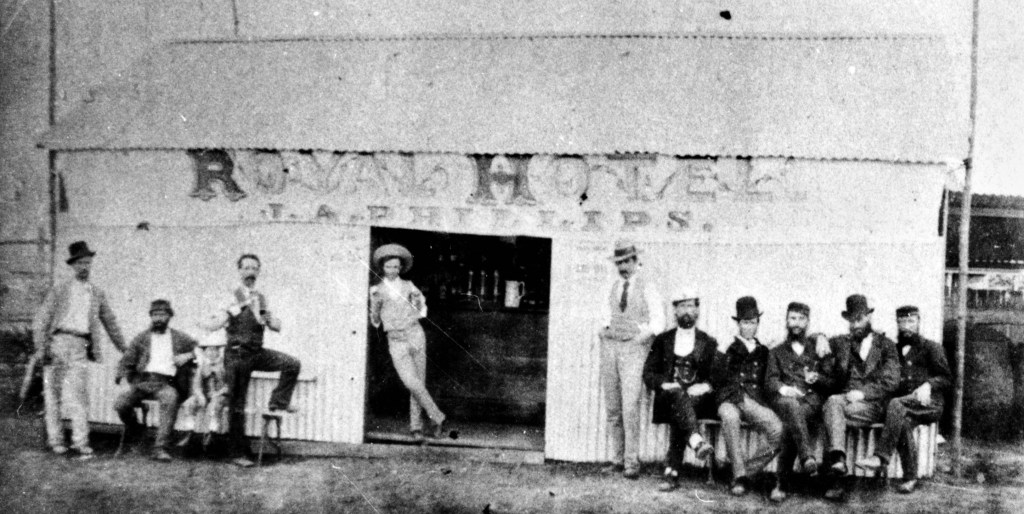
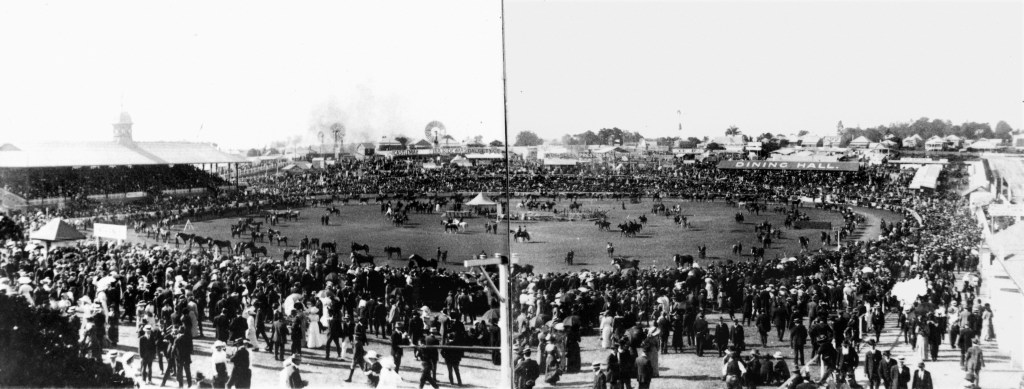
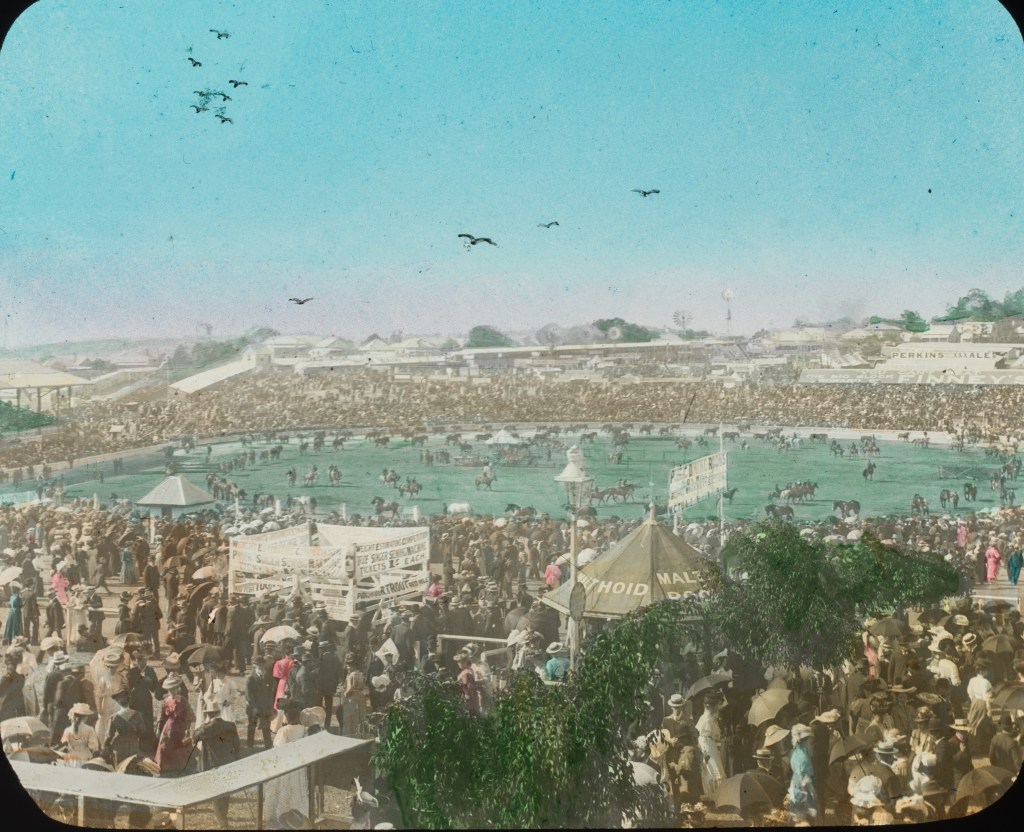
Here’s a visual trip through the Show, from its beginnings in 1876 to the early 20th century.
1876 Exhibition
The Governor opens the Exhibition
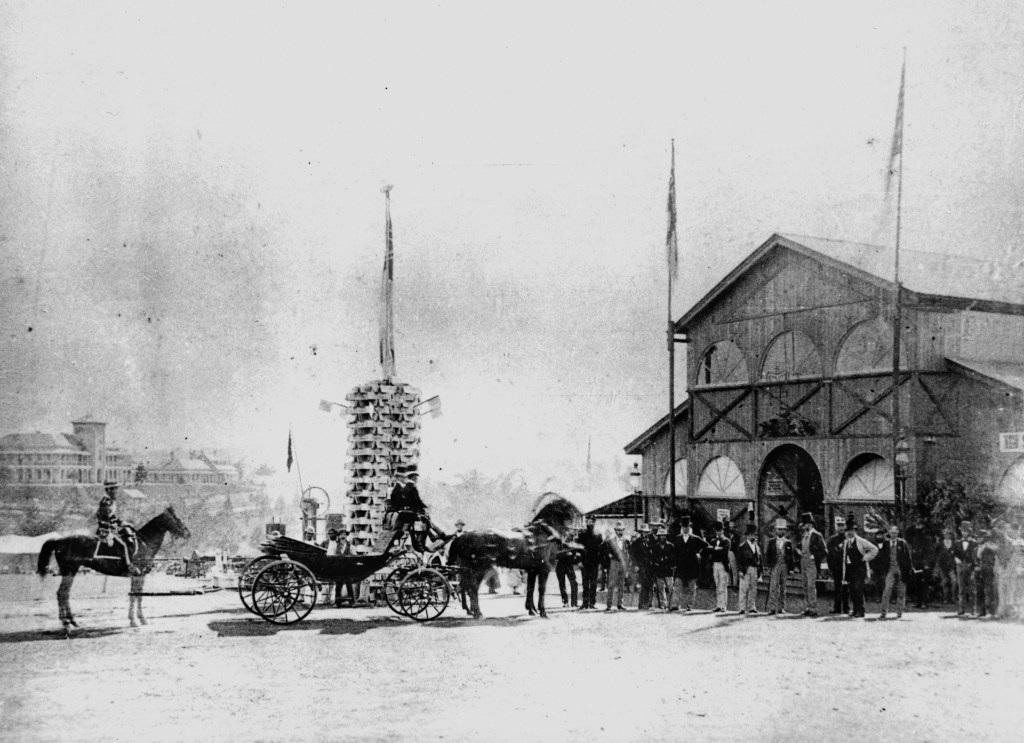

Governor Sir William Wellington Cairns opened the Intercolonial Exhibition. A famously sickly chap who loathed tropical weather, he was probably relieved that this little jamboree was being held in August, one of Brisbane’s cooler months.
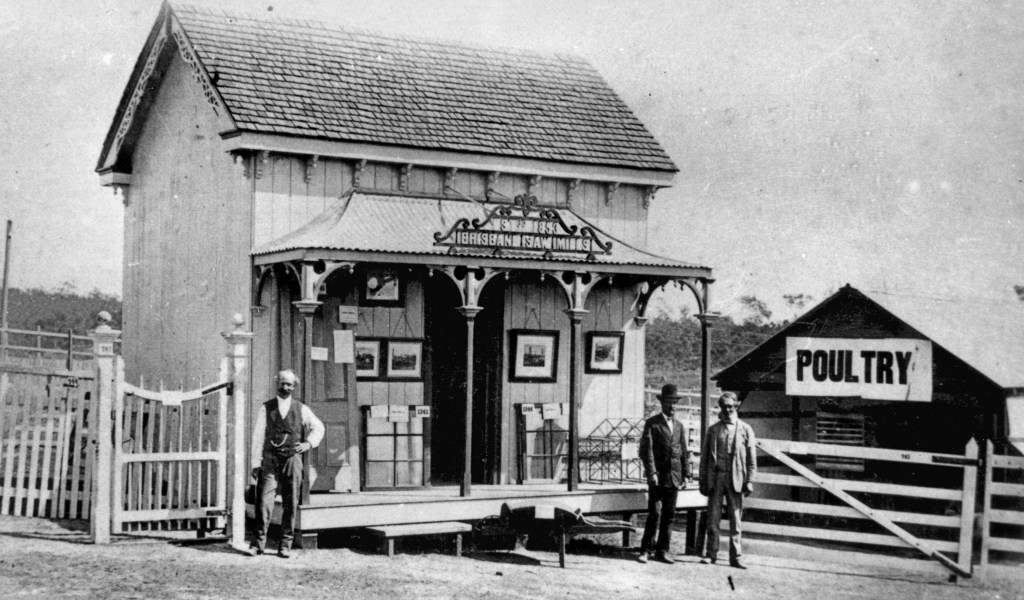
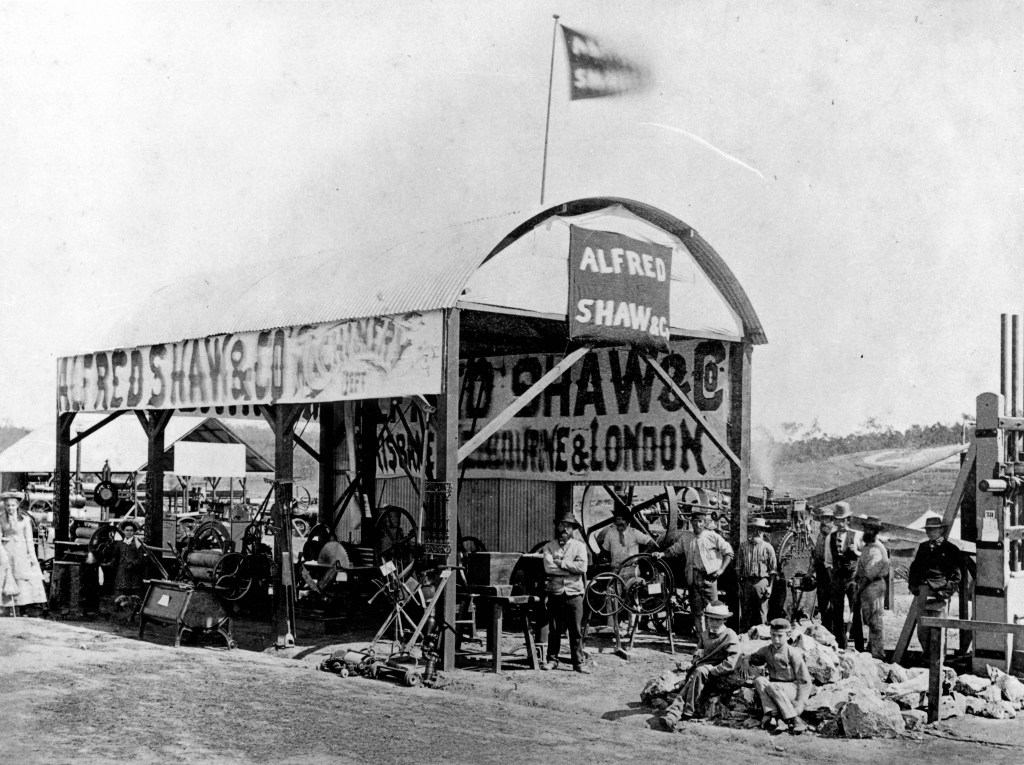
The Exhibits

Later Exhibitions
1877
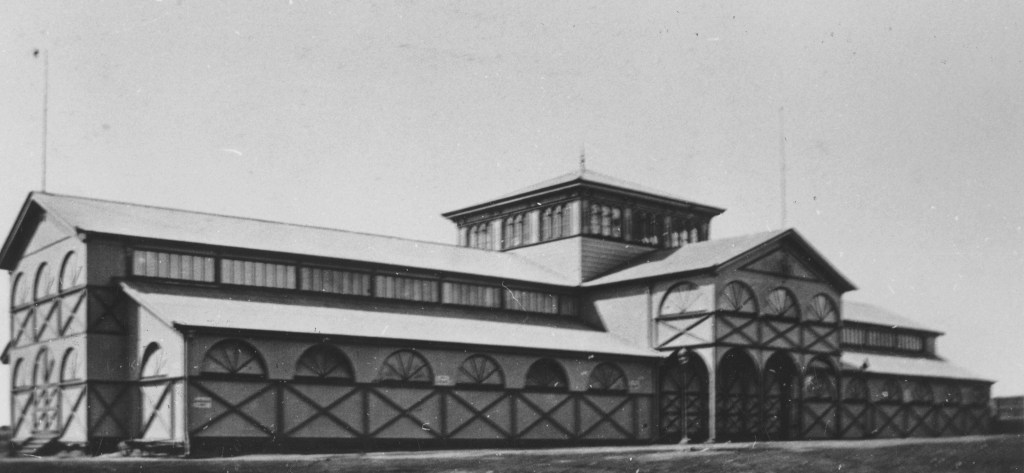

1896

1900 and beyond.



And lastly, an artist’s view of people arriving for the show in 1876 – no parking nightmares, crowded train platforms and buses. And a reminder of the time when Bowen Hills was practically in the countryside.
All images used in this post are taken from the Digital Collection of the State Library of Queensland.
 Moreton Bay and More
Have loved it since 1976. -M
LikeLike