
6 March 1882.
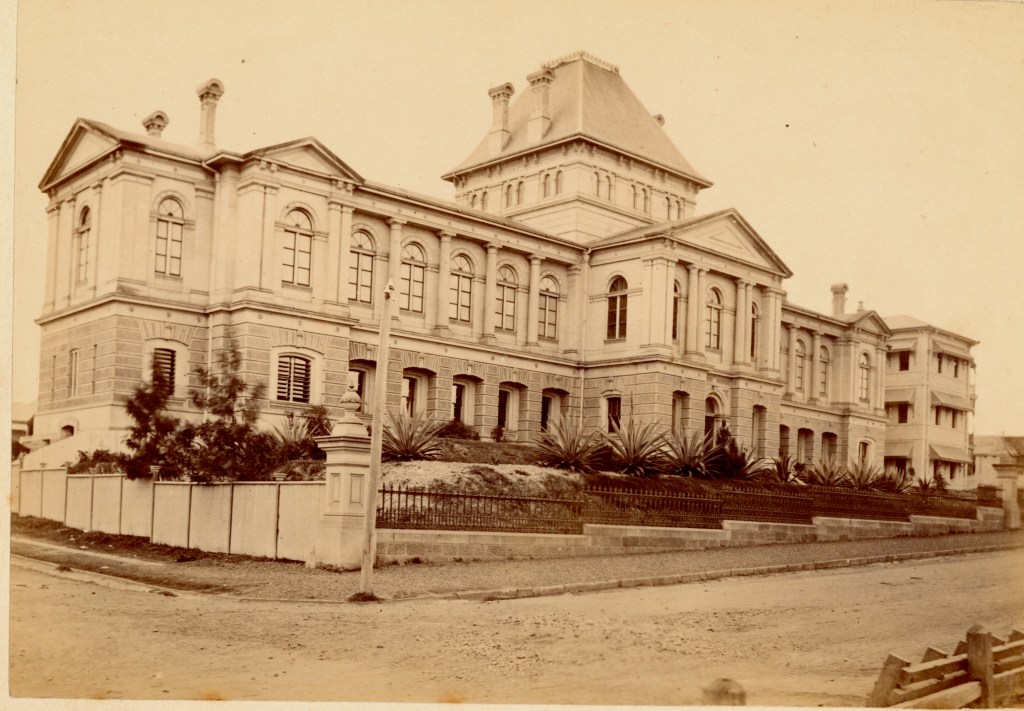
On 6 March 1882, a sensation occurred in the Queensland Supreme Court. It was reported on for weeks afterwards, debated and dissected endlessly. It was a conflict between two well-known – the Honourable Justice George Rogers Harding and the barrister, Mr. Frederick ffoulkes Swanwick.
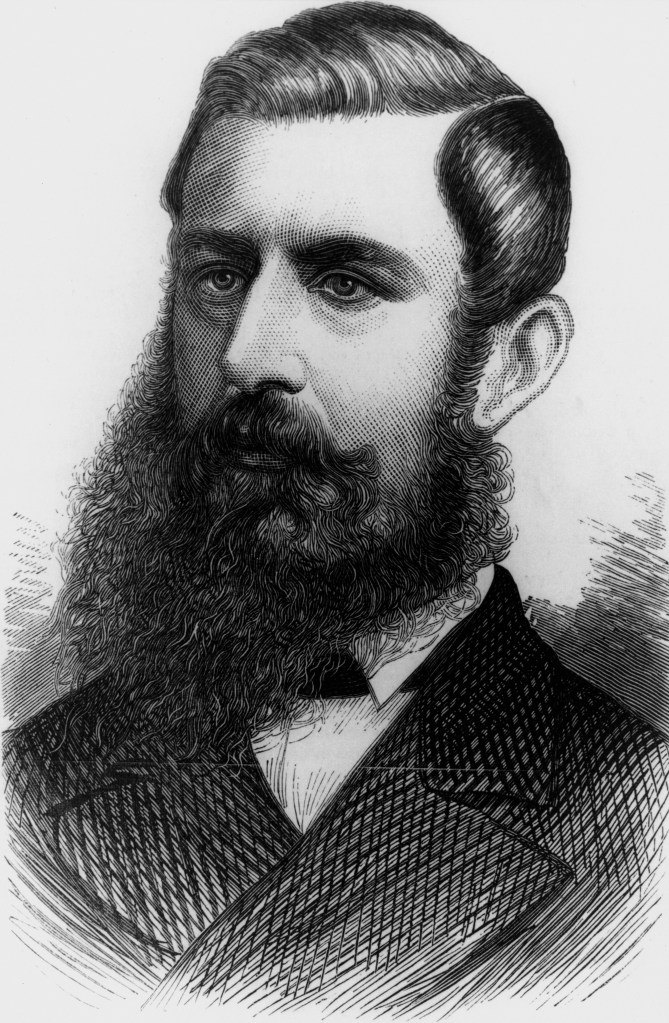
Justice Harding (1838-1895) was a distinguished jurist and author, who published his first work, “A Handy Book of Ecclesiastical Law” in 1861. He had married well, moved to the Colonies, had a residence in St. John’s Wood (Brisbane), and there played host to Princes Albert and George there. He died in office, literally, in 1895.
Mr. Frederick ffoulkes Swanwick (1839-1913), was a Lancashire-born politician and barrister. Swanwick had been a schoolteacher, and became one again after losing his seat and being struck off the Roll of the Queensland Bar for insolvency. These two unfortunate events also occurred in 1882.
CONTEMPT OF COURT.
The solemnity of the proceedings at the Supreme Court yesterday afternoon, in connection with the trial of Michael John Minnis for the murder of William Pillinger, was disturbed by an untoward incident which occurred during the summing up of Mr. Justice Harding.
His Honour was referring to the cases of circumstantial evidence cited by the counsel for the prisoner as instances where there had been a miscarriage of justice, when he observed Mr. Swanwick smiling and shaking his head, whereupon his Honour remarked, “The learned counsel shakes his head at me; I shall not allow it; I shall not be interrupted.”
Mr Swanwick rose to make some observation or explanation but was requested by the judge to sit down and be silent.
Mr Swanwick did not resume his seat, but asked, “Will your Honour permit me to speak?”
His Honour: “I shall not permit it in the least; constable, remove him.”
A policeman standing near the table here walked towards Mr. Swanwick to enforce the injunctions of the judge.
Mr. Swanwick: “Does Your Honour wish me to retire?”
His Honour: “No; conduct yourself with propriety; I shall not be interrupted.”
Mr. Swanwick: “I am entirely in your Honour’s hands.”
His Honour: “I know it.”
Mr. Swanwick, again rising to speak, the judge turned to a policeman and instructed him to “Stand by the side of Mr. Swanwick, not so near as to annoy counsel, but near enough to carry out my orders.”
Mr. Swanwick: “Perhaps your Honour will show me courtesy.”
His Honour: “No.”
Mr. Swanwick: “Thank you; I did not expect it from your Honour.”
His Honour: “You will show cause immediately why at the rising of this court you shall not be committed to her Majesty’s gaol for contempt of court. Mr. Associate, make a note of Mr. Swanwick’s words.”
Mr. Swanwick: “Perhaps your Honour will allow the Associate to take down your Honour’s words first.”
His Honour: “You stand committed at the rising of this court to her Majesty’s gaol until tomorrow morning at 9 o’clock.”
Mr. Swanwick: “I understood you to say that you would give me to the rising of the court to show cause.”
His Honour: “Well, you are wrong; I called upon you to show cause instanter.”
Mr. Swanwick: “This reason; I never had, I never shall have, the slightest intention of showing any disrespect either to your Honour or to any judge of this learned court sitting as your Honour does not; I apologise.”
His Honour: “Very well, do not interrupt me anymore; I accept your apology.”
Mr. Swanwick: “Then I understand I am not committed.”
His Honour: “No.”
The judge then resumed his summing up.
The defendant Minnis was eventually convicted and sentenced to life for manslaughter. By the end of 1882, Mr. Swanwick was the subject of several complaints to the Bar Association, and was struck off the Rolls.
The Telegraph (Brisbane, Qld.: 1872-1847), Tuesday 7 March 1882, page 2.
The images of the Supreme Court of Queensland 1886 and Justice Harding 1879 are both from the digital collection of the State Library of Queensland. The image of Mr. Swanwick is taken from one in the records of the Queensland Parliament.
 Moreton Bay and More