
Separation from New South Wales, exploration and the gold rushes of the 1860s had opened up Queensland. Towns were proclaimed, from the tropical north to the far west, and businesses and infrastructure followed. Railways would gradually cross the colony, replacing the bullock teams and carts that slowly dragged goods across rough bush tracks and over creeks. Here are some images of Queenslanders at work in the 60s and 70s.
the last days of horse-power
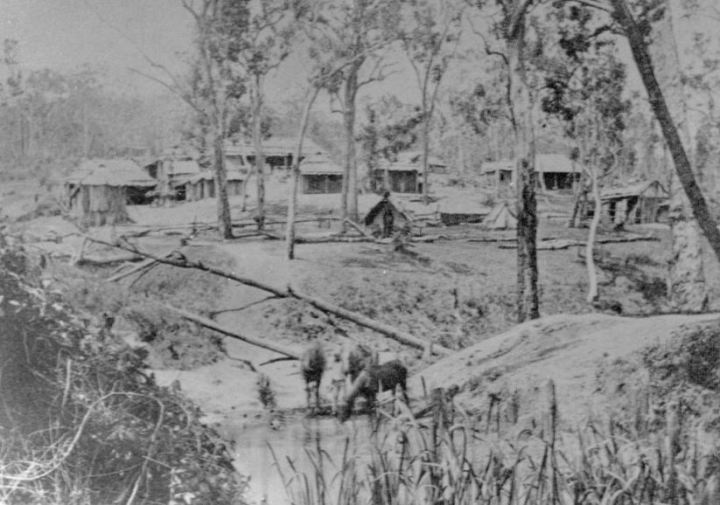
The railways were built using manual labour, horses and bullocks. It took so long that the workers lived in huts onsite. This photograph shows how laborious the work could be.
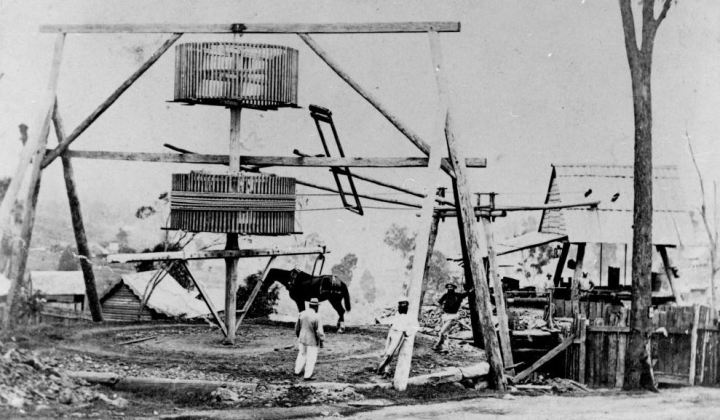
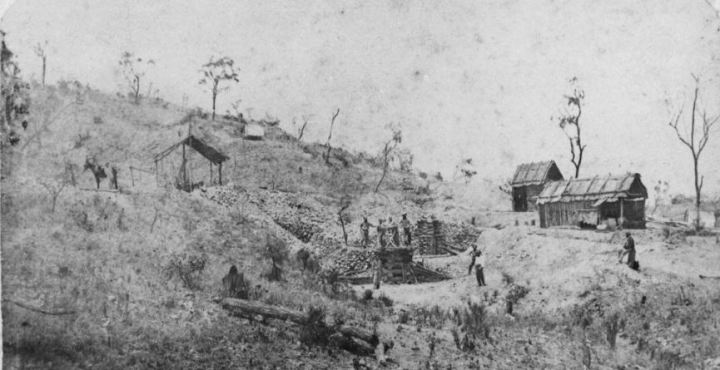
The cutting edge of mining technology, circa 1870, involved a machine called a whim, which hoisted water or ore out of the mine – all powered by the humble horse. The two labourers in the photo are doing what I call the Colonial Lean – very few working men pictured in Australia in the 19th century stand erect, they lean on things or slouch in apparent indifference. Hard work in hot weather, and a resentment of authority, I suspect.
Mining
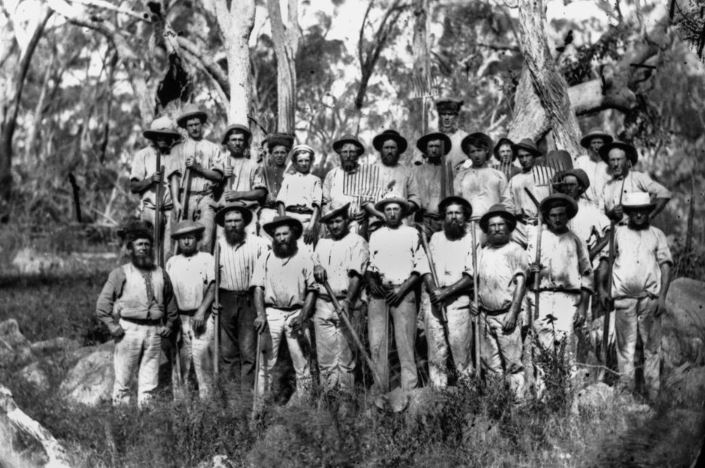
Miners worked with picks and shovels in the 70s, just as they had for generations before. Attired in the unofficial working man’s uniform of Crimean shirts, calico trowsers and cabbage-tree hats, the bearded men, and one or two beardless boys at the back, pose solemnly for posterity.
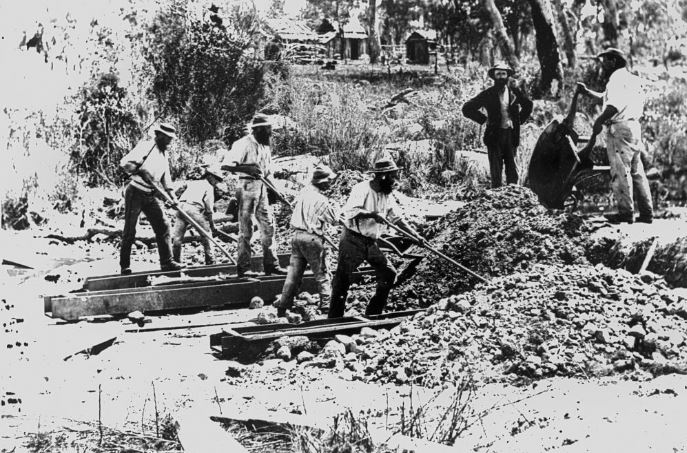
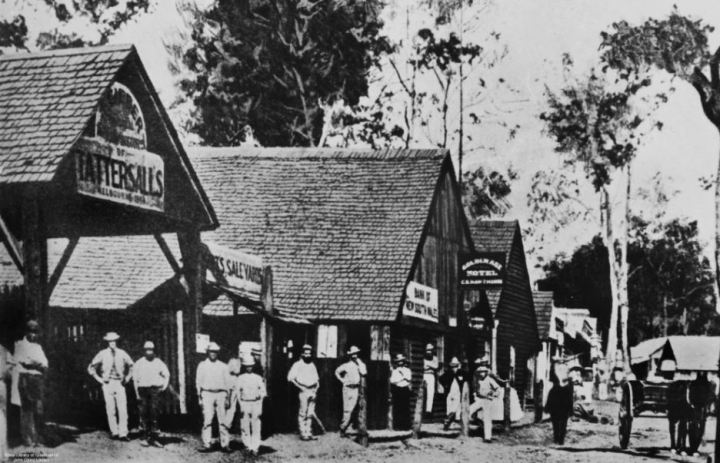
Gold brought people, money, hotels and, perhaps unsurprisingly, Tattersall’s, to Gympie. Couple of splendid Colonial Leans going on there, too.
the sugar industry
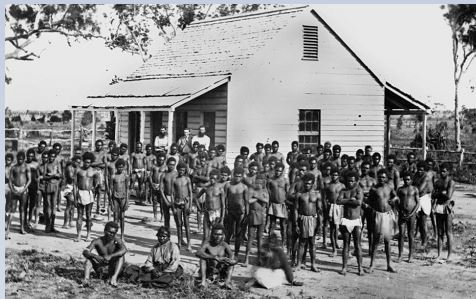
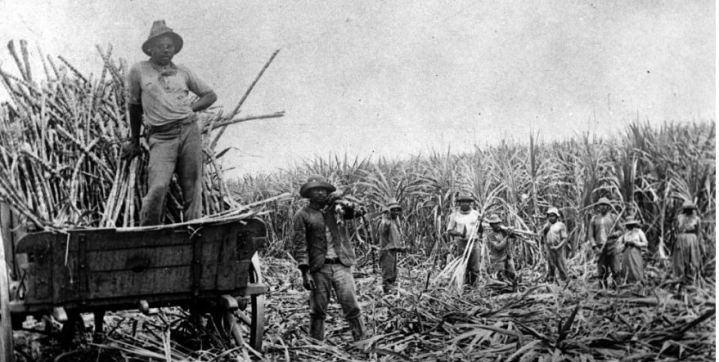
Much of Queensland’s sugar industry was built on the labour of pacific island people lured or tricked, or just plain kidnapped to work in Australia. The trade reached Queensland in 1863, not ending until 1904. People were ‘recruited’ from countries including Vanuatu, Papua New Guinea and Fiji. The payment of nominal wages allowed plantation owners to claim that the people under their control were not enslaved, but the conditions under which the ‘kanakas’ lived and worked, argued otherwise. How this human trafficking affected the families and societies left behind is still being understood.
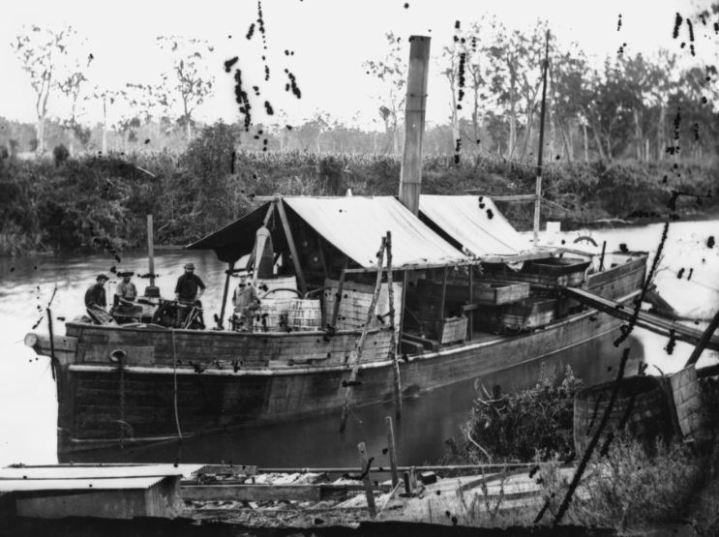
Far from the vast plantations of the tropical north, the smaller holdings in the south east enjoyed the services of the Walrus, a floating sugar mill. Something I admit I’d never heard of.
businesses in town
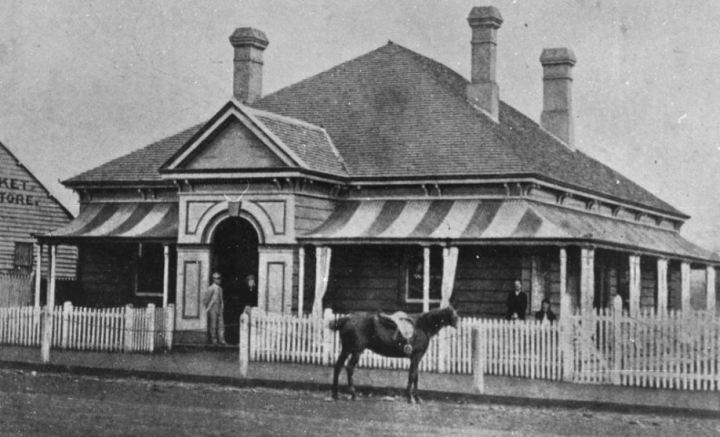
Every town needed a bank, and in Toowoomba the bank had an awning, shady verandah and arched entrance suitable for a Colonial Lean. Street parking included.
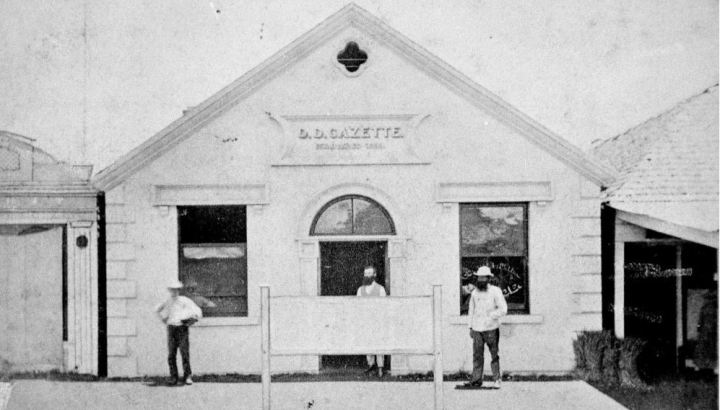
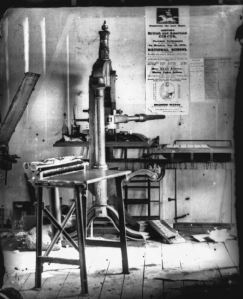
Stannum Miner, Stanthorpe, 1872
As people moved across the Colony, establishing towns, locally-based newspapers opened up, ending the dominance of the Moreton Bay Courier, Sydney papers and “papers from home.” At last, local voices were heard and local interests served (although rabble-rousing was quite common too – see: the long suffering Indigenous and Chinese and just about every newspaper north of the Tweed).
meanwhile in the capital…
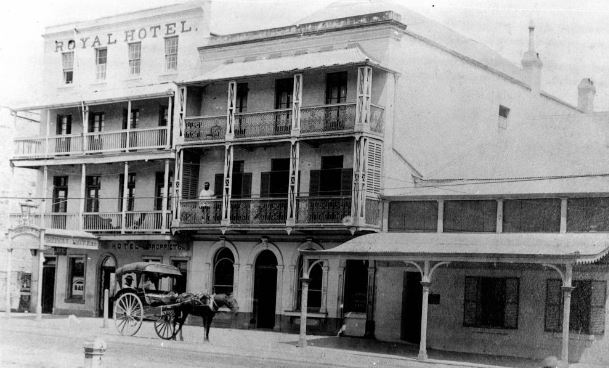
After the Great Fire of 1864, it occurred to town planners and businesses that somewhat more substantial buildings might be a good idea. Aside from Parliament, the Royal Hotel was one of the better buildings of the time, valet parking included. Still, we couldn’t quite let go of the small, tatty, Wild West Town shops, as the pictures below demonstrate.
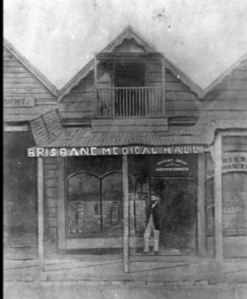
discovered that this place was a Chemist’s.
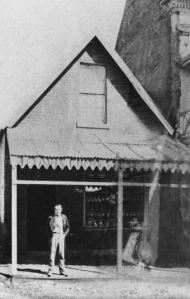
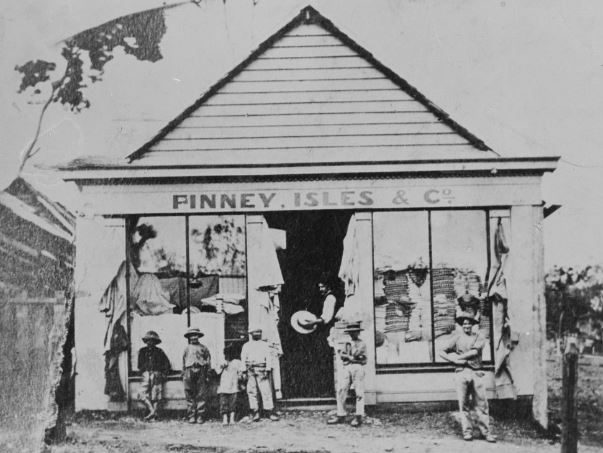
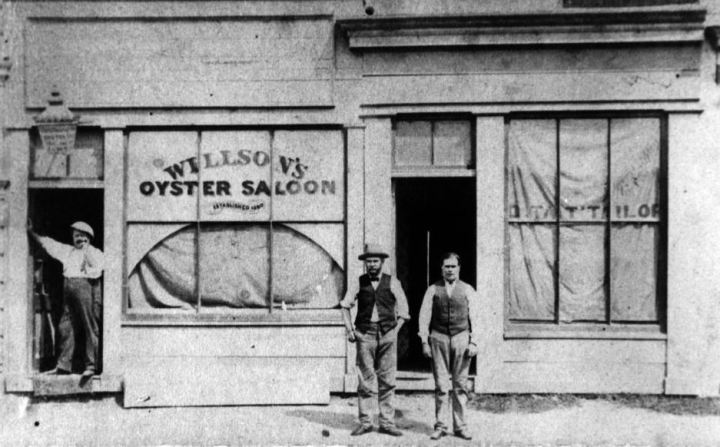
Brisbane 1872.
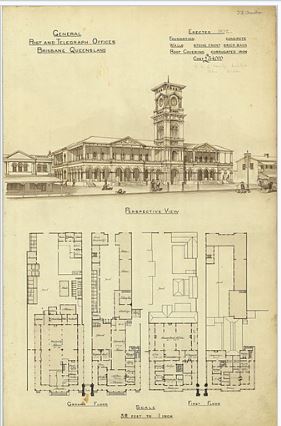
But seriously, the town was beginning to grow. The 1870s would see the building of the General Post Office, still in use, on the site of the old Female Factory. John Petrie was the principal contractor, and an important part of the Petrie legacy for Brisbane has been the family’s sound and tasteful stonemasonry.
The wharves grew busier, and at Petrie Bight the Gas Works had already cast its imposing shadow on the town.
We were ready for the boom of the 1880s.
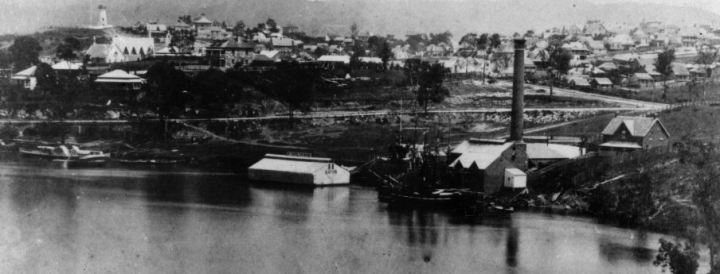
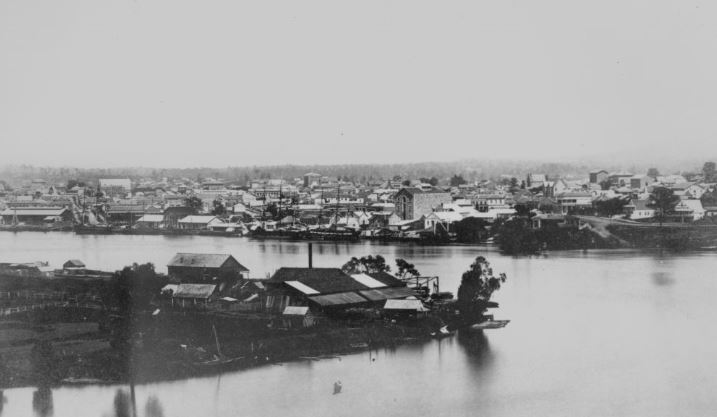
All images are from the collection of the State Library of Queensland.
Information on Pacific Islander plantation workers from: https://www.abc.net.au/news/2017-09-17/blackbirding-australias-history-of-kidnapping-pacific-islanders/8860754

