
It was 1847. The convict settlement was gone and free settlers had begun to come in to Brisbane Town. A few small houses and stores had begun to crop up on the main street – Queen Street – and at remote places like South Brisbane and Kangaroo Point. A few rough pubs and inns catered for the locals and visiting squatters. A local newspaper had started. And a detachment of soldiers from the 99th Regiment remained quartered at the Barracks.
Life must have been very dull for the young men at the Soldiers’ Barracks. While other detachments went to the turbulent frontier country of New Zealand, this lot were stuck in a small town with ticket of leave convicts, small business holders and passing shepherds.

They were a long way from home. The mails from England took months. When not on duty, there wasn’t a lot to do. The fascinating Mrs Bailey lived in a red-curtained establishment with a surprisingly refined cellar at the end of George Street, but her attentions tended towards the officer class.
Alcohol consumption was the resort of privates of the 99th, and they took, in vast quantities, what they could get their hands on. And so, poor George Kirk lost his life to a very rough brew, on the picturesque Windmill Hill, overlooking the sleepy hamlet.
FATAL EFFECTS OF INTEMPERANCE.
– An inquiry was held by the Police Magistrate on a view of the body of a private of the 99th Regiment, named George Kirk, who was found dead near the Windmill on Thursday morning. The circumstances attending the death of this unfortunate man are as follows:
Thomas Holmes, private 99th Regiment, deposed that at about half-past four o’clock on Wednesday while taking a walk he observed some of his comrades going up the Windmill Hill, and on reaching there he found them seated on the ground with a keg of spirits before them, which he was invited to partake of.
He remained there about an hour when the deceased George Kirk came up, sat down, and drank some of the spirits; he soon became drunk, and towards dark the only man who appeared to be sober was Bedford. The latter was then asked to assist the witness in getting the men to the Barracks. They tried to lift a man named Clark, and while doing so, the deceased called to Holmes, and on going to him found him lying on the grass very drunk, and without his forage cap. The cap was searched for, and not being able to find it, he returned, and found the deceased asleep. The witness and his companion tried to lift him, but were unable to do so, and they returned to the Barracks, leaving four men besides the deceased sleeping on the hill.

He did not report the circumstances to the Sergeant, fearing that the men would have a “down” upon him for telling they were drunk. He also thought when he got to the Barracks he should be able to persuade some of the men to fetch their comrades home, but it was too late. There was a civilian in company with the soldiers who had procured the spirits, but he left the hill before the witness and his comrade.
The rum was very strong, and several of the party drank it out of small tin pots. The deceased had one full can of raw spirits; he did not see him drink it, but he had often noticed him when drinking raw spirits, which had a great effect upon him, as he could not stand much. There was neither quarrelling nor fighting amongst the men, for they were too drunk to fight; some of them could not speak.
James Bedford, on being sworn, corroborated the evidence of the last witness, and stated that the deceased (George Kirk), Robert Clough, John Cavanagh and James Morgan were left on the ground.
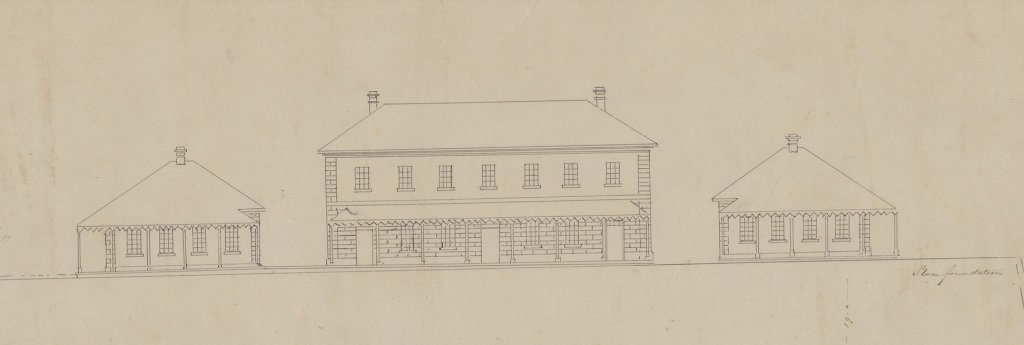
Corporal Byron stated that at about seven o’clock on Thursday morning he was ordered by the Colour-Sergeant to proceed with an escort in search of four men who were absent from the Barracks, the deceased being one of them. He went with his party to Windmill Hill, where he found two soldiers lying on the ground, and recognised them to be George Kirk and Robert Clough.
The former was dead, and his body cold. He appeared to have vomited a great deal. The latter was taken to the Hospital, apparently in a state of stupefaction from the effects of the liquor he had drunk on the previous evening. A post-mortem examination was held upon the body of the deceased subsequently by Dr Ballow, from which it was clearly ascertained that his death had been caused by excessive drinking. We hope and trust that this young man’s awful death will be a lesson to those who indulge in the pernicious practice of drinking raw spirits. Let them bear in mind the 20th chapter of Proverbs, “Wine is a mocker; strong drink is raging; whosoever is deceived thereby is not wise.”
The Moreton Bay Courier, Sat 17 April 1847, page 3.
 Moreton Bay and More