
Quarries
We had them, of course. And alarmingly close to houses, by the looks of things. I was aware of the rock-breaking activities in the early days at Kangaroo Point, but hadn’t quite imagined this, and just a short walk from the centre of town. But it does explain why there’s a Quarry Street in Spring Hill.


Queen Street
In the late 1830s, the first Supervisor of Works, Andrew Petrie, marked out a track from the Convict settlement buildings to his home near the river, thinking that a road might one day be formed there. And so we have Queen Street.


Queen’s Wharf
This wharf site has been in use since late 1825. Goods brought in by ship were unloaded into the Commissariat Stores. As the years went by, the little landing became a busy hub. The wharf and the Commissariat are still there, but expect to see a rather enormous hotel and casino around them.

Queen’s Gardens
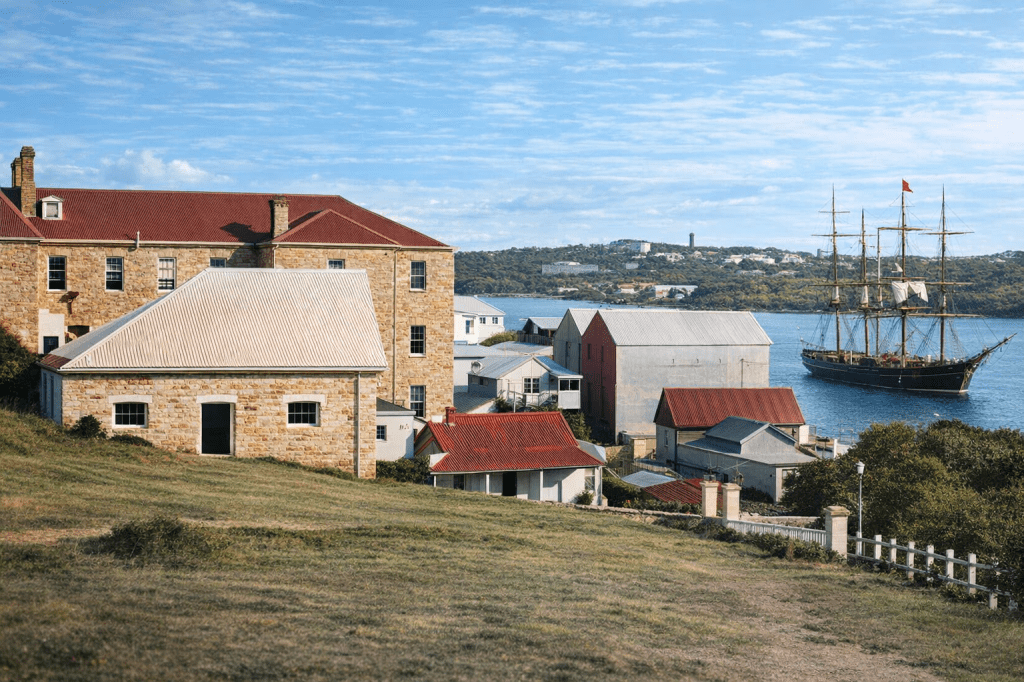
Queen’s Gardens is a park area, spanning from George to William Streets. The park came into being after 1905, on an area with deep connections to European history in Brisbane.
The site was first used as a lumber yard in 1825, with a cottage on the corner closest to William Street. Workshops and offices followed until 1848, when the Church of England acquired the site. A parsonage, then St John’s Anglican Church and pro-Cathedral was built. After all manner of local administrative fuss, the site eventually became the Executive Gardens, then Queen’s Gardens (although locals often refer to it as Queen’s Park). After even more local fuss, statues of Queen Victoria and a politician named TJ Ryan were installed, together with a 1917 Krupp field gun. There was probably a sound reason for this. The gun, I mean.

Racing
Horse racing is a beloved part of Brisbane’s recreational culture, and has been from the beginning of free settlement.
The Races. 1846.
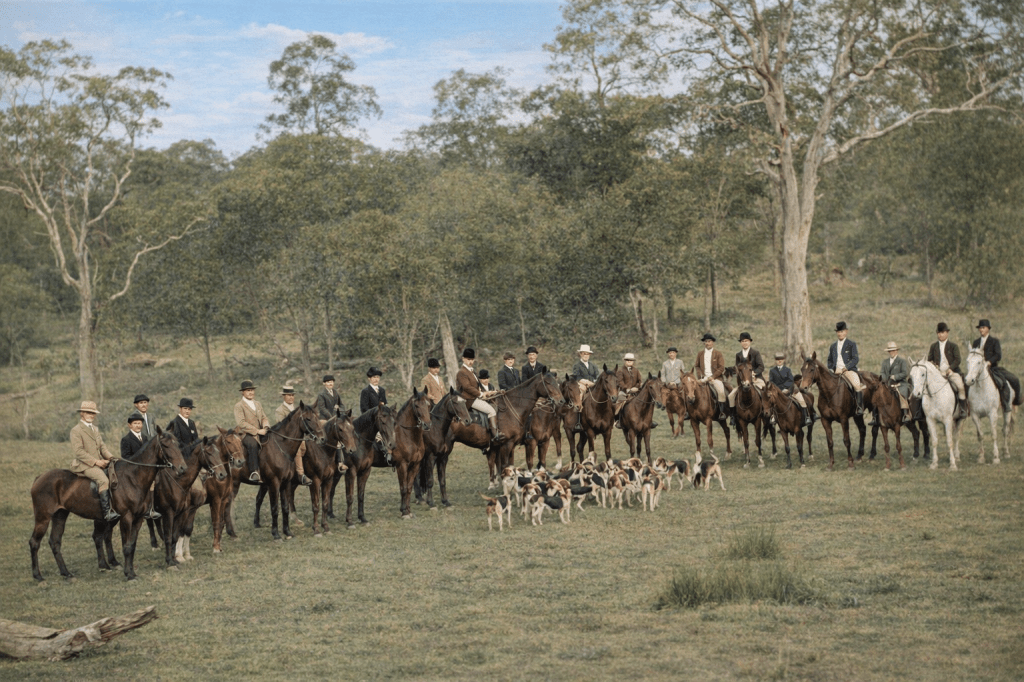
THE Annual Meeting of the Moreton Bay Racing Club took place at the Race Course, New Farm, on Tuesday and two following days in the past week. The attendance on the course was not only numerous but boasting more than an average of respectability. The sun shone brightly, and, judging from the happy faces of the holiday folks, it was evident that all came there to enjoy themselves, and to take part in the amusements. The greater part of the assembled throng consisted of pedestrians, who like ourselves, chose to make use of that far-famed animal known as Shanks’ mare for the occasion. There was a goodly number of the fair sex dressed out in holiday attire, which with the bright costumes of the gentleman-jockeys, gave a most animated appearance to the scene. It only wanted a band of music to add to the harmony of the proceedings, and make the mirth and excitement complete.
The Moreton Bay Courier, Saturday 20 June 1846.


Redcliffe
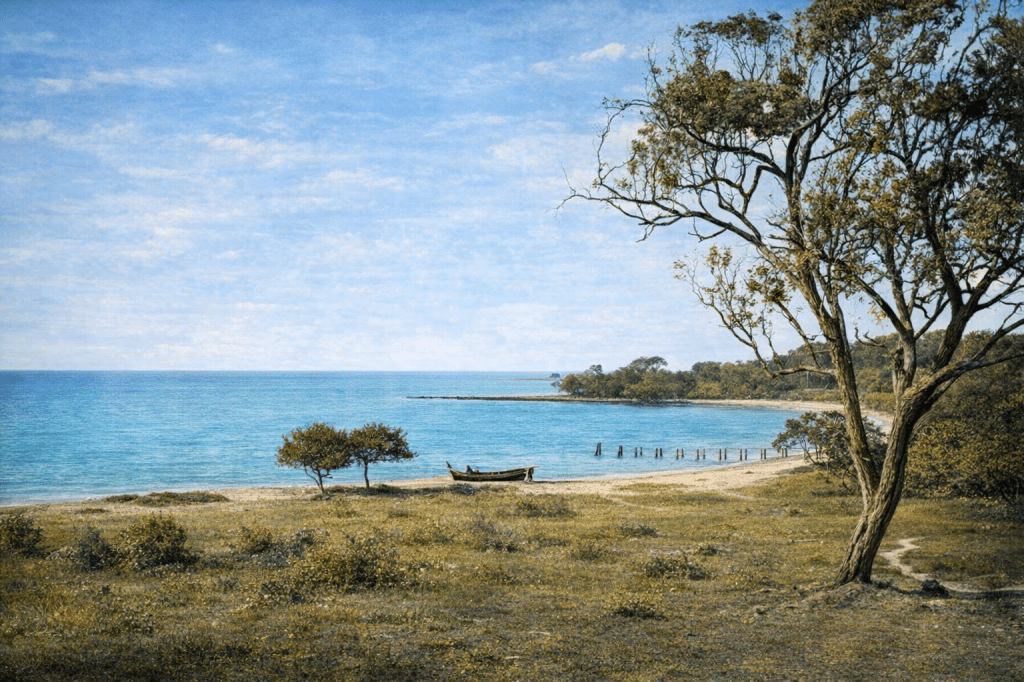
Not technically in Brisbane, but Redcliffe is the reason Brisbane exists, so I can’t resist including it. (Redcliffe was chosen as the original site of the penal colony in 1824, but conditions were difficult, and it was decided to go up that nearby river, and see what could be set up there.)


Red Hill
Close to town, and delightfully hilly and breezy, Red Hill grew quickly in the late 19th and early 20th centuries.


Rocklea
Now residential and industrial, Rocklea was once the Rocky Water Holes, and entirely rural.
Roma Street
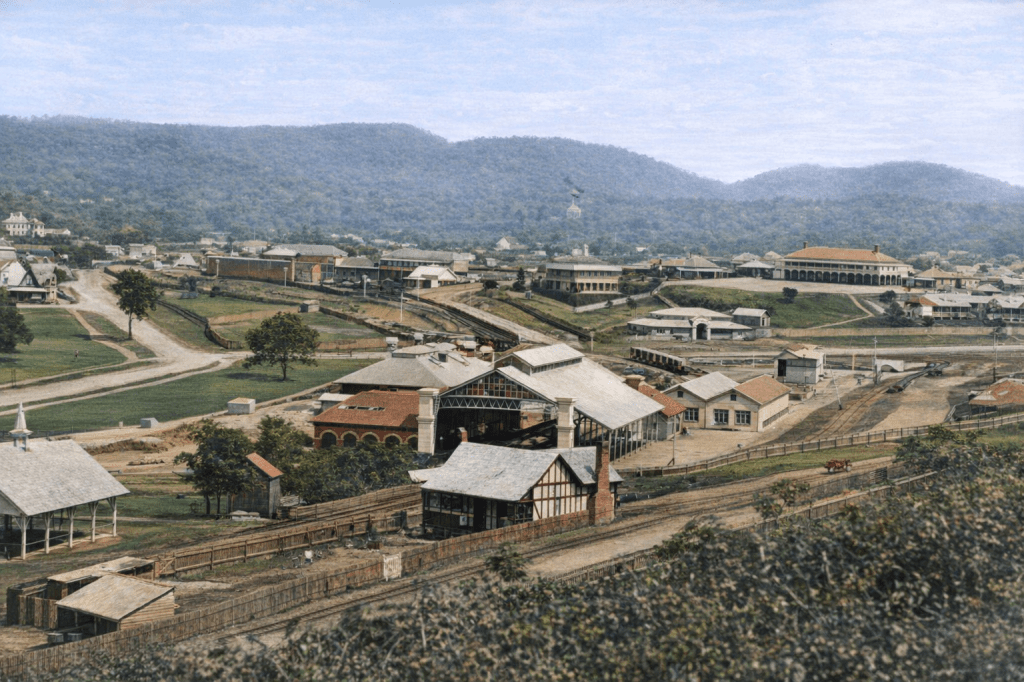
Roma Street was named for the Contessa Diamantina di Roma, Lady Bowen, who was the wife of Queensland’s first Governor. The presence of a genuine aristocrat, with a glamorous European title to boot, was almost too much for old Brisbane. Everything that could be named for Bowen and his wife was, and Lady Bowen had such a variety of names to choose from. There was the town of Roma, Countess Street, the Diamantina River, the Diamantina Hospital and Roma Street. Roma Street is best known for its railway station, and rail travel came to Queensland during the Bowen era.


Rosalie
Rosalie no longer exists. It’s considered part of Paddington now, and it seems unlikely at this stage that it will be returned to suburb status, Petrie Terrace-style.




Moreton Bay Courier (Brisbane, Qld.: 1846 – 1861), Saturday 20 June 1846, page 2.
AI generated painting of the 1846 Race Day by CoPilot.
Queensland Places website.
Wikipedia
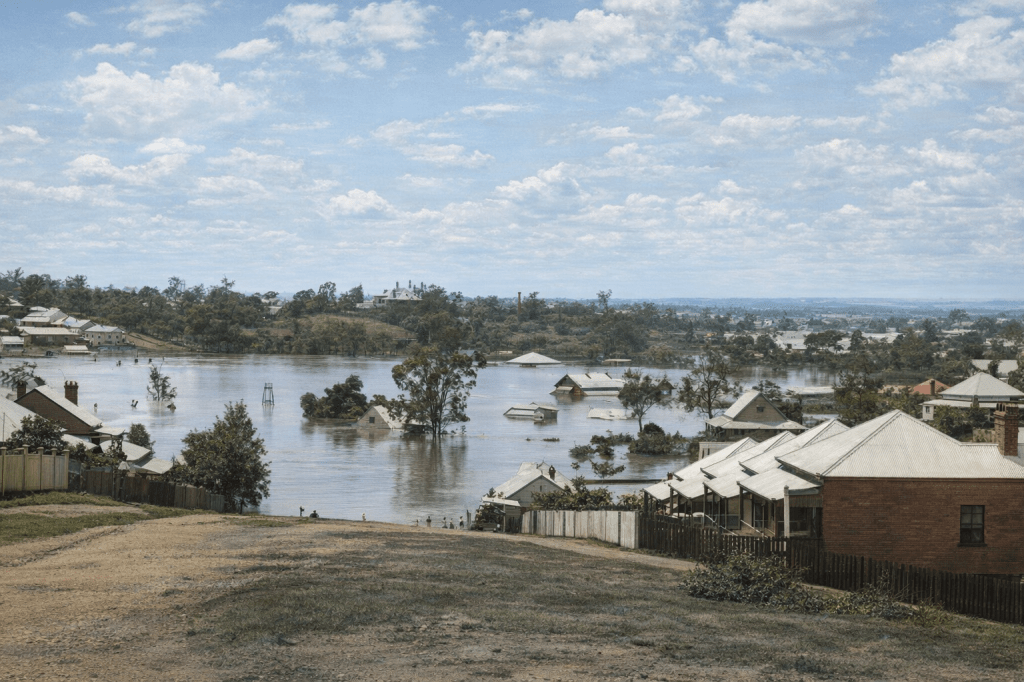
All images (apart from 1846 race painting) are taken from the digital collection of the State Library of Queensland and are out of copyright. AI colourisation by CoPilot.

