
Mackay, on the Coral Sea coast of Queensland, grew into a town with a lot of help from the sugar industry. There are endless photographs from its early years that depict enormous plantation homesteads and the lives of their owners and families. There are also many photographs of the South Sea Island labourers who worked for these families, often under conditions that amounted to slavery. The wealth that flowed from the sugar industry was reflected in the public buildings of Mackay, some of which stand today.
There were also ordinary people leading ordinary lives as the township grew over the years. Mackay was and is more than a plantation town.
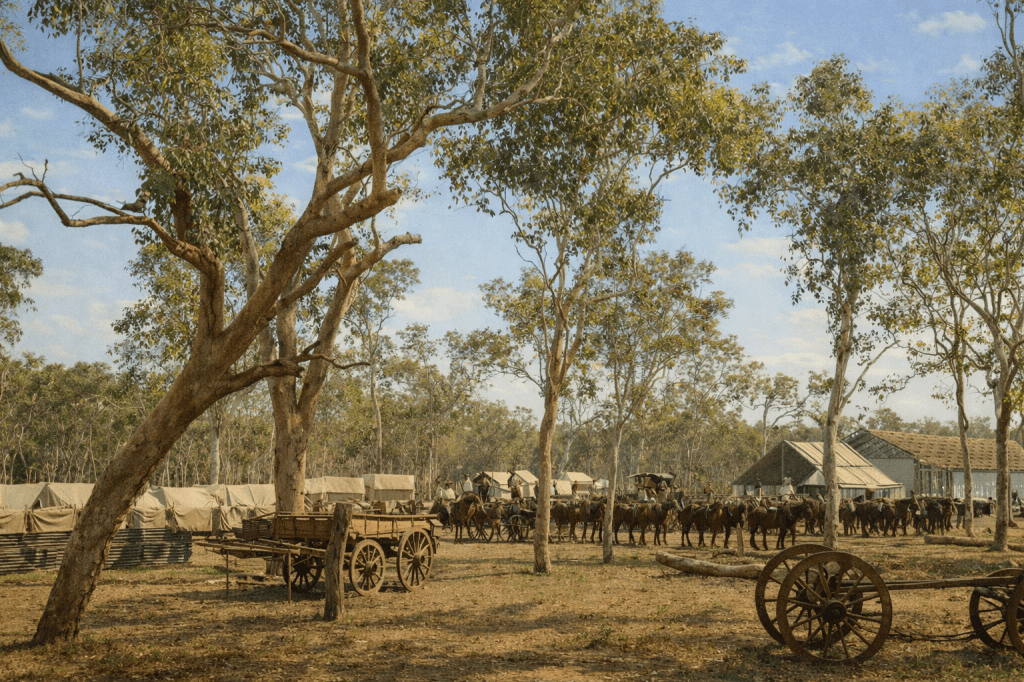
The Vice-Regal Visit in 1883.
As the Mackay wharves were approached, the south bank of the river, on which the town is situated, was seen to be crowded with people. The skipper of the Porpoise, as he steamed up the river, fired off a cannon at uncertain intervals, and his reports were responded to from small guns on some of the shipping in port. The men engaged in erecting a protecting wall in the river bad in the absence of bunting hoisted on their derrick all the coloured handkerchiefs they could muster, and as the Governor passed they let fall the immense weight with which they were driving piles, and gave three cheers for his Excellency.
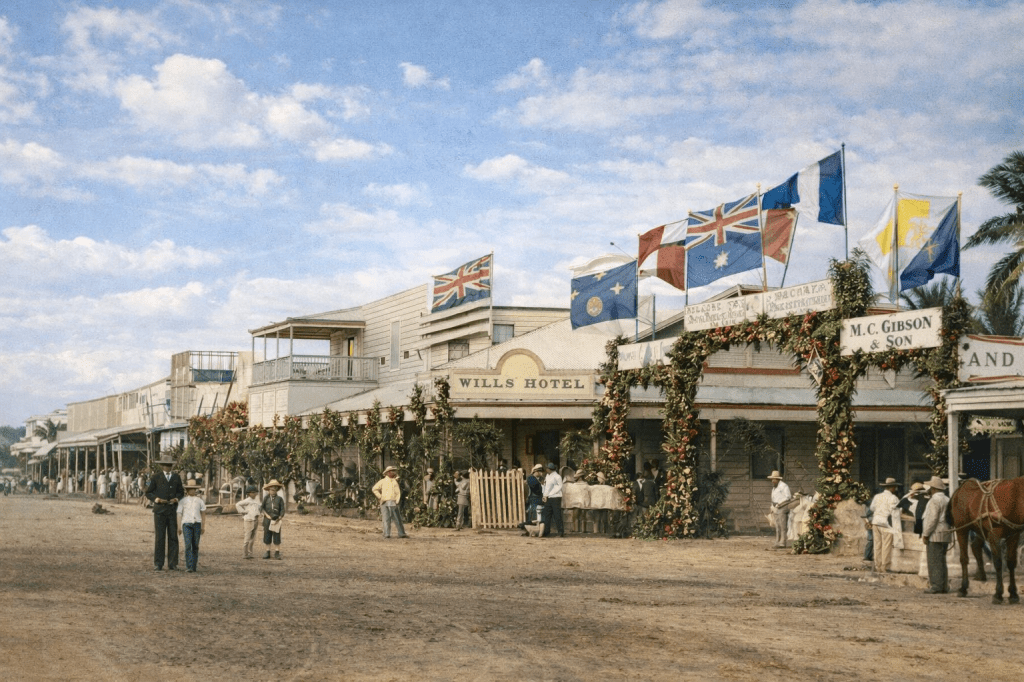
The town was gaily decorated with bunting, palms, and green bushes, and presented a very festive appearance. The A.J.S. Bank was particularly conspicuous for the excellence of its decorations, while close by, at the corner of Victoria and Sydney streets, a handsome triumphal arch bearing appropriate inscriptions had been erected.
Mackay Post Office.
Amhurst wanted to know if the Premier would enlarge the Mackay Post-office? What with letters from unruly constituents, and frequent telegrams from Thorn, he thought a larger place required. It seems Thorn does not think so — at present.
Maryborough Chronicle, 1876
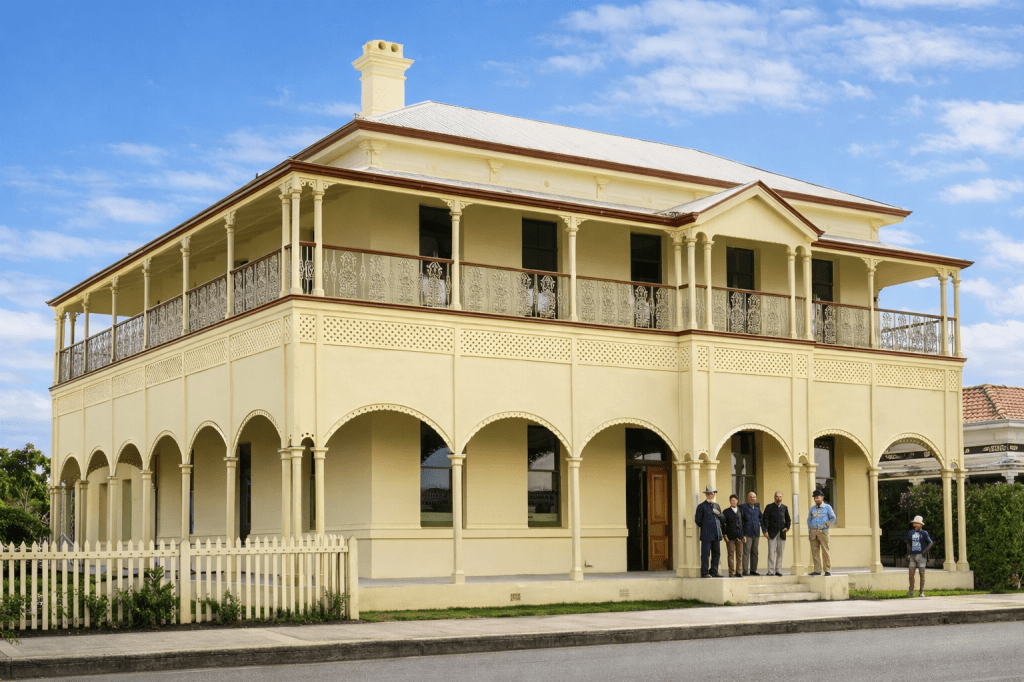
Flat-top Island Lighthouse.
It is satisfactory to find that the Government have decided upon erecting a lighthouse on Flat-top Island. At present the flagstaff on the Island does duty as the lighthouse, the light being hoisted up to its position and lowered down by ropes every day. This as well as other troublesome work that has to be done before the beacon can be exhibited will, of course, cease when a proper house to fix it in is erected.
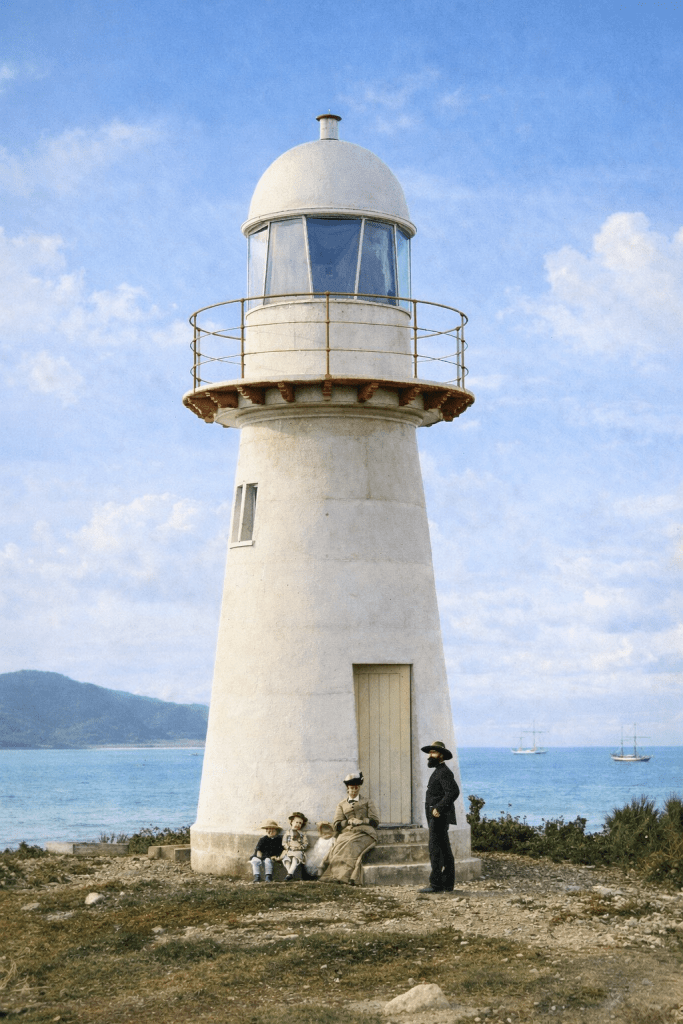
The Australian Joint Stock Bank.
We had also an opportunity of inspecting a number of columns that have recently been cast by Mr Robertson, to the order of Messrs. Tracy and South, the contractors. The columns are for the Australian Joint Stock Bank, which is in course of erection in Victoria-Street. They are diminishing in proper proportions and have a correct Doric moulded base, and we need not say that the cap or abacus partakes of the character, being finished with the laurel leaf and berry.
The Mackay Mercury, 1880
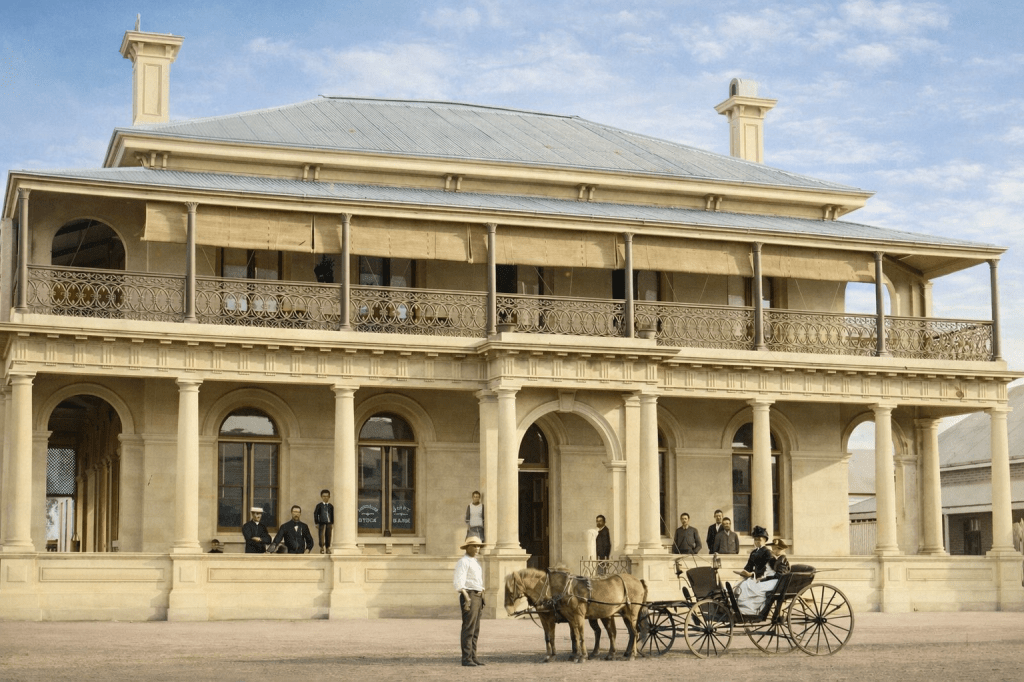
We may finally supplement our former description by referring to the exceedingly elaborate fittings which have been erected in the public banking room. Stepping from under the verandah the room is entered by a porch having two swing doors hung on climax spring hinges. To the left is the accountant’s counter and to the right the teller’s counter 12 ft by 4 ft 8 ins, with a passage leading to the general clerk’s desks which are sealed from the public and rendered private by a richly moulded panel framing 5 ft 6 in in height. The fronts of the counters have raised moulded panels, carved trusses and a projection of counter-top elaborately moulded, with a deep cedar plinth. Now that the extensive business of the Bank is being conducted within the building, great convenience and comfort are being experienced every day.
The Mackay Mercury 1881.
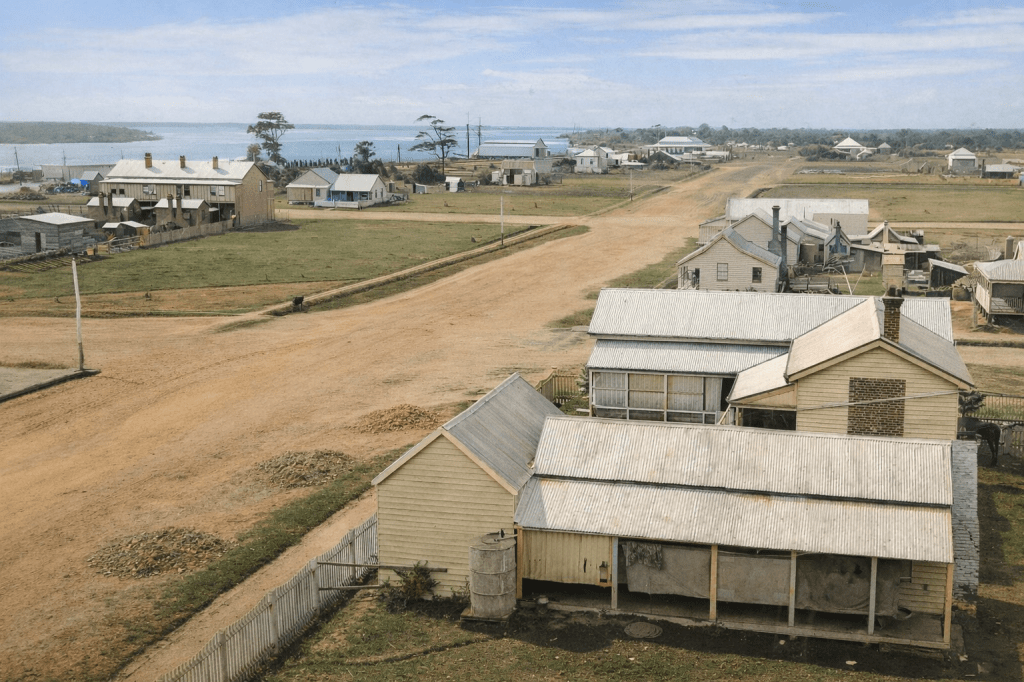
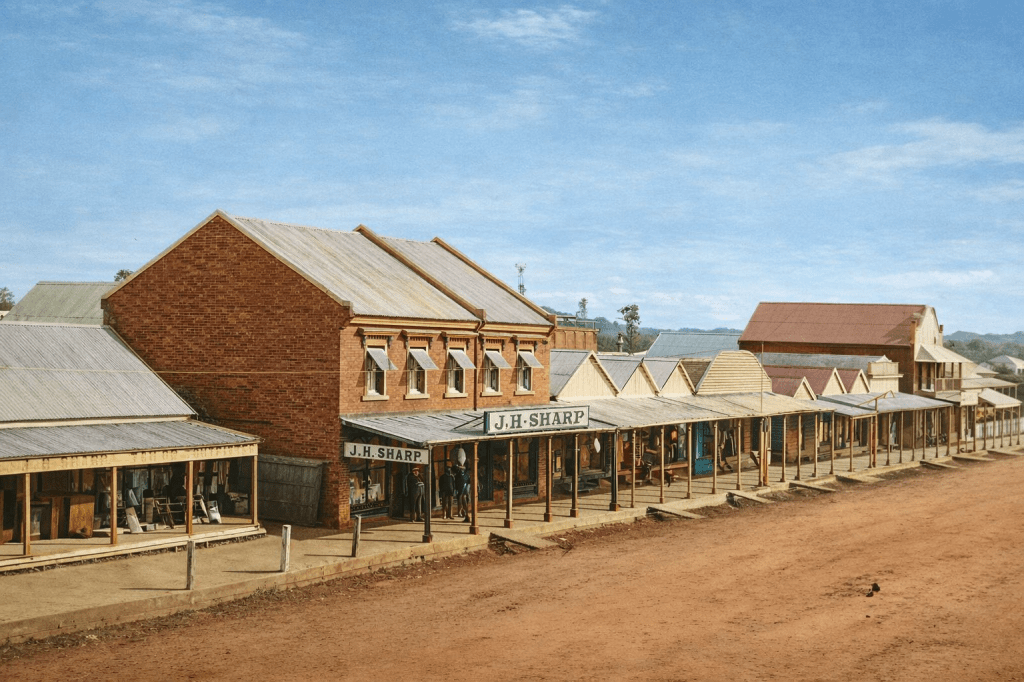
Views of Mackay in 1883.
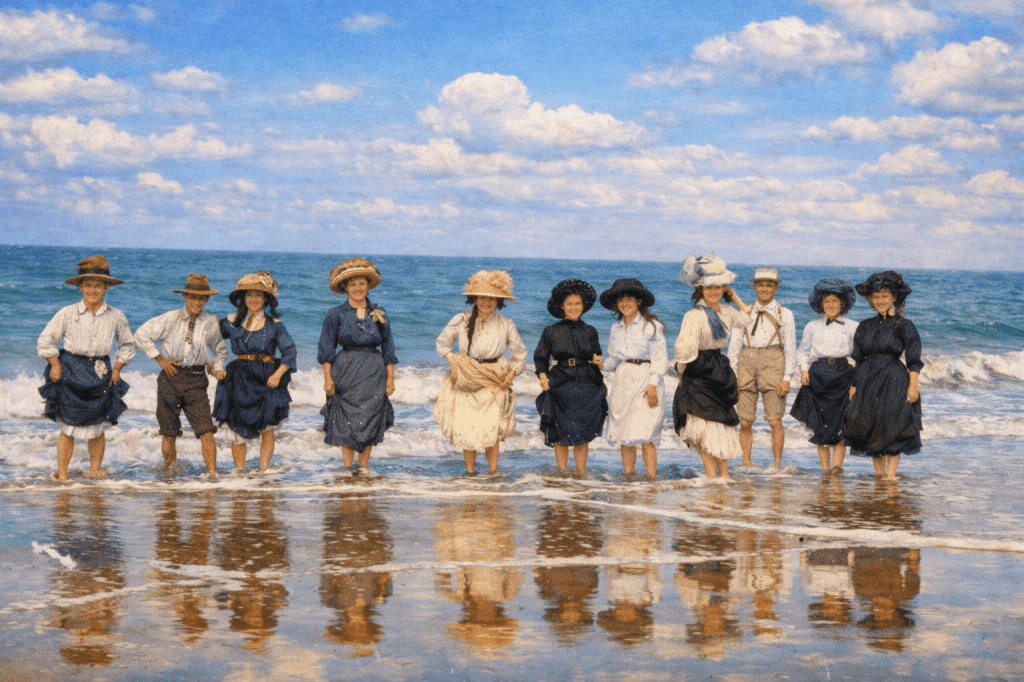
School’s In!
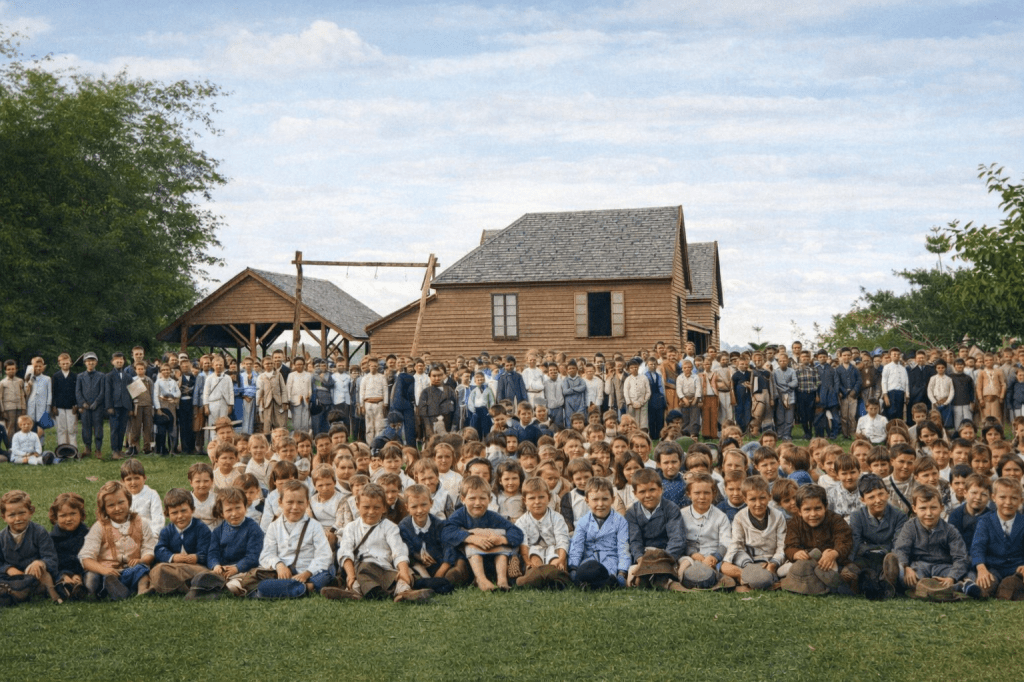
A breach of decorum, but all in good fun.
1918 Cyclone
Long before sophisticated weather warnings and emergency communication existed, Mackay was alerted to an impending cyclone on 21 January 1918, by a notice on the Post Office door. Two hours later, the storm hit the town. The weather had been bad in the lead-up, but no-one was prepared for the ferocity of the cyclone.
Witnesses reported two- to three-metre waves breaking in the main streets.
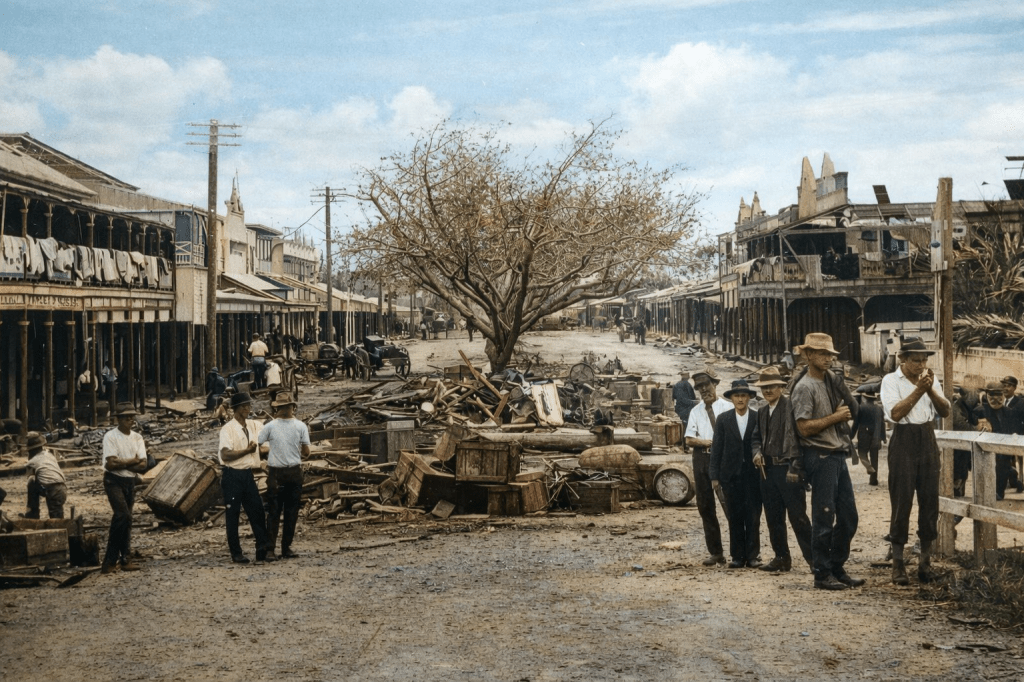
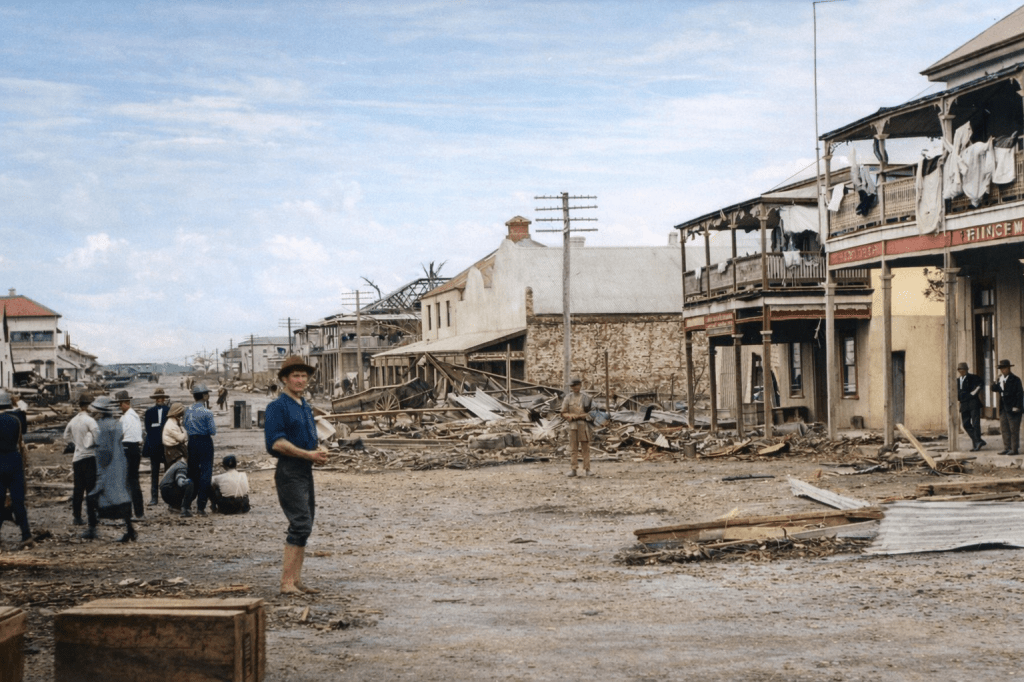
The houses in Mackay at the time were mostly timber dwellings, and couldn’t withstand the high winds and rain. There were around 1400 houses in town, and 1300 of them were either destroyed or severely damaged.
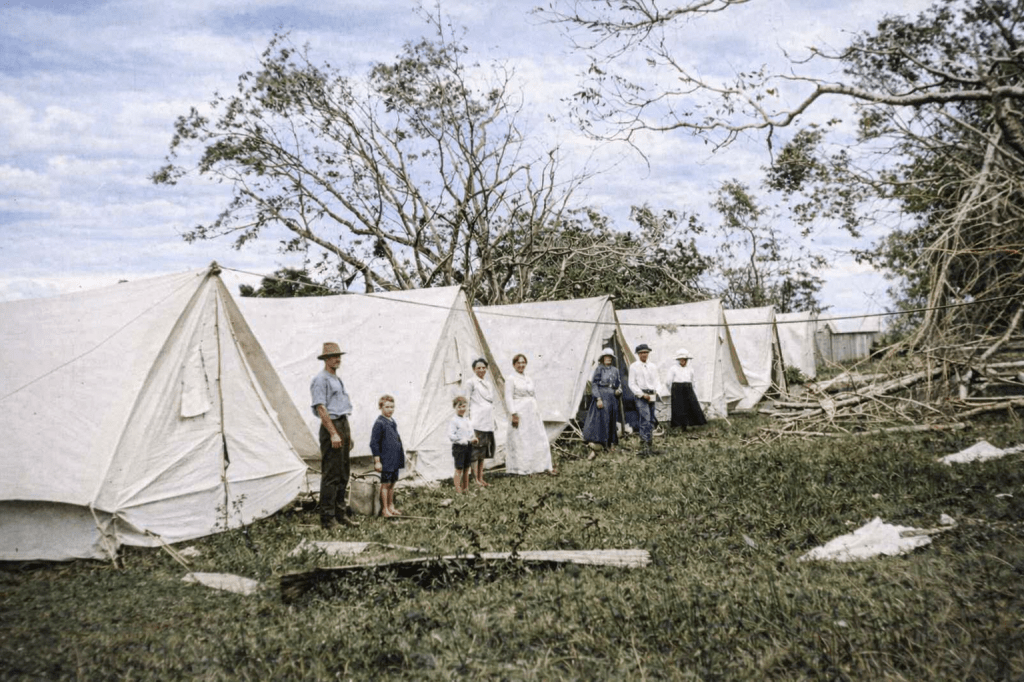
Mackay rebuilt, with an emphasis on sturdier construction. The Town Hall and Joint Stock Bank buildings survived the maelstrom.
Maryborough Chronicle, Wide Bay and Burnett Advertiser (Qld.: 1860 – 1947), Thursday 2 November 1876, page 2.
Mackay Mercury and South Kennedy Advertiser (Qld.: 1867 – 1887), Saturday 24 February 1877, Page 2.
Mackay Mercury and South Kennedy Advertiser (Qld.: 1867 – 1887), Wednesday 11 August 1880, Page 2 .
Mackay Mercury and South Kennedy Advertiser (Qld.: 1867 – 1887), Saturday 26 February 1881, Page 2.
Brisbane Courier (Qld.: 1864 – 1933), Monday 24 December 1883, page 3.
State Library of Queensland website, The Deadly Cyclone Season of 1918, by R. Hillier, Librarian.
 Moreton Bay and More