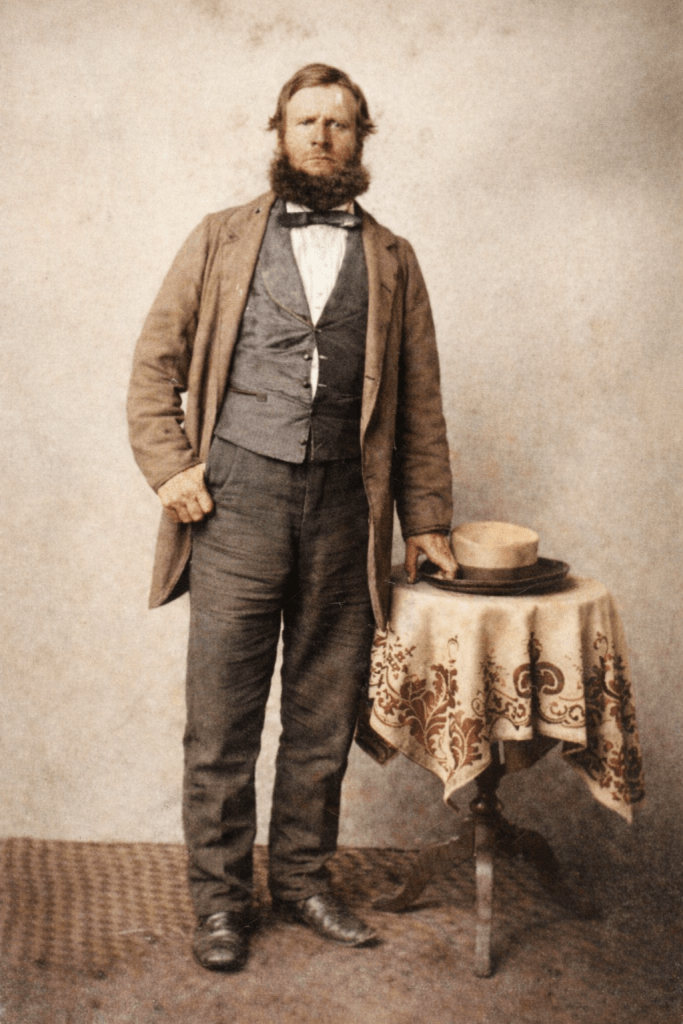
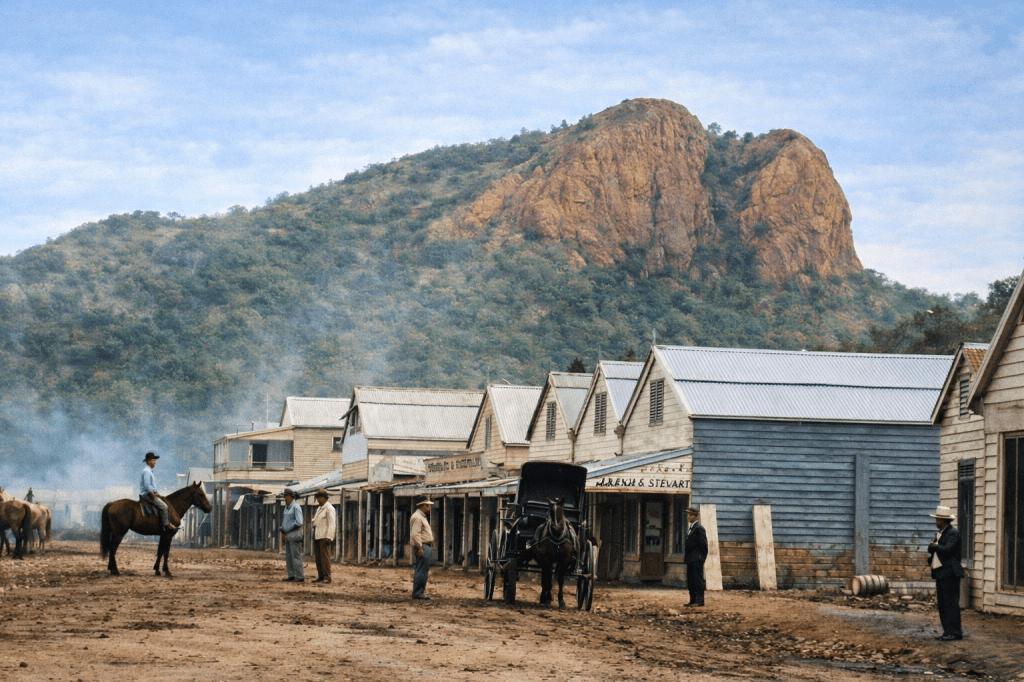
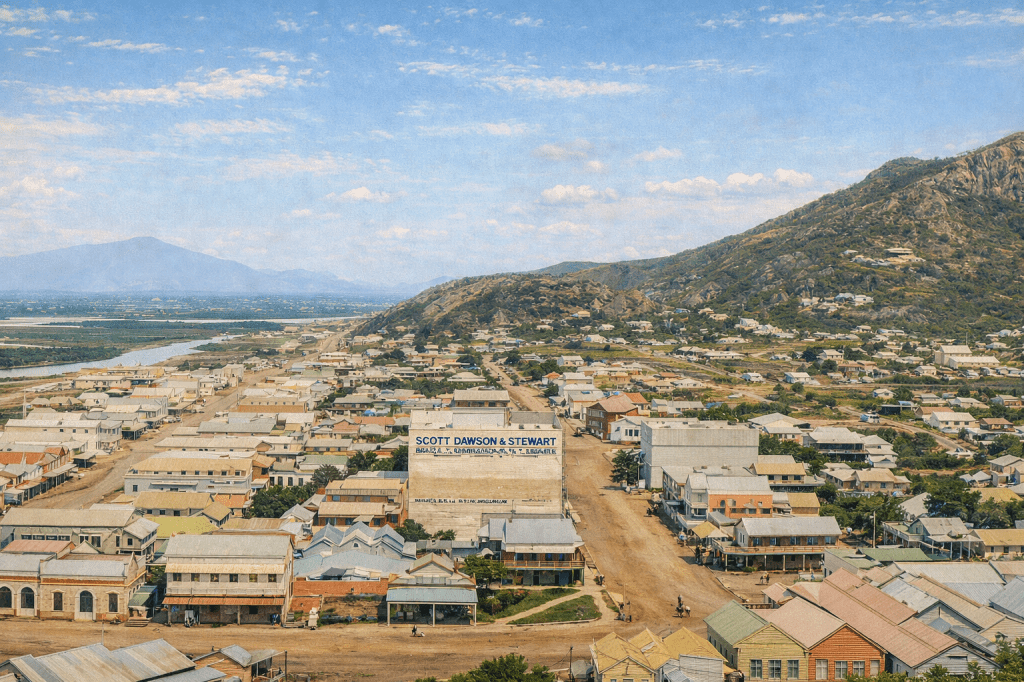
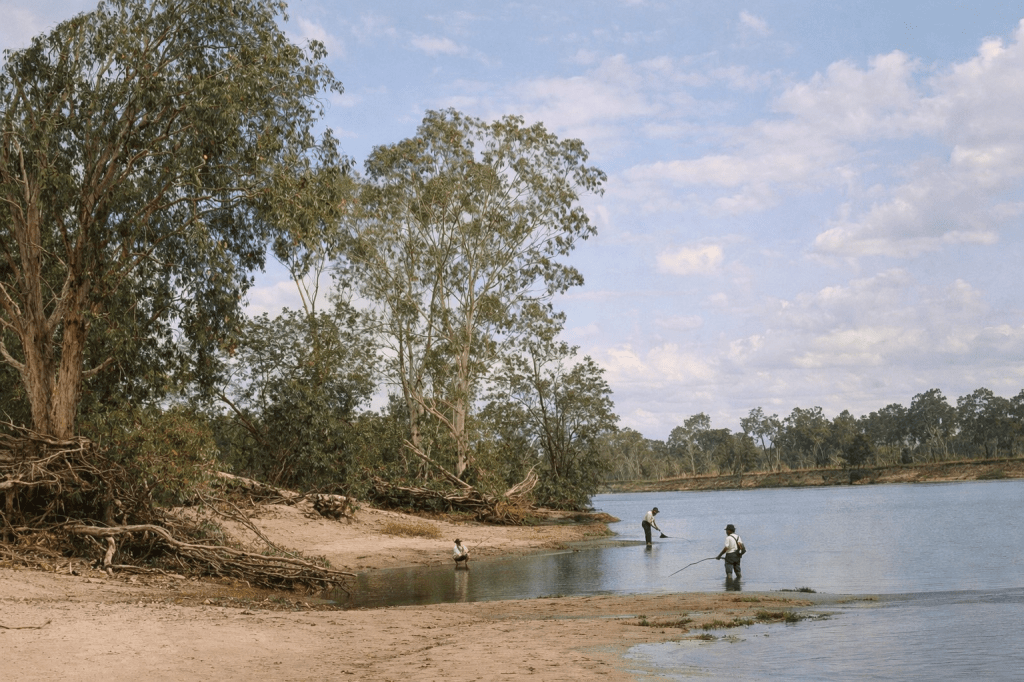
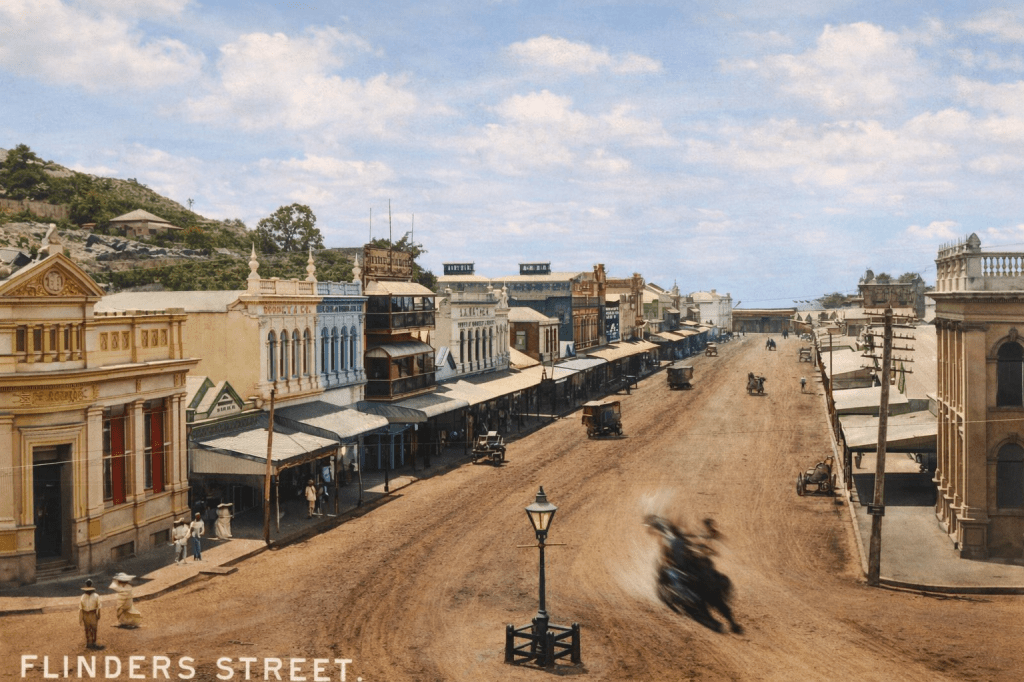
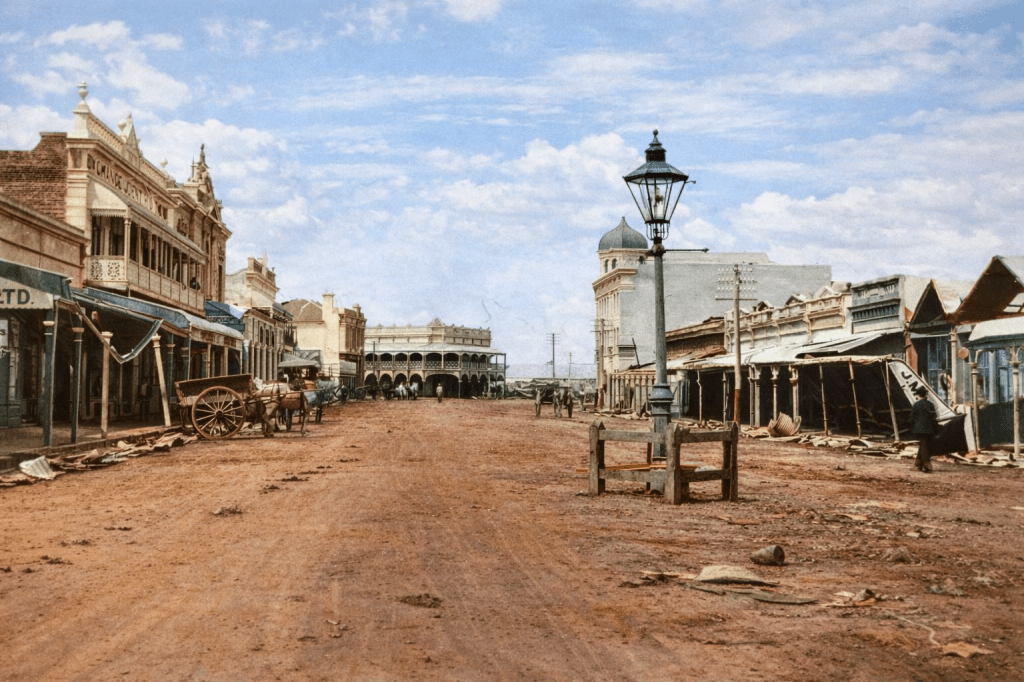
James Morrill was the first European settler in Townsville, living with the indigenous people of the area after surviving a shipwreck. He was part of the aboriginal community there for 17 years. This photo was taken some time between his reconnection with Europeans in 1863, and his death in 1865. Townsville was barely seven years old when this view of Lower Flinders Street was taken in 1873. At peak hours presumably.Early panorama of Townsville, 1881.Fishing on the Ross River, Townsville in 1884.
Townsville in the 1890s.
In 1890, a series of photographs of Townsville captured the town as it began to expand into suburbs. The locality had only been established twenty-four years earlier, and its rapid growth was largely due to the sugar industry in the region. I prefer not to include photographs of plantations and mills, and the South Sea Islander people who were ’employed’ to work them for a pittance.
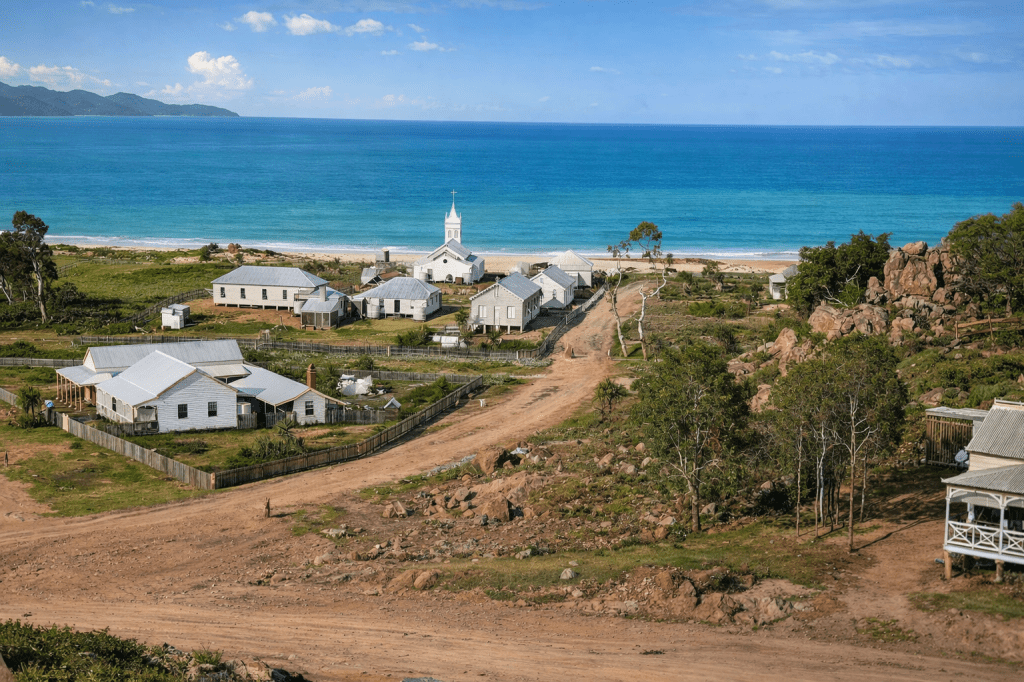
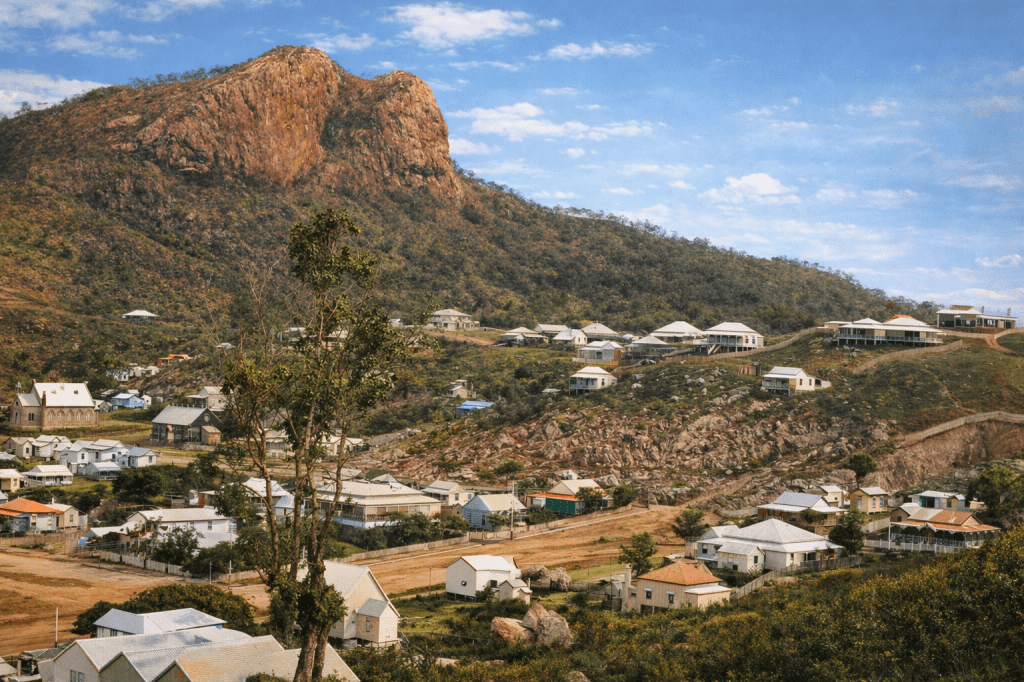
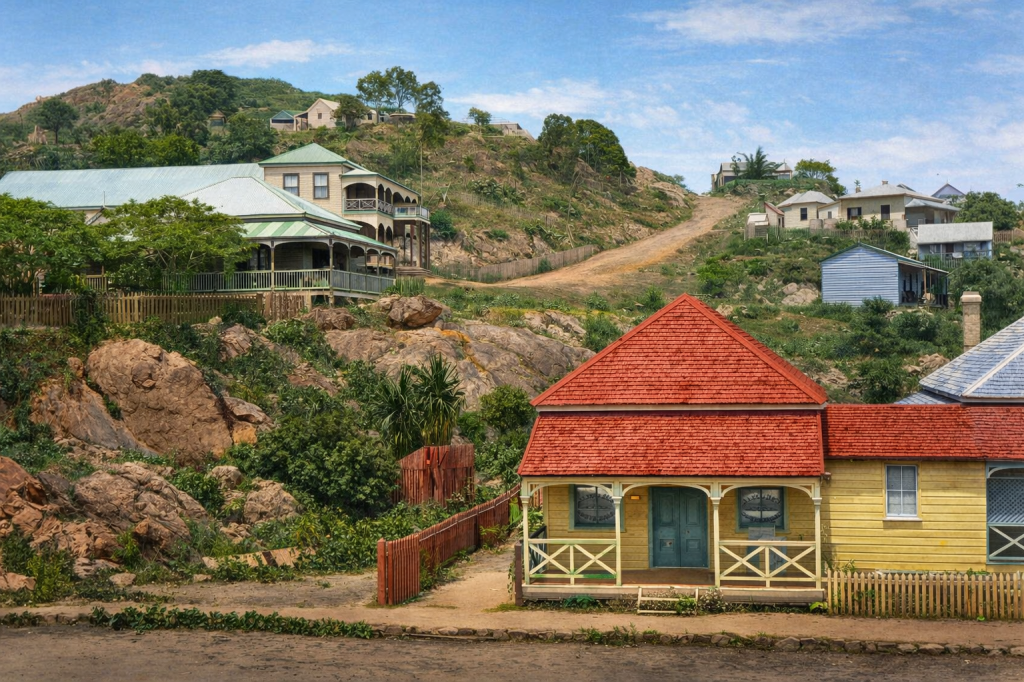
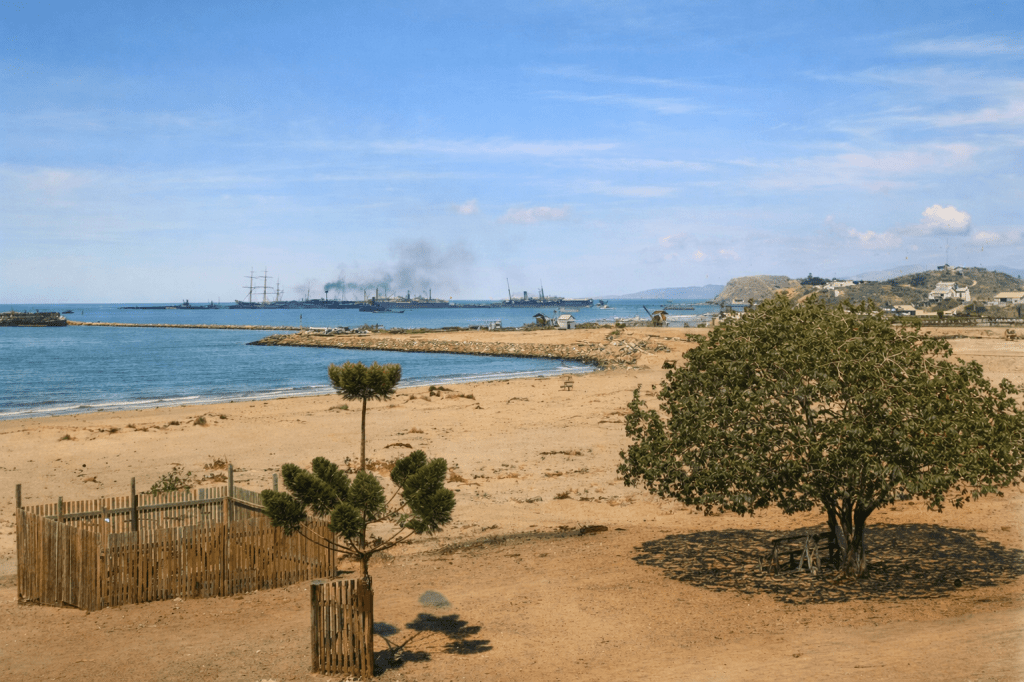
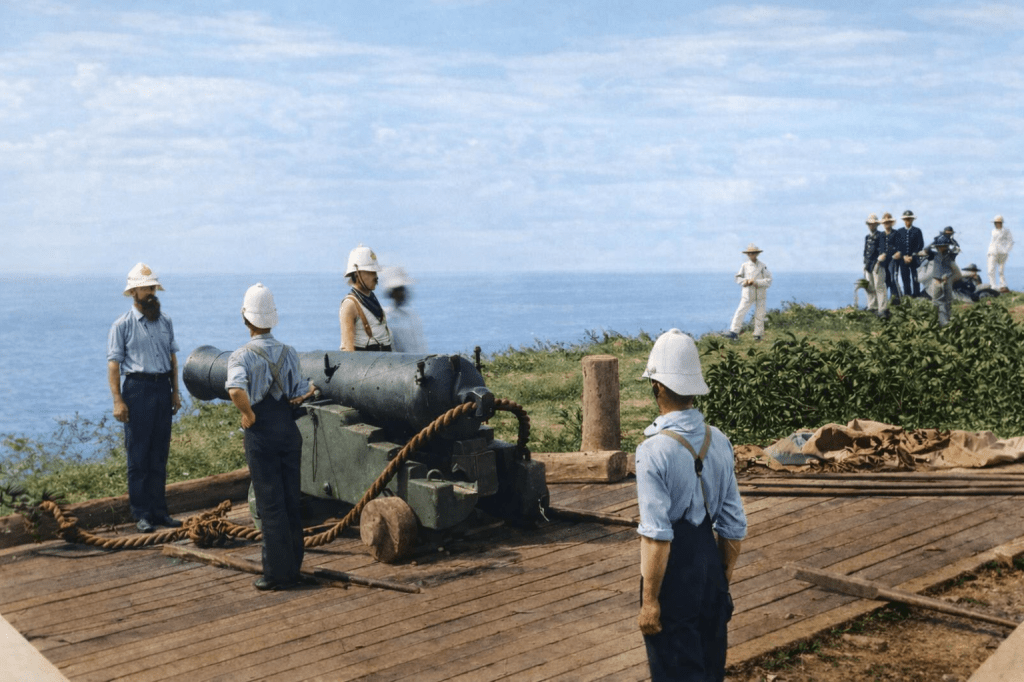
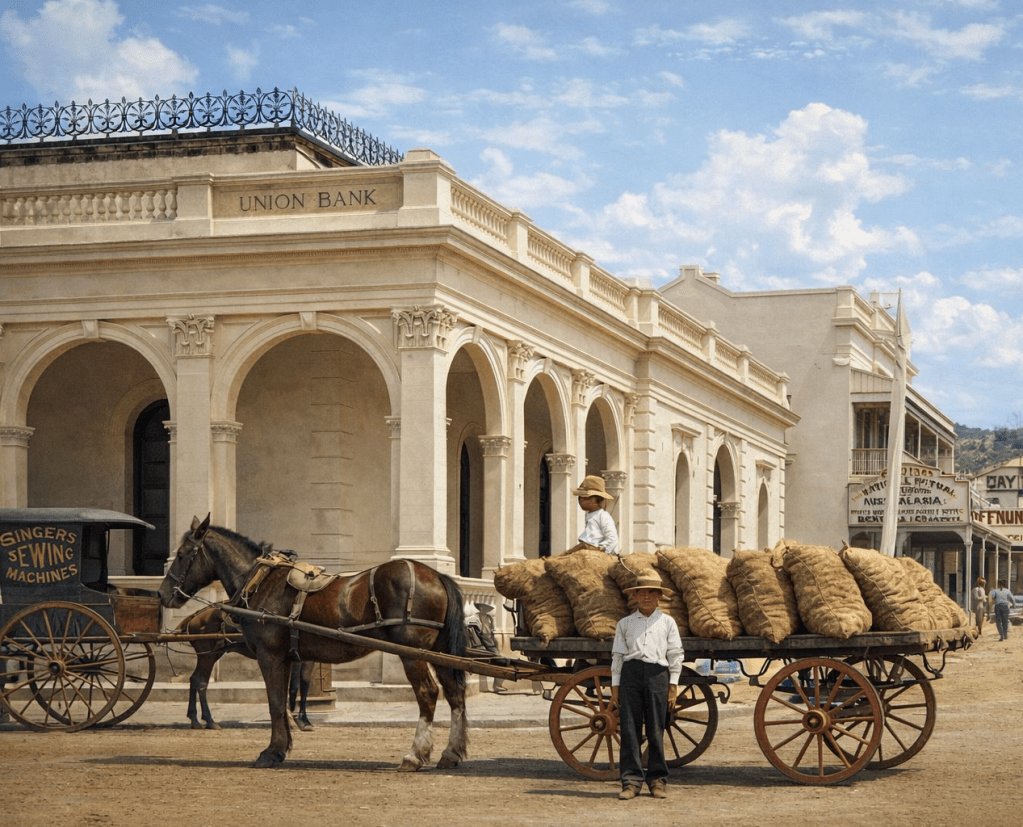
The beach and hinterland at Townsville, 1890.Buildings nestled under Castle Hill, Townsville, 1890.Another view of Townsville in 1890.View of Townsville’s Outer Harbour, 1890.The first line of Townsville’s defence against the territorial ambitions of possibly Germany? Who knows? And while you’re at it, lads, try not to stand in front of the cannons. (Members of the Townsville Garrison Artillery standing next to a cannon at Kissing Point in 1892.)Union Bank in Flinders Street, c 1892.
1900.
Another series of photographs of Townsville views were published in 1900, showing the city’s growth – and its tropical environs and architecture.
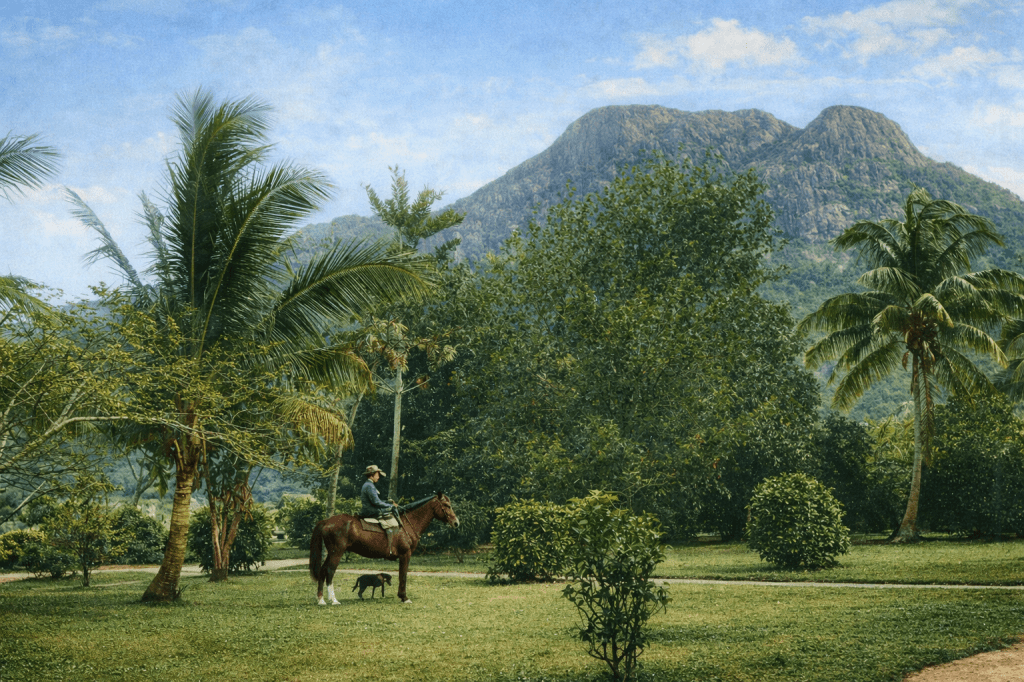
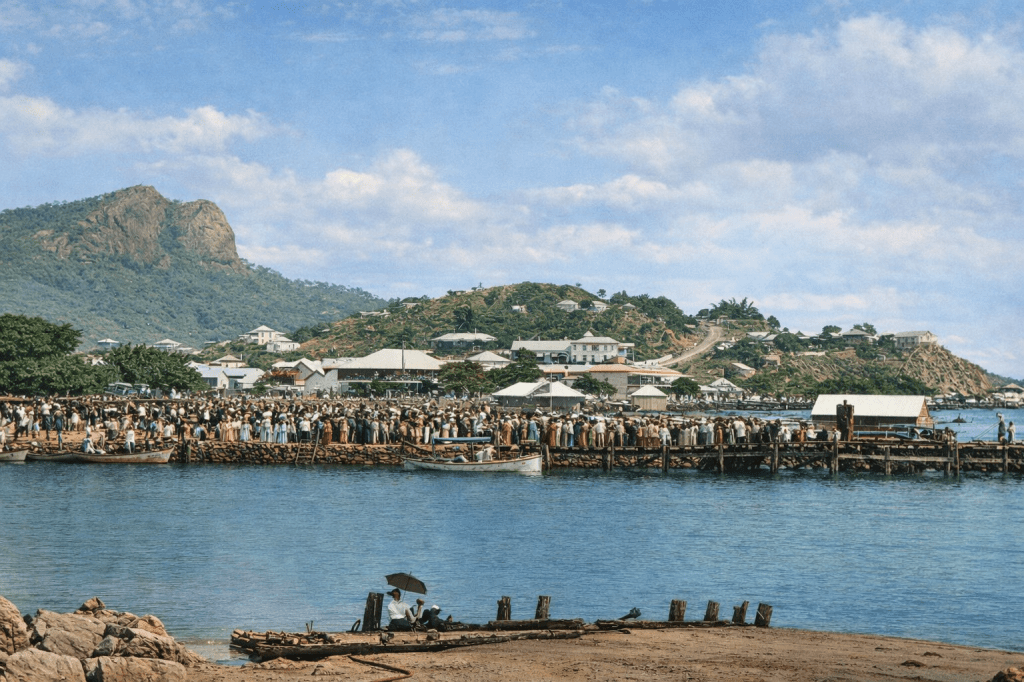
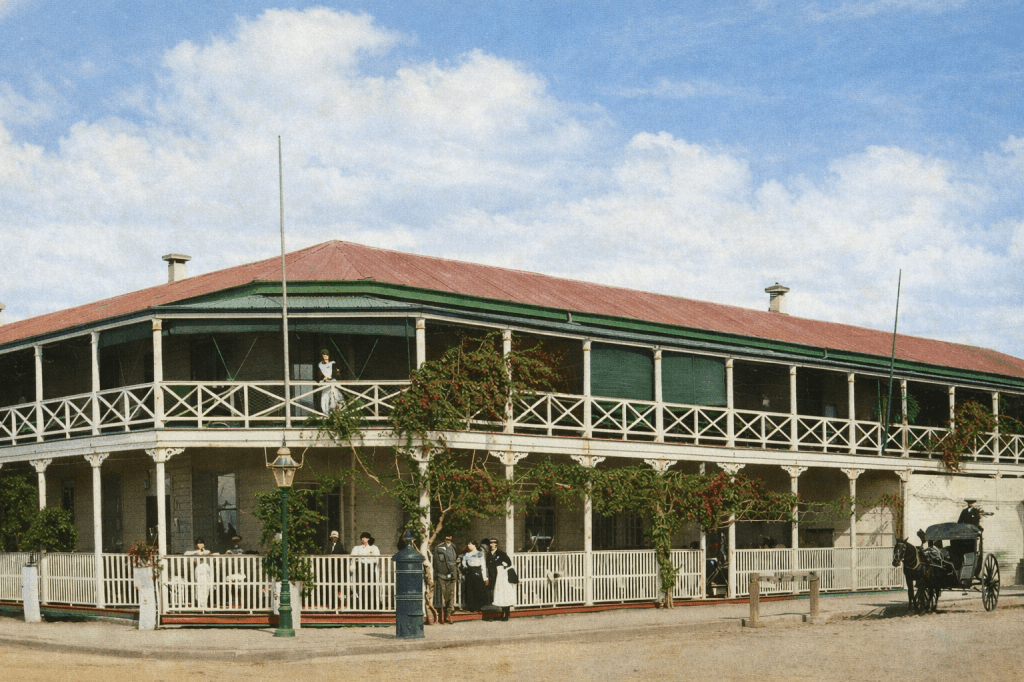
Horse rider and his dog in the Townsville Botanical Gardens, 1900.Crowds line the wharf at holiday time, 1900.Flinders Street, complete with speeding cart, in 1900.Offices of the Harbour Master in Townsville, 1901.The Queen’s Hotel, Townsville, 1900.
1903 – Cyclone Leonta.
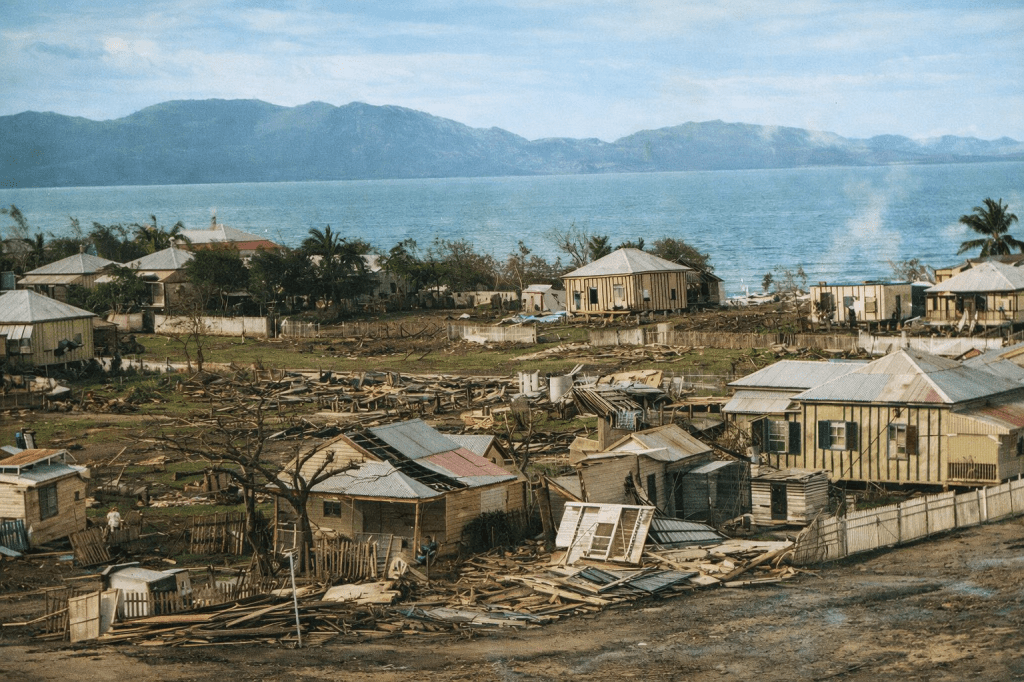
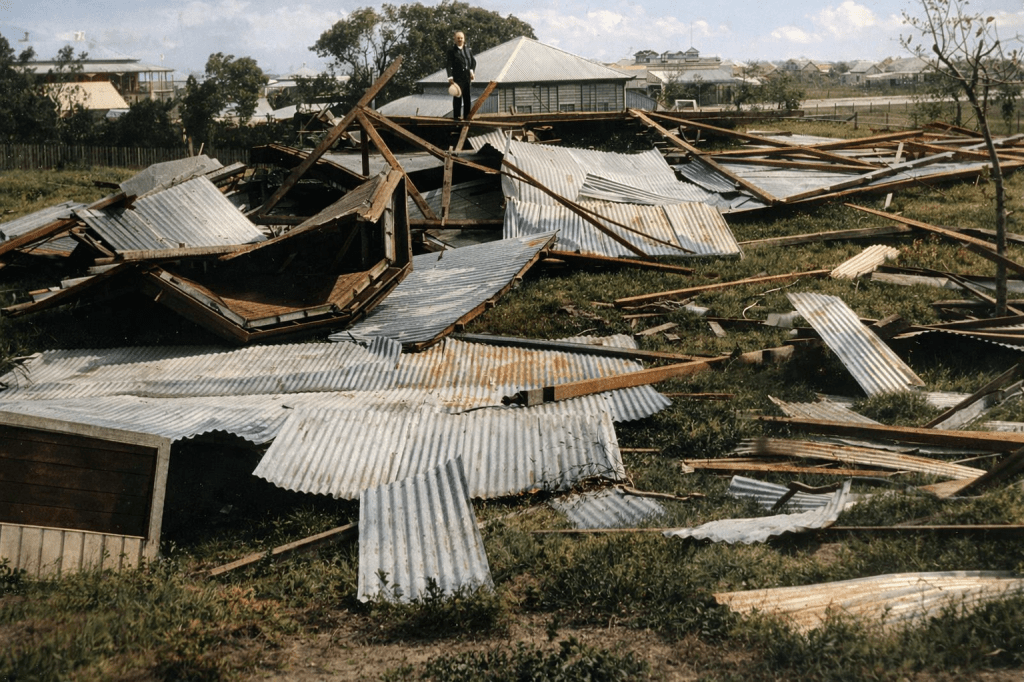
Townsville residents are used to regular visits from tropical lows and cyclones. Leonta, as this cyclone was named, was stronger and much more destructive than anything they’d known up to that point. It roared through the North in early March 1903, spending nearly 12 hours battering Townsville. The Townsville General Hospital was one of the many large buildings destroyed. As the clean-up began, it was thought that three-quarters of the town’s houses were either completely destroyed or substantially damaged.
Damaged houses in Townsville after Cyclone Leonta in 1903.Damage to Flinders Street after the storm.Ruins of St. John’s Church after the cyclone struck.
After the cyclone.
With a booming economy, Townsville was better equipped to recover from the cyclone than poorer coastal communities. All sorts of changes occurred in the following years, from horseless carriages arriving to global conflicts.
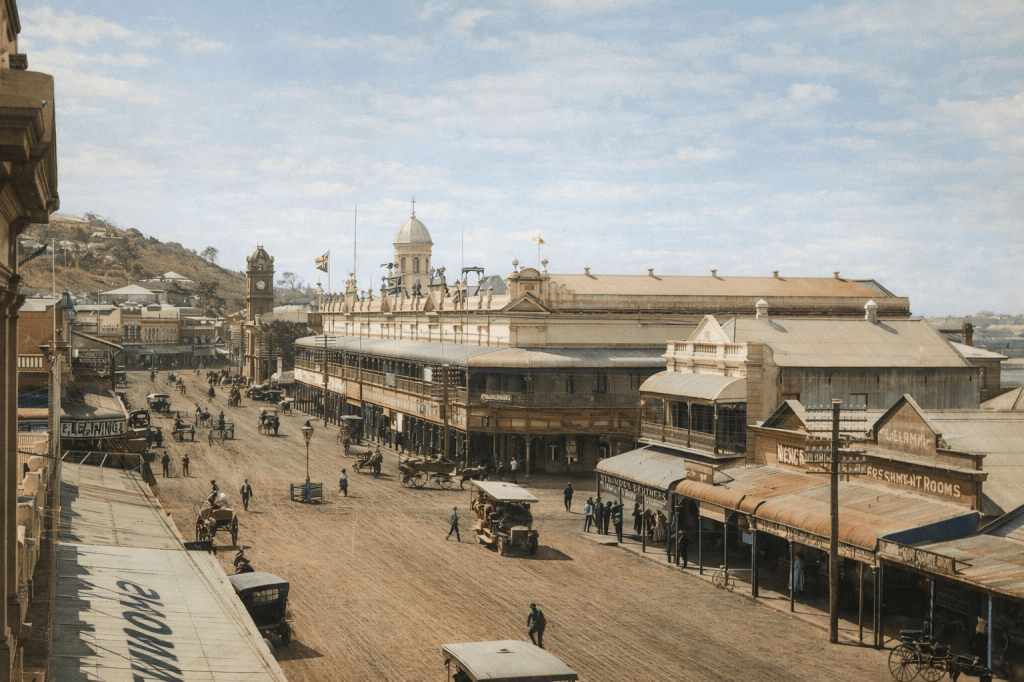
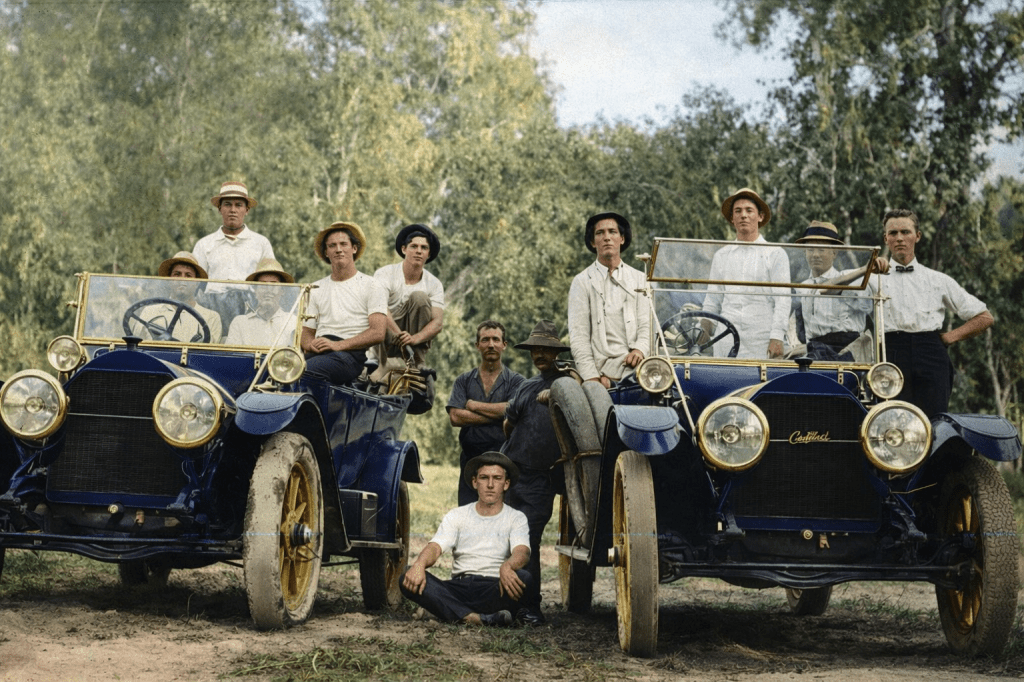
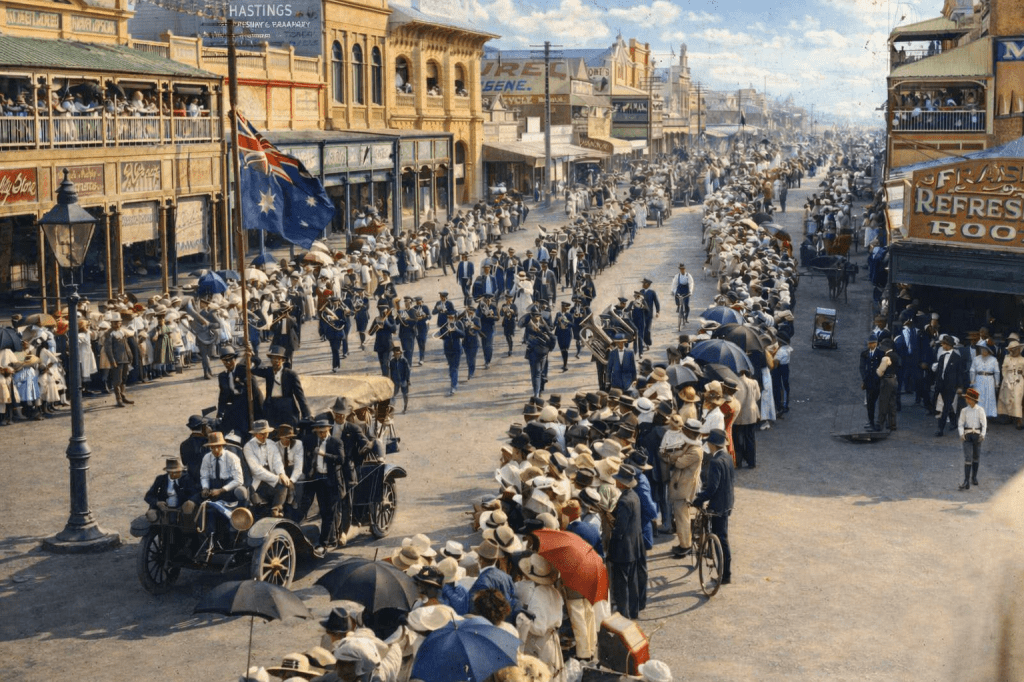
Flinders Street in 1913.A group of young men and their two Cadillac tourers around 1914. Those cars must have been tough to handle Queensland’s early roads.A street procession after the First World War. Townsville’s connection to the armed forces remains strong.

 Moreton Bay and More
I think the horseman might actually be a horsewoman, riding side-saddle.Love your work! Bernadette McCabeSent from my iPad
LikeLike
Thank you Bernadette. You’re correct. Note to self- wear the correct prescription glasses when blogging!
LikeLike