
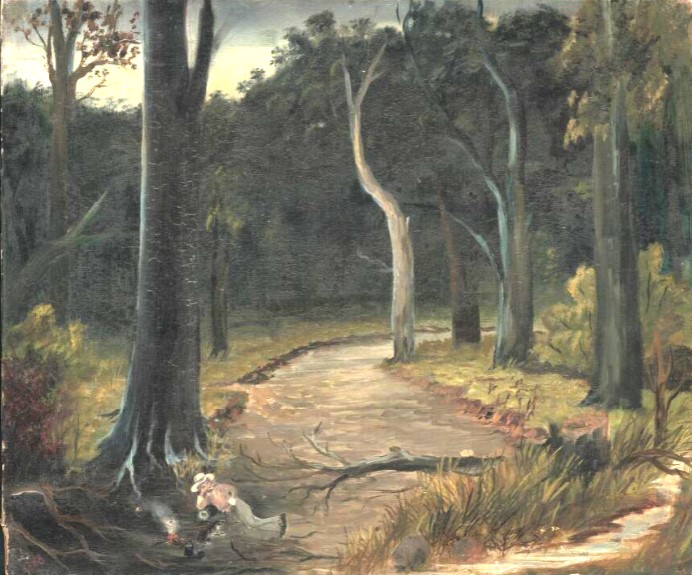
Outback and country life. Plus photobombing horse (again!).
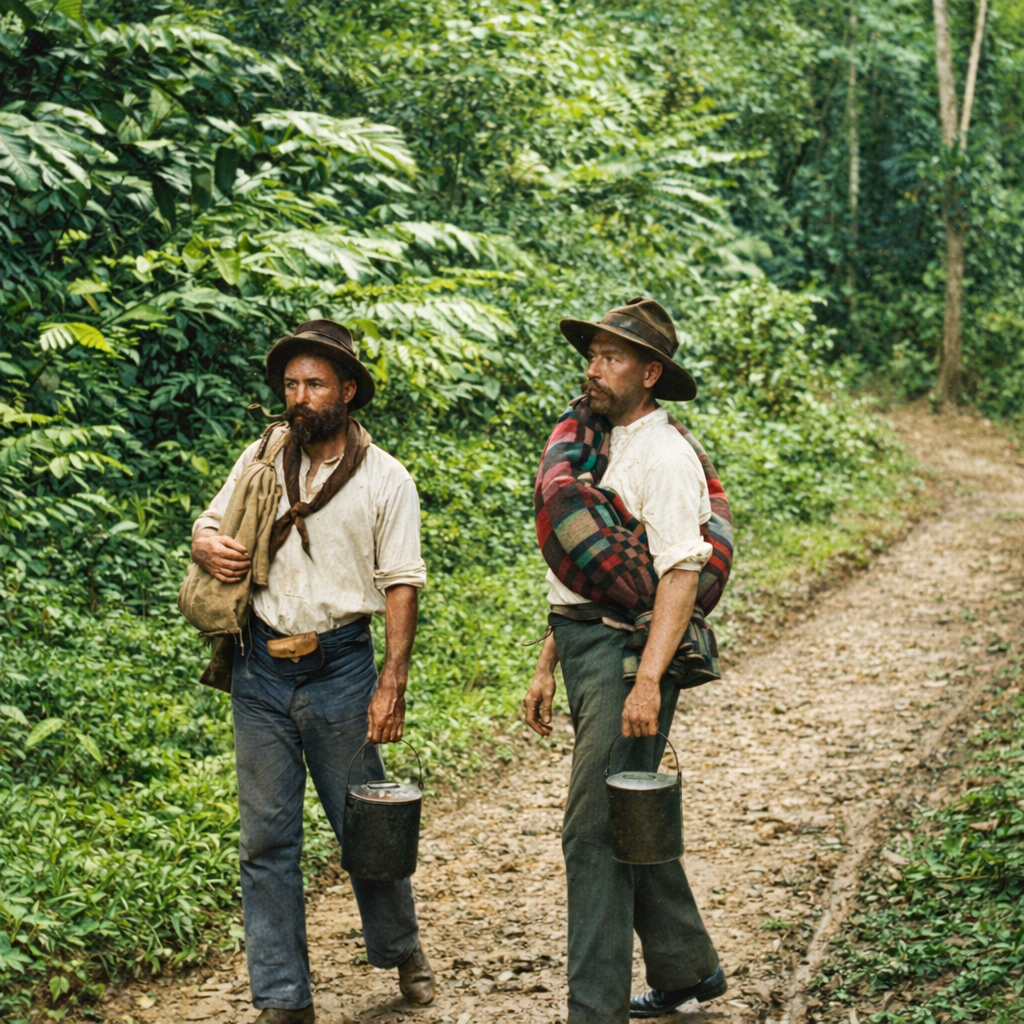
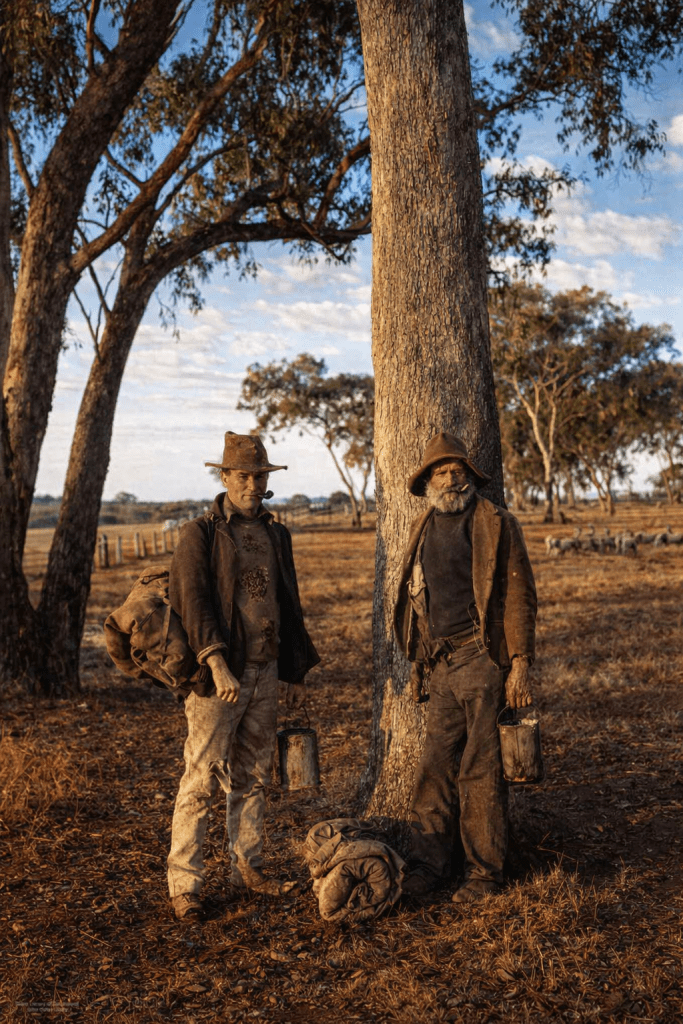
On the wallaby.
To be on the wallaby track meant that you were travelling about the countryside looking for work. When times were hard, or work was short, you took your blanket and billy can and walked – often hundreds of miles – to look for a labouring job on a station.
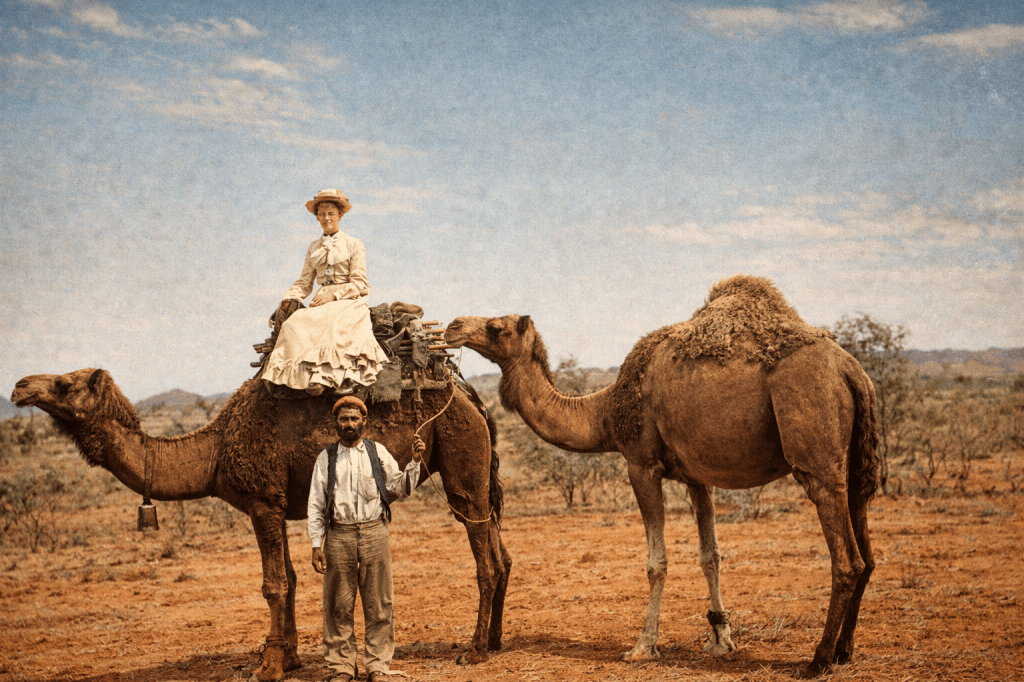
The Cameleers.
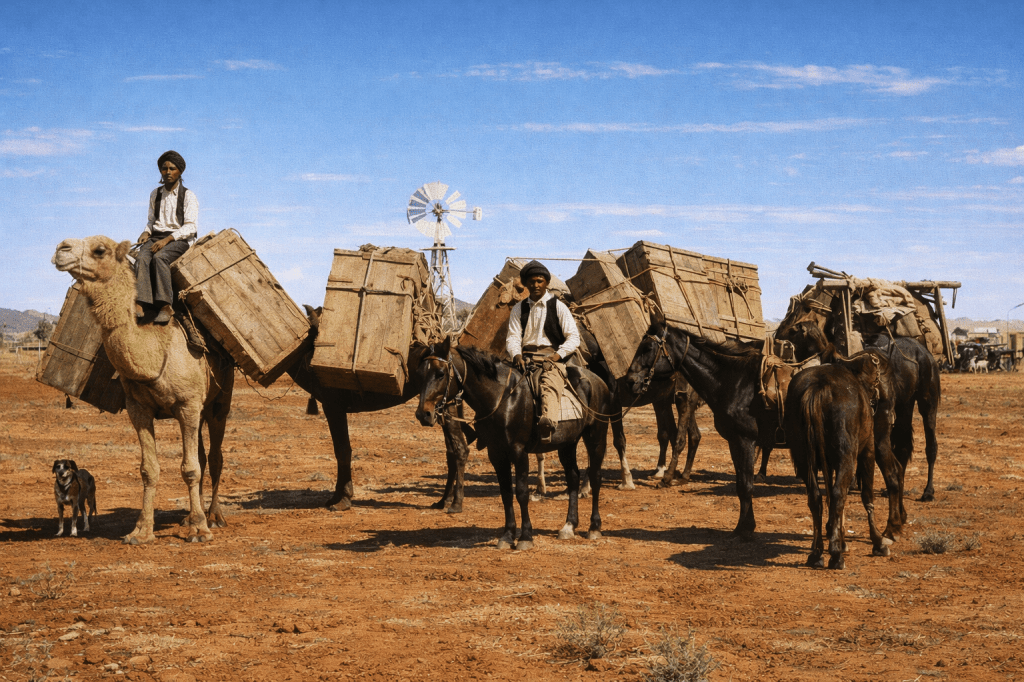
Afghan cameleers were a fixture of outback life in from the 1870s to the early 20th century, when a grateful Australian government refused to allow naturalisation or entry. Not all cameleers were from Afghanistan – 19th century Australians couldn’t distinguish between what they considered the “Asiatic” races.
Camels could carry heavy loads across terrain that defeated horses and bullock trains, and in 1890, the efforts of a cameleer saved flood-bound Cunnamulla from running out of food.
The best-known cameleer in outback Queensland was Petty Khan, who traded around western Queensland and South Australia into the 1890s.
The drover and his mate.
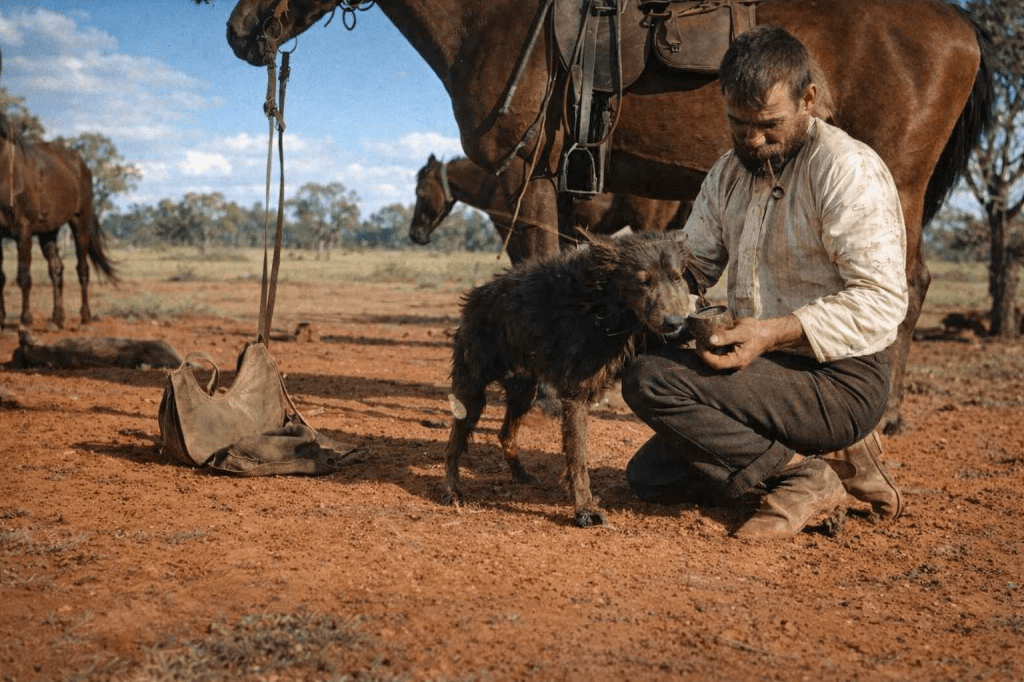
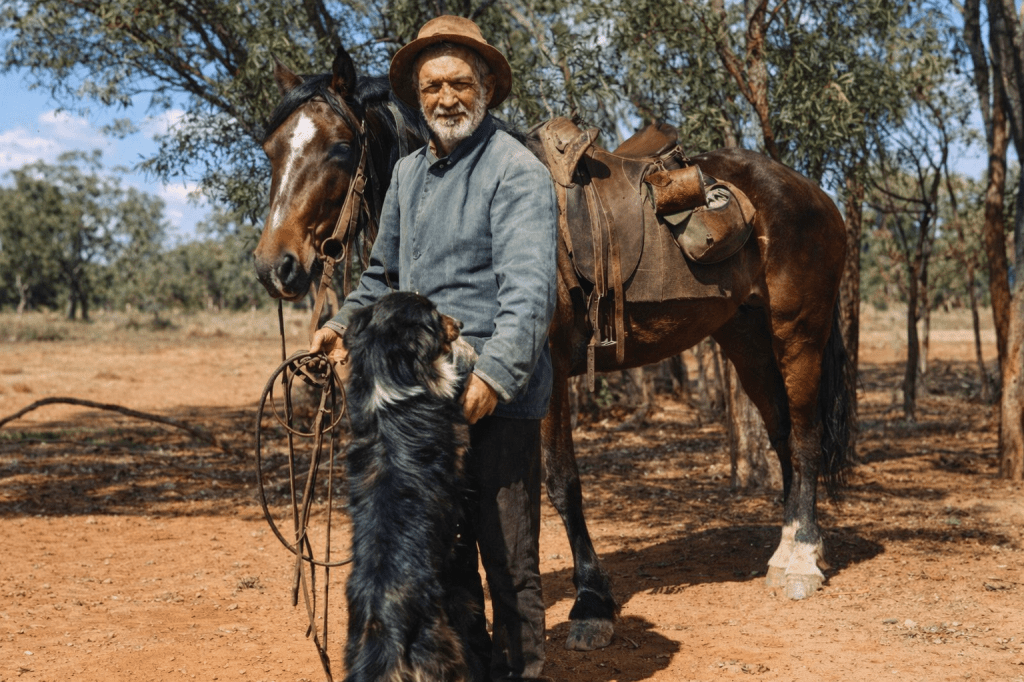
The early outback relied on drovers – stockmen able to move large herds of cattle or sheep hundreds of miles to new properties, or in search of feed and water in times of drought.
Essential for droving was the trusty drover’s dog – for herding stock, and for company on long journeys. Here are two drovers and their canine chums.
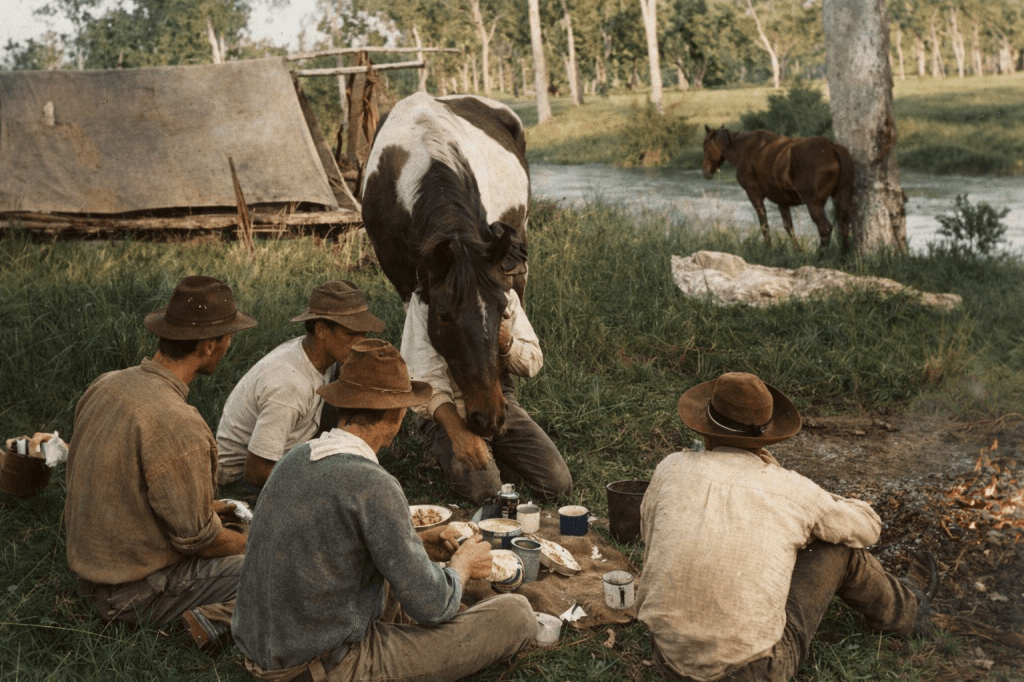
Billy Tea
The billy went everywhere with the swagman, drover, stockman and carter. It was just a modified tin can used for boiling water over a camp fire. The tea produced in the billy undoubtedly lacked the finesse of the beverages made in the Chinese, Japanese or English tea ceremonies. But it kept bushies warm and watered through the long days and nights.
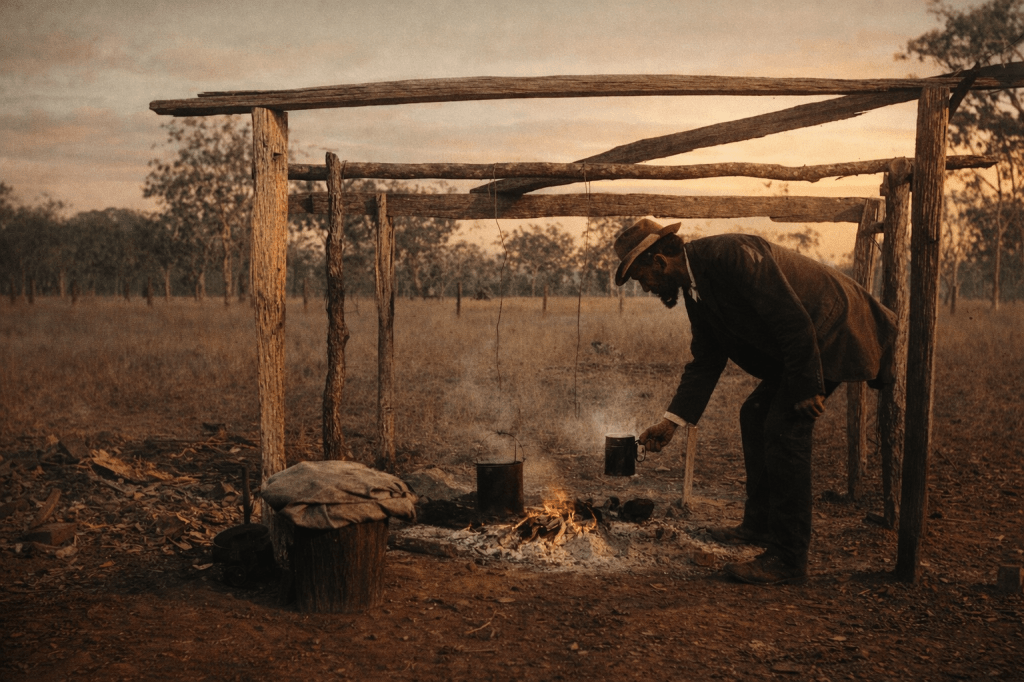
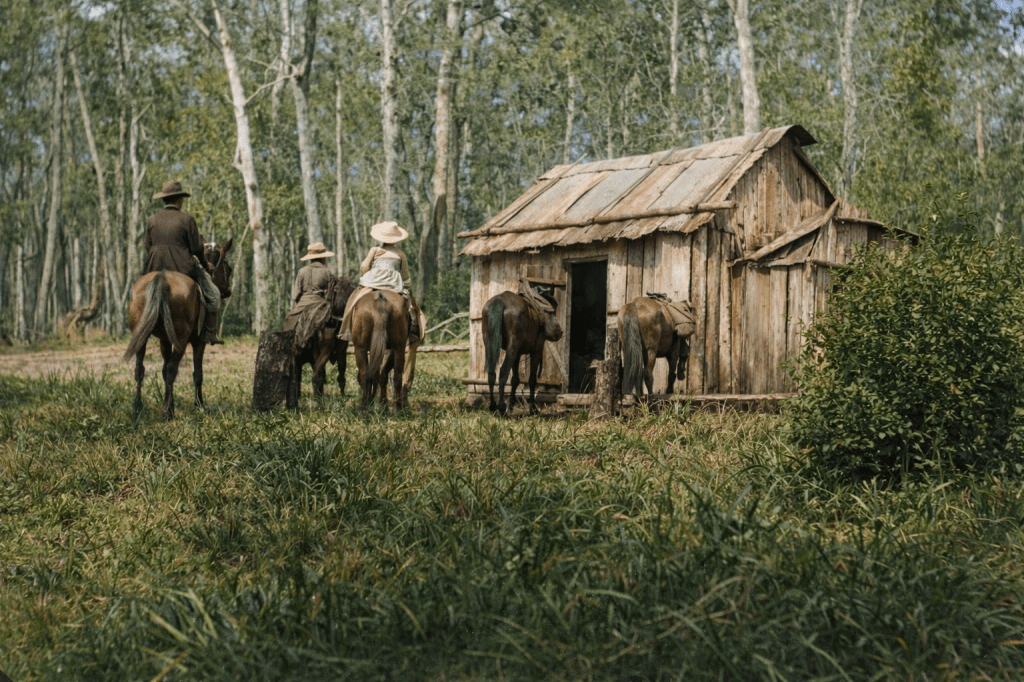
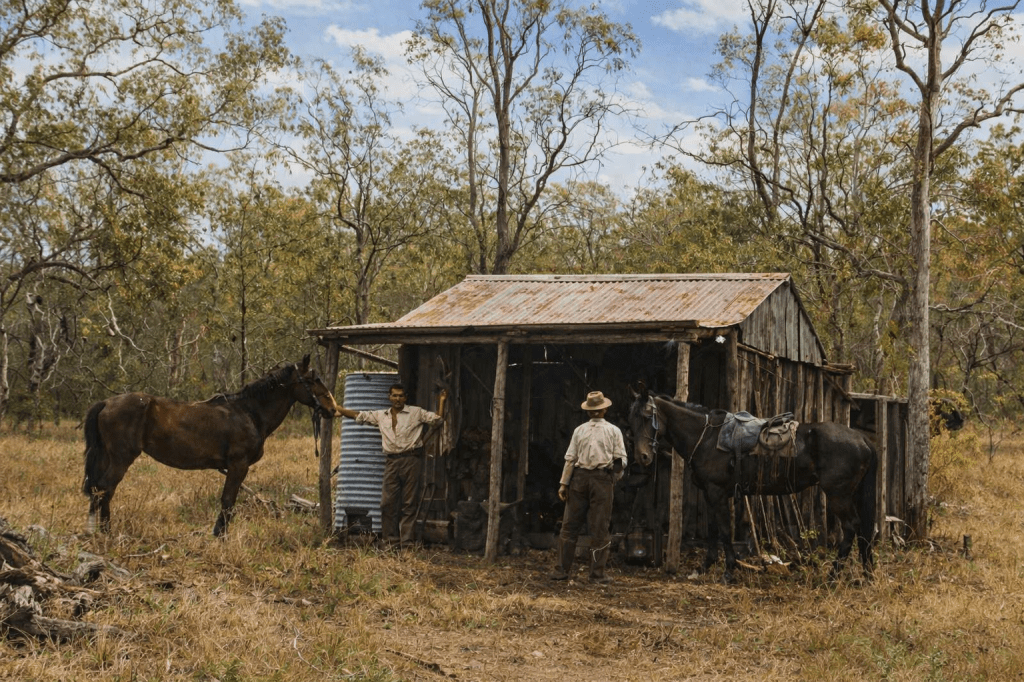
The bush hut.
A rough-hewn shelter in the bush or outback provided some comfort for the early bush settler. It was also vulnerable to bushfires and wild weather.
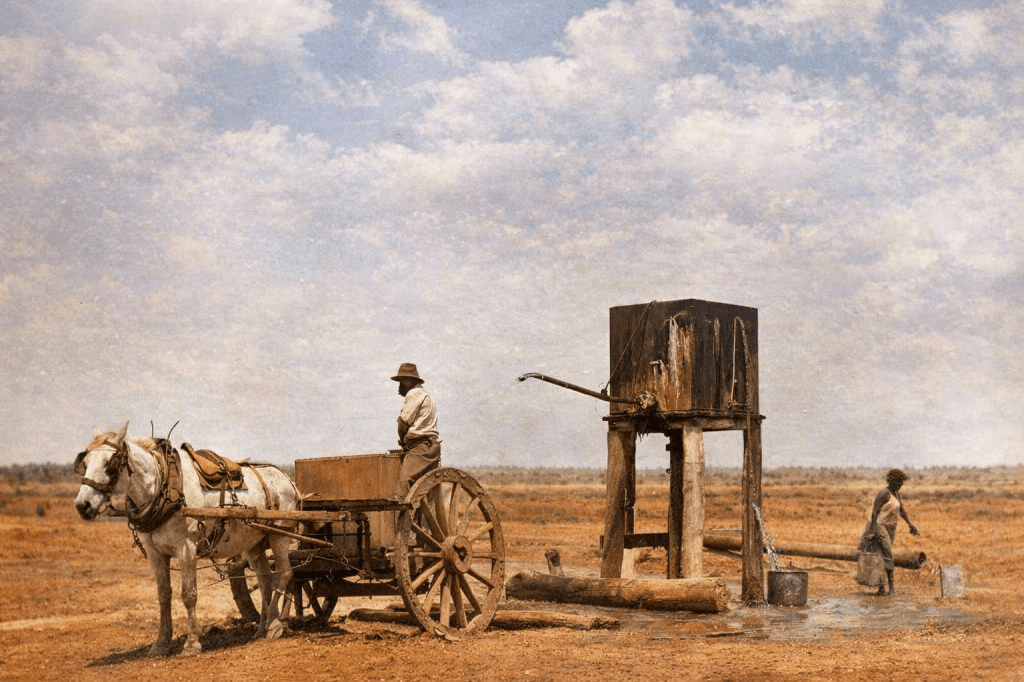
Water carrying.
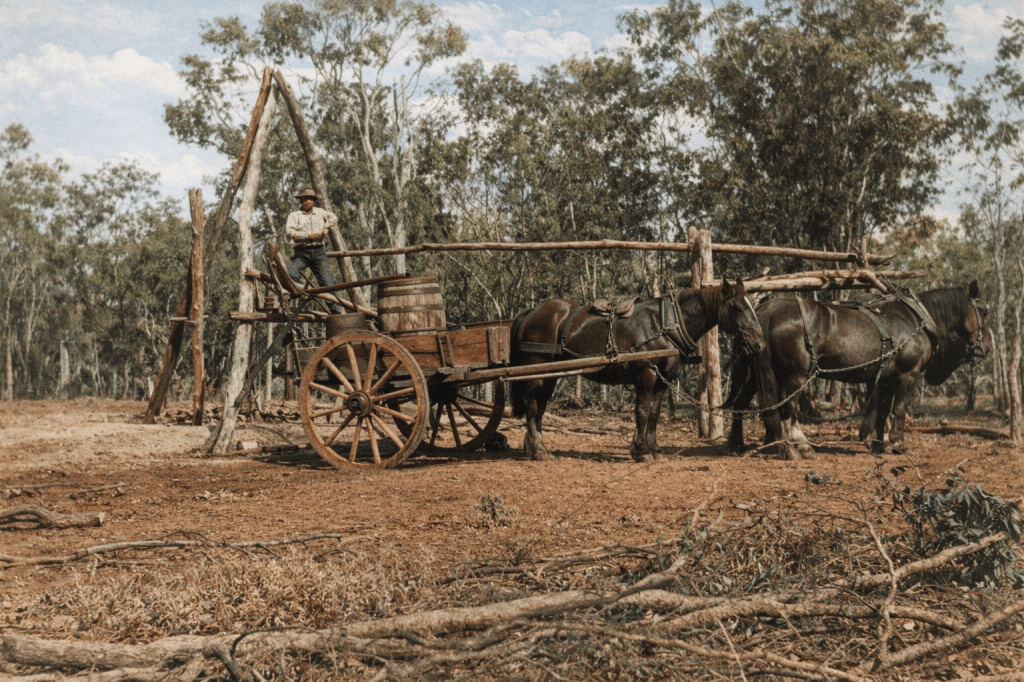
Water is always a problem in the Queensland bush and outback. Every location seems to alternate catastrophic flooding and catastrophic drought. In Burketown, a remote location in far north-western Queensland, a water carter fills up at a distant tank, and in the bush, a water carter travels with the precious liquid in a horse-drawn cart.
Two unidentified men carrying blankets across their shoulders and billies in their hands FL1404882.
Swagmen standing under trees, outback Queensland ca. 1905 FL9443
Horse and camel team, Cloncurry, ca 1904 FL57551
Afghan cameleer with 2 camels, one carrying a woman, near Cloncurry around 1905 FL2963471
Stockman and his dog, Adavale District, Queensland, ca. 1900-1910 FL302317
Drover with his horse and dog, 1910-1920 FL108901
Man making tea in a billy, ca. 1898
Billy tea and damper in the bush, Queensland, 1899 FL125875
Small hut erected in the bush, Queensland, ca. 1905 FL92365
Tending to the horses outside the hut, Hawkwood, in the Mundubbera district, 1910 FL128617
Water cart and tank, Burketown, 1904 FL117097
Water carter with his truck FL1411581
All images are from the digital collection of the State Library of Queensland and are out of copyright. AI colourisation by Copilot.

