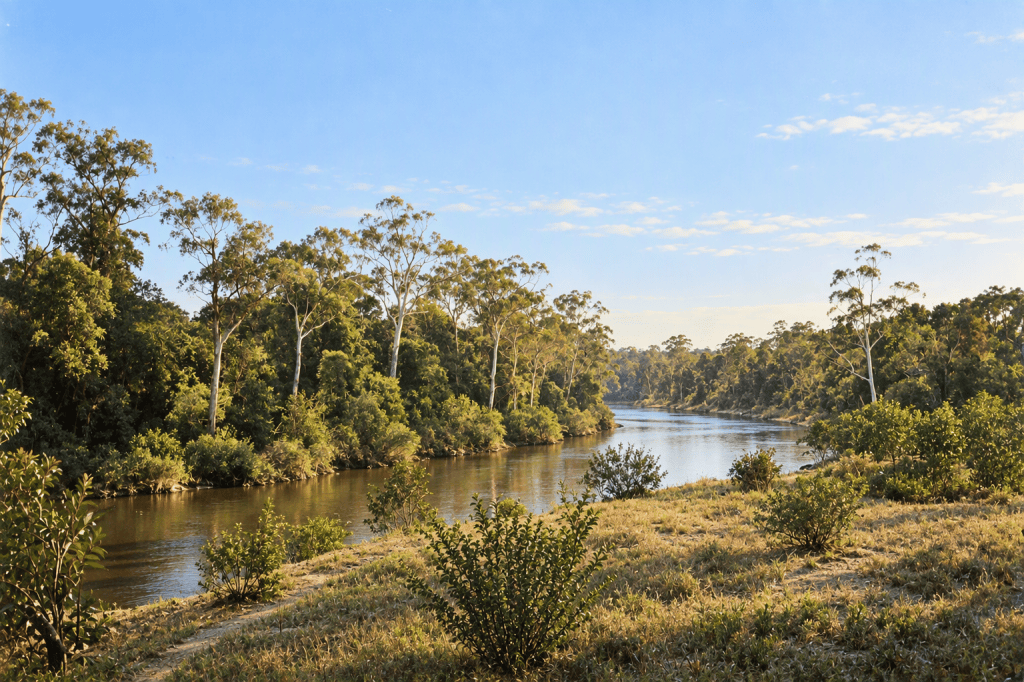
The River.
Caboolture in 1841.
Towards evening, our direction being still the same, we came to the banks of another river or creek of the same breadth as the Pine River; it was however pretty deep, as it was flood tide. Having crossed it, we went over a tract of rich soil, followed by a marshy plain, until we arrived at the last river on our journey. Its native name is Kaboltur1; among the whites it is called Deception River; its breadth is considerable; and it had risen to such a height that one of our guides, by whom we had been forsaken on account of a piece of pork, and who had wished to hasten on before us, had not ventured to cross the river alone, and thus we found him here again. The night was coming on, and the sky threatened rain, but we had no choice left, as we could not spend the night on the marsh on this side of the river, so we were obliged to cross it, and reached safely the opposite shore, although we had to go up to our chins into the water. When we had reached dry land, we encamped for the night.
The Colonial Observer, October 1841.
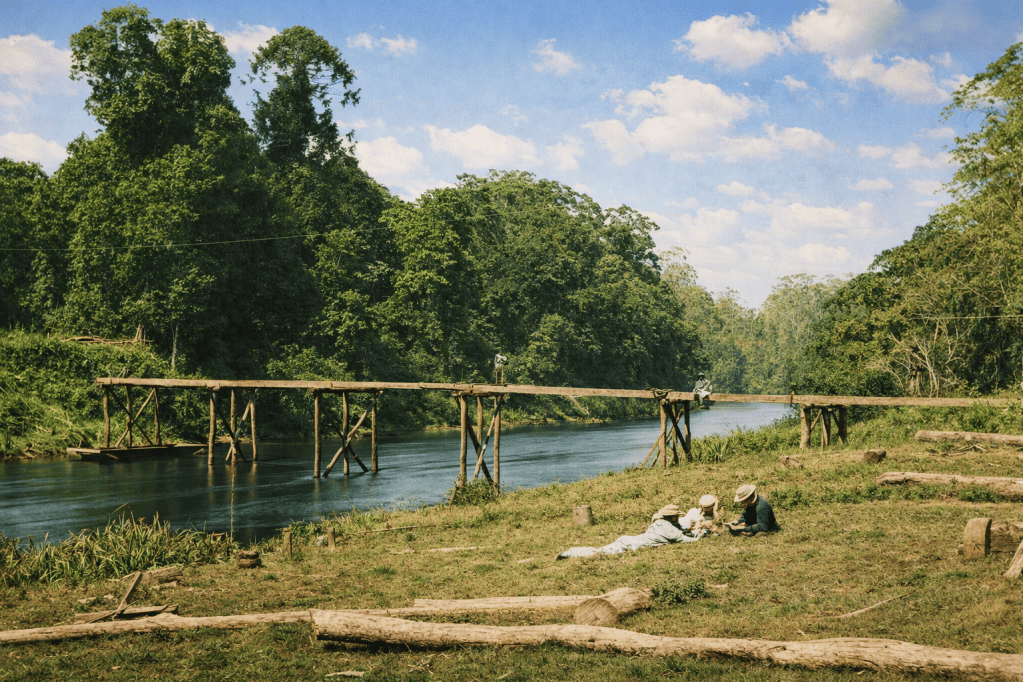
The completion of the bridge over the Caboolture River, on the Great Northern Road, is a matter of considerable importance not only to the settlers resident in that district, but also to all persons travelling on the road referred to. The bridge is undoubtedly one of the finest and most substantial of the kind in the colony. It is 288 feet long, and it is constructed entirely of hardwood.
The Brisbane Courier, January 1873.
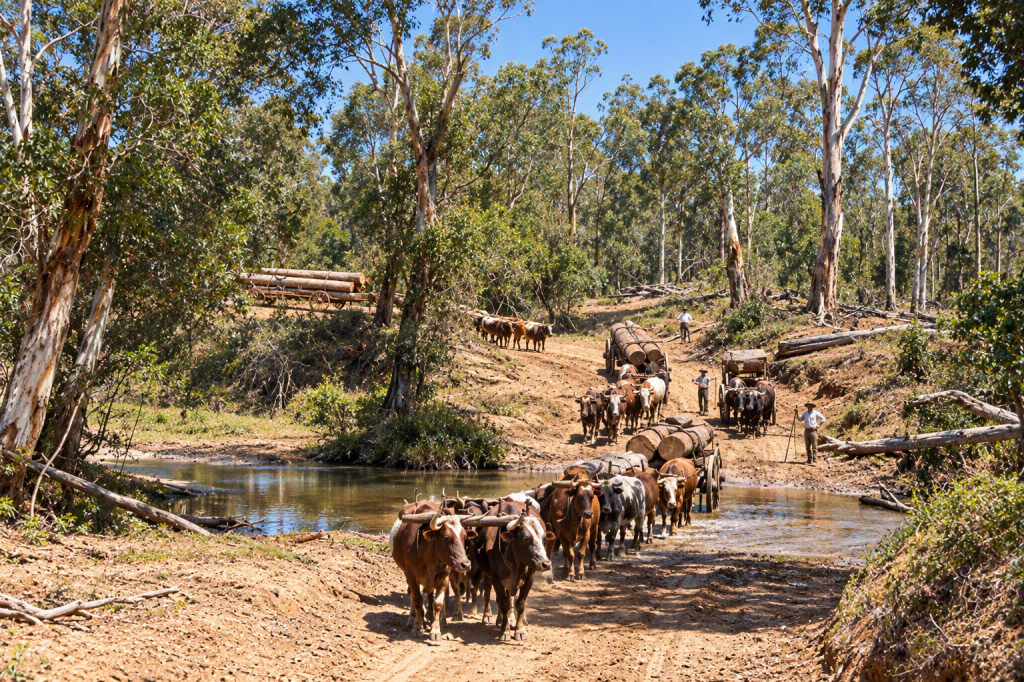
On the road.
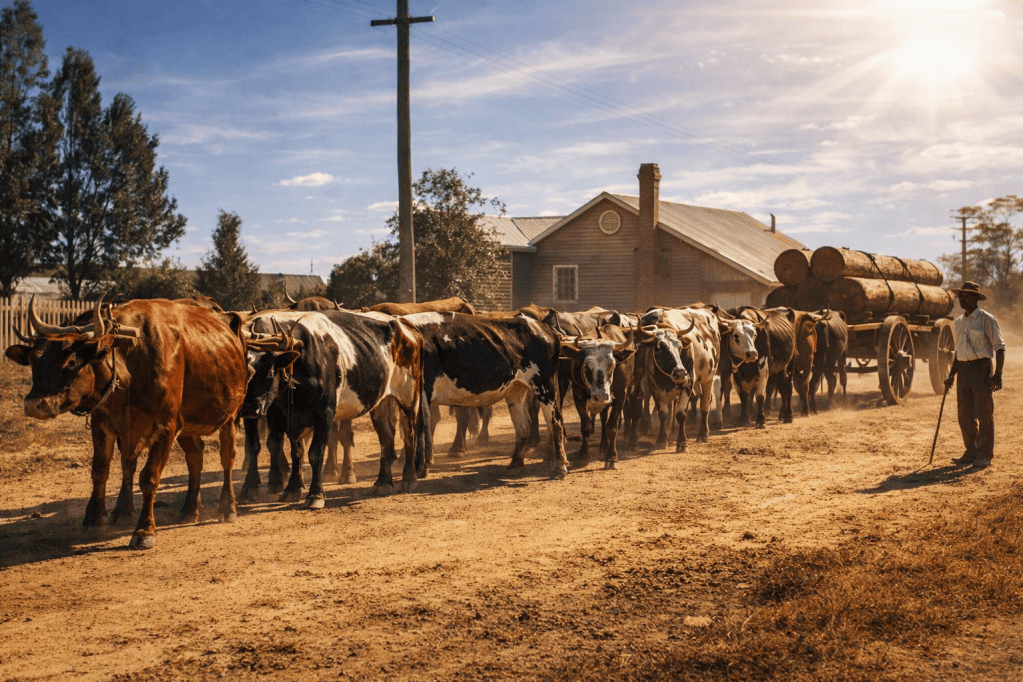
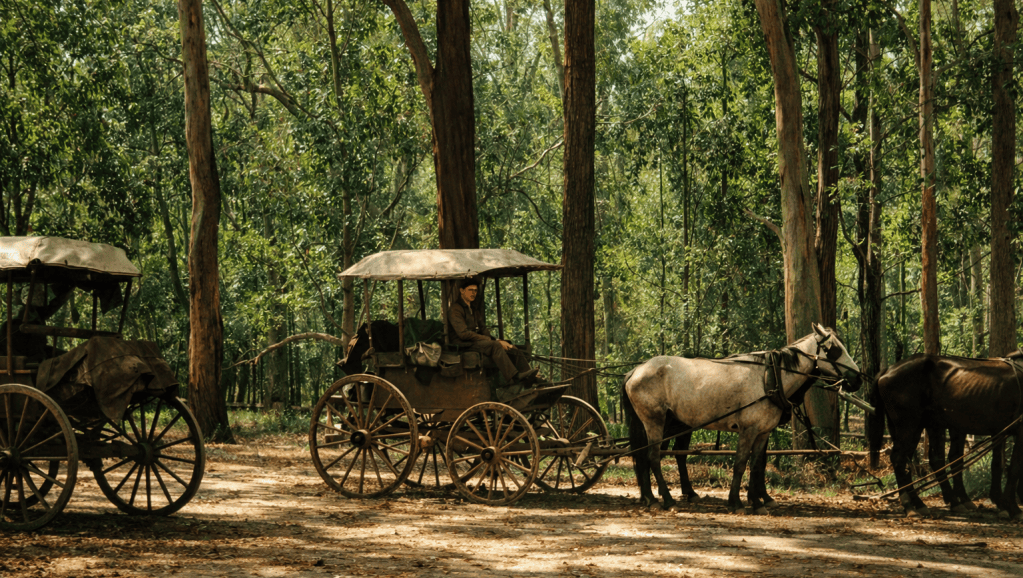
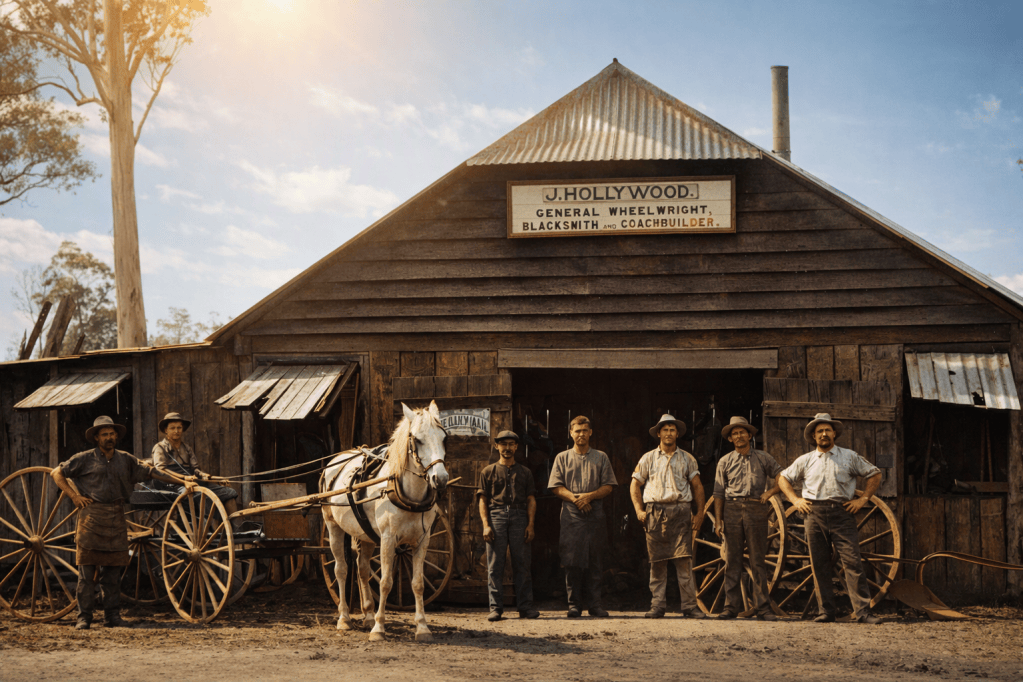
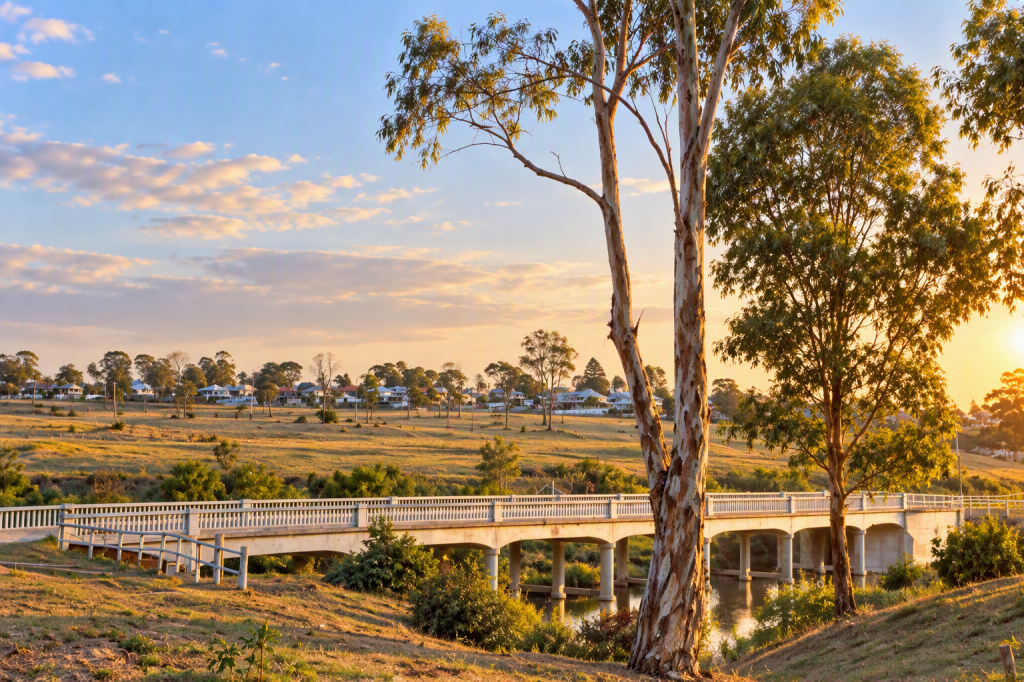
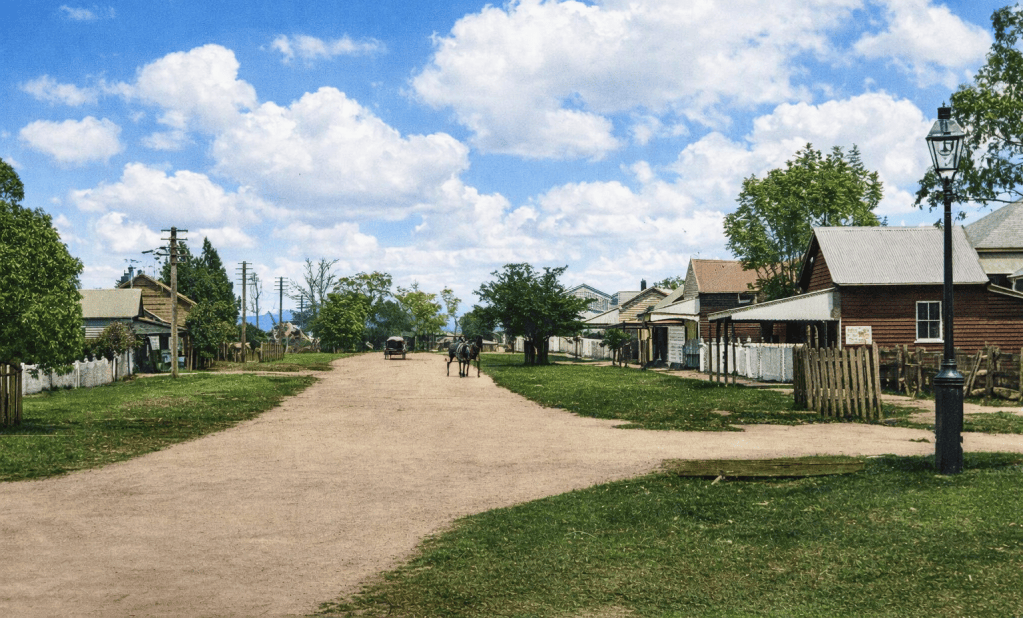
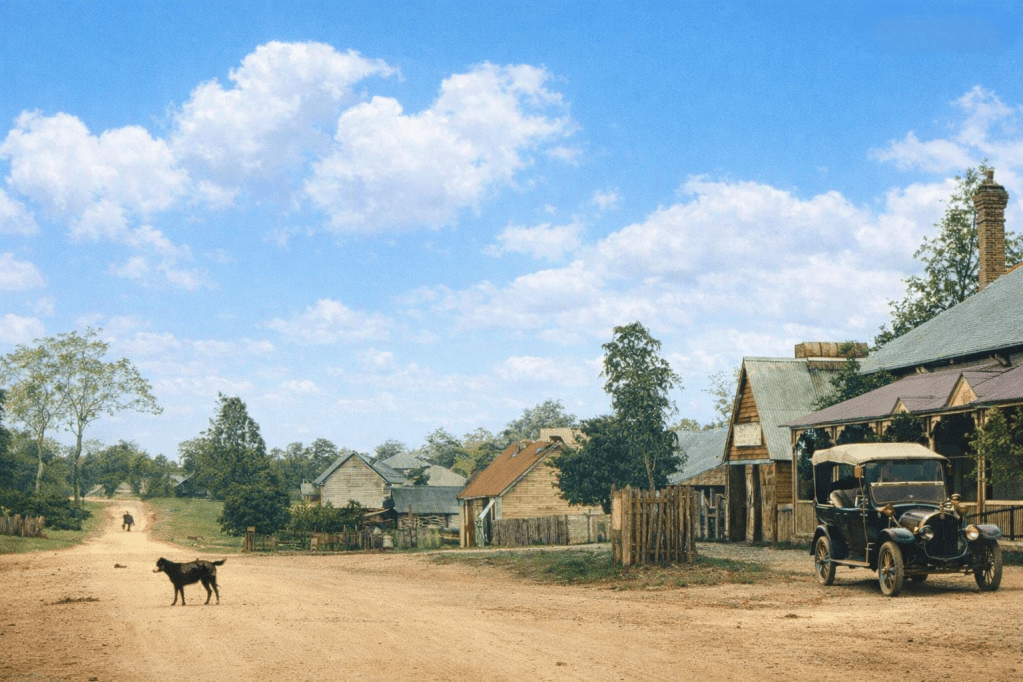
From selector’s huts to homes in town.
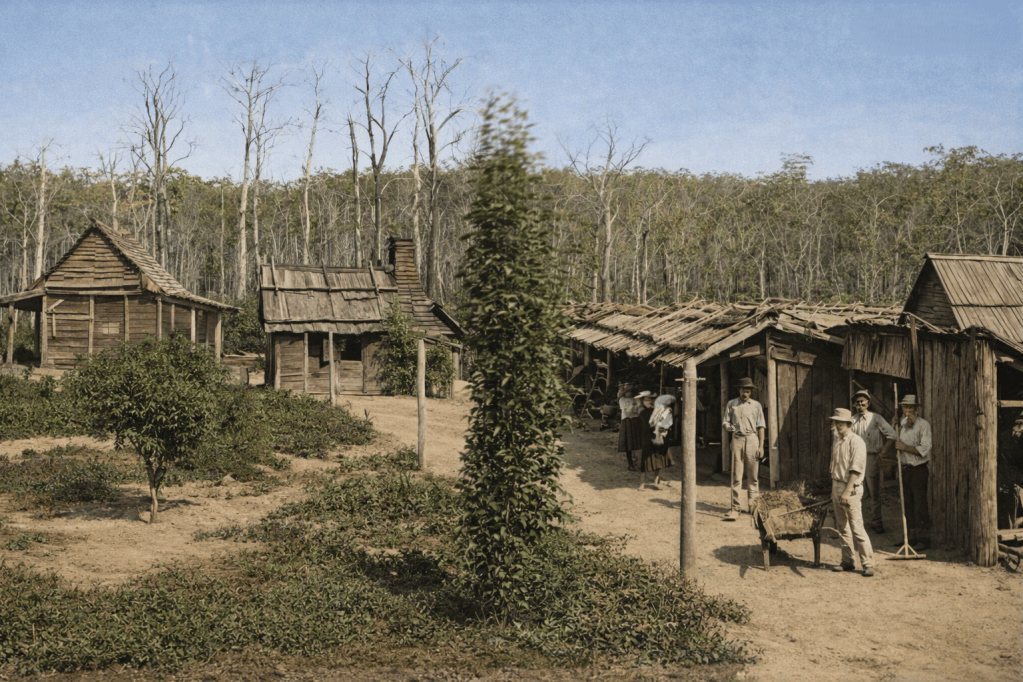
A spot of recreation nearby.
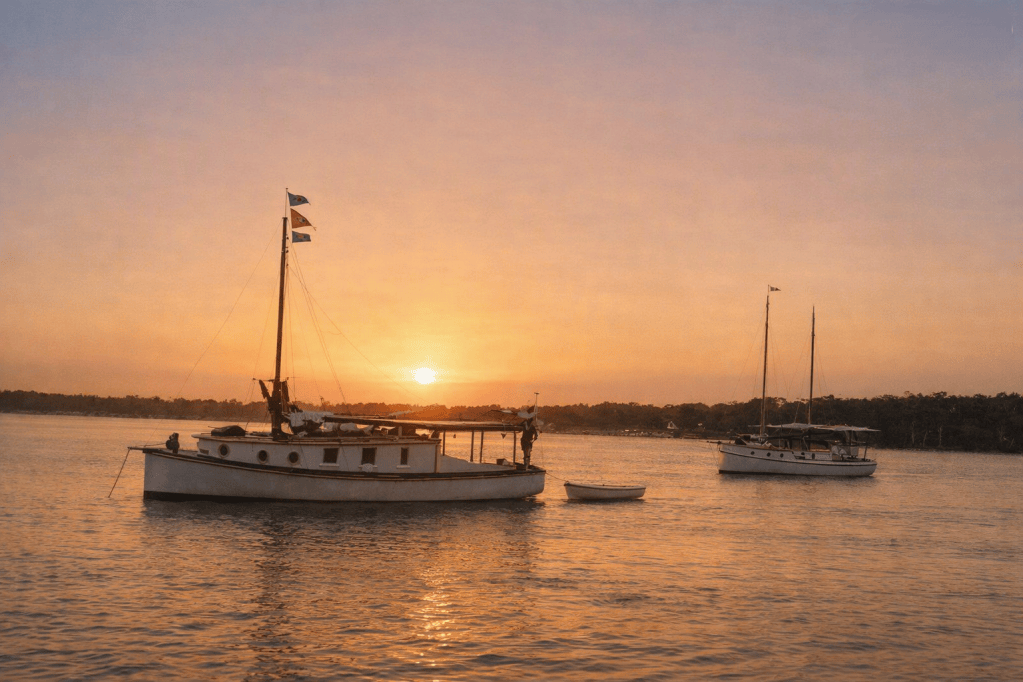
The party embarked at Sandgate, and after a pleasant run across the Bay, anchored for a few hours off Toorbul Point – the neck of the mainland opposite the southern end of Bribie Passage – as our prudent skipper was not inclined to face the shallow straits of the passage except on a rising tide. Fish of all kinds were plentiful, but at that state of the tide those who used small hooks baited with prawns were content with whiting, bream, and flathead were most successful. Among the fish caught, however, were a few very fine soles equal in size to the English variety, and no whit behind in the matter of flavour when put to the test of the frying pan.
The Queenslander, March 1889
- Caboolture. ↩︎