
There’s no doubt that the tea enjoyed in these old Queensland settings was made and consumed in the English manner. Anything else would cause social disgrace. Possibly the end of the world.
Earnest research into the art of the English cuppa led to some startling discoveries.
Afternoon Tea in the Garden.
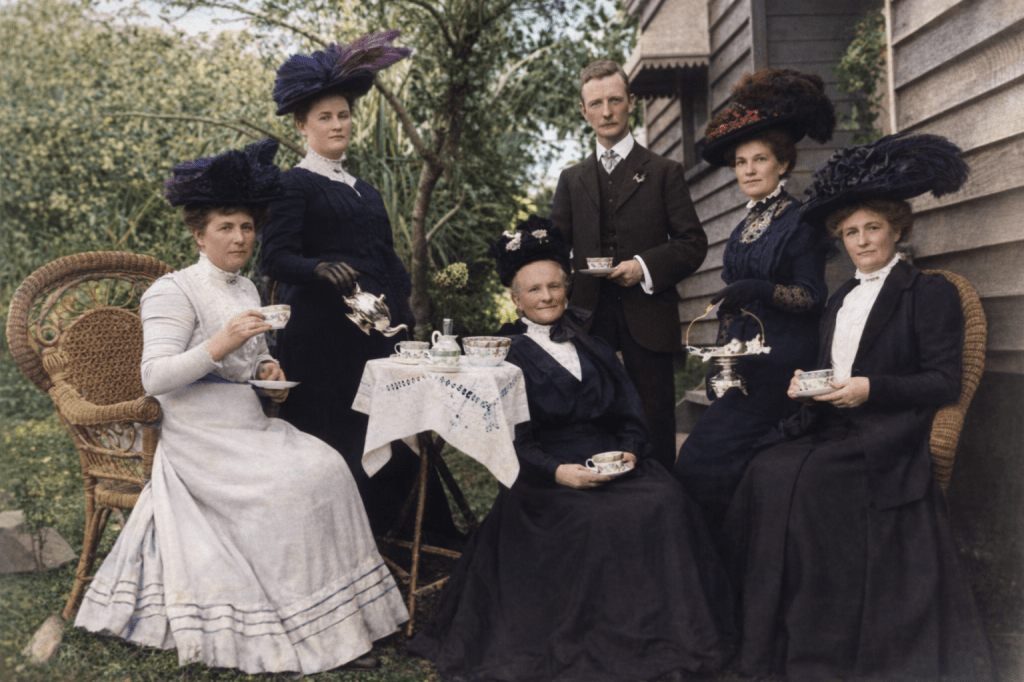
Afternoon tea in the garden, Gympie, ca 1907
- The British drink over 100 million cups of tea daily. (I think they mean collectively, otherwise nothing would get done, particularly Empire-building.)
- The tea must be made with boiling water. A roiling boil, mind you. Steep your brisk, black tea for 3-5 minutes, depending on taste.
- A genuine teapot is essential. Ideally, it should be UK-made, says the website. Presumably, the steeping tea leaves can detect the nationality of the vessel in question and will respond with disdain if placed in something foreign.
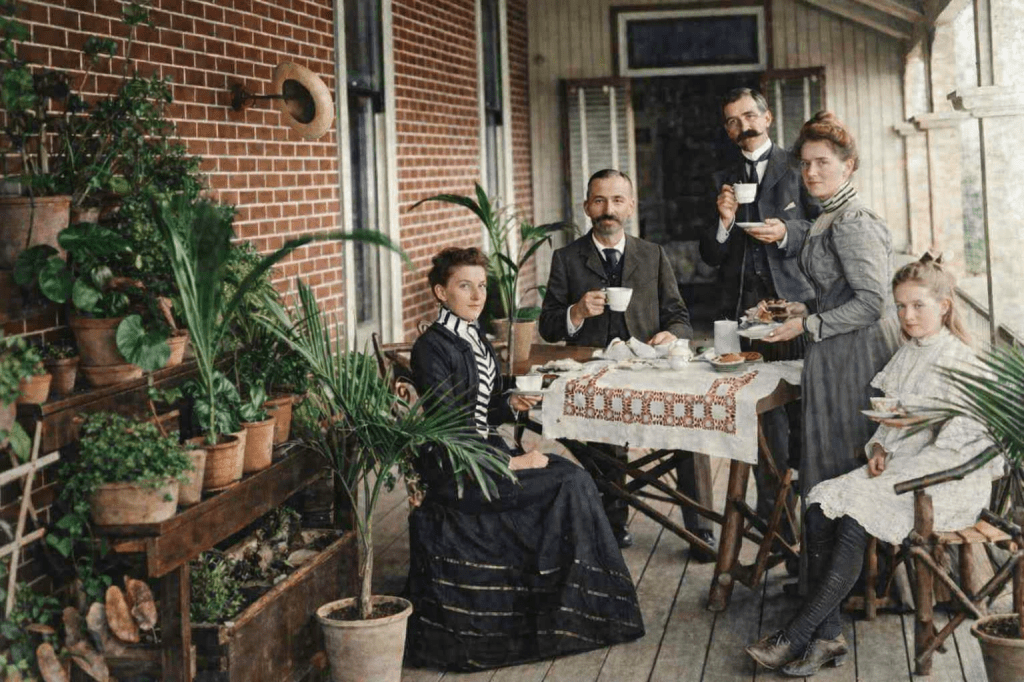
Taking tea on the verandah.
- Whole milk and white sugar can be added to an English cup of tea, “not cream or honey.” The very idea. And don’t even consider a slice of lemon.
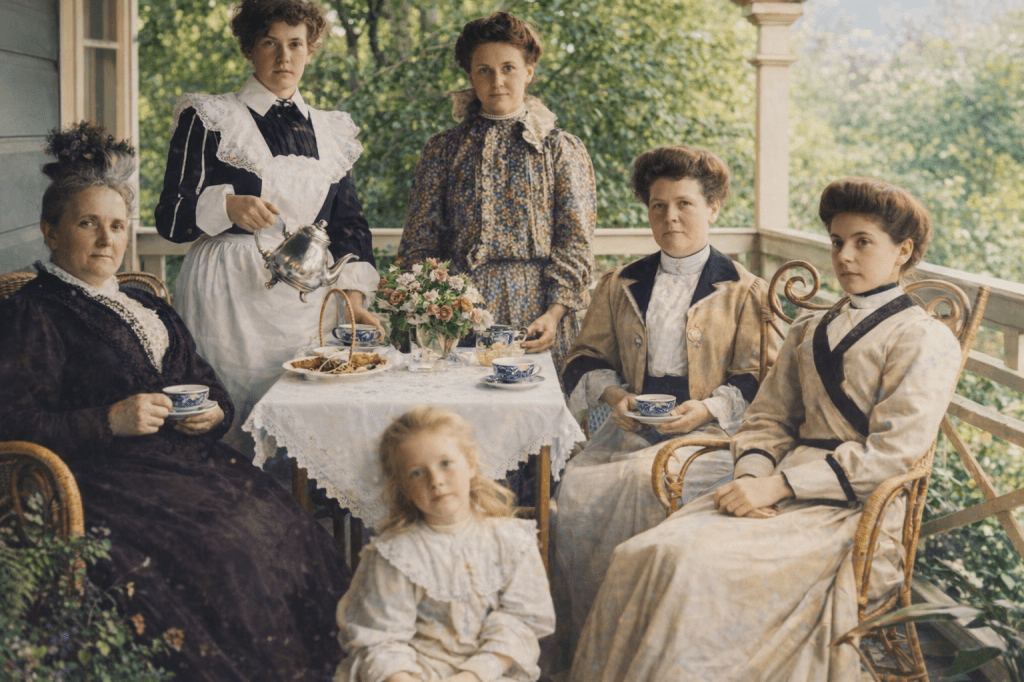
- “The proper British cup demands whole milk rather than cream or non-dairy options.” Make sure you have whole milk on hand, or the cup may become very demanding indeed. Possibly abusive.
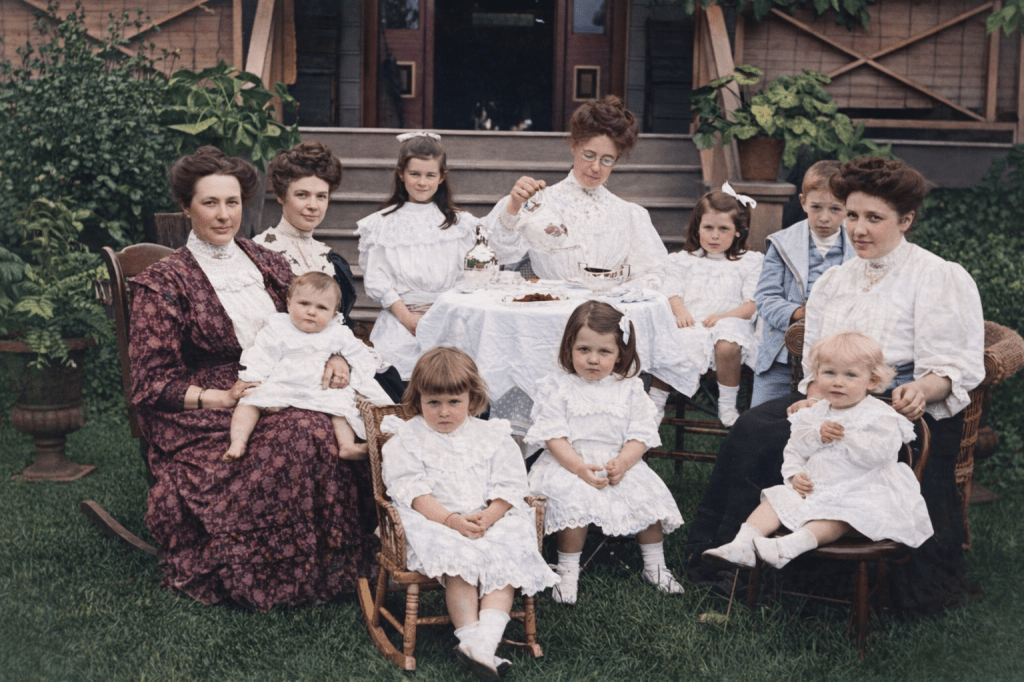
The indoor tea party.
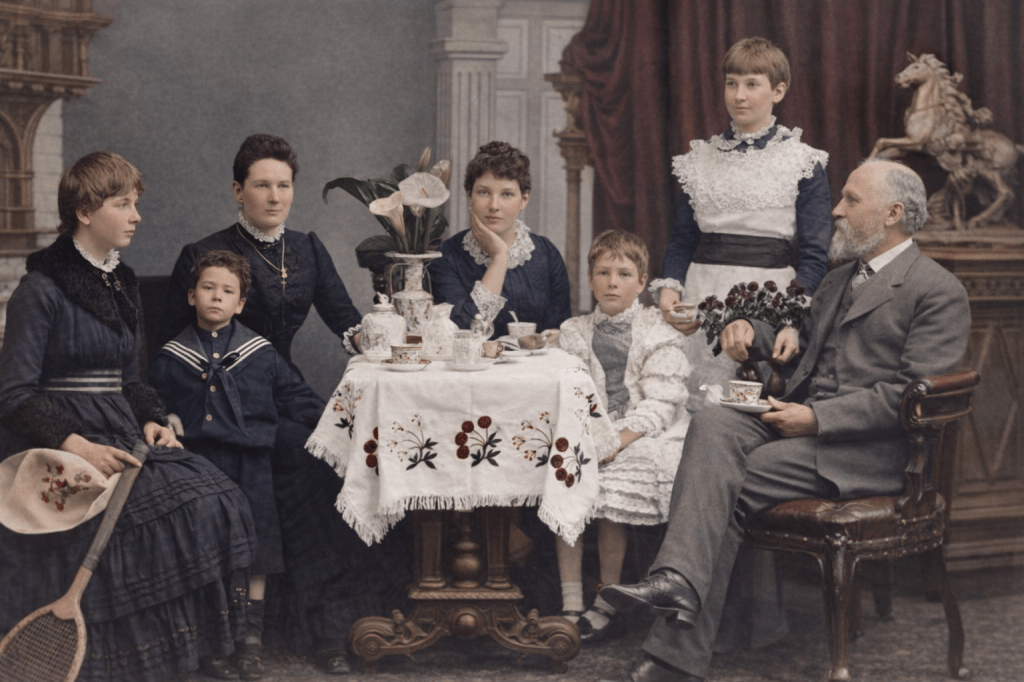
- A tea strainer is essential when brewing loose-leaf tea. Tea bags were unheard-of in the 19th and early 20th centuries, let alone leaving a tea bag in a cup while drinking tea.
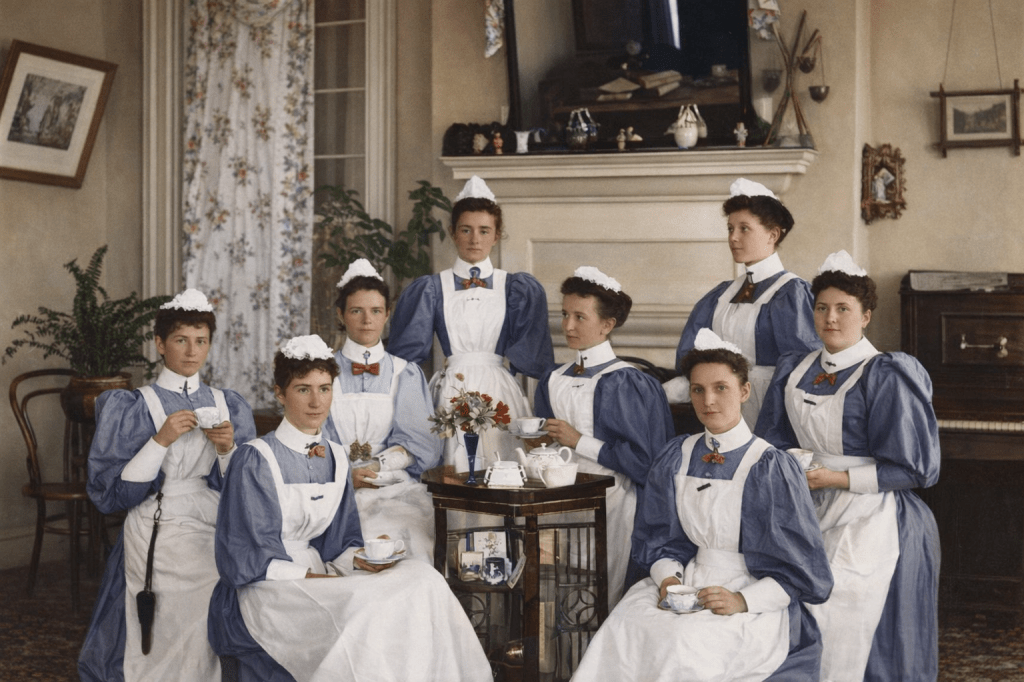
- Warm the teapot first, and use a tea cosy. Failure to use a warmed teapot can drop the temperature required to extract the flavour of black teas.
Tea beyond the garden.
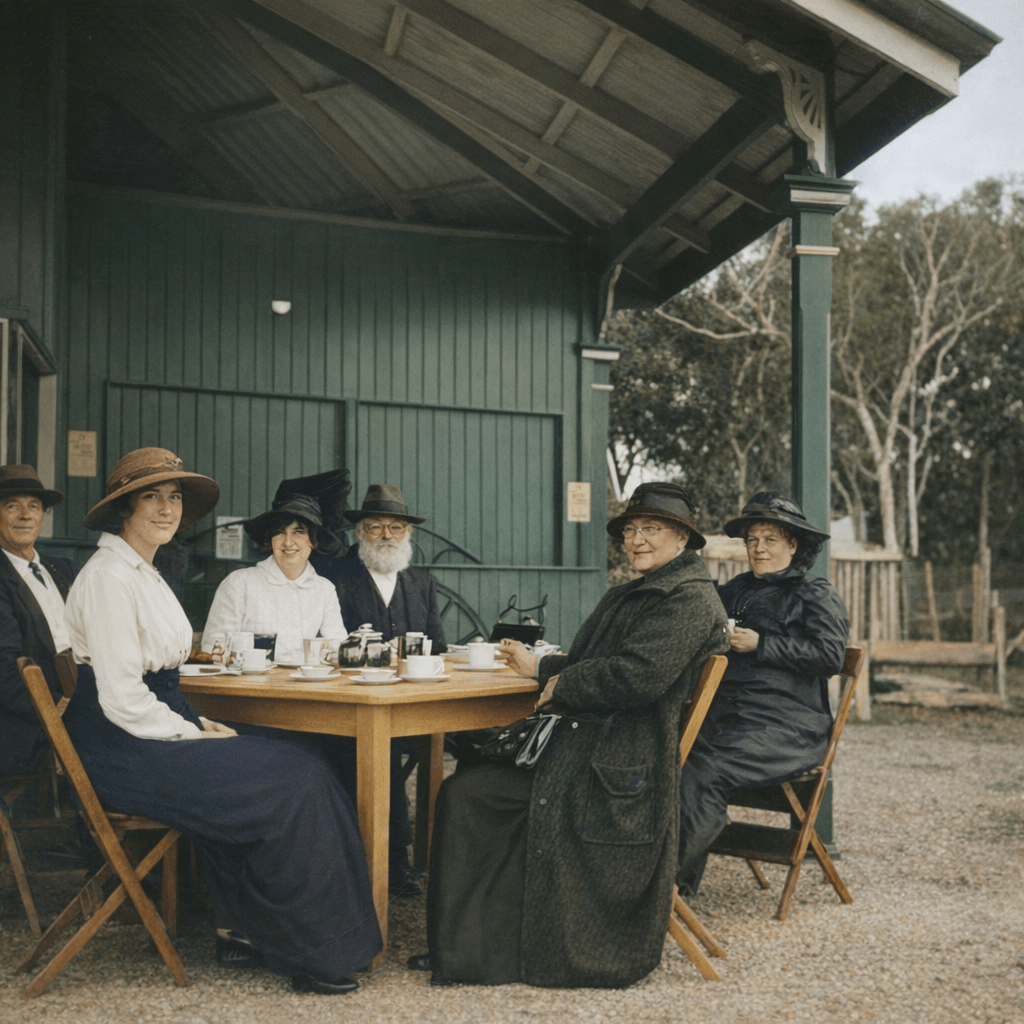
- “2% milk works as an acceptable substitute in American kitchens.” Americans. They were colonials too, you know.
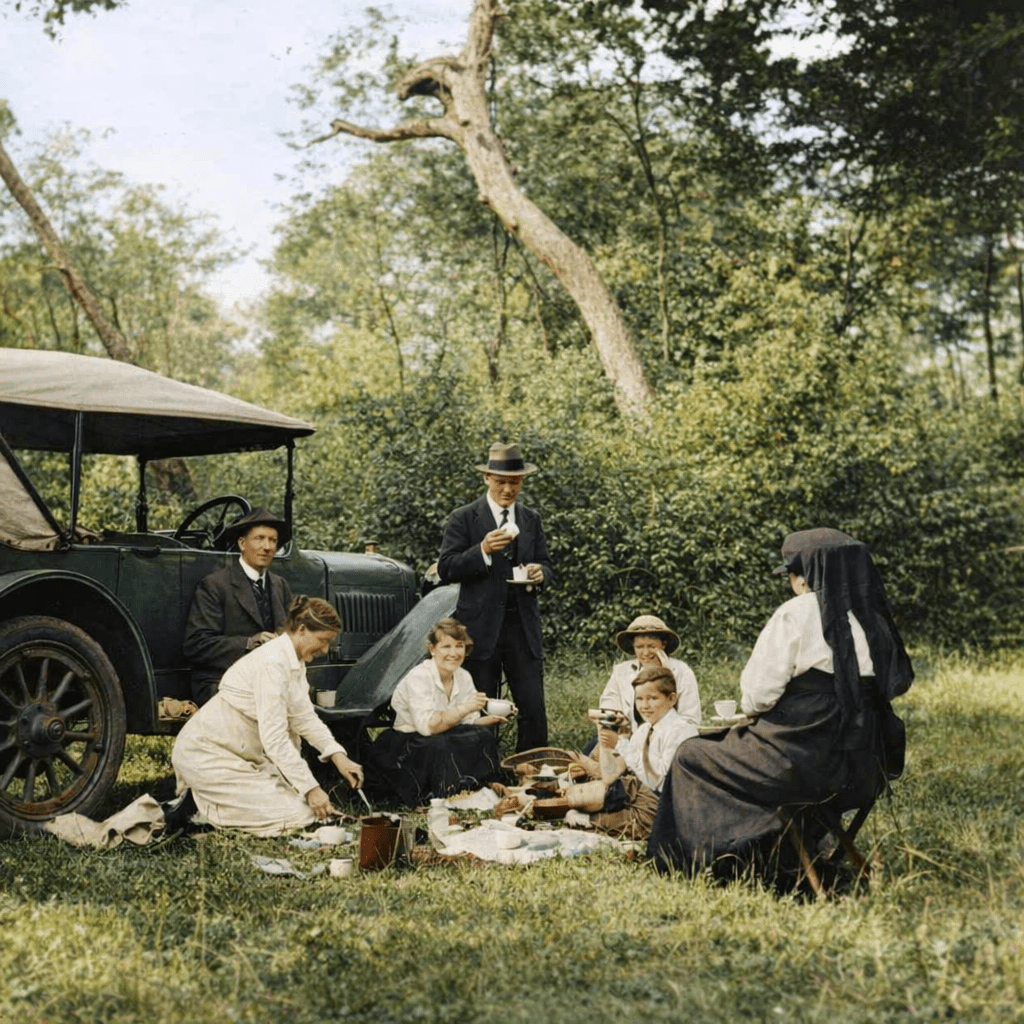
- Milk in first?? Although the website permits individual discretion in the matter of milk in first or milk in last, the debate has raged across generations. One’s entire social future could depend on when one chose to lift the milk jug.
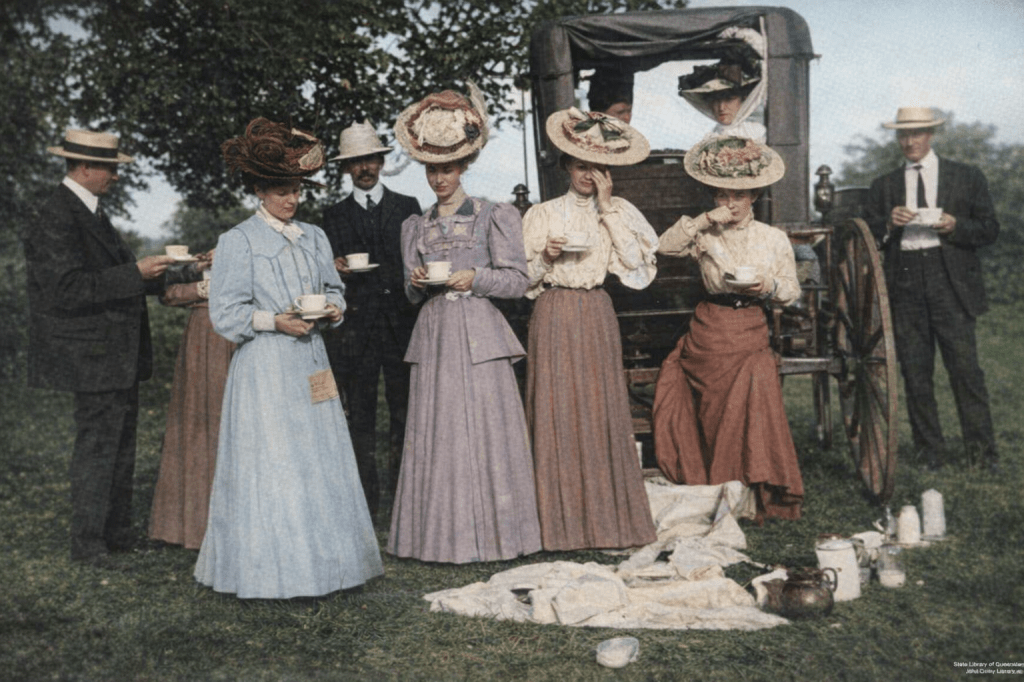
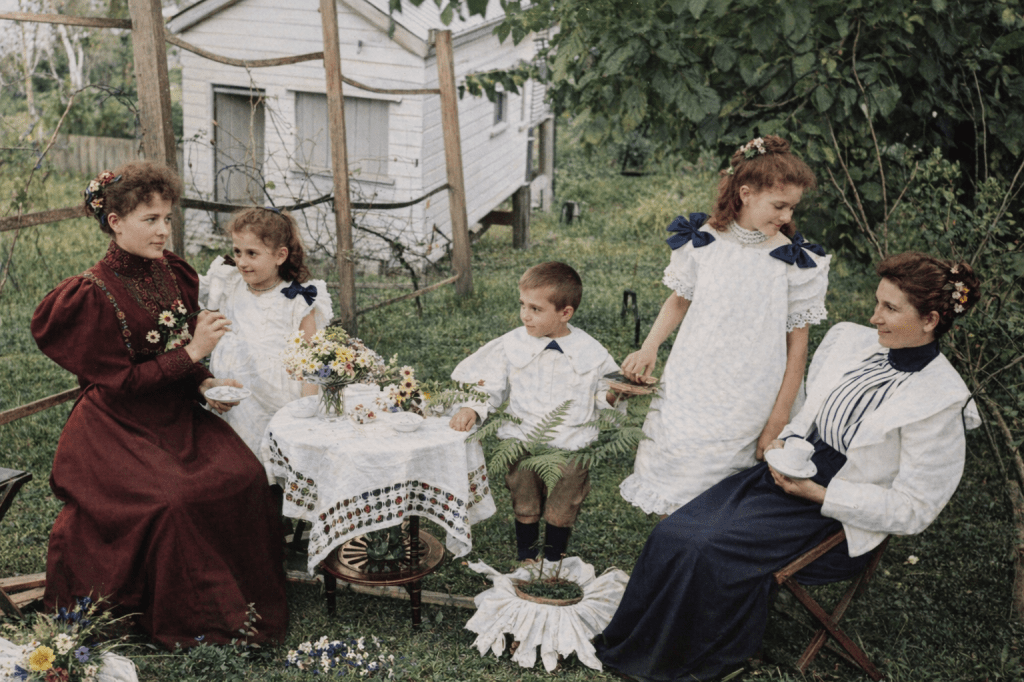
All images are taken from the digital collections of the State Library of Queensland and are out of copyright. AI colourisation by CoPilot.
The information on English tea-making comes from the website Teadelight.net, “How to brew tea like the English: the proper way to make a cup of British tea.”

