
The usual suspects passed by Gladstone in the early years of contact with Europeans. Cook sailed past, and Flinders did likewise in 1803. At least Flinders didn’t engage in any hat-related misadventures with the indigenous people this time. He’d learned his lesson at Bribie. Oxley poked around there in 1823, but found the harbour and surrounding country not conducive to European settlement. (In those days, European settlement almost certainly meant convict accommodation.)
An attempt was made to set up a convict settlement in 1847 in Port Curtis, as it was then known. It was abandoned before it was properly set up. A decade later, surveying for a town was underway, and Sir Maurice O’Connell installed as Government Resident. His dwelling, on Barney Point, was at the site of the old attempted convict settlement.
Gladstone was named and made a municipality in 1863, and the town grew gradually over the rest of the century.
The early years of Gladstone.
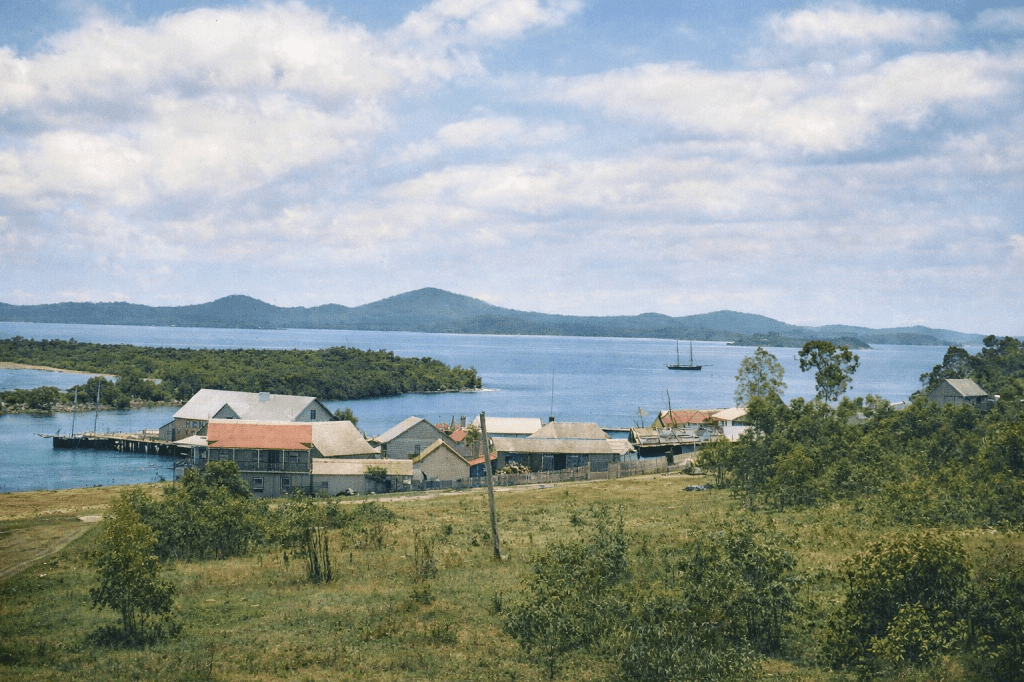
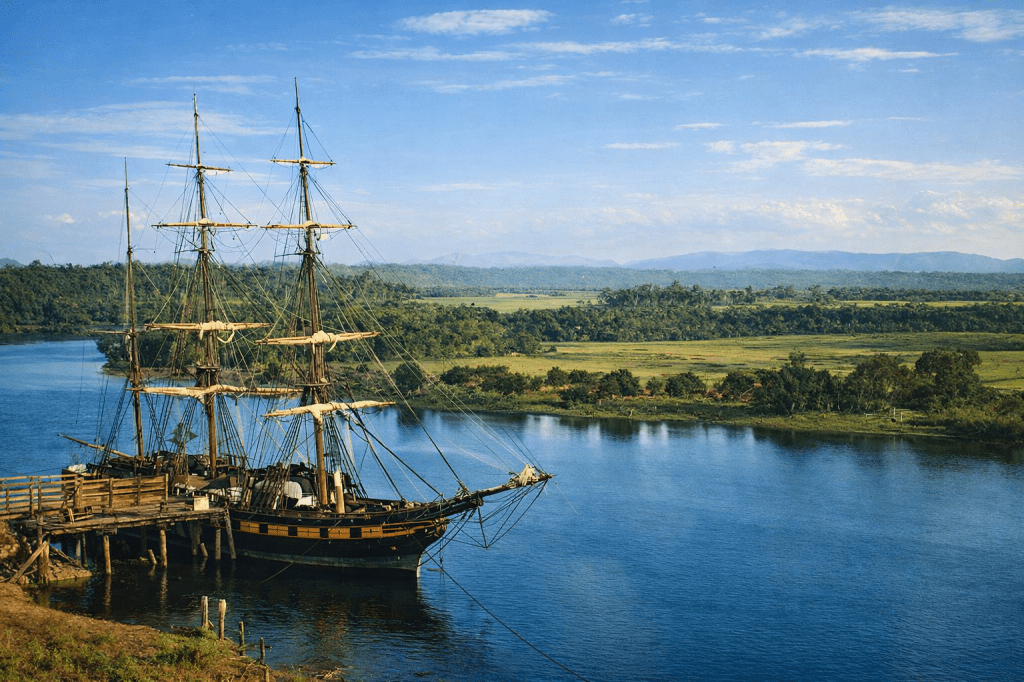
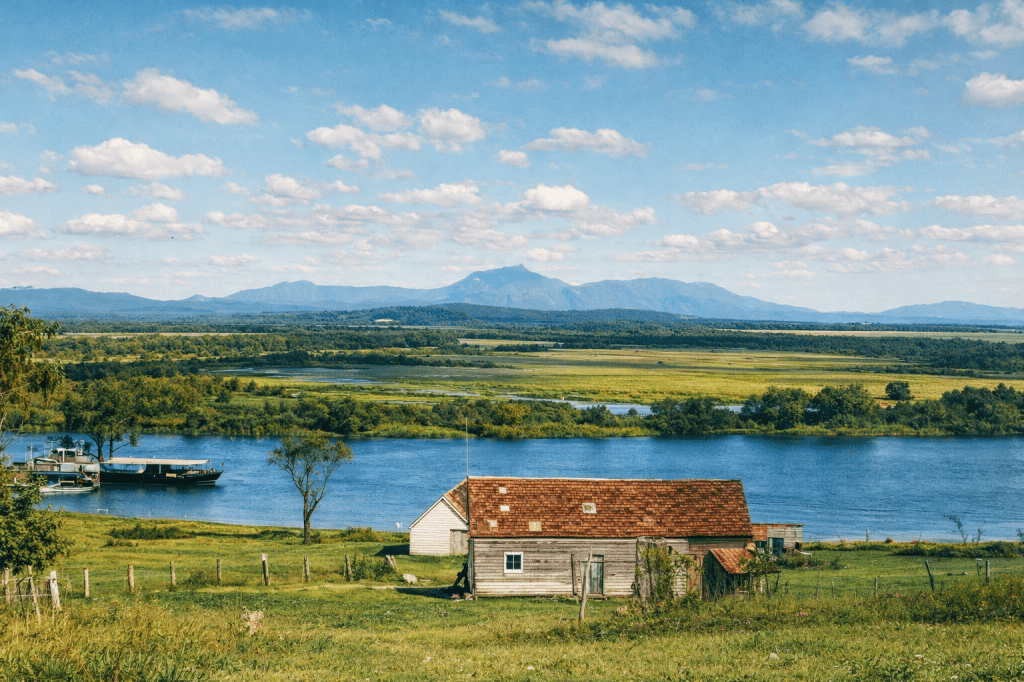
The growing years – 1880 to 1920.
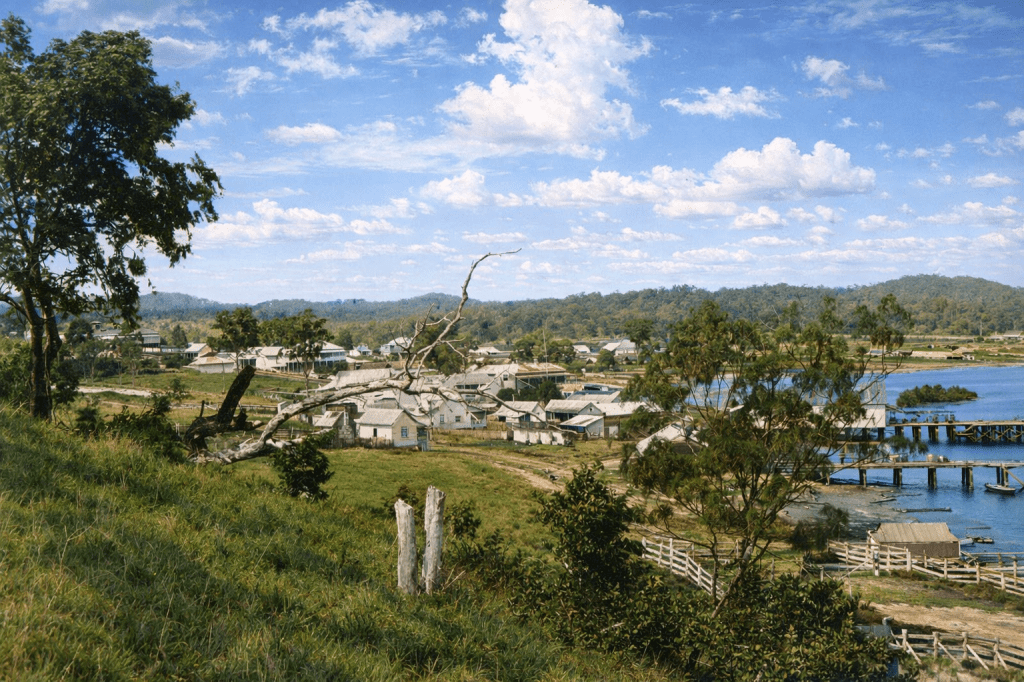
The river and wharves in the days of steam.
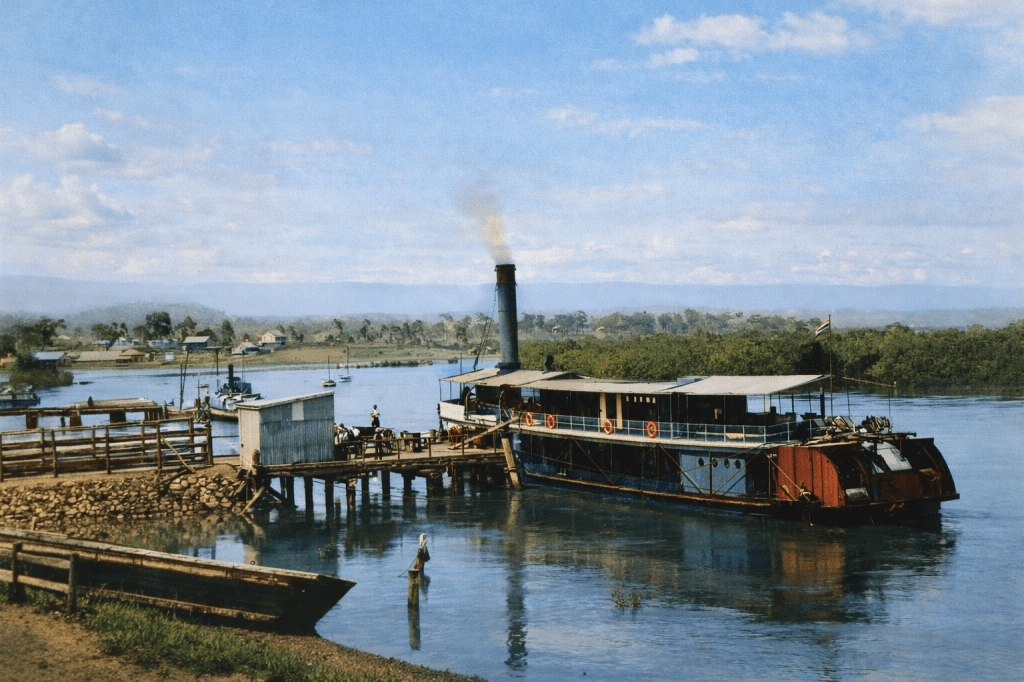
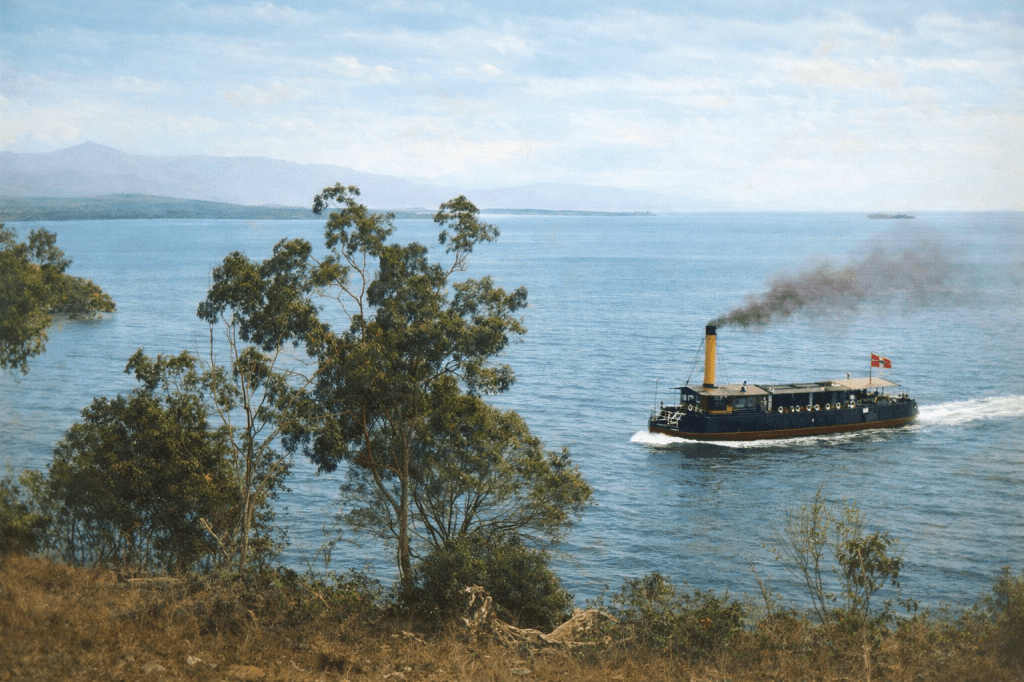
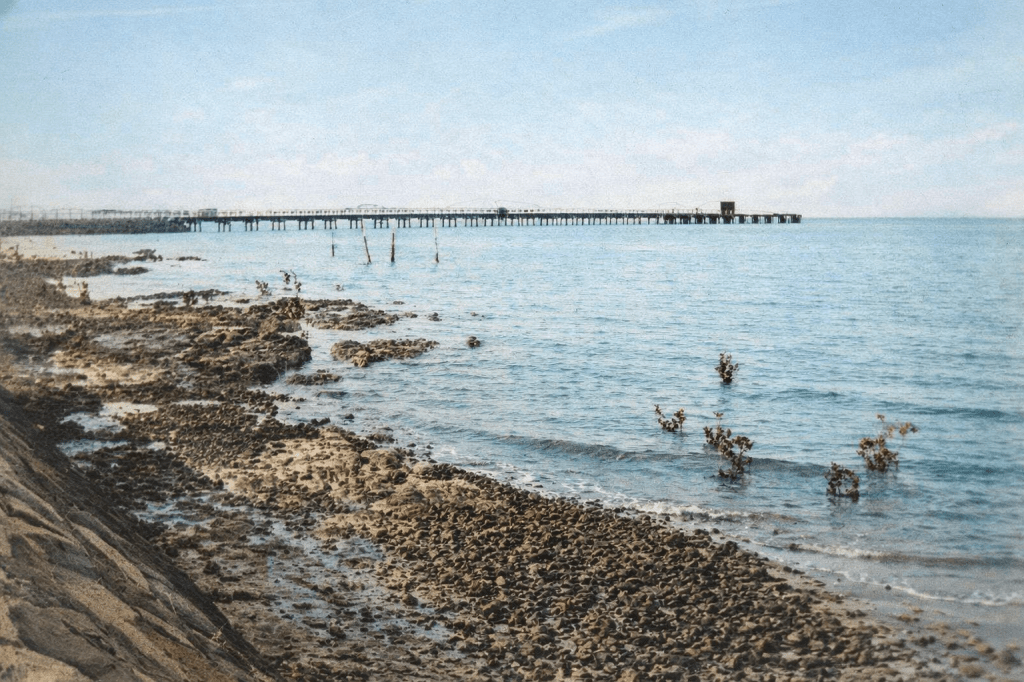
Spots for recreation.
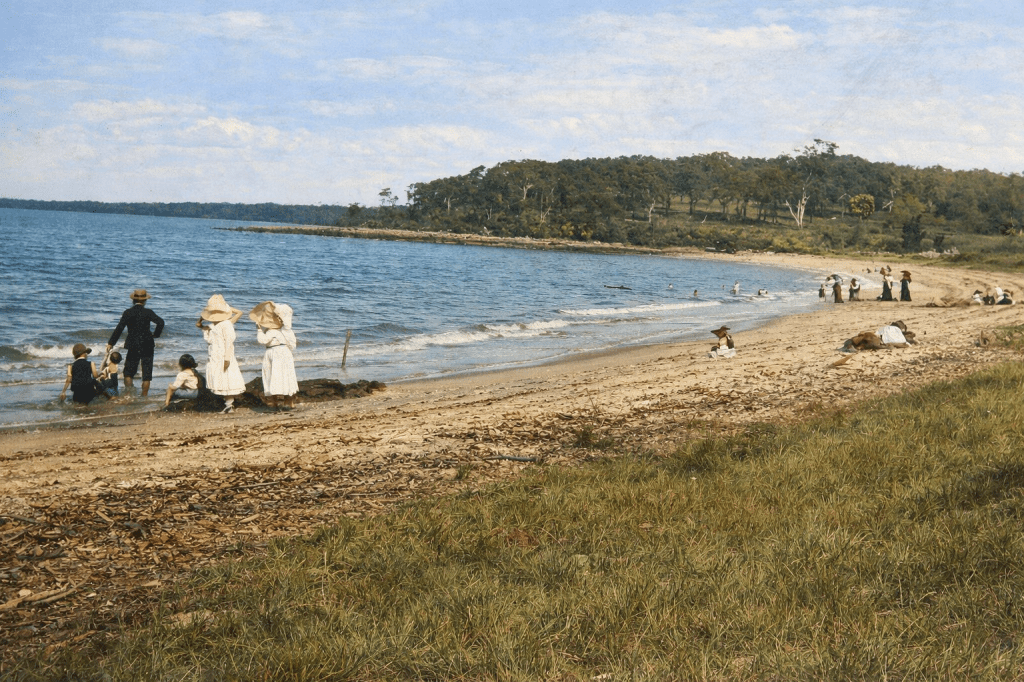
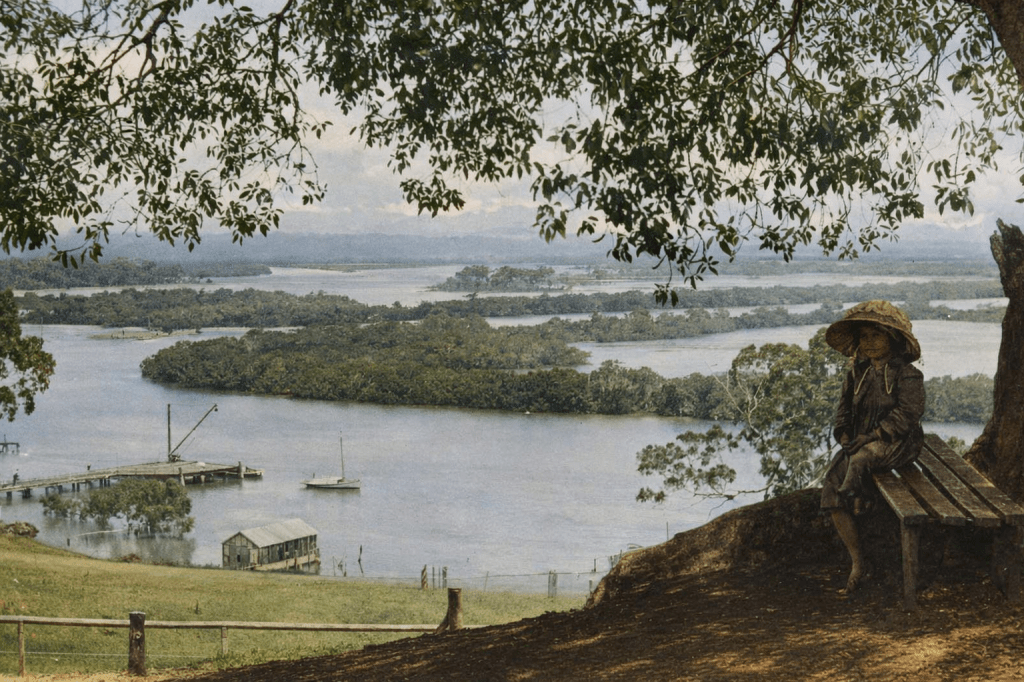
The last reminder of an abandoned convict settlement.
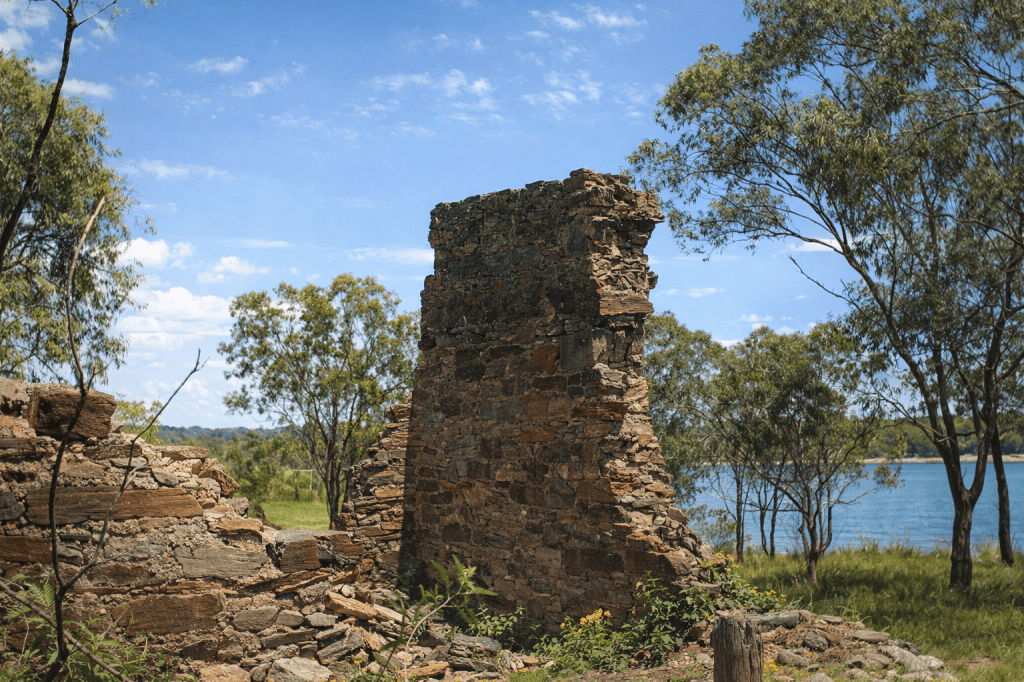
Another interesting spot is Barney Point, a low headland south of Gladstone. On this charming promontory Sir Maurice O’Connell pitched his home, and near the ruins of the old place stands the grave of a bright young Englishman, one of his staff, who was killed by a horse falling on him.
The Queenslander (Brisbane, Qld.: 1866 – 1939), Saturday 23 October 1897, page 816. Gladstone Railway.
The floods of 1911 – Gladstone.
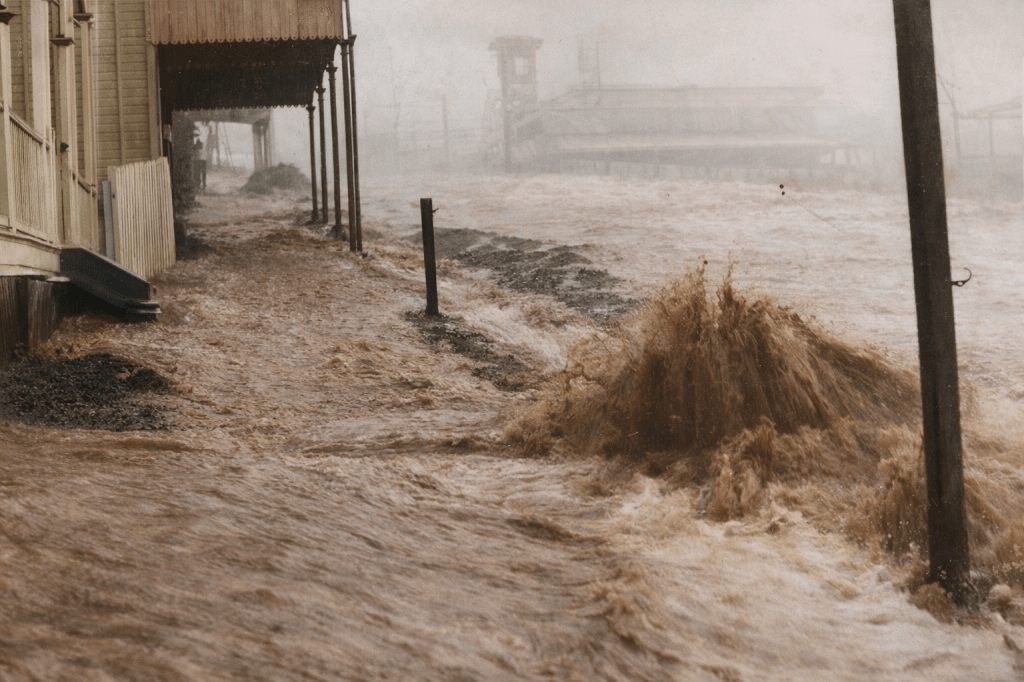
In the centre, the Fitzroy is in high flood, and all the low-lying parts of Rockhampton are submerged. Gladstone had the phenomenal fall of 18 inches in 24 hours.
The Evening Telegraph (Charters Towers, Qld.: 1901 – 1921), Monday 6 February 1911, page 2. Rainfall.
Town buildings.
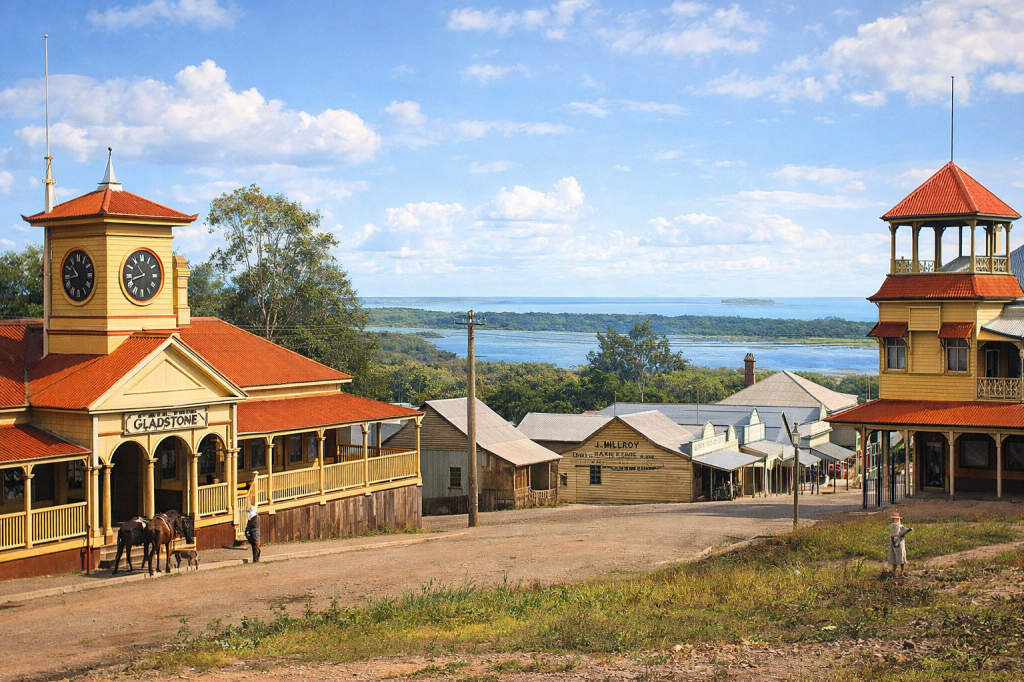
The Blue Bell.
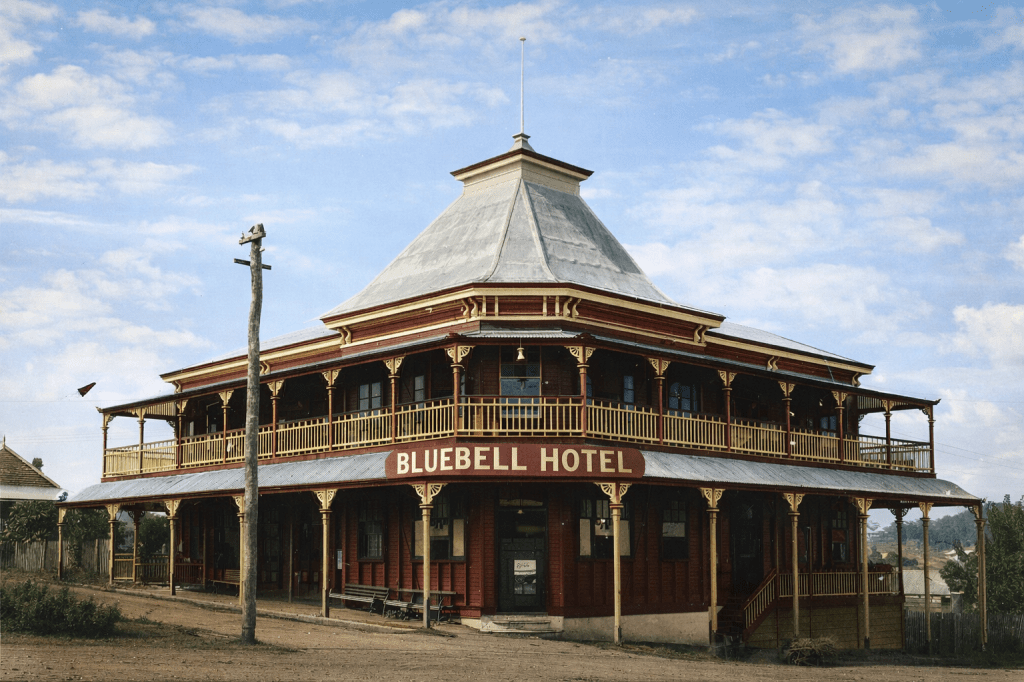
The Blue Bell Hotel, Mr. W. J. Cowan, proprietor, is an excellent hostelry, and has the distinction of being patronised by His Excellency Lord Lamington. The building is most pleasantly situated, overlooking the harbour. The coffee and bed rooms are detached from the bar portion of the house, thus securing a peacefulness which is much appreciated. There is excellent stabling connected with the hotel, and a buggy, for the convenience of patrons, meets all trains and steamers.
Capricornian (Rockhampton, Qld.: 1875 – 1929), Saturday 2 April 1898, page 17.
All images are taken from the State Library of Queensland’s digital collection, and are out of copyright. AI colourisation by Copilot.
Apart from the cited sources in the text, general information on the early days of Gladstone was adapted from the relevant Wikipedia page.

