
Gympie takes its name from the Gubbi Gubbi word gimpi-gimpi, or stinging tree. Prior to the name being adopted, it was called Nashville, after James Nash. Nash had reported a deposit of alluvial gold in 1867, which started a rush that eventually saved the colony’s economy.
Gympie in the early years.
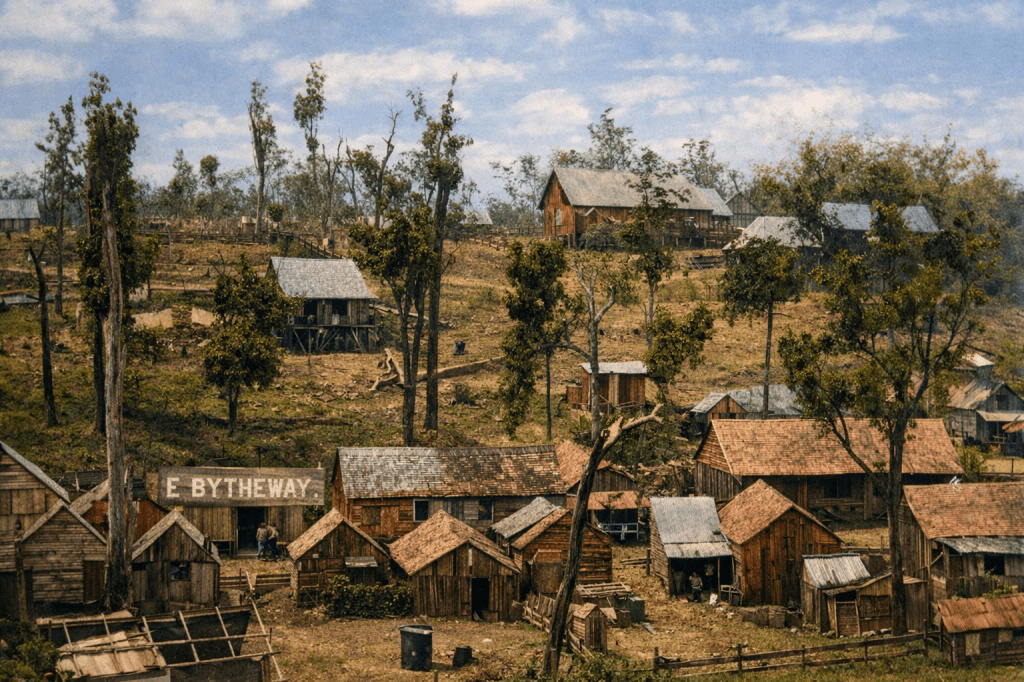
The businesses of early Gympie.
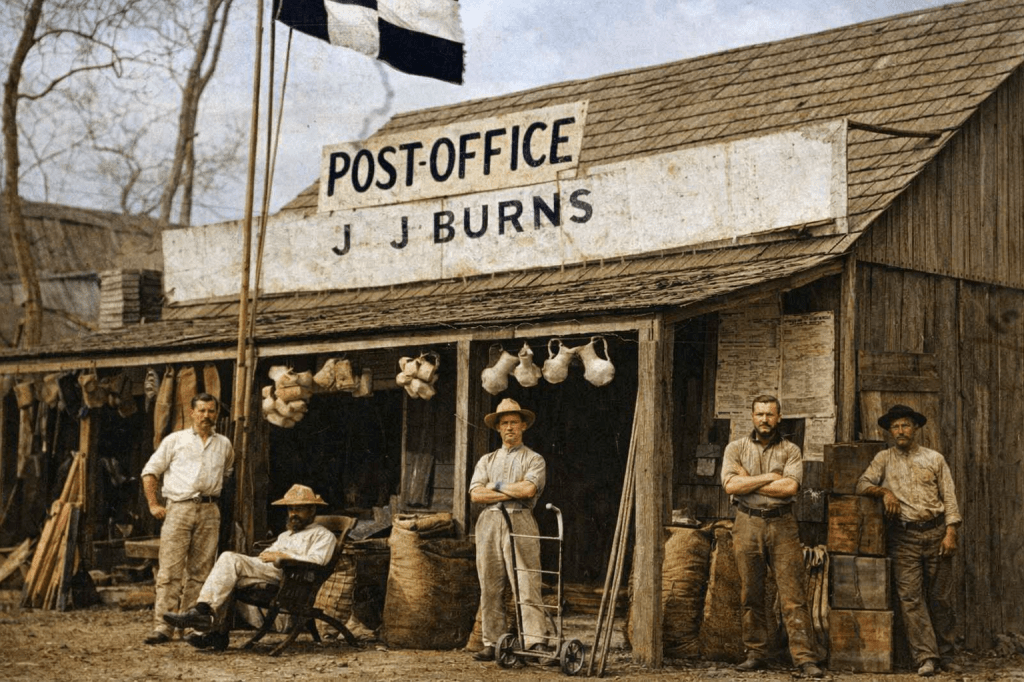
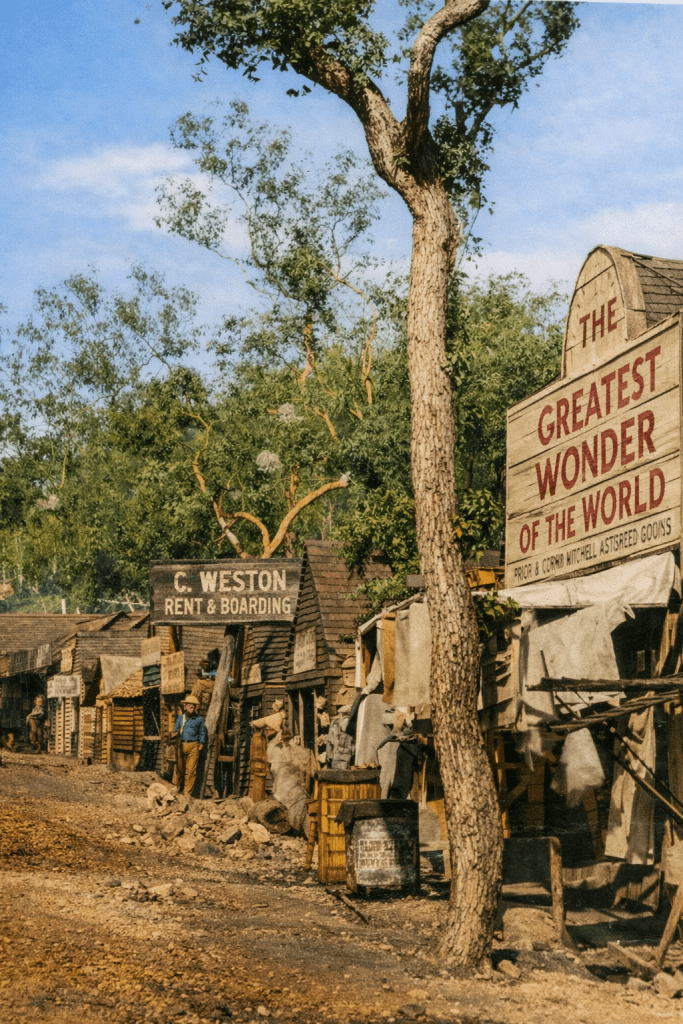
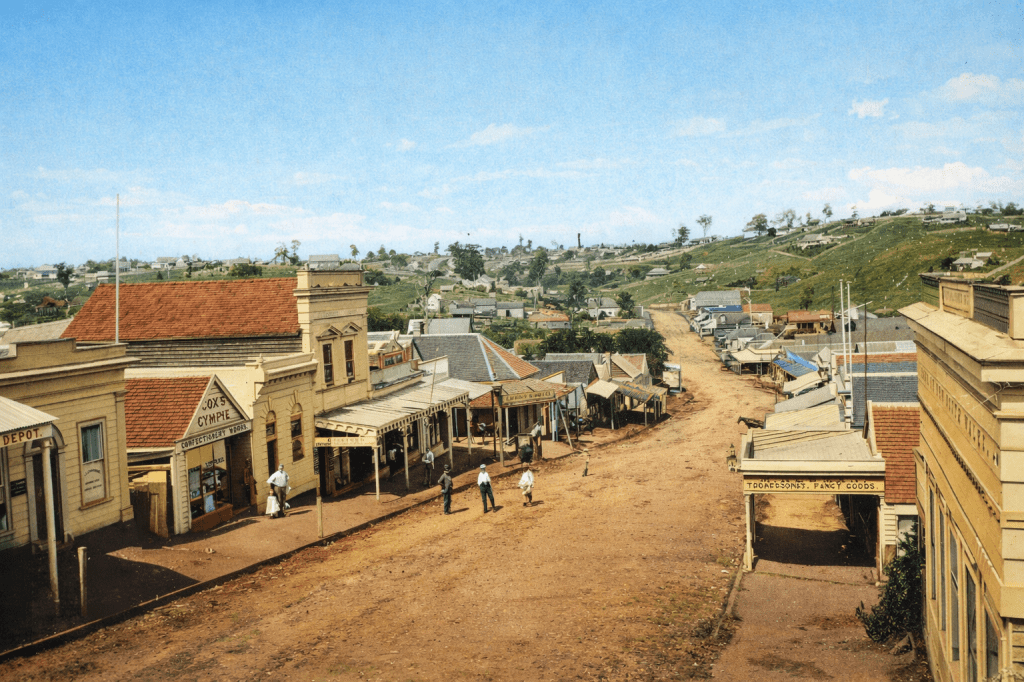
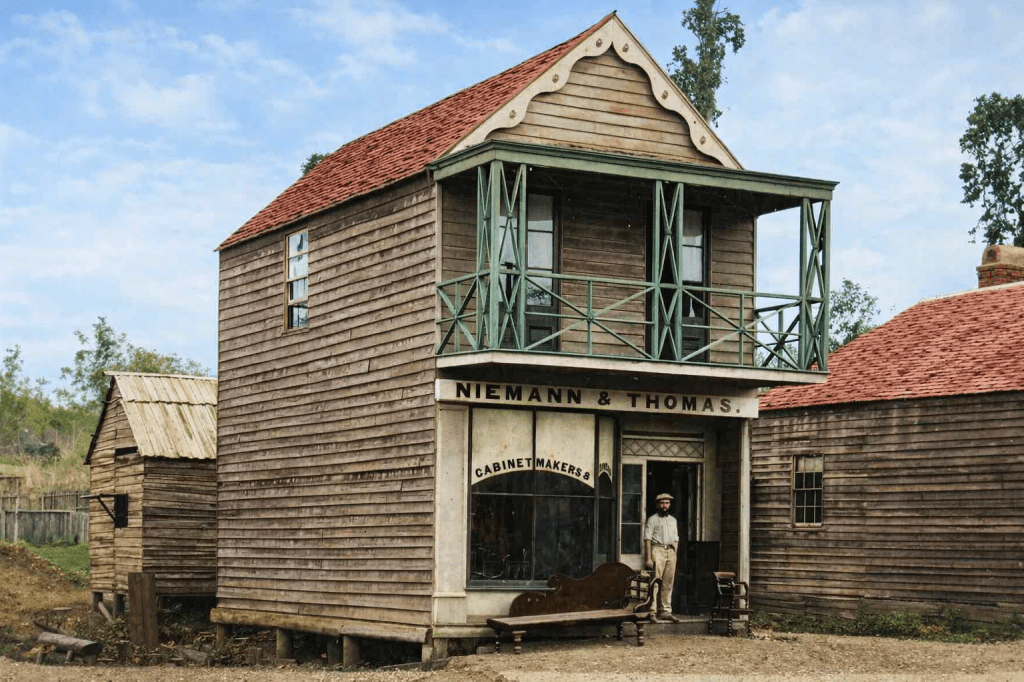
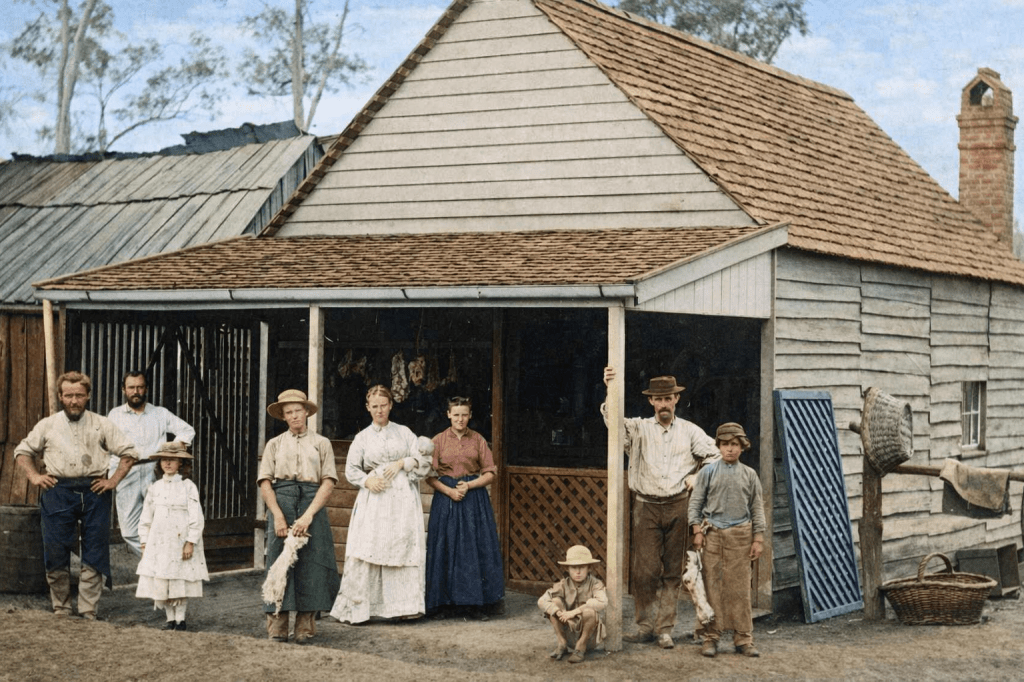
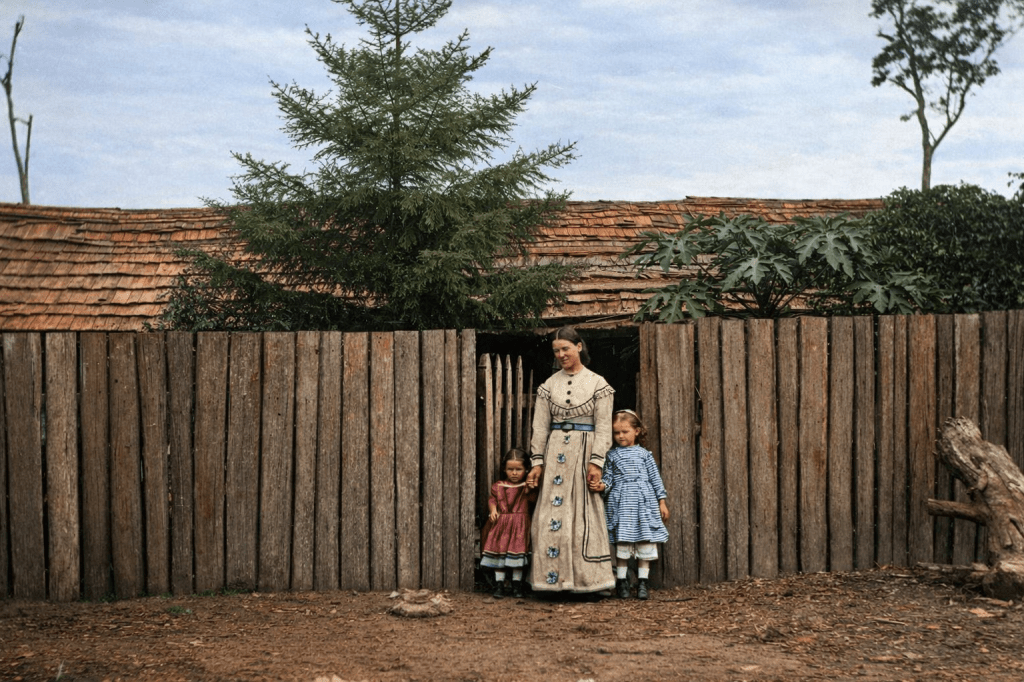
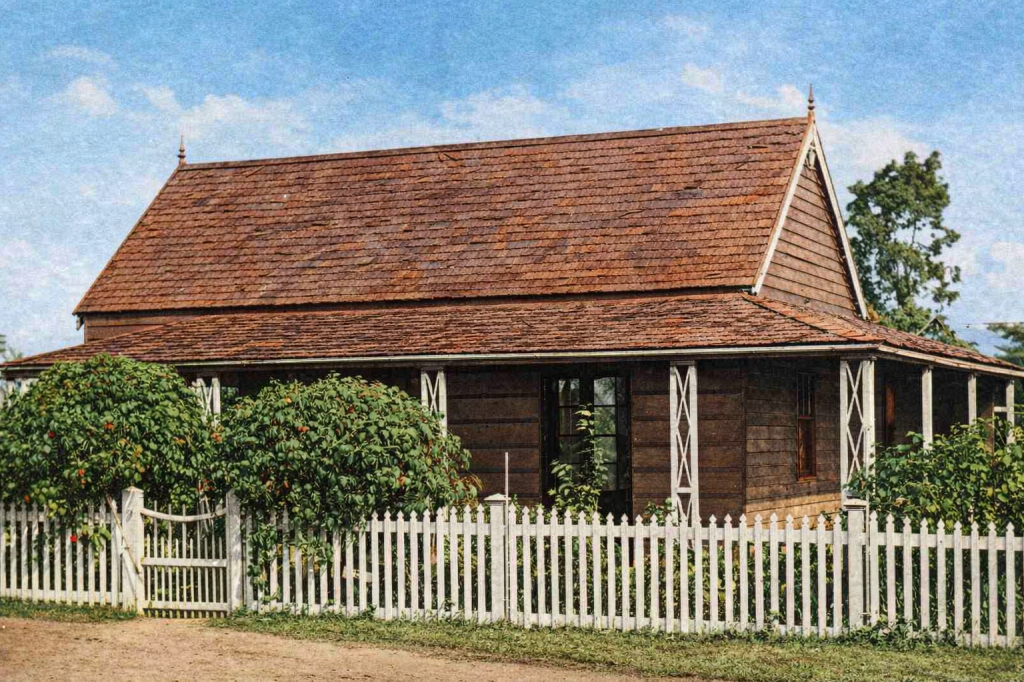
Gympie’s early homes.
The floods of 1870.
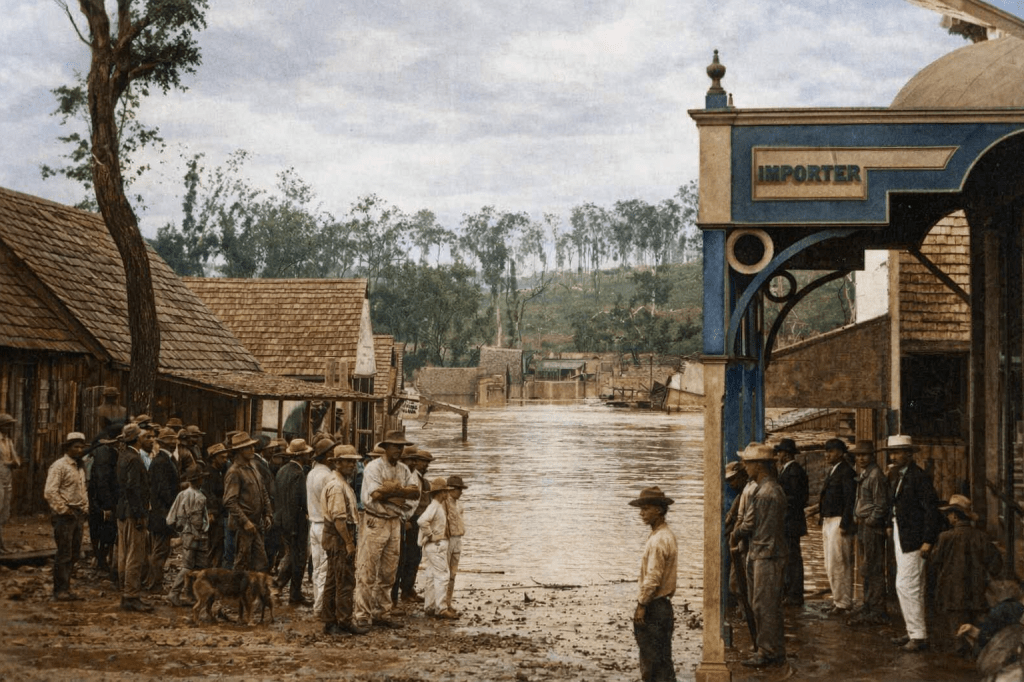
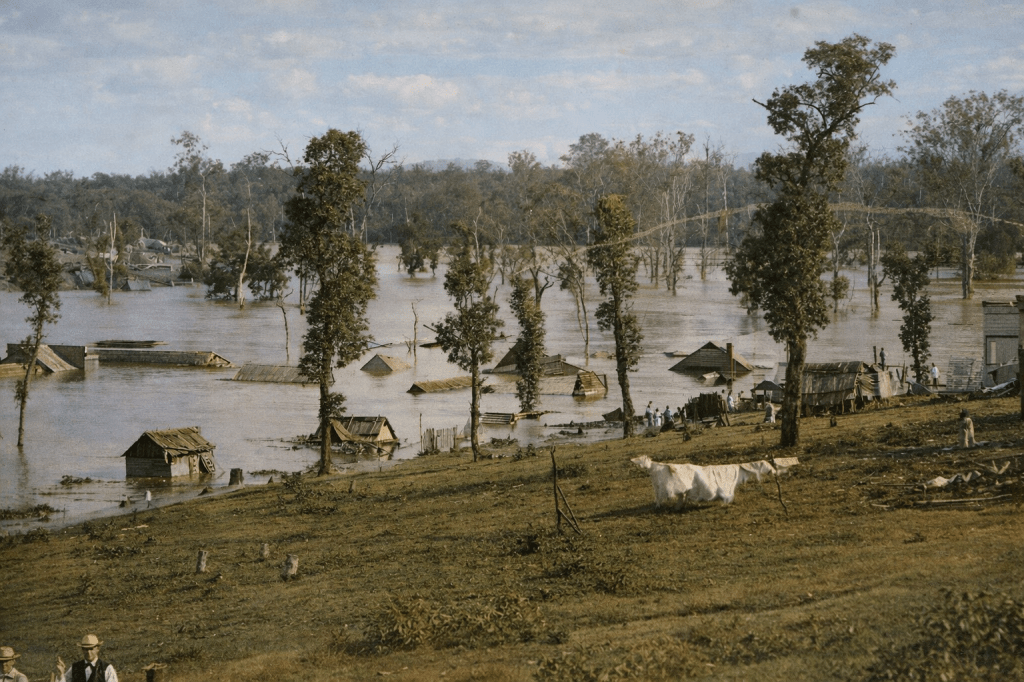
The town was up and running, and in its third year of official existence, when it was deluged with rain. The photos below show how heavily the place was inundated. Perhaps it was the newness of the town, or the prospect of future wealth through gold, but Gympie rebuilt and grew again.
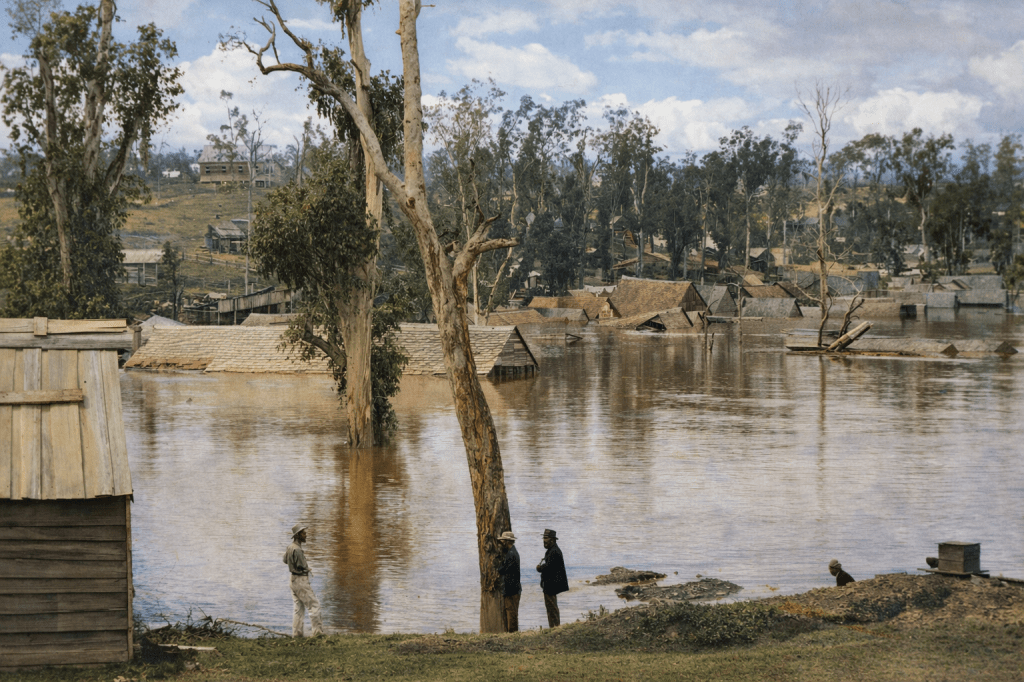
HEAVY RAINS AND CALAMITOUS FLOOD.
Gympie Times and Mary River Mining Gazette (Qld.: 1868 – 1919), Wednesday 9 March 1870, page 2.
It becomes our painful duty to recall the greatest fall of rain and the most calamitous flood which has yet visited the Gympie Goldfield. Its injurious effects are everywhere so apparent that we hardly know at which point to commence a description.
Mining.
From lone prospectors hoping for a miracle, to companies with proper equipment, the lure of gold spurred a population boom, and some serious infrastructure.
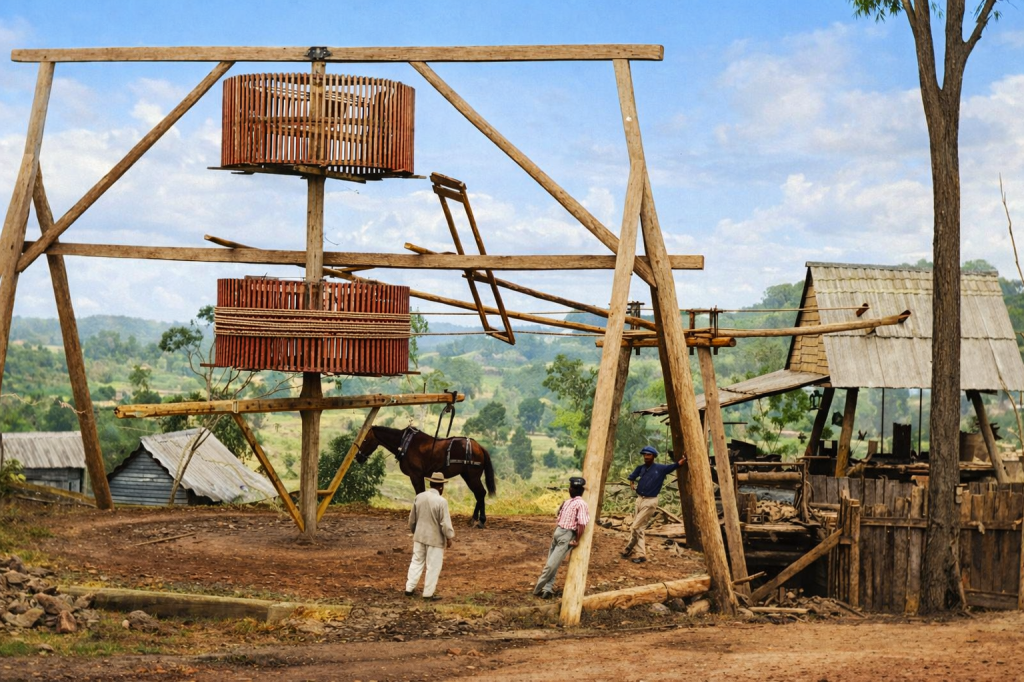
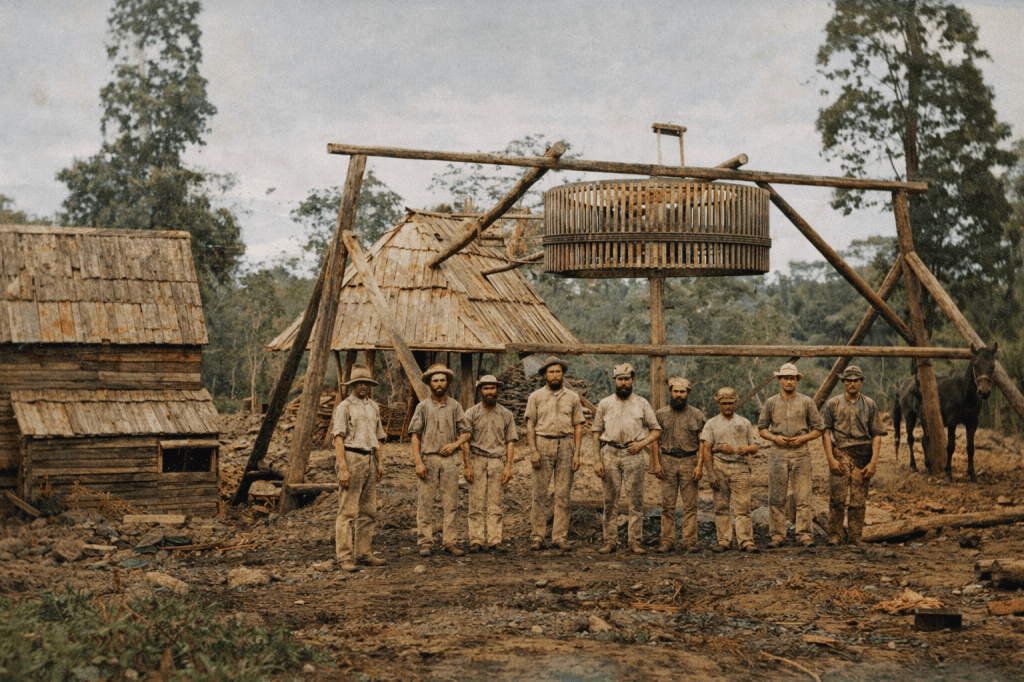
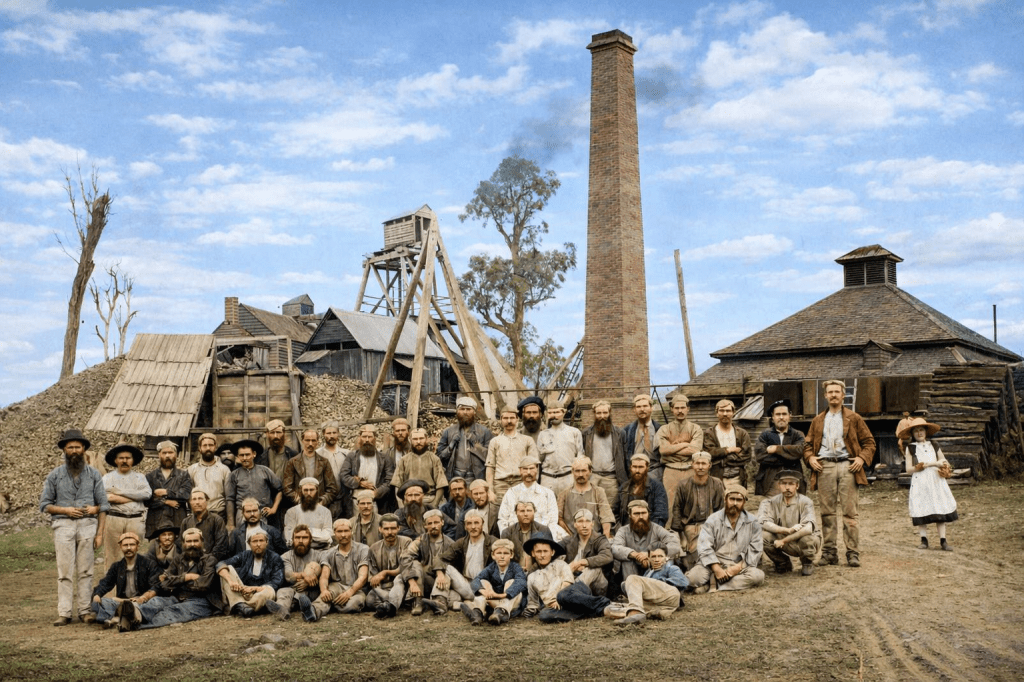
Glanmire. The holders of the prospector’s claim (O’Keefe and party) have two shafts working; their northern one is 110 feet deep, and they are at present driving to the east out of it. It appears that at the 70 feet level, the reef they had in the shaft split in two leaders, one of which they followed until it ran out and they are now driving east to cut the other leader.
Gympie Times and Mary River Mining Gazette (Qld.: 1868 – 1919), Wednesday 23 November 1870, page 3.
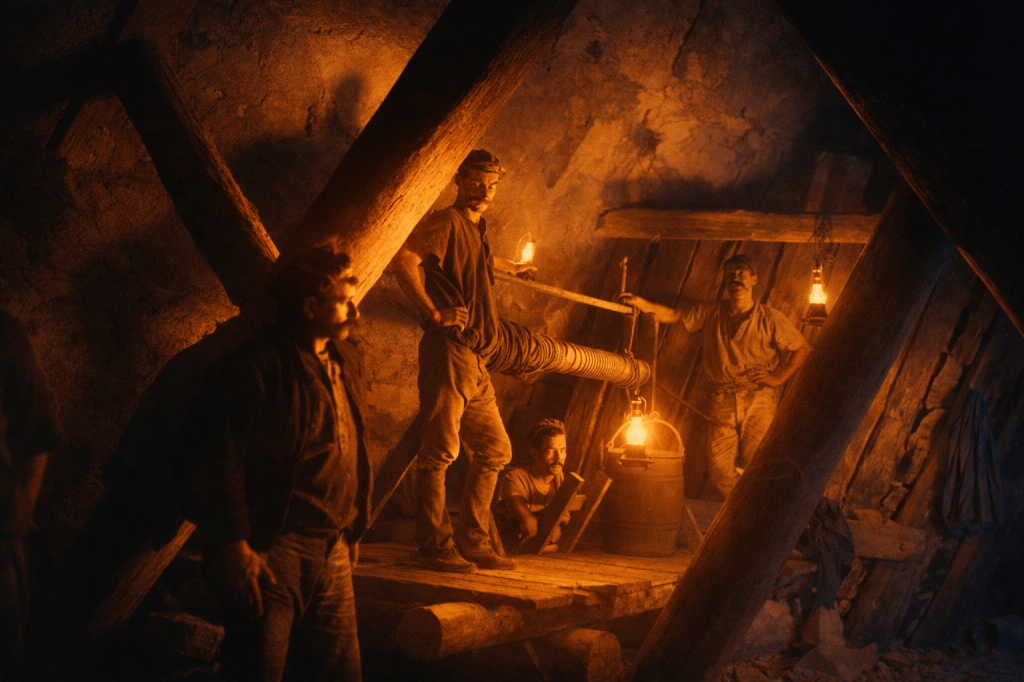
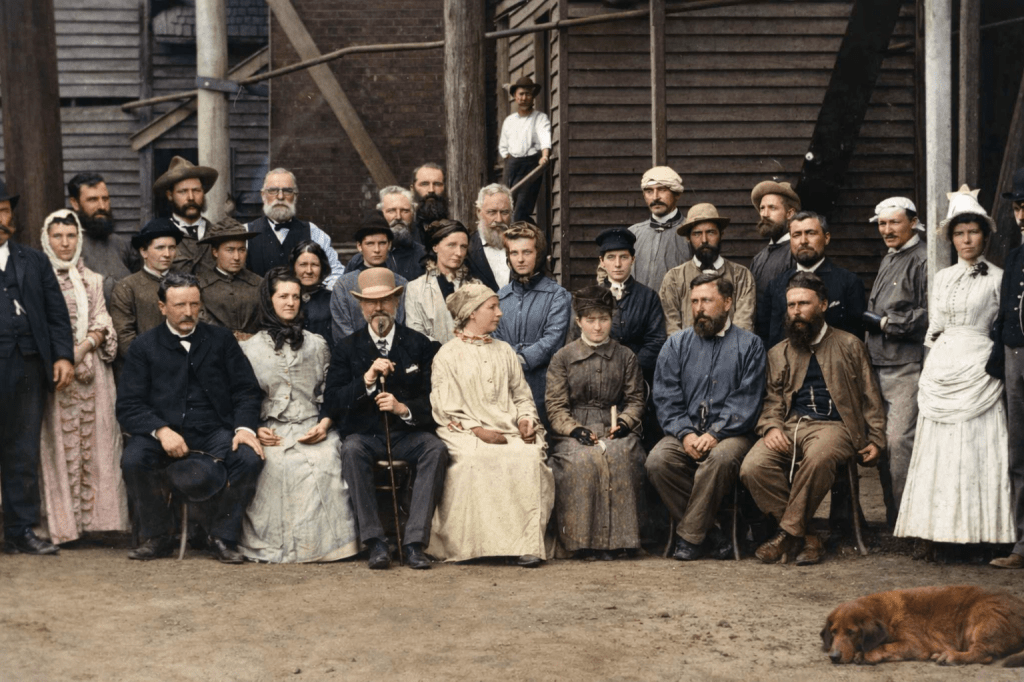
I don’t think the vice-regal couple were all that glad to be led around a mine, including an underground inspection. The local paper described their exit tellingly.
After the fatigue of the trip around the mine, the visitors generally, gratefully availed themselves of the refreshments provided by the management. An hour after, the Vice-regal party were speeding away to Maryborough as fast as the special train could carry them.
Gympie Times and Mary River Mining Gazette (Qld.: 1868 – 1919), Thursday 7 June 1888, page 3.
The new century.
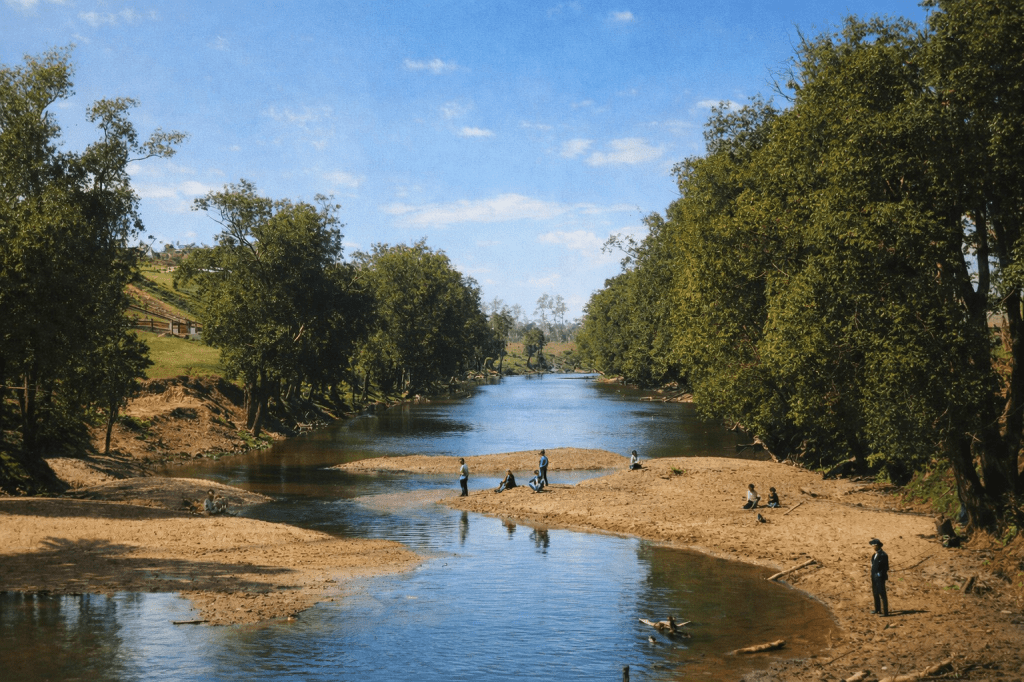
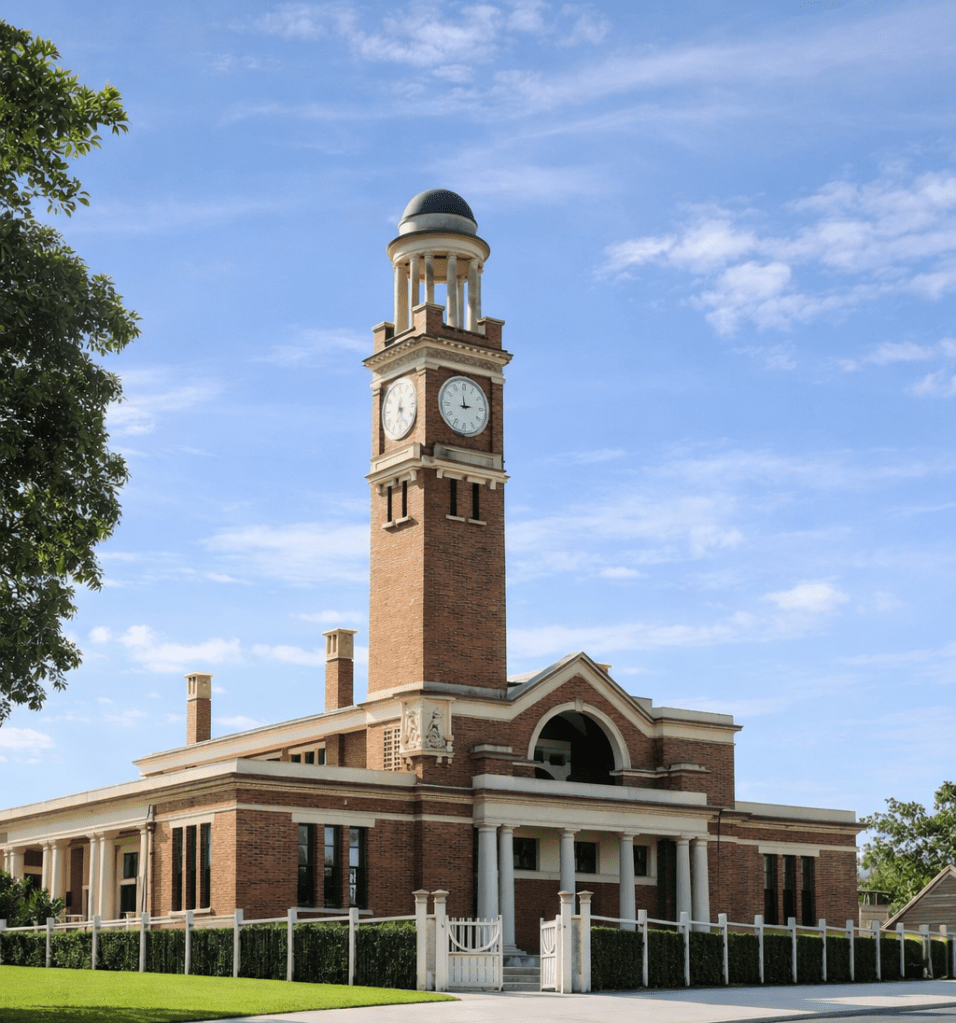
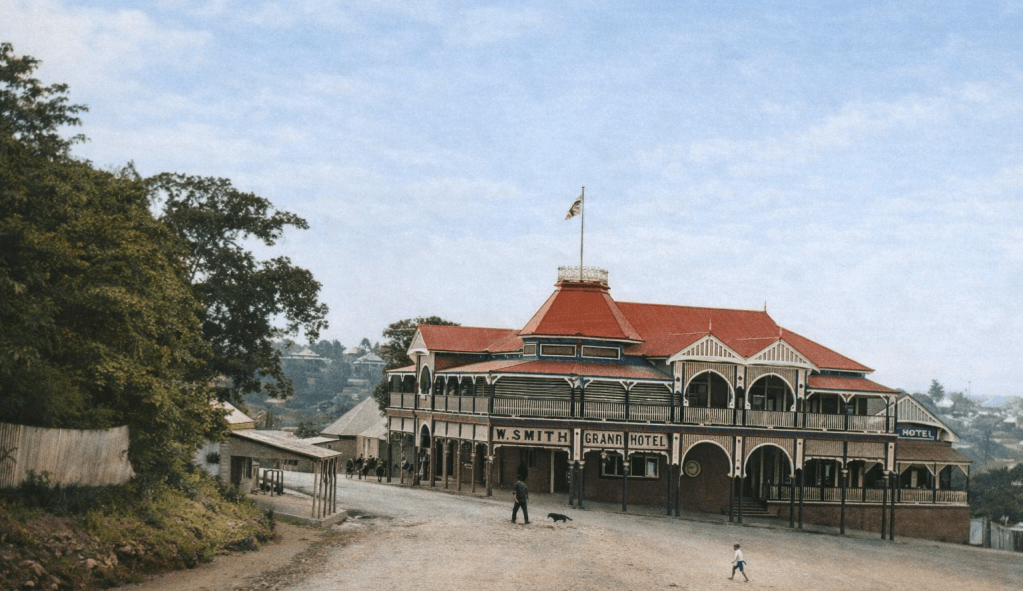
All images are from the digital collection of the State Library of Queensland, and are out of copyright. AI colourisation by Copilot. Information on the naming of Gympie from Wikipedia.

