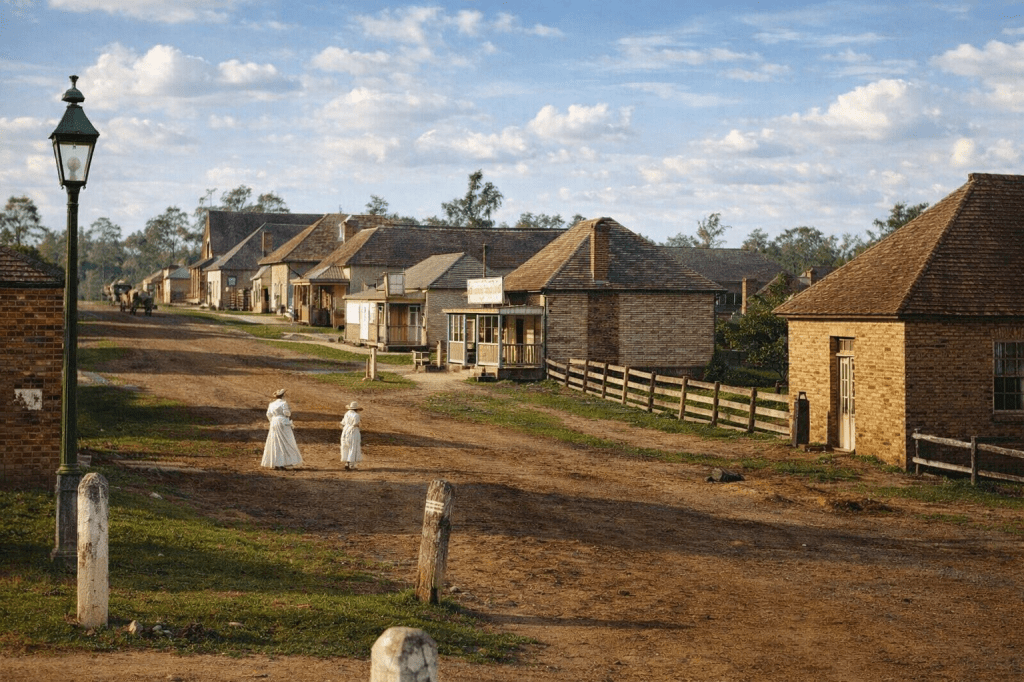
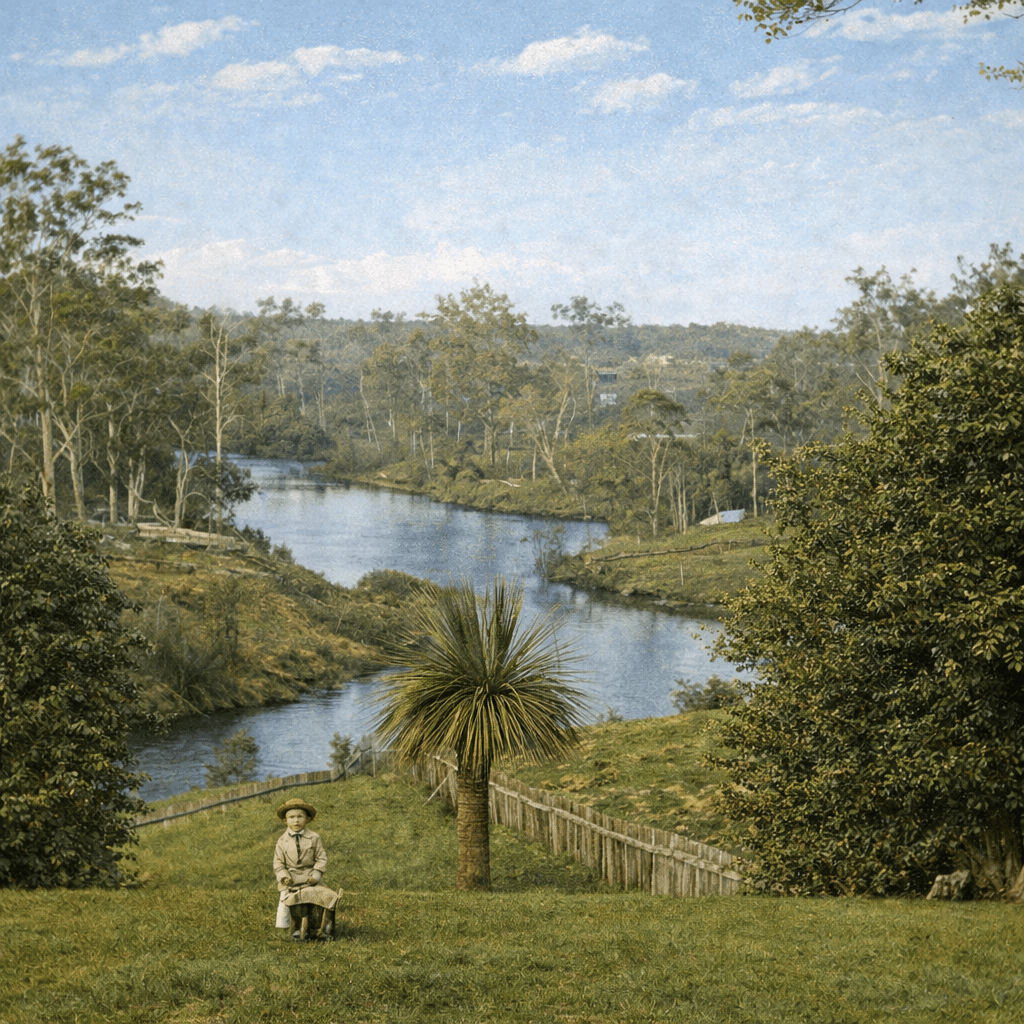
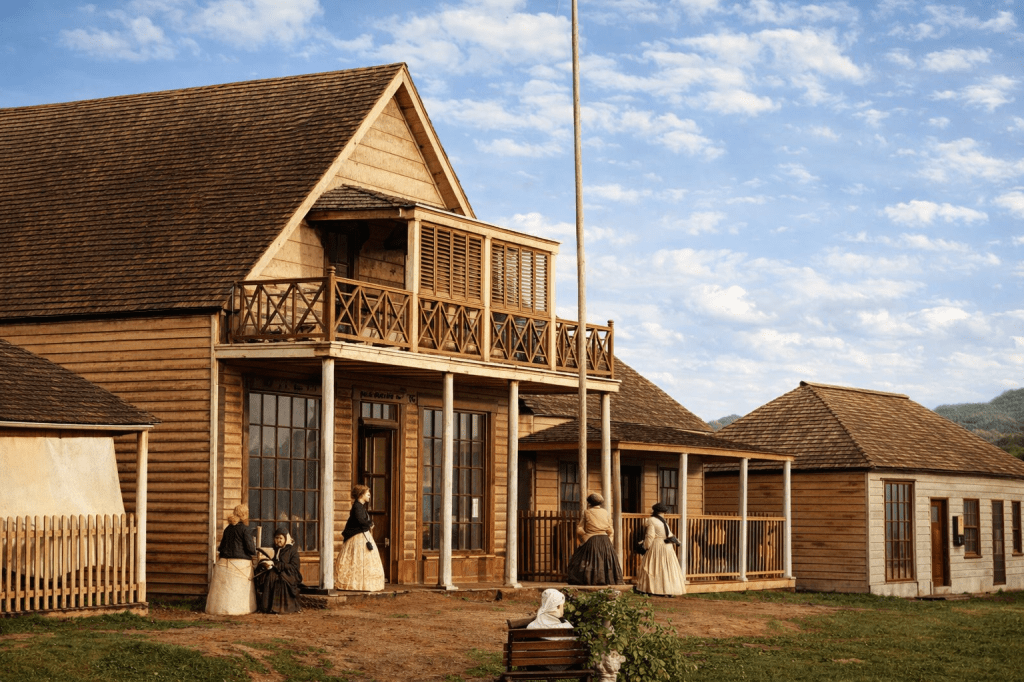
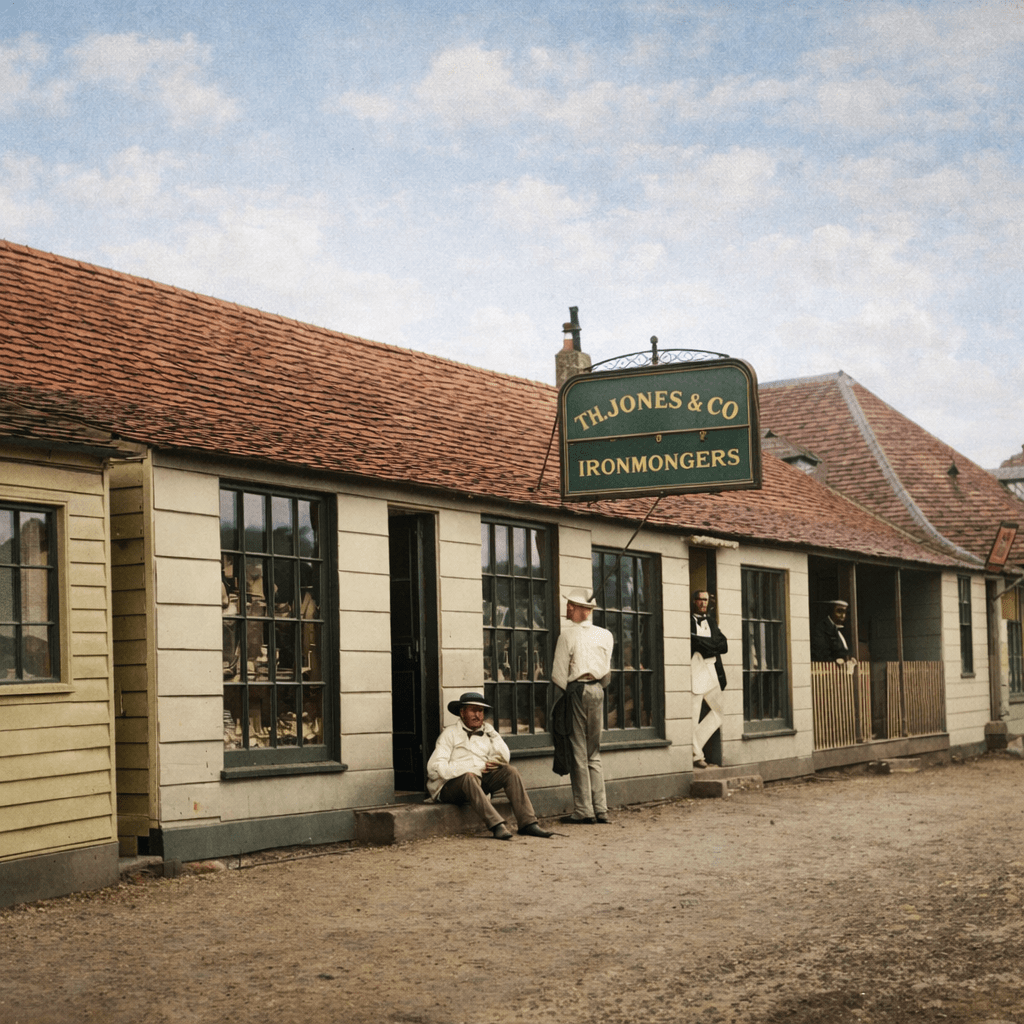
A series of photos taken in 1860 show a small country town, with cottages and small shops. By the twentieth century, a city of impressive public buildings and modern communication had taken its place.
Ipswich in the 1860s.
Pictures from 1860
View of East Street Ipswich in 1860Ipswich Basin, 1860. A determined little boy is pushing his cart uphill in a perfect Australian country scene.Mr Fleming’s Store and Mrs Blair’s House in East Street Ipswich 1860. According to his advertisement, Mr Fleming was “prepared to supply from his Stores in East Street, Flour and Bran of superior quality.”T.H. Jones Co. Ironmongers in Bell Street, Ipswich, 1860. Mr Jones was prepared to supply “lamps, picks, bellows, anvils, spades, shears, carbines, powder and shot, blasting powder, fuses, portable forges, ploughs, chaff cutters and cutlery.” Everything from mining to shearing to farming to dining, it seems.
After 1860
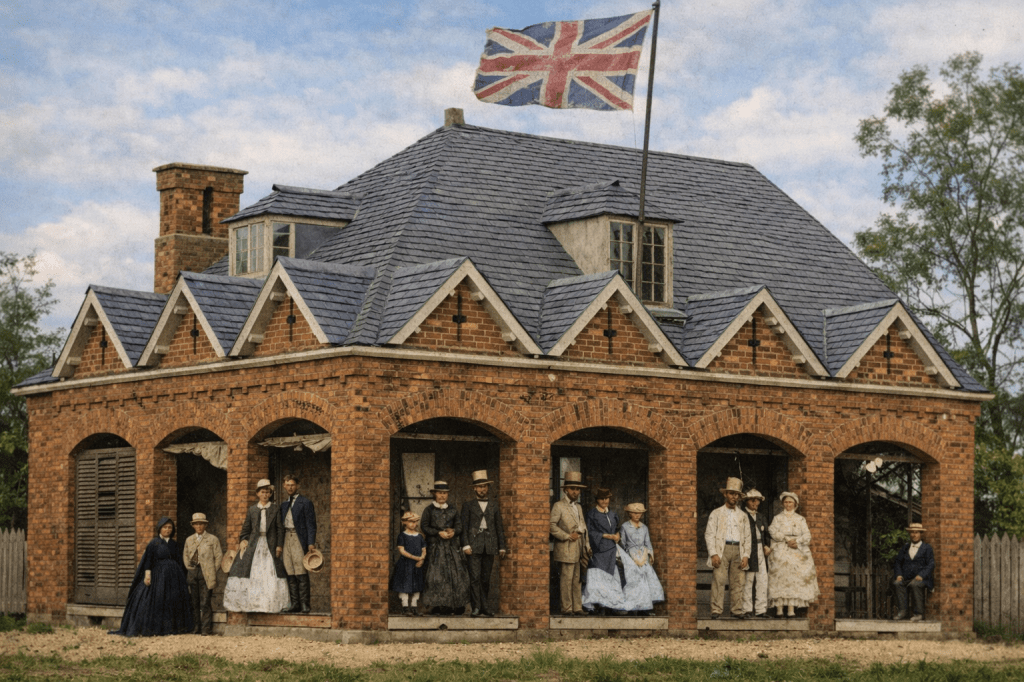
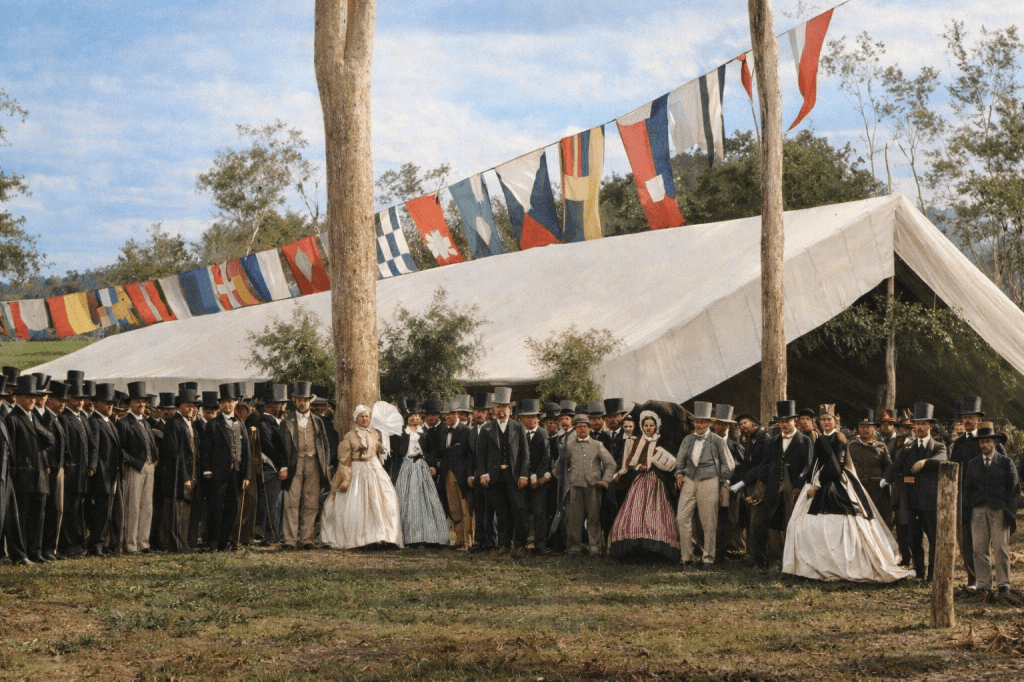
Large residence at Ipswich c 1864. Whoever this belonged to, they were well-heeled, well-dressed, and immensely patriotic. Official opening of the first section of the Ipswich to Grandchester railway line 1865. Sir George and Lady Bowen are somewhere in this photo.
“Before luncheon, the guests, among whom were many ladies, spread themselves in various directions, the greater number betaking themselves along the pathway to the bridge over Guilfoyle’s Gully, some two hundred paces beyond the temporary platform, while several gentlemen hastened to the refreshment pavilion which stood on a hillock about a stone’s throw from the platform. It looked refreshingly cool with its archways of evergreen boughs and gaily flaunting flags.”
The Brisbane Courier, May 1865.
I suspect that the ladies were searching for a convenience, having been stuck in hot, stuffy carriages for an hour. Whilst wearing crinolines. The men, understandably, headed straight for the beverages.
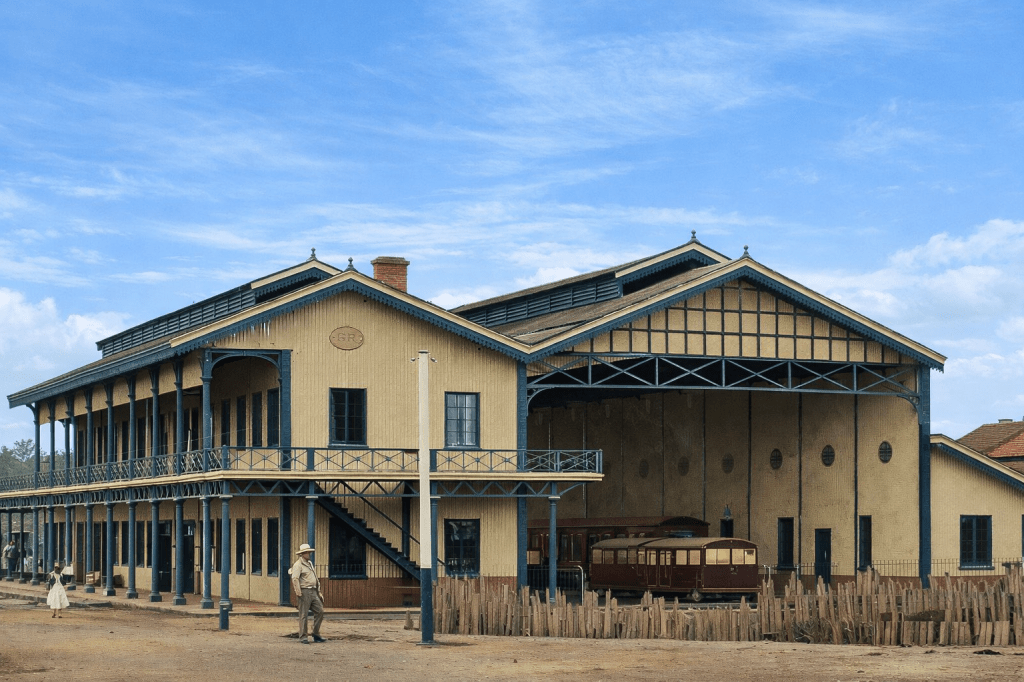
Ipswich Railway Station, 1868. This was rebuilt later in the century.
1870s – the age of growth.
As the town grew, linked to other centres by water and rail, more substantial homes and public buildings were being built.
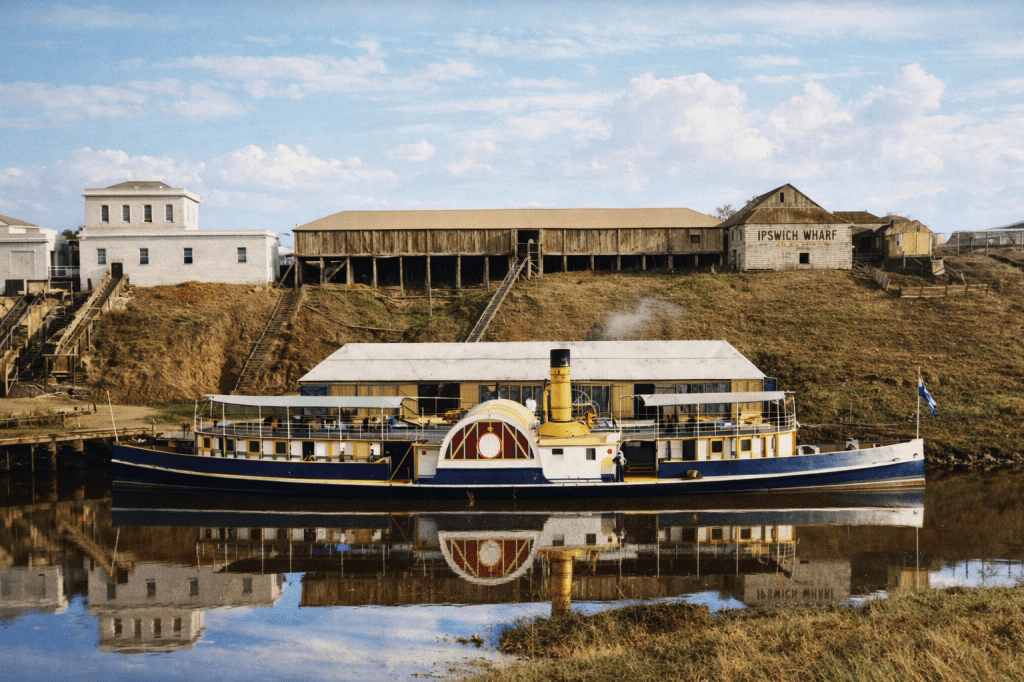
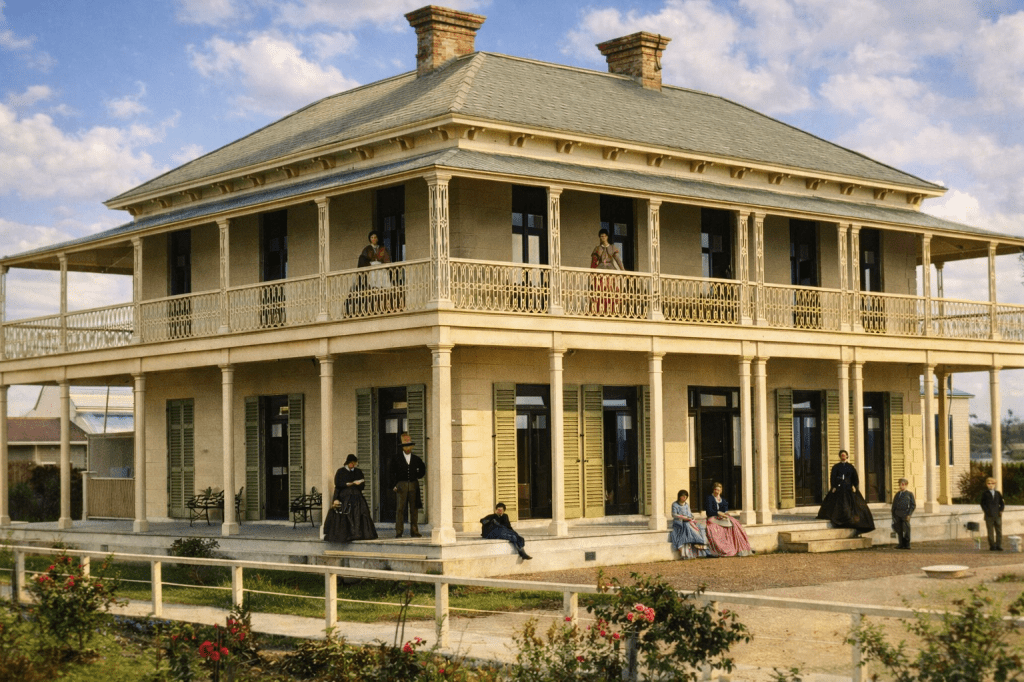
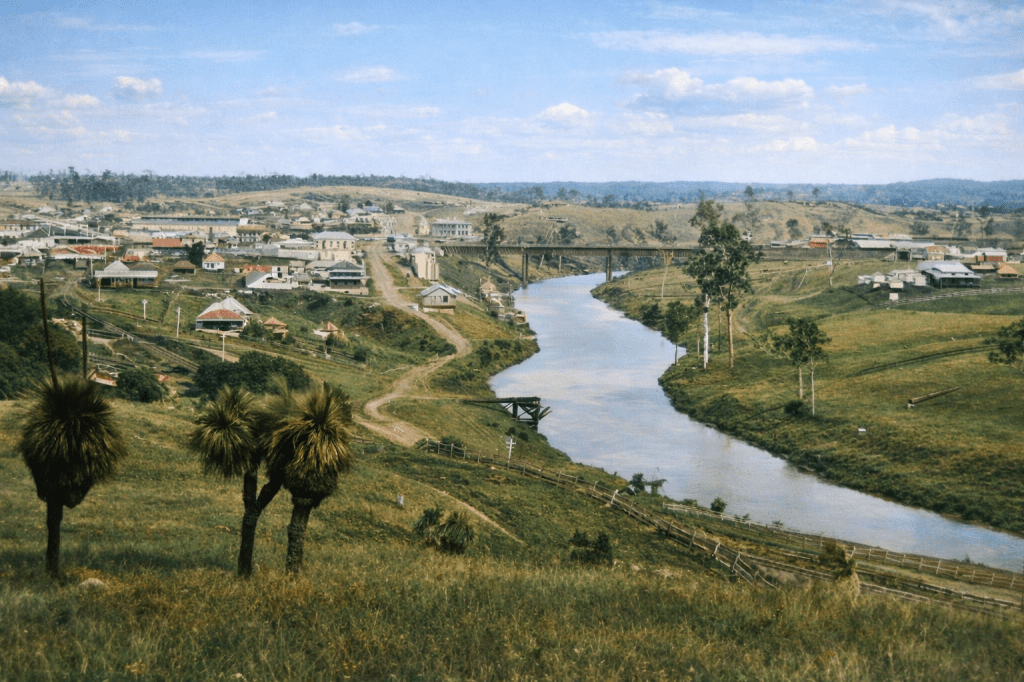
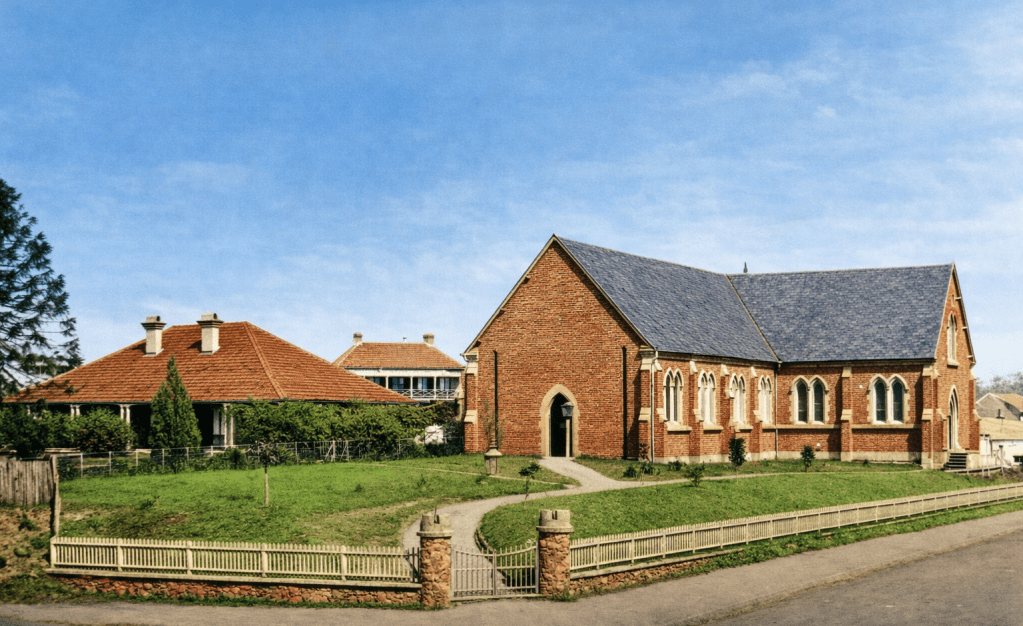
Large paddle steamer docked at the Ipswich wharves, 1870. Beaumont House, Ipswich, 1870. A place of balconies, rose gardens and elegantly positioned gentlefolk.View of Ipswich c 1872. This shows the gradual growth of Ipswich through the railway bridge and the developing central business district.St Paul’s Church of England, Ipswich 1872. AI kindly added some rather unlikely road surfacing for those days before macadam, but I didn’t want to get into an input-box tug of war. Besides, it looks nice.
Floods.
1887
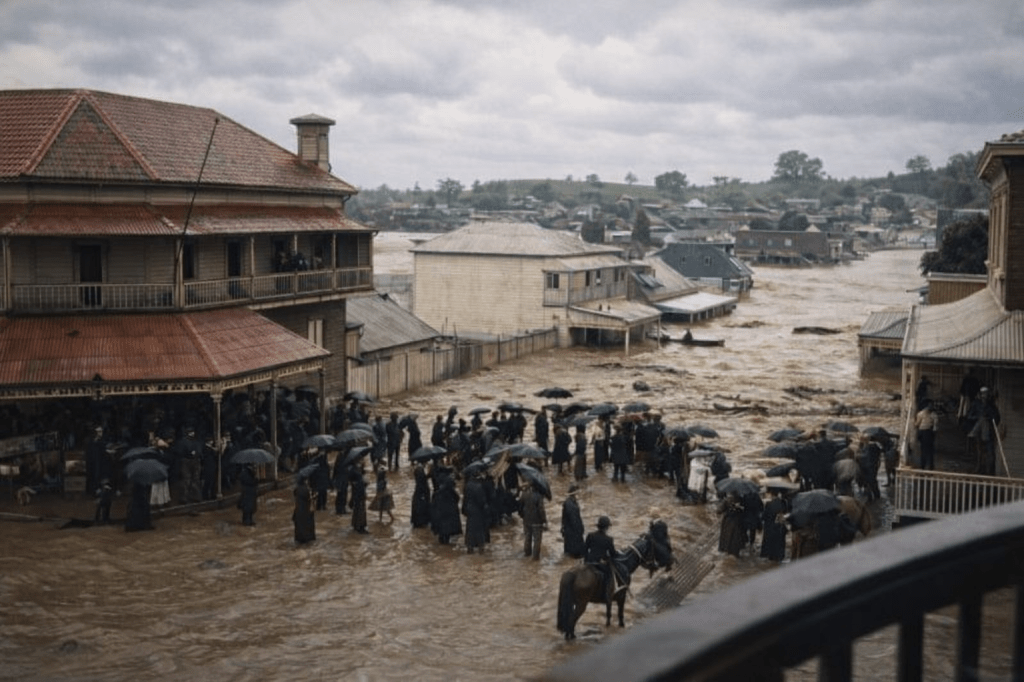
Floodwaters in Ipswich, 1887. If Ipswich residents thought that was bad, things would be much worse six years later.
1893
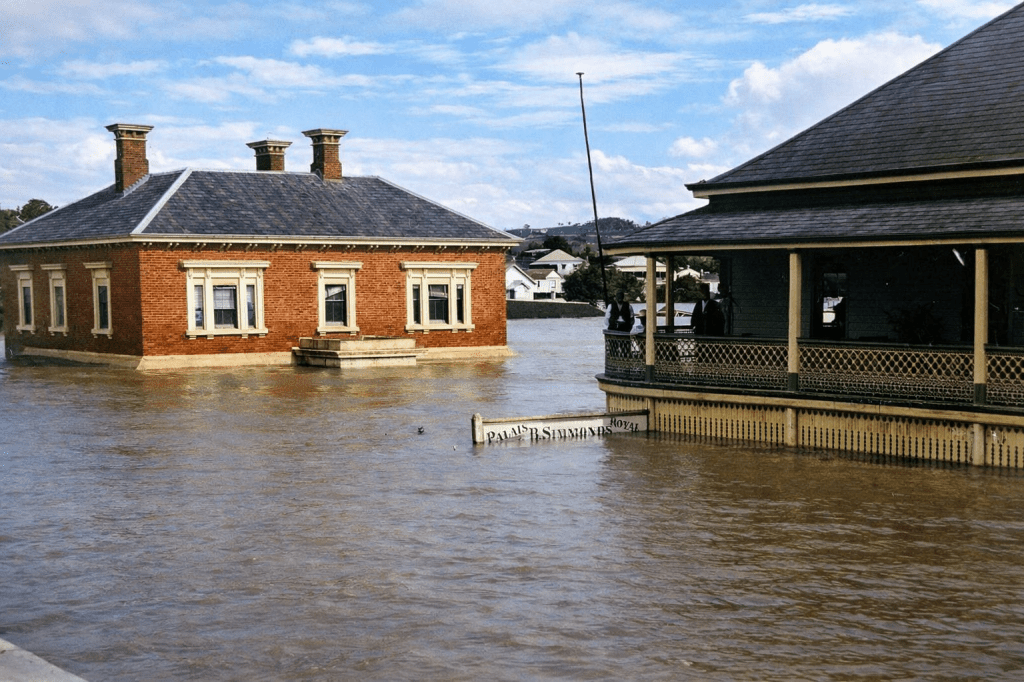
Flooded intersection at Ipswich 1893
The town is in a deplorable plight. We are cut off from communication with the outside world; we have no water from the reservoir, and we have no gas – in fact, everything is topsy-turvy.
Queensland Times, Ipswich Herald and General Advertiser (Qld.: 1861 – 1908), Tuesday 7 February 1893 – Page 3.
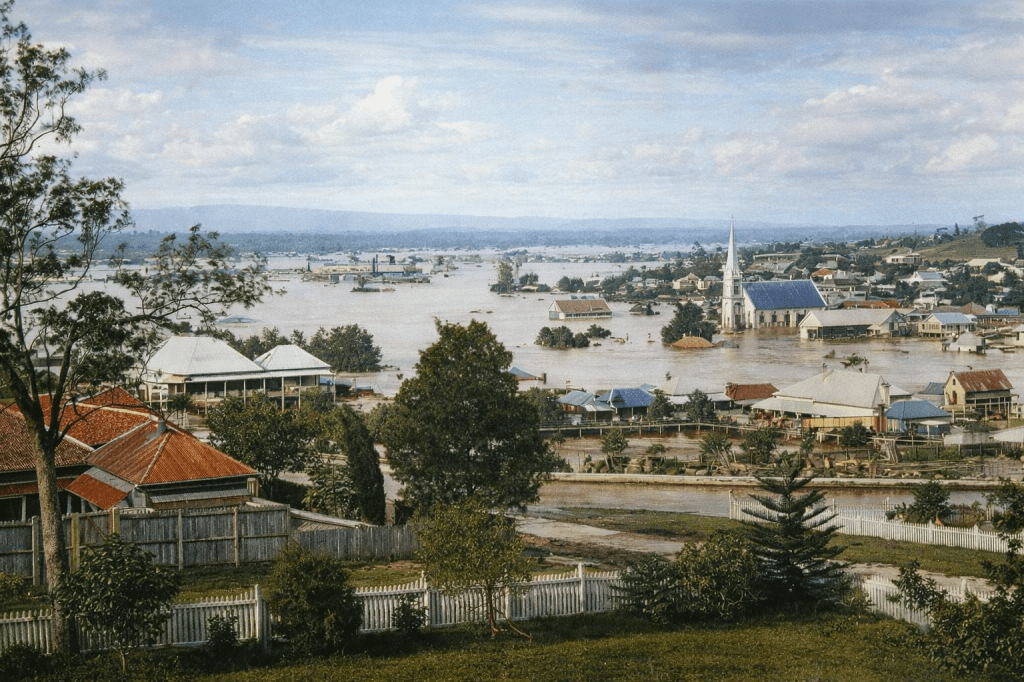
View of Ipswich floods, 1893
There were terrible stories from the flood – seven miners were “entombed” deep underground by the waters, and four children from one family drowned when their house came loose from its foundations.
The 1890s.
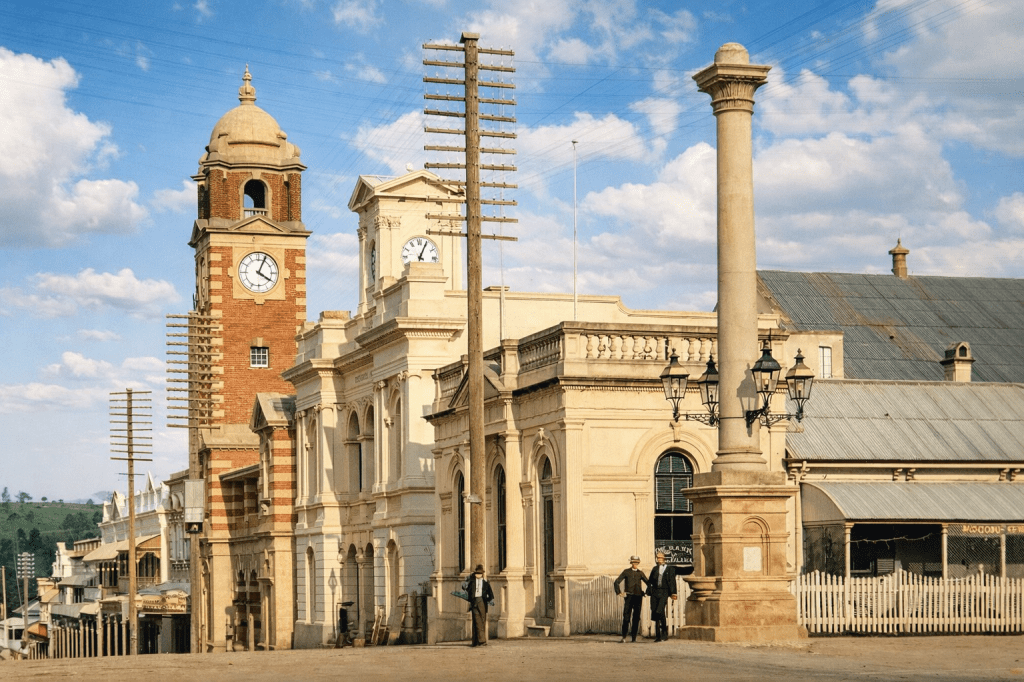
While parts of the town recovered slowly from the flooding, impressive public buildings were being built.
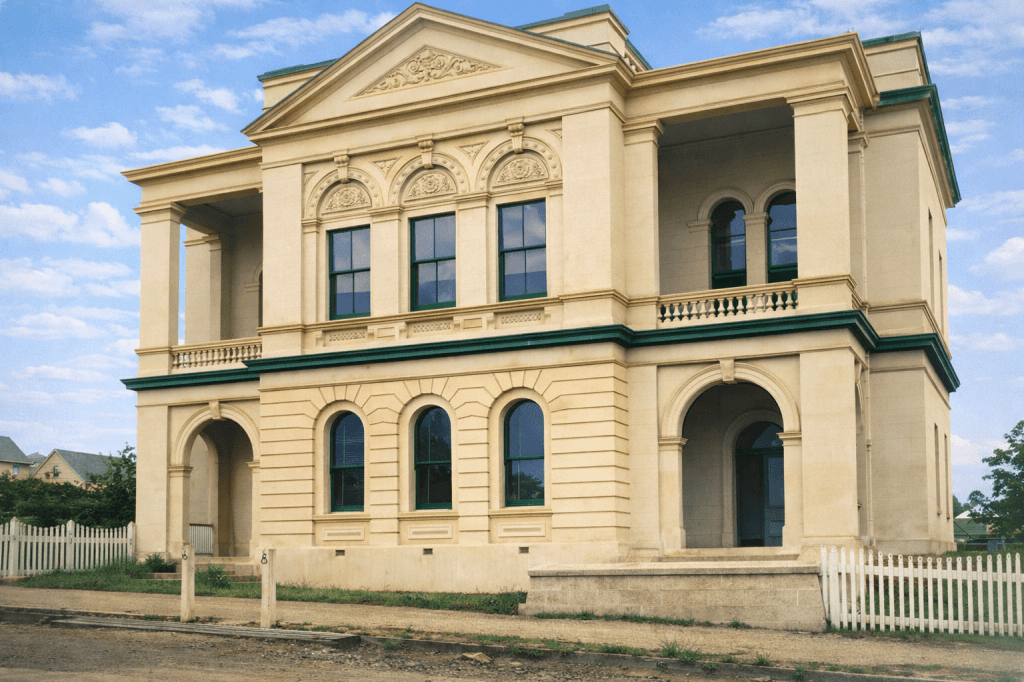
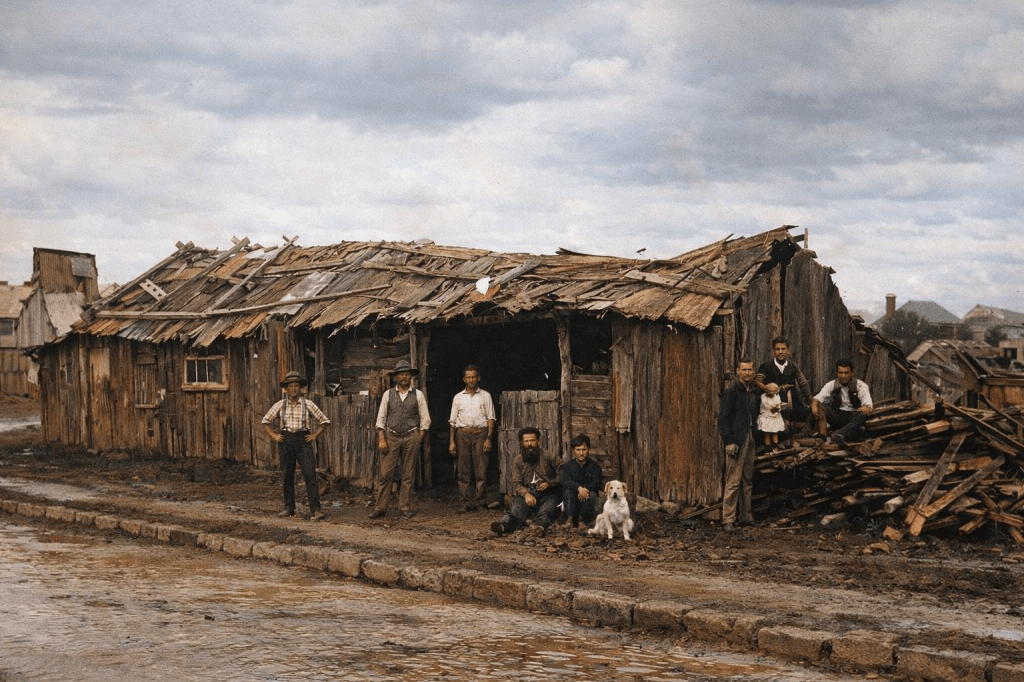
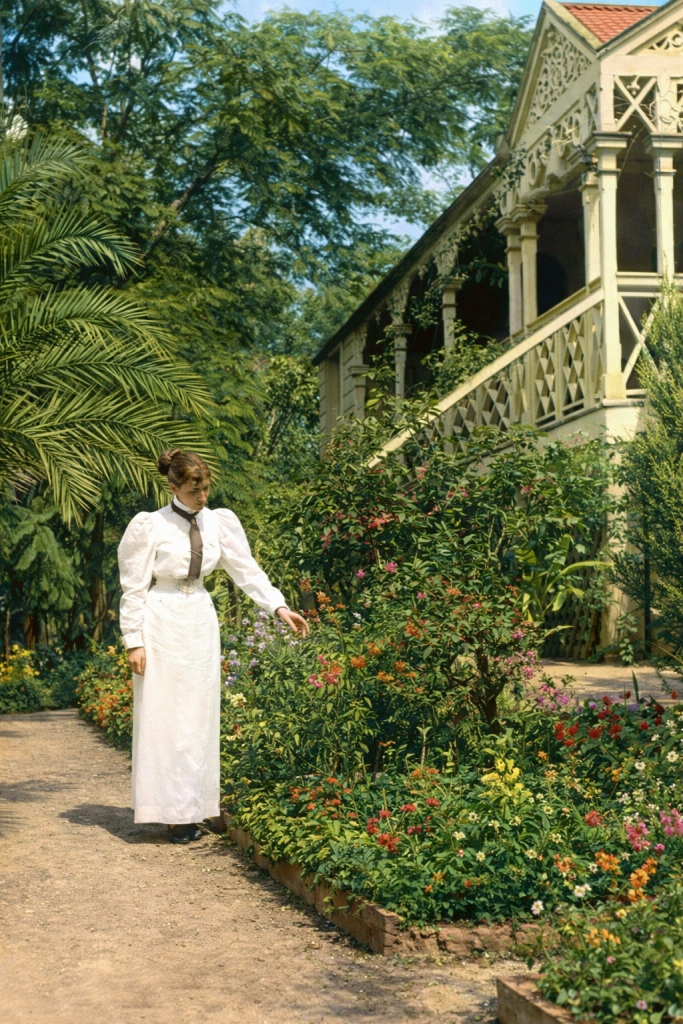
Lands Office in East Street, 1893Unidentified residence in Ipswich, 1894. This house is barely standing after the harsh weather, and hopefully is in the process of being repaired.Young lady tending her garden, Ipswich, 1895. A stark demonstration of how the other half lived.
20th century.
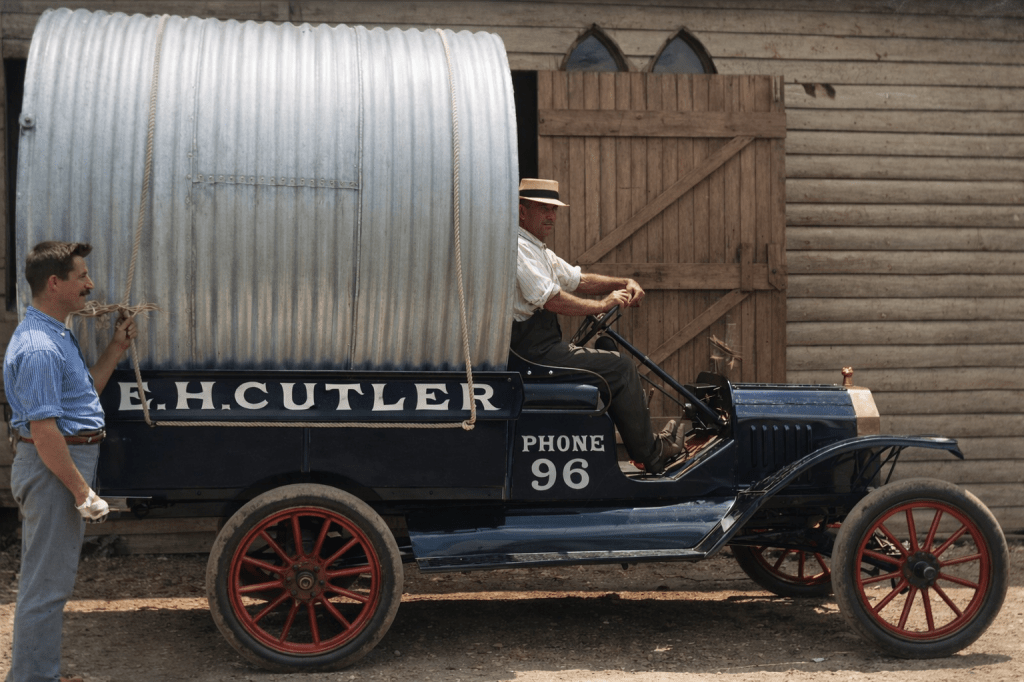
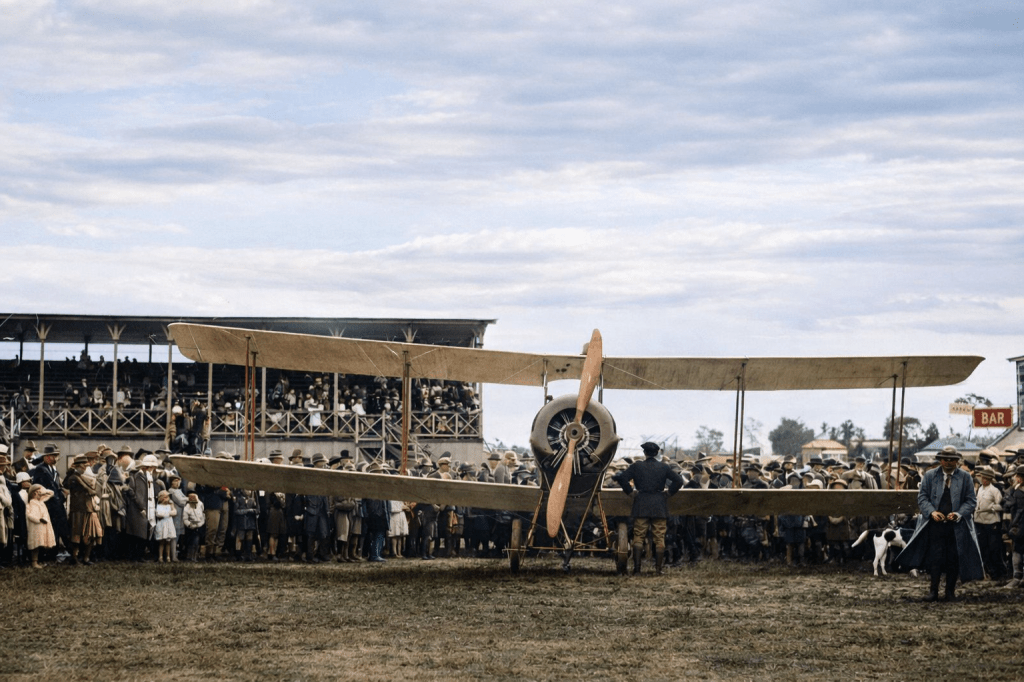
The town was becoming a city, and the horseless carriages and flying machines were on their way in.
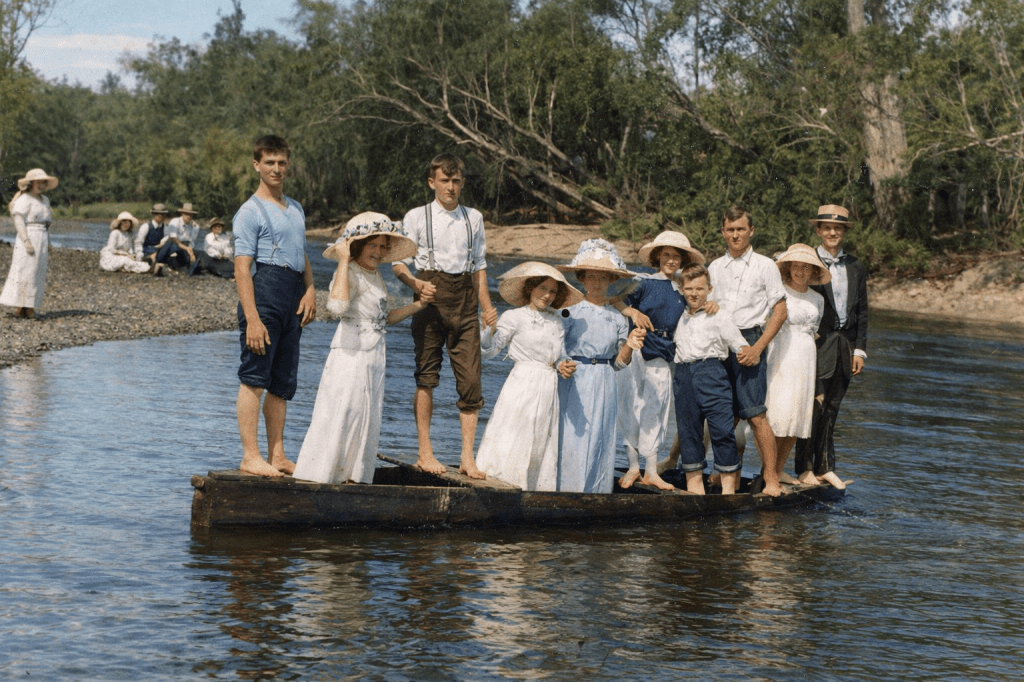
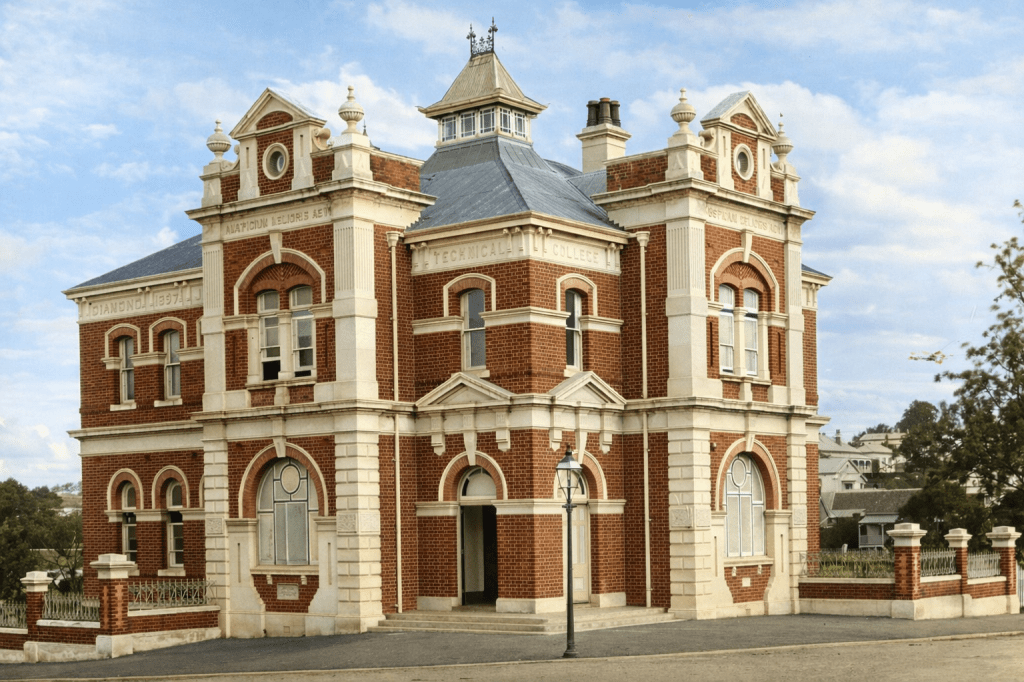
Looking east along Brisbane Street at the corner of Nicholas Street, Ipswich 1906. Nearly 50 years after the 1860 photo, the small cottages and shops had been replaced by a growing city.Family fun day at Colleges Crossing, Brisbane River, Ipswich District 1915. Nothing says fun like an overloaded canoe. At least the water would have been shallow when the inevitable happened (not pictured, unfortunately).Ipswich Technical College, 1906.Ford Model T Truck of E.H. Cutler’s plumbing service delivering a water tank 1914. Sign of the times – the 2-digit phone number.First aeroplane to land in Ipswich 19 July 1920. I’m not sure why aviation took so long to arrive there – possibly the First World War was a factor.
All images are from the digital collection of the State Library of Queensland and are out of copyright. AI colourisation by Copilot.
The North Australian, Ipswich and General Advertiser (Ipswich, Qld. : 1856 – 1862), Tuesday 3 January 1860, page 1.