
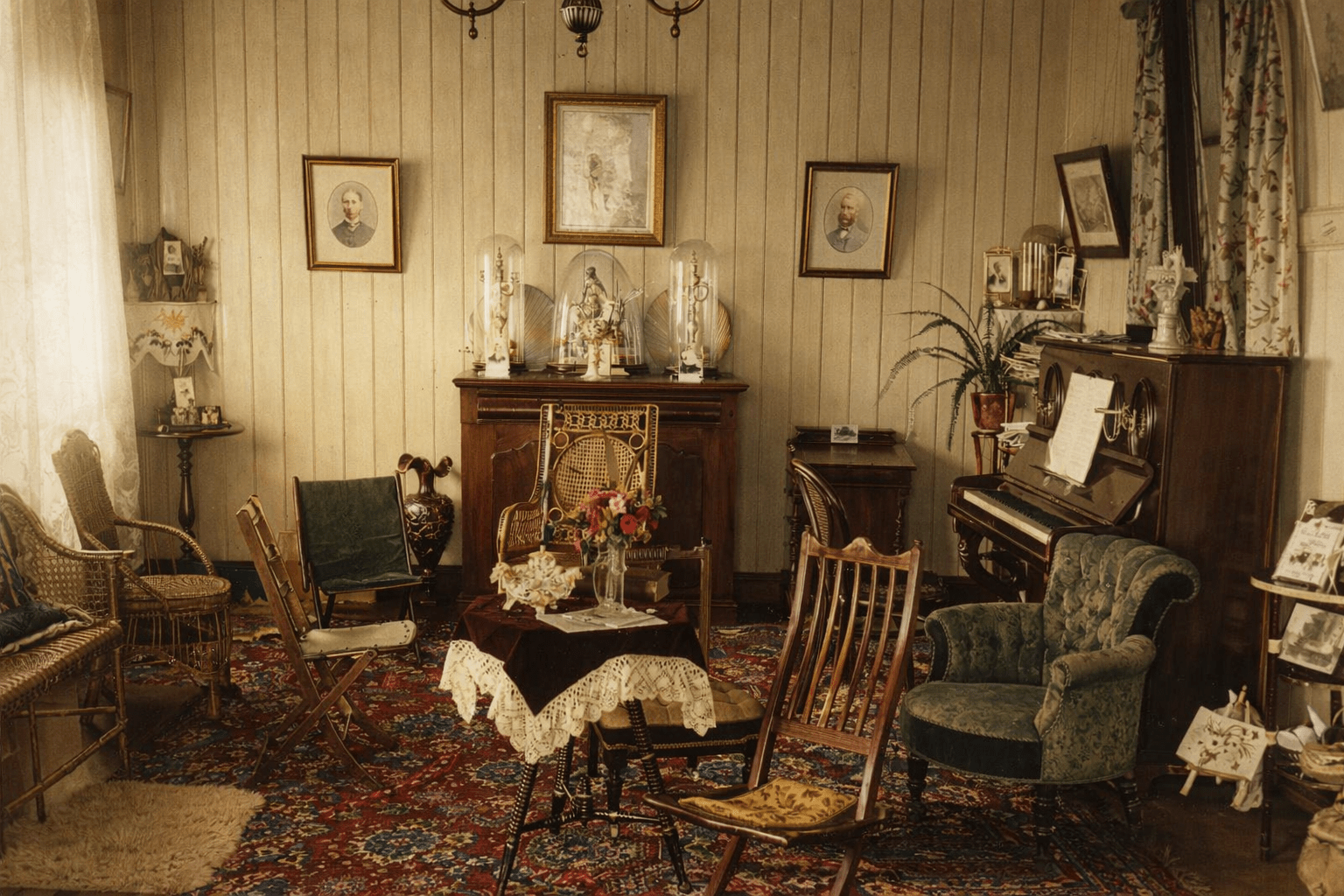
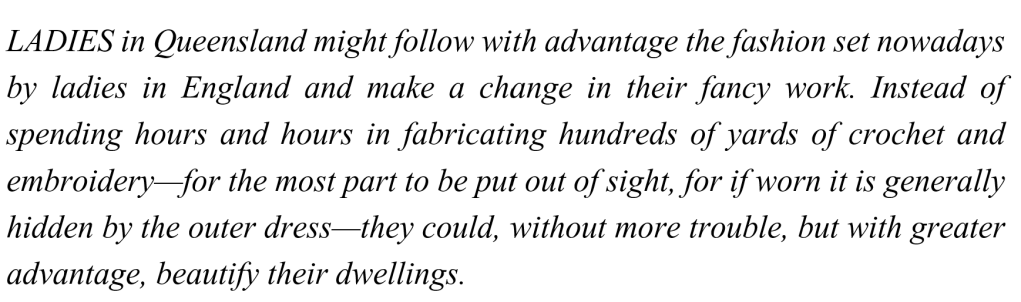
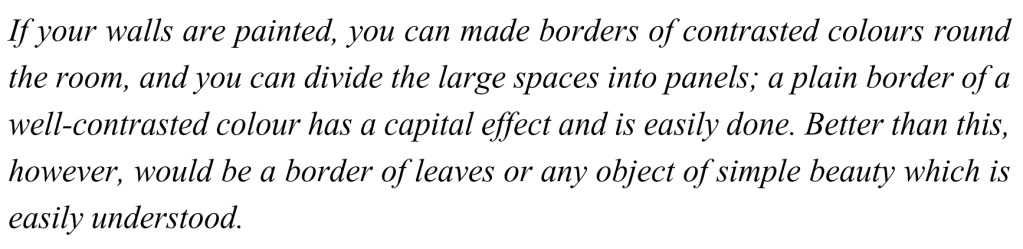
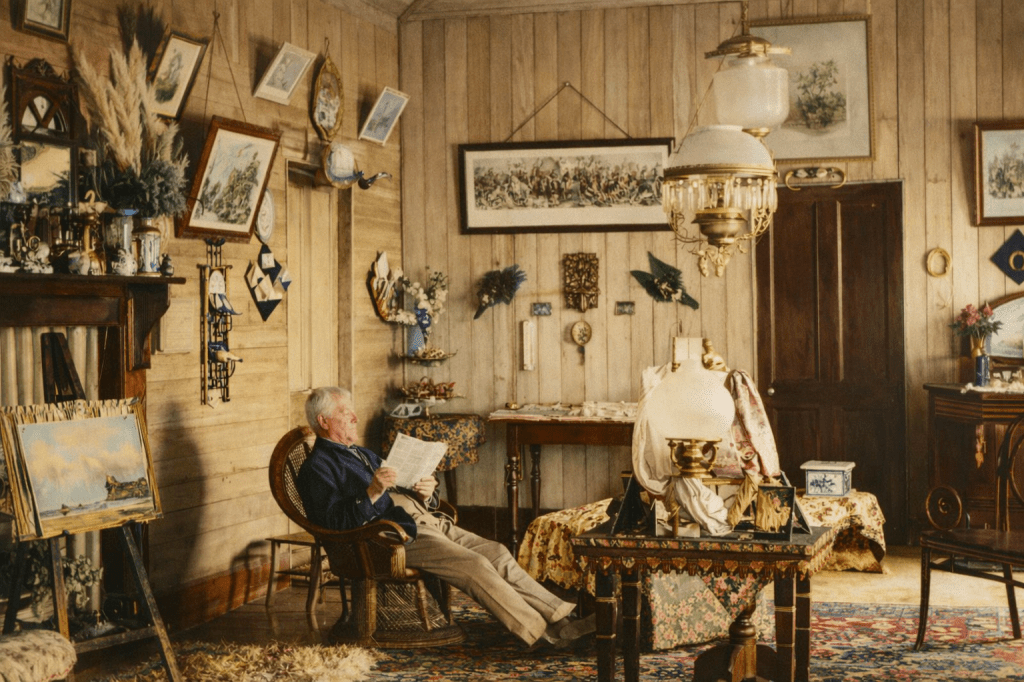
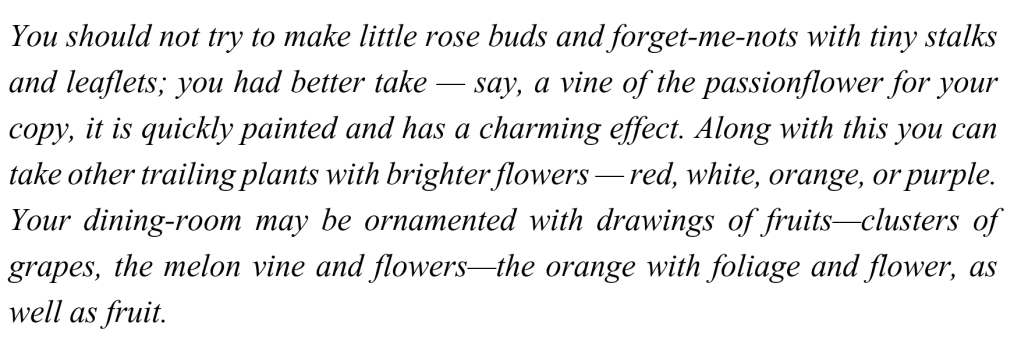
The Queenslander advised ladies to cast aside their embroidery hoops, and use paint, brushes and the inspiration found in nature to transform their homes. (It was assumed that ladies had nothing better to do with their days than crochet or attempt arts and crafts-style makeovers.)
Flourishes for the Drawing Room.
The Queenslander offered some style inspo for ladies who longed to beautify their homes.
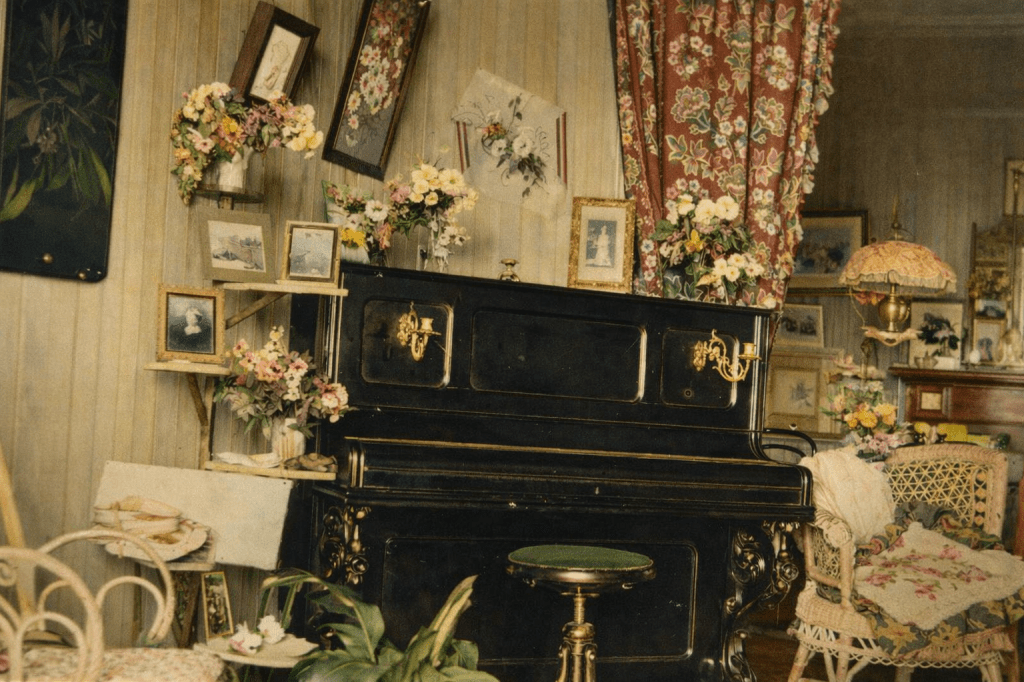
Flourishes for those with wallpaper.
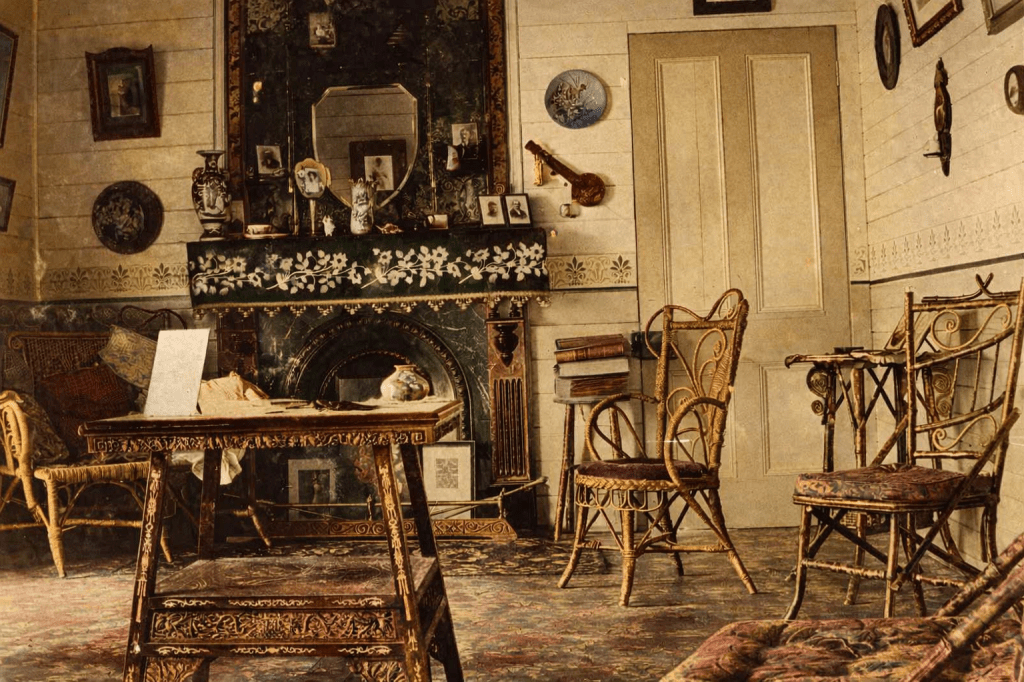
In the 19th century, a home with wallpaper was seen as a status symbol. No raw boards or rough paint jobs would do for the rising classes. A lady might think that a tastefully wallpapered room would require a little less personal creative input. The Queenslander had news for any lady who might have entertained such idle thoughts. Borders. On windows, doors, skirting boards, the lot. And of course, the job of creating and applying these borders would fall to the lady of the house.
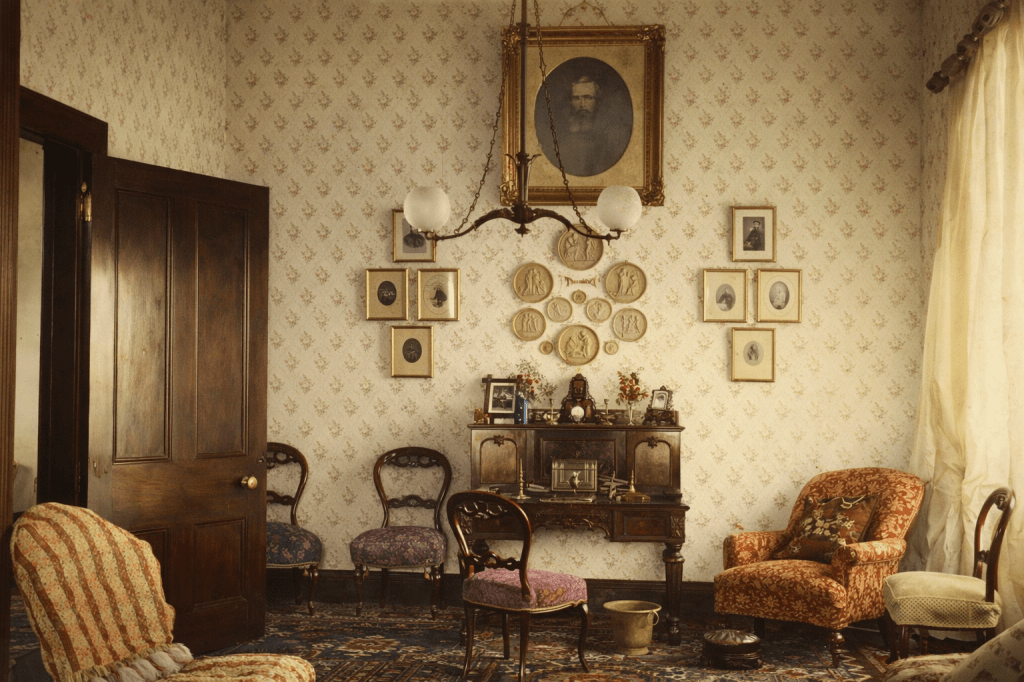

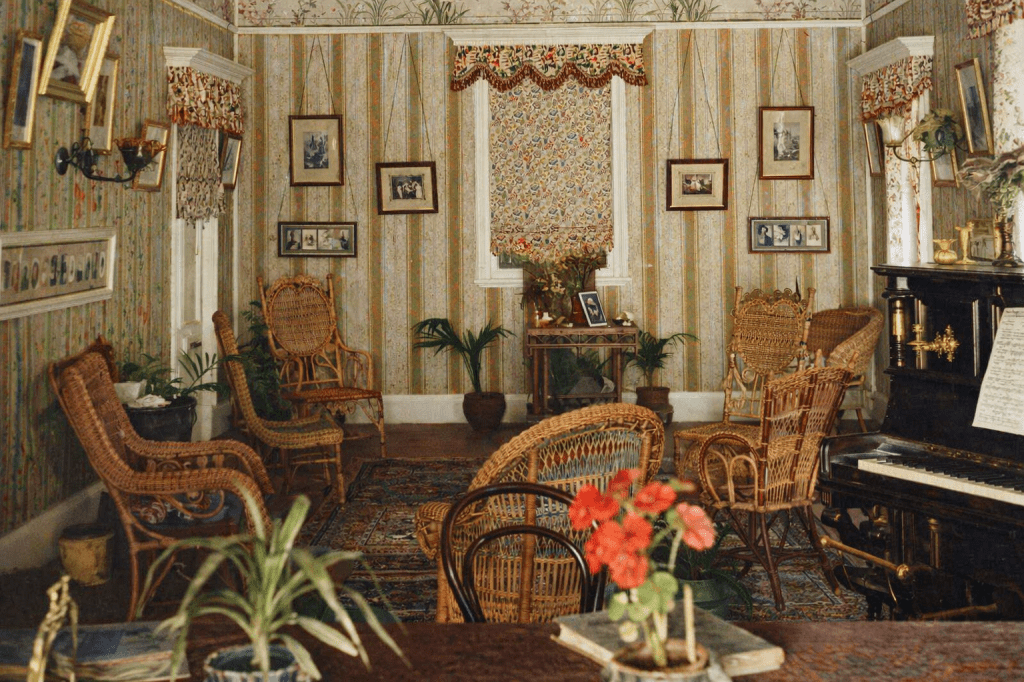

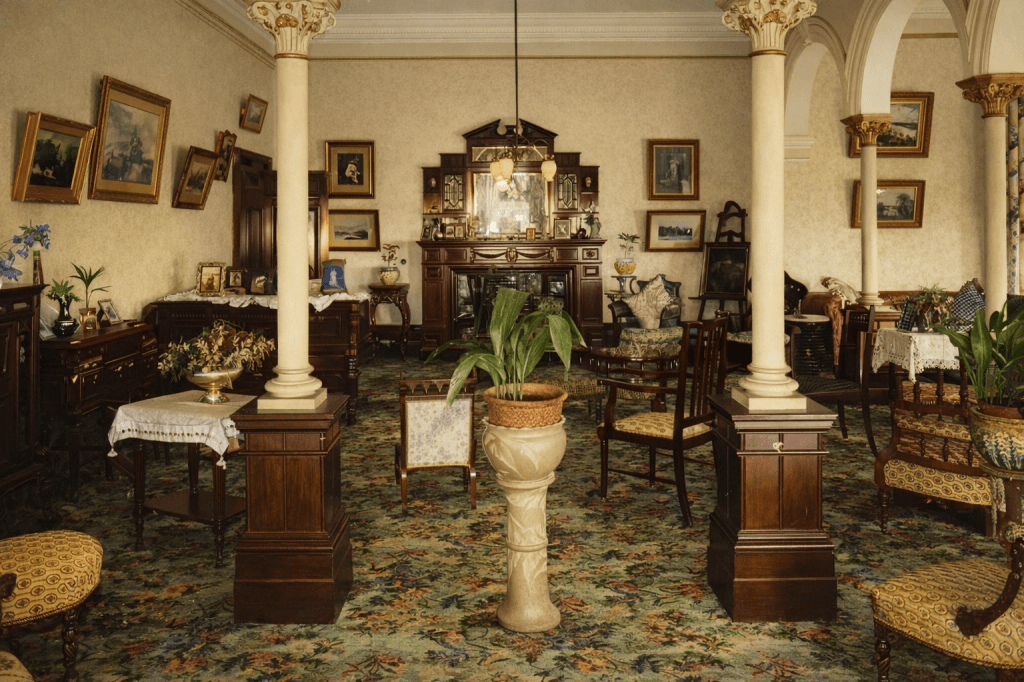
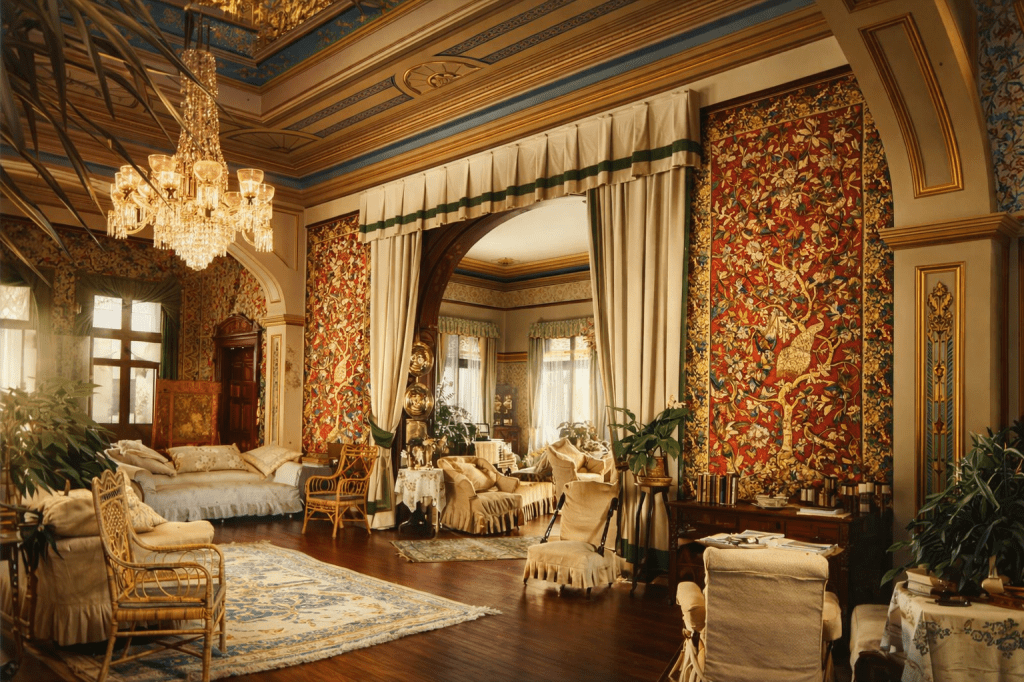
And the winner is…
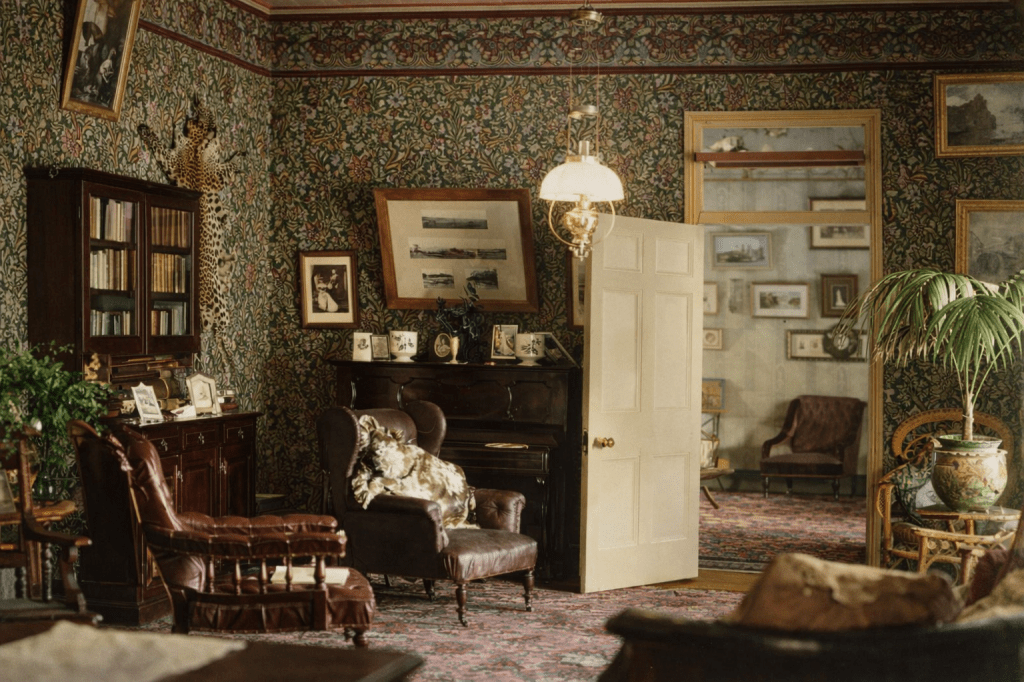
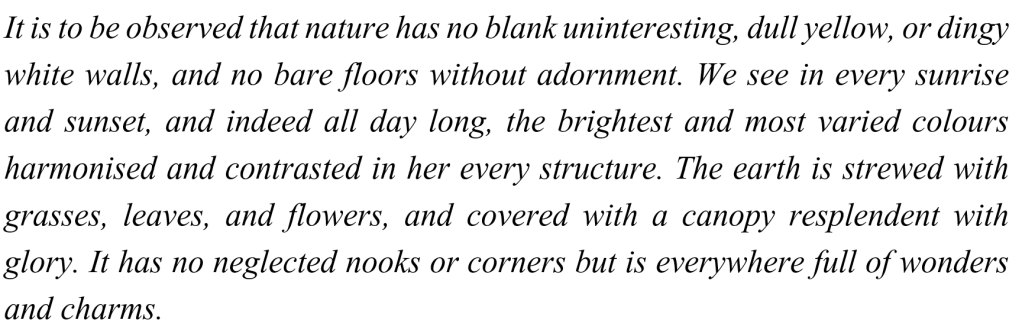
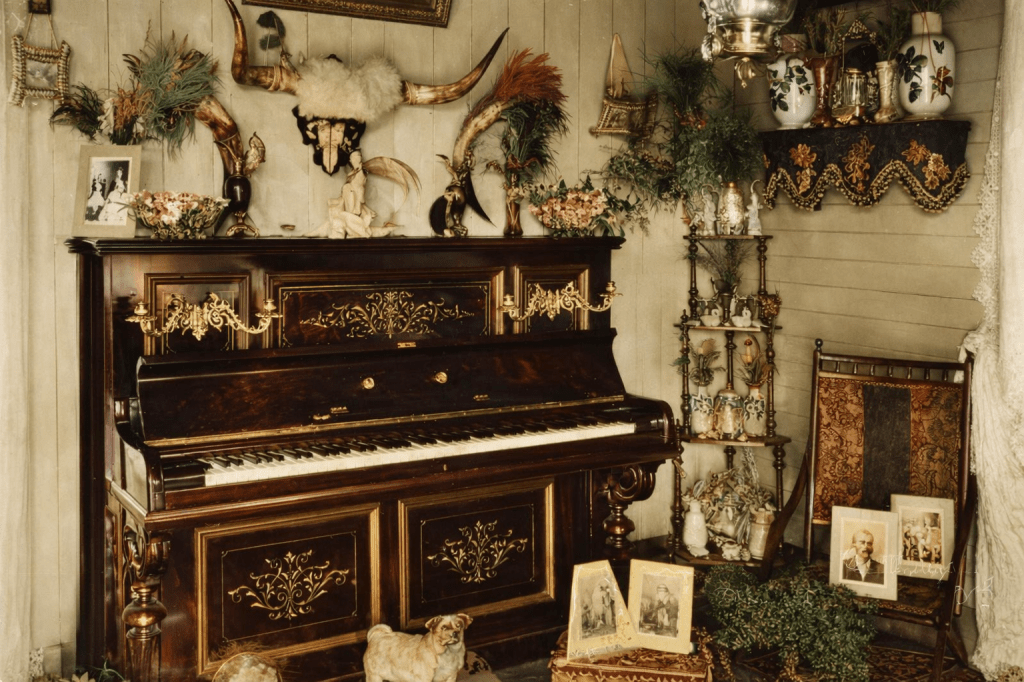
The Queenslander advocated for no “blank, uninteresting” walls, and no “neglected nooks or corners.” Canning Downs followed that dictum, in spades.
Bilious floral print wallpaper with the complimentary border up top? Check. Big leather armchairs? Check. Knick-knacks galore? Check. Piano? Check. The leopard skin flung on the wall as if the poor creature’s last act was to crash-land on it? Check. There is nowhere for the eye to rest. The Queenslander would be pleased.
Queenslander (Brisbane, Qld.: 1866 – 1939), Saturday 21 August 1875, page 11.
All photographs are taken from the State Library of Queensland digital collection, and are out of copyright. AI colourisation by Copilot.
 Moreton Bay and More