

In June 1829, a broken man wrote a letter to the Governor, Sir Ralph Darling. He hated to impose upon His Excellency’s time but hoped that his earlier connections with the Darling family, together with his earnest wish to work at any settlement in any capacity, however humble, would cause His Excellency to allow him a situation. The writer was at a crossroads, having lost family members, and every shilling he owned, in Van Diemen’s Land.
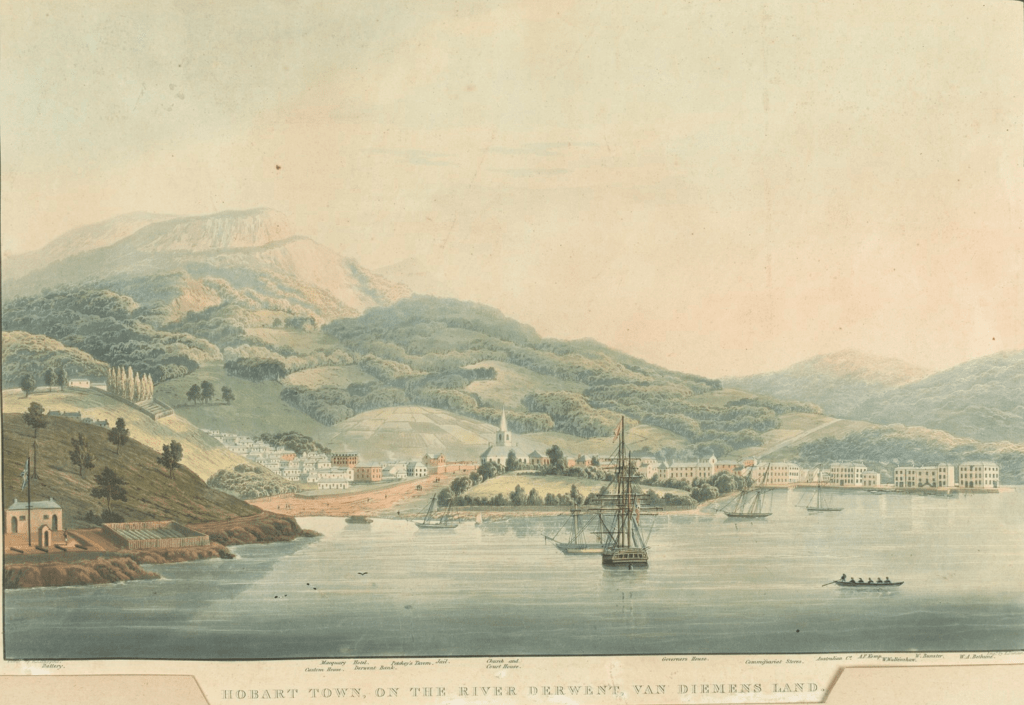
The Governor knew the man and saw the excellent references he was able to produce. He wrote an instruction on the letter, directing the Colonial Secretary to, “Let Mr Whyte proceed to Moreton Bay as an overseer, in place of Hillis – and receive 2/6 a day in addition to his Rations. R.D.” The Colonial Secretary made a note – “Mr Whyte must proceed onboard the Waterloo, and his appointment be notified to Captain Logan.”
William Whyte was, as he had hoped and prayed, rescued from “degradation.” He was in early middle age[i] and had been in service with the Armagh Militia from 1806 to 1810, then the 57th Light Infantry, serving with Captain Darling in India. Ill-health led Whyte to relinquish his commission and work in the Revenue.
In 1817, he set off for the colonies, armed with high hopes and letters of recommendation from (then) Governor Macquarie and Lord Castlereagh. He was granted 500 acres of land, started a family, and flourished. And then, for Whyte and many other local farmers, everything fell apart. The price for their produce fell by three-quarters, and economic ruin was exacerbated by grief – his brother died, and his son had been accidentally killed.[ii] The job at the remote station of Moreton Bay would be his salvation.
To the Bay, by the Waterloo.
The Waterloo arrived at Dunwich on 12 September 1829, with William Whyte and 246 prisoners on board. The increase in numbers did not please the Commandant, Captain Patrick Logan. Moreton Bay now had nearly 1,000 convicts to manage. The settlement was just starting to take shape – the windmill and the Commissariat Store had been completed, agriculture was expanding.
William Whyte landed at Brisbane Town to find a distinct tension in the air. Captain Logan and the Rev. Vincent were engaged in a torrid power struggle of Church and State.[iii] Vincent had arrived at Brisbane several months earlier, with ambitious plans for pastoral reform. He failed to understand the authority of the Commandant of a penal station. Logan saw Vincent as a threat to his authority, and Vincent saw Logan as an enemy of all things Godly.
Vincent left at the end of 1829, and the settlement fell back into its usual routine of agriculture, discipline and absconding. William Whyte had arrived to work as an overseer but was quickly made Clerk to the Commandant.
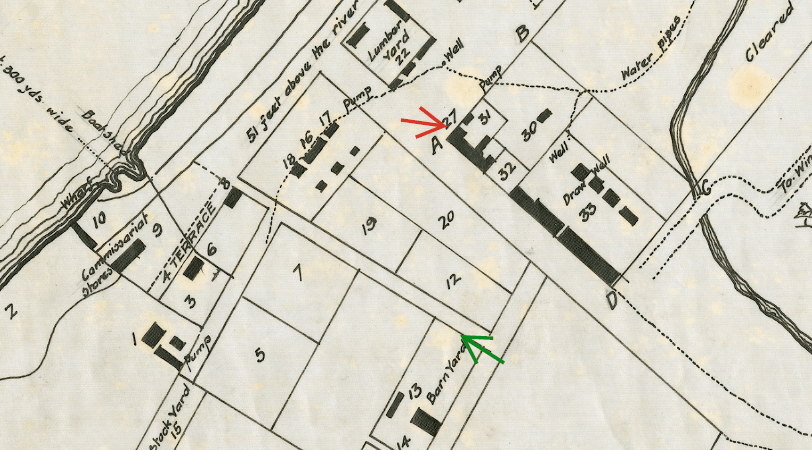
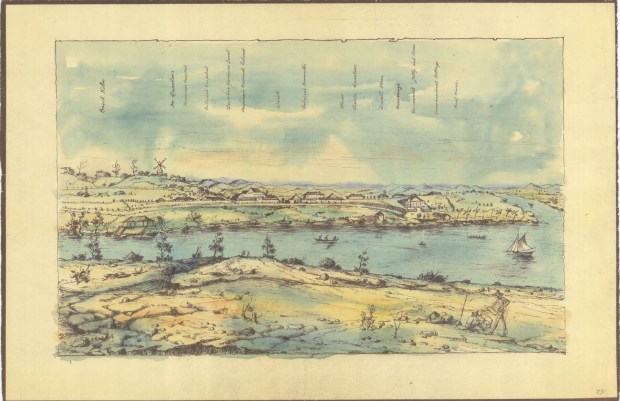
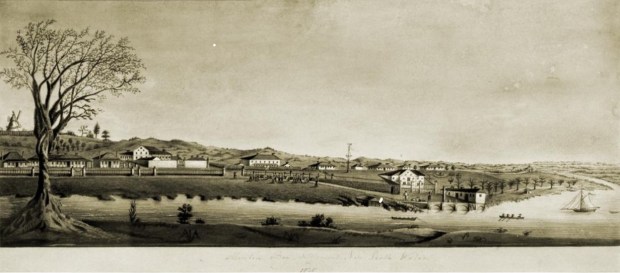
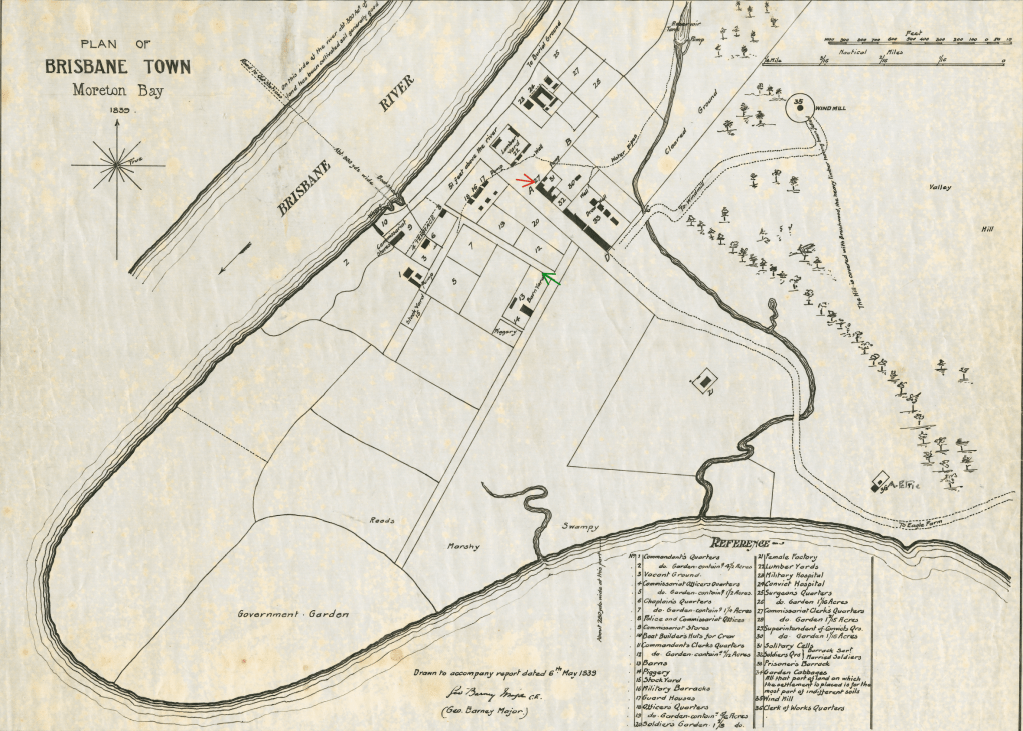
Whyte was ex-military, respectable, and literate. He knew the ropes. The clerkship meant that he was assigned a small cottage with a kitchen garden in front, located nearly opposite the Convict Barracks on a path that would eventually become Queen Street. His pay was small, but there was literally nothing to spend his money on. There were no shops, entertainments, even streets. The Commissary supplied everything as rations. Anything else had to be obtained by steamer from Sydney, with Government permission. Companionship would have been limited to other government employees and the military families stationed at the Bay. It would have been lonely at times.
By June 1830, change was in the air. Captain Logan was firing off missives to the Governor about an editorial in the Monitor of 27 March 1830, which accused the Commandant of murder. As this was happening, the 57th Regiment was ordered to go to India. Logan was preparing to take one last survey of the region before going to Sydney to prosecute the editor of the Monitor for libel and then head to India. Captain James Clunie had arrived at Brisbane Town, ready to take charge of the settlement on Logan’s return from his expedition.
The Commandant’s Clerk.
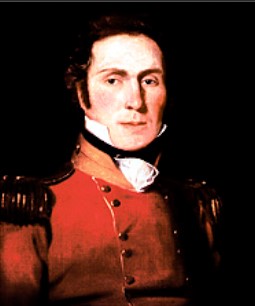
Captain Patrick Logan was murdered on 17 October 1830, probably by the indigenous people of the Mount Beppo area. Captain Clunie took formal command. Captain Clunie’s Moreton Bay settlement was a much calmer place. The new commandant increased the rations for the convicts, and punished the more severe infractions, rather than imposing the rigid universal discipline that marked Logan’s time.
Knowing that the Governor had imposed restrictions on spending, Clunie nevertheless wrote to the Colonial Secretary that it had been Logan’s intention to make changes to the civil service at the settlement. Logan had wanted to promote Peter Spicer and William Whyte (from Commandant’s Clerk to Superintendent of Convicts at Moreton Bay)[iv]. He noted that,
“It appears to me the double duty Mr Spicer has to perform is almost too much for any one person, that I believe he and Mr Whyte are very deserving and both stood high in the estimation of the late Commandant, who was well qualified to judge of their merits.”
James Clunie
In March 1831, the Superintendent of Agriculture, John Parker, needed a replacement at the Eagle Farm establishment while he went to Sydney to get married. His former Principal Overseer, and now Clerk to the Commandant, William Whyte, was his recommendation to fill his absence. He would “discharge the duties with zeal and integrity.”
A few months of better pay must have been welcome. The following year, Whyte had to attend a court-martial in Sydney and found his pay did not stretch very far in a place with shops and inns. Whyte was stranded there for three months and had to resort to asking the Colonial Secretary for remuneration in lieu of lodging and rations, a request that made the government sit up, pay attention, and return Whyte to Moreton Bay forthwith. Rather than shell out the shillings.
Captain Clunie never missed an opportunity to remind the Colonial Secretary, for the information of His Excellency, that Mr Whyte’s salary was unusually low, and any increase would be welcome, particularly in the light of his diligent service. In fact, he made the point again in his final letter as Commandant in November 1835.
The new Commandant at the Bay was an eccentric Captain of the 4th Regiment, Foster Fyans. A man of considerable kindness when his sympathies were aroused, he was also capable of ordering condemned men to dig their own graves at Norfolk Island. No sooner had Fyans arrived than he was also recommending William Whyte for a decent rate of pay.
It wasn’t until 1837 that Fyans found the way to His Excellency’s heart, and loosened the purse-strings, where Whyte’s salary was concerned. He mentioned the Army.
“Mr Whyte’s small pay & allowance is unequal to maintain him in decency. I beg to recommend him for a small advance in Salary. Mr Whyte was an old Officer in the 51st Regt and served in May on Phelps’s company. I have spoken to Major Phelps regarding this gentleman and am glad to inform His Excellency his Character and Conduct had been Excellent. I therefore beg to recommend him.”
This raised William Whyte’s salary to 4 shillings a day.
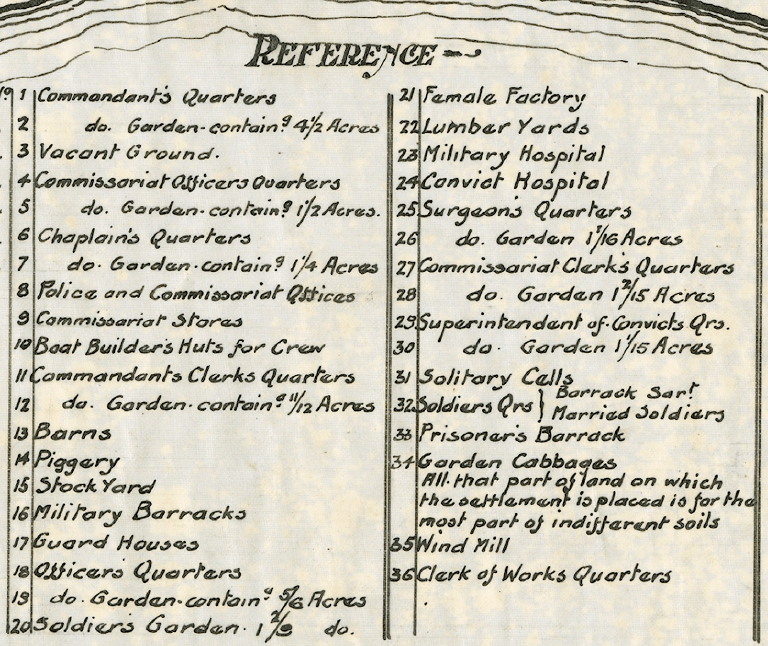
Fyans had such confidence in Mr Whyte that he deemed the arrival of the Superintendent of Works, Andrew Petrie, unnecessary. “Mr Whyte could perform all this duty equally well on a few shillings daily,” boasted the Commandant. Governor Bourke noted drily in the margin, “I do not concur with this opinion.”
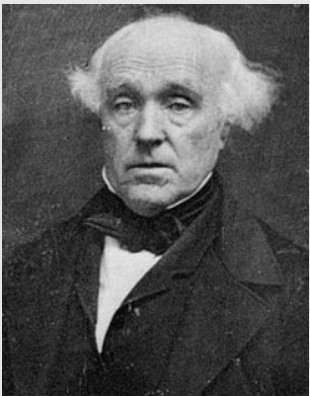
Captain Fyans left the settlement in the charge of Major Cotton, and (briefly) Lieutenant Gravatt, who were tasked with overseeing the gradual closure of the penal establishment prior to the arrival of the final Commandant, Owen Gorman.
Peter Spicer (Superintendent of Convicts) had, after 11 years at the settlement, become ill enough to require a spell in Sydney in September 1837, and found William Whyte the best person to take on his duties during his leave.
The end of the convict era.
By July 1839, Major Cotton and his staff (including William Whyte) had returned to Sydney to headquarters to await instructions. It was thought that there would be no need for a Commandant’s Clerk if the settlement was being emptied of convicts.
Just as Whyte was considering where on earth he was going to go, and what on earth he would do next, Cotton recommended him for the position of Chief Constable and Clerk of the Bench back at Moreton Bay. He boarded the steamer to return to a town ready to grow.
“Mr Whyte might be very advantageously employed in the joint situations of Clerk and Chief Constable, in which he would willingly serve so long as the settlement remains (as at present) partially under penal restrictions, and afterwards probably no more fit or deserving person would be found to fill the Situation of Clerk to the Bench of Magistrates.”
Sydney Cotton.
Lieutenant Owen Gorman took command in August 1839, and laid down Settlement Orders, designating who did what to whom and with what authority. Mr Whyte was to take charge of “Government Cells and general superintendence of the Prisoners’ Barracks,” but not, apparently, the “Discipline carried out therein.”
“He will confine himself solely To the Civil Custody of the Prisoners when not Employed, and to the Maintenance of the good Order and Discipline of the Settlement, reporting all irregularities, that may come to his knowledge to the Commandant and to whom only He is responsible.”
Lt. Gorman.
Gorman had already commenced a war of attrition with DACG[v] Kent and would shortly commence hostilities with Surveyor Dixon. He wanted everyone in their place. Or else.
William Whyte’s place was also the Post Office. There was a nice little garden next to it, and it was just opposite the lumber yard. There were no settlers in the area yet, and the only correspondence of the settlement was of the painfully official variety. Free settlement was around the corner, and soon letters of all varieties would flow. William Whyte became our first man of letters, pretty much as a side hustle. It wasn’t until 1840 that an overland mail was attempted.
THE POST — An Overland Mail from Moreton Bay arrived last night, being the first from that settlement. The Post started on the 25th of February and accomplished the distance in the short space of thirty-nine days. This circumstance will be hailed with pleasure by the Colonists generally.
Sydney Herald (NSW: 1831 – 1842), Monday 6 April 1840, page 2
Whyte continued to work as Clerk of the Bench. He took depositions when Surveyor Stapylton was murdered and convened a board to account for the pitiful belongings left at the camp – determining what was the property of the government, and what was personal property, and might be sent to the man’s family. Whyte’s involvement did not stop there – he was sent to Sydney in charge of the prisoners and witnesses for the trial of Merridio and Nengavil, the men accused of the Stapylton killing.
In March 1841, having delivered the depositions, witnesses and the accused to their various locations, William Whyte took leave while the trial took place. When applying for the holiday, he reminded the Colonial Secretary that he had served at the Moreton Bay settlement without a break for twelve years.
1842 saw the arrival of Sir George Gipps to inspect things, find things satisfactory or otherwise, and give sanction to the opening up of Brisbane and Moreton Bay for free settlement. Lieutenant Gorman was on his way out, and Dr Stephen Simpson, the new Commissioner of Crown Lands, took charge of the settlement until a Government Resident could be appointed.
The Governor noticed that the combination Chief Constable, Clerk of the Bench and Postmaster was getting on in years, and pulled Dr Simpson aside for a Talk. In His Excellency’s view, Mr Whyte had no place in any of these roles. An active and energetic man would be just the ticket.
Dr Simpson had a talk with Mr Whyte. A Mr Slade would be coming to Brisbane to take over as Clerk of the Bench (formerly Commandant’s Clerk), but Simpson thought that Mr Whyte could continue on as Postmaster, and keep the little cottage that came with the job. Mr Whyte concurred. The situation would keep a roof over his head, and a nice, indoor occupation for him. He had been suffering rheumatic gout increasingly and had been troubled by ague since his service in India three decades earlier. Whyte wrote to the Governor, pleading to remain in the Post Office, and Dr Simpson supported him.
“I am now after a period of 13 years at this place in the Service of Government, thrown helpless upon the World, in the decline of life, and from the Small income enjoyed during that Period I hope your Excellency will be enabled to perceive that Slender Savings could be made; I therefore throw myself upon the beneficence of your Excellency for the Continuance of my Situation as Post Master, with such gratuity as your Excellency many please to bestow so as to enable me to live until the Emoluments of the Post Office covers that object.”
William Whyte, April 1842.
Meanwhile, a new Chief Constable was being recruited, and the Sydney papers gave credit to the retiring Chief, William Whyte.
I can assure you, the inhabitants of Brisbane will, at all times, bear testimony to the upright and conscientious manner the present chief, Mr. Whyte, has performed the duties of his situation, and it is to be hoped, now that he has fallen into the sear and yellow leaf attendant upon old age, that past services for a number of years will not be altogether forgotten by the government.
Sydney Morning Herald (NSW: 1842 – 1954), Tuesday 10 January 1843, page 2
Sadly, a few months later, Whyte’s health declined. Simpson reported to the Governor in July 1842 that Whyte was suffering from “a very severe attack of illness. For some weeks past his mind has evidently been wandering and he is now in a state of high delirium.” Simpson doubted that Whyte would ever be able to resume his duties. Whyte recovered for long enough to plead with the Government in October 1842 for a small sum to cover his purchase of small block of land to allow him to build a small cottage “at Brisbane where memorialist has passed thirteen of the best years of his Life, in the Service of Government.”
The Government considered the petition but really couldn’t find a precedent for making a gratuity to Mr Whyte in the circumstances. It couldn’t make a precedent, either, really. The House of Lords wouldn’t approve.
Dr Simpson intervened as much as he could, and I suspect that he found some way to keep Whyte housed and fed in his last months, given that the Government could not decide on the best way to treat a man who had lived and worked at a remote outstation on a pitiful salary for over a dozen years.
William Whyte died on 18 February 1843 and was buried in the first Brisbane Burial ground the following day. As he was laid to rest, his successor, Mr Slade, was finding out the hard way just how much work was involved in those multiple roles William Whyte had performed.
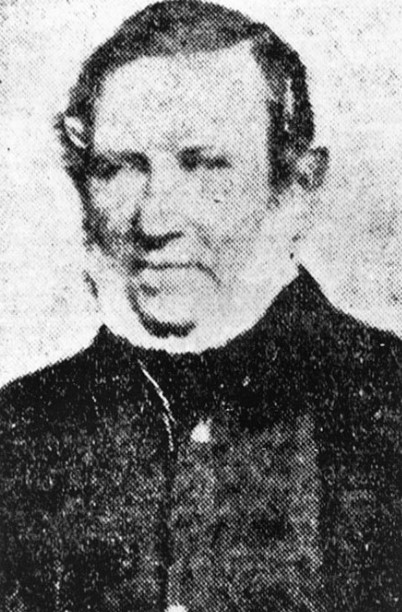
Meet William Whyte.
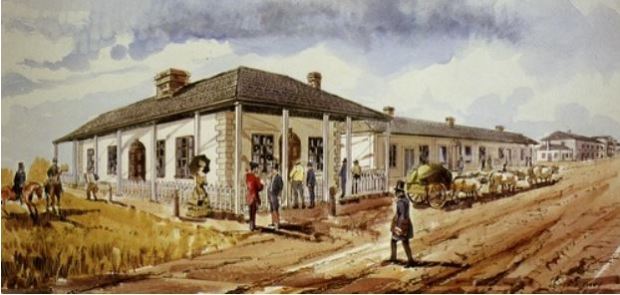
A squatter from the Darling Downs met William Whyte in the transitional year of 1841, when Gorman still reigned over the town. The squatter had needed to collect his mail, and that of his fellow squatters on the Downs. The squatter’s story has only been told in the first person once, and it was submitted to the Darling Downs Gazette under a pseudonym. (Although Thomas Dowse also recounted the tale as he heard it from the squatter, in several publications.)
In this tale, William Whyte’s merry presence comes to life, and it contains physical descriptions of Whyte, his convict servant and the rather alarming Lieutenant Gorman.
Christmas Day in Old Brisbane.
Darling Downs Gazette and General Advertiser (Toowoomba, Qld.: 1858 – 1880), Wednesday 24 December 1873, page 5
Undergoing a few of those incidents appropriate to an overlander from the Bathurst country to the Darling Downs, I reached the settlement on the Brisbane, one of the first flight of pioneers. Making the south side of the river in the noon of a sultry December day, and as there were no habitations on that side, I camped, hobbled out old ‘Hippy’ on a fine swarth of couch grass, and betook myself to the waters of the noble Brisbane, tasting salt water again for the first time for twelve months. Emptying out the contents of my valise, I availed myself of my very limited wardrobe to polish up, so as to face “big fellow commandant,” who a blackfellow informed me “lived in big humpy over dare.”
Hailing the Government boat, I was soon landed at the “steps.” Here I was confronted by a sentinel, who demanded my name. I was told to pass on to the commandant’s house on the hill, and I was immediately in the presence of a most portly and soldier-like looking gentleman, Captain Gorman, Commandant of H. M. Penal Settlement of Moreton Bay, &c, &c. This high dignitary chose to treat the squatters very cavalierly, but on my showing credentials from the Sydney authorities he was as civil as it was in his nature to be to an unknown civilian. Hastily quitting this martial character, with permission to roam over the settlement without let or hindrance, I made for the post-office, as I had not had a letter for twelve months.
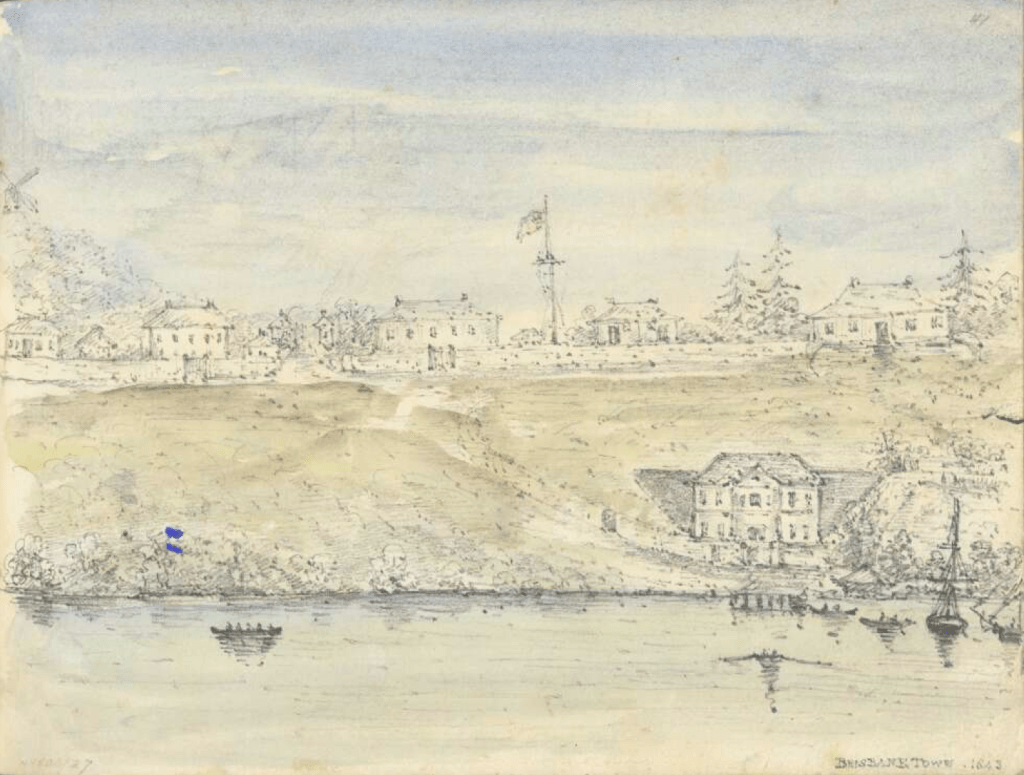
Brisbane then consisting of the Government House, commissary and officers’ quarters, barracks and hospital, with good old Andrew’s at the far end, I had no difficulty in finding the humble brick cottage in which sojourned Mr White, chief constable and postmaster. On entering the parlour of the General Post Office, I found the postmaster, a portly middle-aged gentleman, entertaining two young squatters, and who appeared to have commenced the Christmastide festivities rather early, as three black bottles stood on the table, and to which they had done evident justice. On being introduced to the rubicund postmaster, I was asked by him what I would take; having then but one desire— to hear from dear friends at home— I replied, “I’ll take my letters, if you will allow me.” “Oh, that be hanged!” he replied, “this is ‘St. Moreton’s Day,’ and no one opens a letter here if I know it. Now then, what will you take, ‘red tape,’ ‘white tape,’ or ‘black tape’? there you are; help yourself. Taking the cue from my friends, I sat down and helped myself to a dose of black tape, in the shape of dark brandy.
The thermometer standing at 104 in the shade, the various nips of red tape, sundry songs, ‘Hailing Smiling Morn,’ and the like, from the most taciturn bushmen I ever met, aided by the rattling jollity of the jolliest fellow then on the Downs, soon made our party hilarious, but as tiffin time was a state institution amongst the officers of the settlement, we soon broke up the party -one having orders to tiffin at the Commissary’s, the other at the doctor’s, and I still trusting to get my letters was thrown on the forced hospitality of the postmaster, who made me perfectly understand that the Post Office and all the contents thereof —especially the brandy— was at my command.
My host, addressing his factotum and man of all work, Peter, asked what was for lunch; was told by Peter, “Why, sir, nothing sir; you know you lunch with Mr Petrie.” “Oh! so I do; come on you Downs man, it’s all right, old Andrew is good for forty feeds.” Consequently, a raid was made upon the true Scotch hospitality of friend Andrew and his kind and generous wife. After partaking of a most sumptuous repast and sitting long, talking over the old country and absent friends, on looking round I missed my friend the postmaster. Feeling slightly chagrined to be thus deserted, I made a move to be off, but was told “it’s no use, it’s his way, never mind him;” but determined to stick to the letter-hunting-object, against the advice of my kind entertainers I made tracks in search of the postmaster. On reaching the office I found the shutters up, doors closed, Peter and the postmaster not “at home.” I forthwith returned to Mr Petrie’s where I was twitted for my doubting their knowledge of the official habits of the postmaster, and to the manner of the old settlers was told to consider myself at home.
Early the next morning I betook myself to the Post Office. The shutters were up, but on searching round, I found the veritable Peter – who was a great collector of birds – cleaning guns ready for an expedition down the river. On making known to him my determination to have my letters that day, he exclaimed, “Is that all; come here,” and showed me into a room in which stood a large bureau, and lifting the lid displayed a large and miscellaneous heap of letters and papers. “Help yourself,” he exclaimed, and quitted me for the more congenial gun business. I took time and trouble, and searching the pile through, obtained a large mail for the Downs. During my short visit to the settlement, I frequently undertook of the abundance of the postmaster’s red tape; and the worthy official, doing a small trade in ships stores, I purchased a few necessaries of him on my return home. Some time after, I got a bill of items of goods, and amongst the lot, red tape, white tape and black tape, totted up no inconsiderable sum.
[i] William Whyte had been born around 1790, judging by his death record.
[ii] 20 Jan 1827 – CRIMINAL COURT, LAUNCESTON – Trove; CSO 3-1-262-W. Tasmanian Records Index.
[iii] While Logan was sailing to the Bay to meet the Waterloo, a convict named Michael Collins died after becoming entangled in the windmill’s machinery. Rev. Vincent decided that a funeral report ought to be produced, and an inquest should take place. The military officer acting in Logan’s place ordered a funeral, which Vincent refused to conduct. Logan returned to find the funeral in progress, with Mr Spicer officiating. Logan fired off an order, demanding Reasons why this was occurring. Days later, a prisoner on the Waterloo (Vincent’s assigned servant, Anne Goodlake), wanted to marry a Moreton Bay prisoner named Thomas Cribb. Rev. Vincent decided to unite the convict sweethearts in holy matrimony, posting the banns in the settlement’s orderly book. Captain Logan had heard nothing good of Miss Goodlake and stepped in to prevent the marriage. Indignant letters flew in all directions, and the dispute continued until Vincent’s departure at the end of the year.
[iv] Clunie and his successors would continue to commend Whyte’s ability and recommend him for pay increases.
[v] Deputy Assistant Commissary General. A title that was, understandably, shortened to its initials.
AI very nicely made this clip for me. I think it imagines that I have functioning social media accounts, and wish to share it. Bless.

