
The earliest census returns for Moreton Bay had nearly 1600 people spread out over a vast area that ranged from the Darling Downs to the Logan, Pine River, Ipswich and Brisbane Town. In December 1849, there were two men named Humby in tiny Brisbane Town. Both were English. Both were transported convicts. Both had married ladies named Caroline, and both had large families. Both ran businesses in the township. The two Mr Humbys could not have been more different in their fortunes.
Henry Humby
Henry Humby (sometimes spelled Humbey) had been born at sea in 1808 to William (a mariner) and Catherine Humby, and was baptised at St Mary, Rotherhithe, Surrey, in 1812. He was the third child of five, and the Humby family based itself in Stepney after their seafaring years.
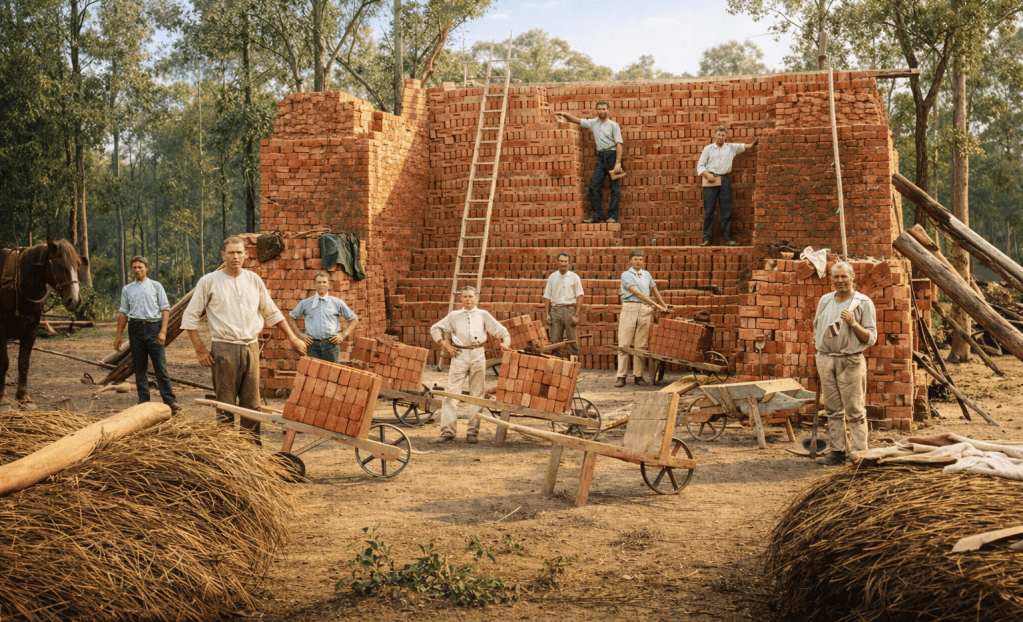
In 1832, a now adult Henry Humby worked as a brickmaker at Mile-End. Although he claimed to have been elsewhere at the time, he and one Thomas Smith were convicted at the Old Bailey for stealing window-sashes from the Reverend George Evans. Humby was transported to Australia on the Waterloo the following year.
His convict indent on arrival in New South Wales In 1833 gives a glimpse of Henry Humby’s appearance. He was 5 feet 6 ½ inches tall, with dark brown hair, brown eyes and a tanned complexion. He had been married and had a daughter.1 He was a brickmaker (noted as “good”) and he had an impressive collection of tattoos on his arms.
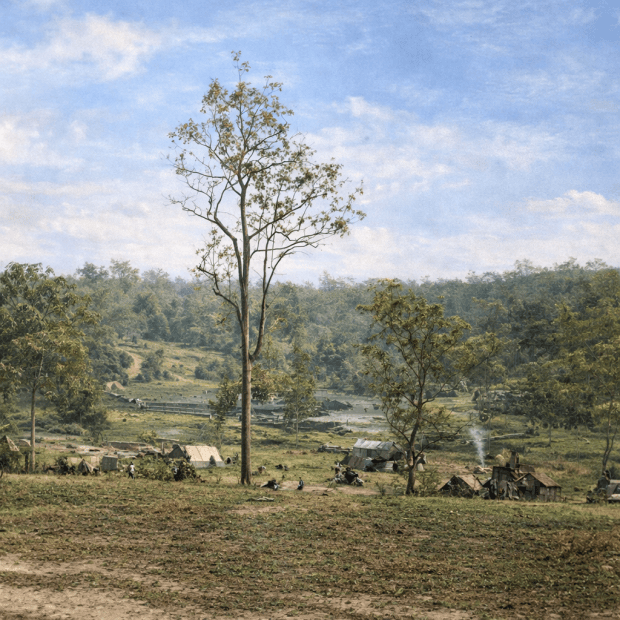
Humby served out his sentence of transportation, married Caroline McNamara in Goulburn in 1839, and received his Certificate of Freedom in 1840. In 1849, Henry Humby was living and working as a brickmaker in York’s Hollow, Brisbane. In December 1849, as the other Mr Humby was arriving in Brisbane, Henry Humby unwittingly started an affray.
York’s Hollow
York’s Hollow is an area of great cultural significance to the indigenous people of the Moreton Bay area. It was named after an indigenous leader who was known to the Europeans as the Duke of York. The area comprised what is now Victoria Park, the Hospital and the Exhibition Grounds.2
Most of the activity in the Moreton Bay settlement took place close to the river, and York’s Hollow area became a place of refuge for the displaced indigenous people. There were no streetlights or even streets, in York’s Hollow. Henry Humby and his young family were living in a distant part of the township, and there had been threats to break into his house before.
On the night of 28 November 1849, an indigenous youth who worked with the Petrie family came to Humby’s home and told him that one of the Petries’ bullocks had been taken by the Yorks Hollow group, with a view to dining on same. Humby went to the Petrie house to inform them of this. On hearing someone cry out in the night, Humby went home, locked the door and put the lamp out. When the coast seemed clear, Humby went to town and raised the alarm with the police. He returned home, having done what he assumed was his civic duty.
What followed was a part farce and part armed raid. The policeman that Humby spoke to went to the Chief Constable, who gave some orders and returned to his bed. Ensign Cameron, in charge of the 11th Regiment at Brisbane was enjoying a spot of night fishing when he was alerted to trouble at York’s Hollow and decided to take action. The Petries were out in the night, trying to locate the missing bullock and talking to the elders to find out what the problem was. Then, Cameron’s armed soldiers came into the York’s Hollow camp and fired, believing that a boomerang had been thrown at them. The Petries identified themselves and got the soldiers to stop shooting. Several indigenous people were hurt – in fact, the young man who had alerted Humby was shot in the leg during the ruckus and spent some time in hospital. No bullock was lost in the scuffle.
There was an enquiry before the Police Magistrate the following day. Witnesses were examined, the Chief Constable was censured, and depositions sent to Sydney. Henry Humby was mocked by the Moreton Bay Courier for shutting himself in the house, “conjuring up through the darkness a host of imaginary hostile natives,” then, for reporting the matter, “arriving in town, he rushes about in a bewildered manner, spreading as he goes the fear that infects himself.”
The Chief Constable was relieved of his job for refusing to get out of bed. Three members of the 11th Regiment were court-martialled in the first sittings of the Moreton Bay Circuit Court, and Henry Humby was called upon to give evidence again. He gave a very terse account of what he was told and what he did, and added that he was “not in fright at the time.” (One of the soldiers was convicted and given six months in Sydney Gaol for firing on the York’s Hollow people. The other two were acquitted.)
Maitland and back
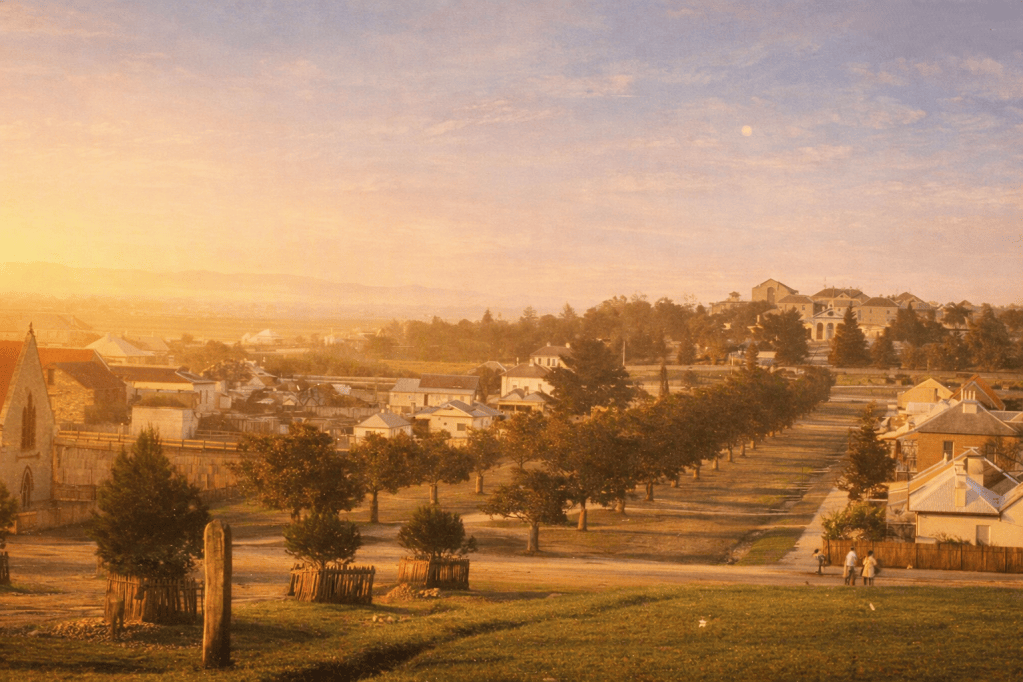
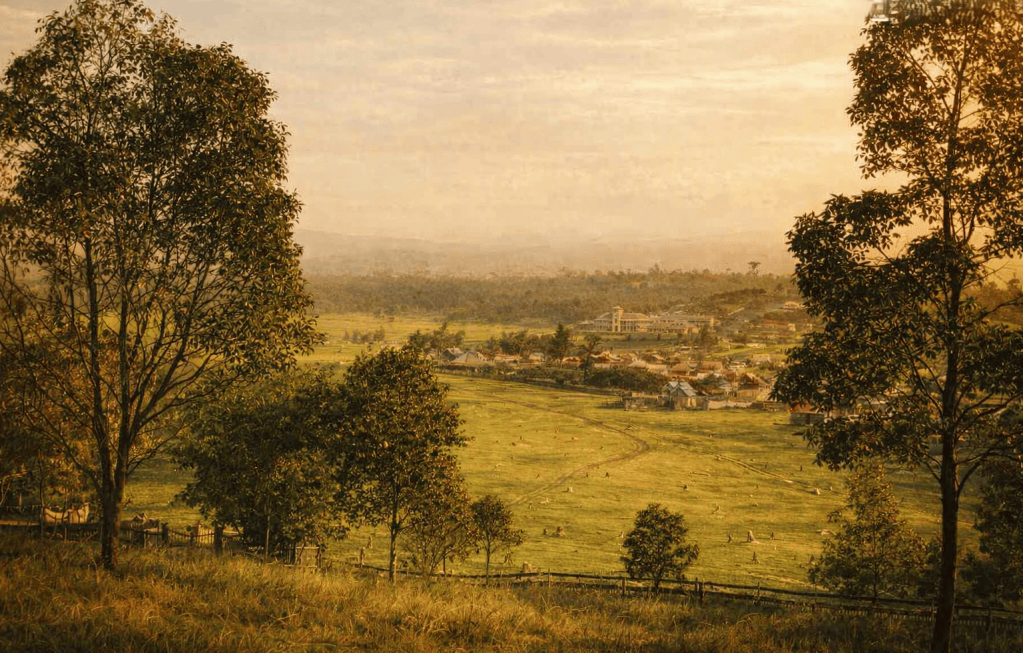
Understandably, pastures new beckoned for Humby. In 1851, he was in Bathurst, where the family spent a couple of years, and two more children were born. By 1856, the family had taken up residence in Maitland, where Henry plied his brickmaking trade in peace. For a while.
In 1857, Henry Humby’s father died in the Mile End workhouse, while in Maitland, Henry had lost a valuable game cock (a rooster bred or trained for fighting). Humby must have had an enduring interest in game cocks, because they caused him some trouble later.
Caroline Humby took another lady to court for swearing at her when she disciplined the sweary lady’s child. She briefly sought protection from Henry from the Court but withdrew her application when she reconciled with her husband. After nearly 20 years of marriage, Henry would still become jealous of other men’s attentions to Caroline. He was fined 40 shillings for swearing at a man in Maitland who had dared to speak to Caroline in public.
The Humby family returned to Brisbane in 1862 and started making a few appearances before the Courts – Henry for swearing and business disputes, and then Caroline a couple of times for drunkenness.
Then the Curse of the Humbys visited again – in this case, it was one of the Humby children who (quite understandably) raised a hue and cry when a neighbour came to their house armed with a knife and making threats to kill Caroline. Over a game cock, apparently.
Mounted armed troopers again headed out to the vicinity of the Humby home, but fortunately, the neighbour had given up his armed threats and gone home. The press mocked once more.
There were some more shenanigans in business and personal life – including one which culminated in Humby being chased into his house by stone-throwing neighbours – but generally, throughout the 1860s and 1870s, the Humby family settled down. Their youngest daughters married – Elizabeth to James McDermott in 1875, and Esther to Charles Graham at a residence near Thargomindah in 1885.
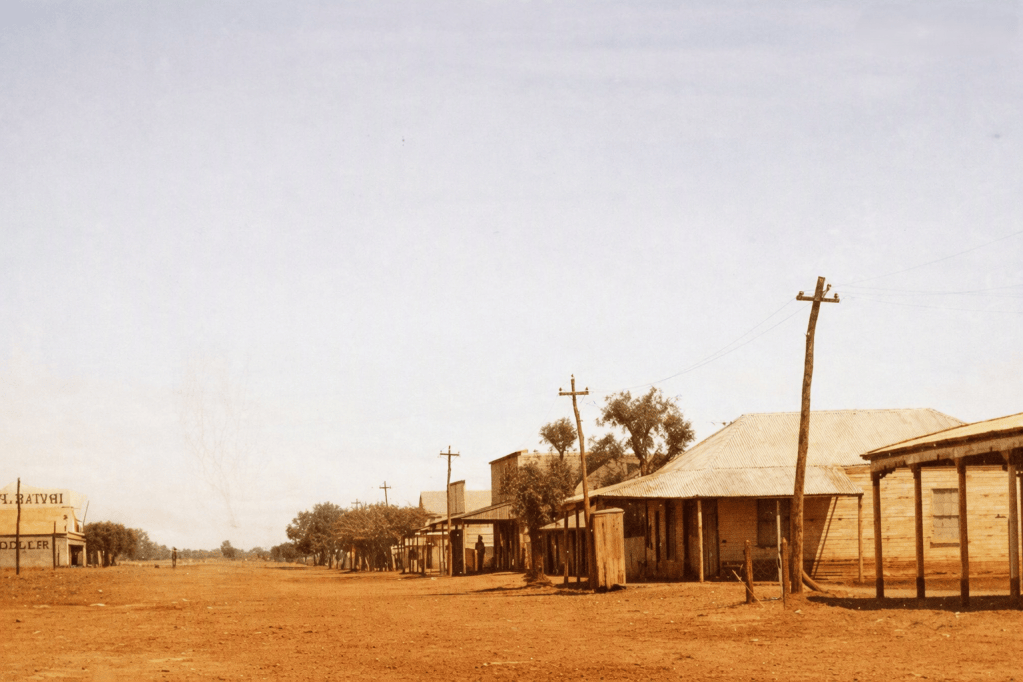
After Esther’s wedding in November 1885, Henry made his way back to Thargomindah on foot to catch a coach home. The water bag he carried had, unbeknownst to him, started leaking, and Henry collapsed by the side of the road in the heat, and nearly died of exposure and dehydration on his way back to town.
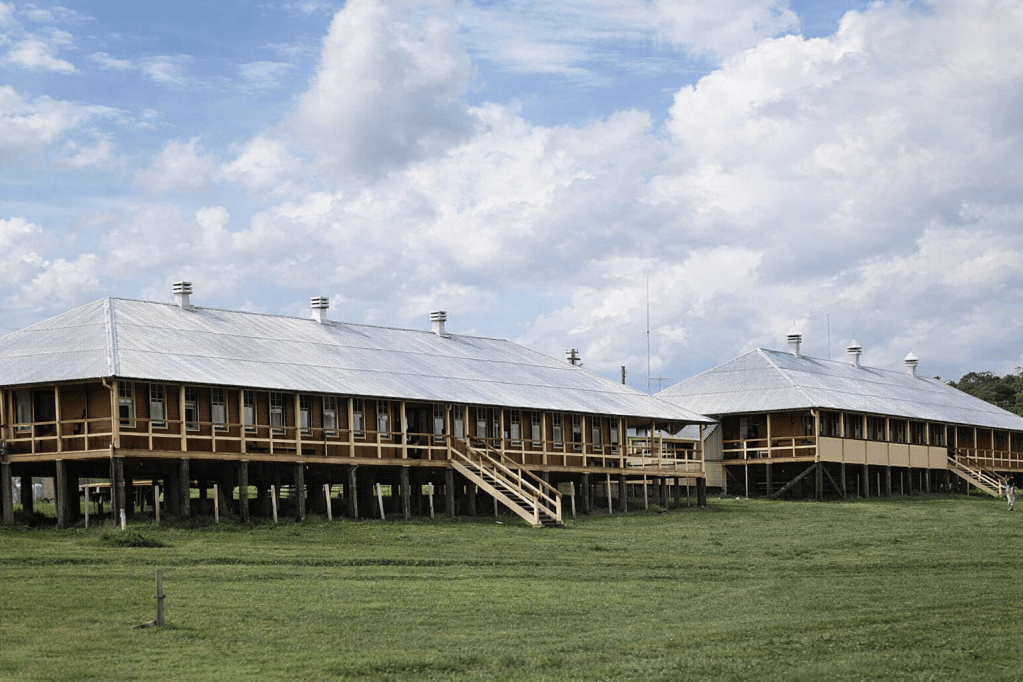
Henry Humby was in his 70s and found that he could no longer work to support himself. The after-effects of nearly dying of exposure, his long life spent in physical labour, and his age, combined to weaken him. He spent the last 15 years of his life in and out of Dunwich Benevolent Asylum. He was able to spend time with his wife and children when he was well enough to leave Dunwich, but his general health meant that he always had to return. His wife Caroline died in 1899, and Henry finally passed away at Dunwich aged 93. He is buried at Dunwich Cemetery.
John Cross Humby
John Cross Humby was a year older than Henry Humby but arrived in Australia sixteen years after his near namesake. A native of Hampshire, he was a cordwainer3 by trade, and by all accounts, a very competent one.
John Cross Humby was of a slightly higher social class than Henry Humby. He was a second-generation craftsman, educated, and skilled in music. He married Caroline Williams in 1833 (the year that Henry Humby was transported to New South Wales) and set up a business in Blackfriars Road.
Perhaps his fine shoemaking was not matched by a fine business sense. In April 1847, he was bankrupt, appearing before Commissioner Fane at Basinghall Street. Three months later, he was convicted of forging an acceptance of a bill of exchange and sentenced to 10 years imprisonment. I think the two events can hardly be a coincidence.
Exile
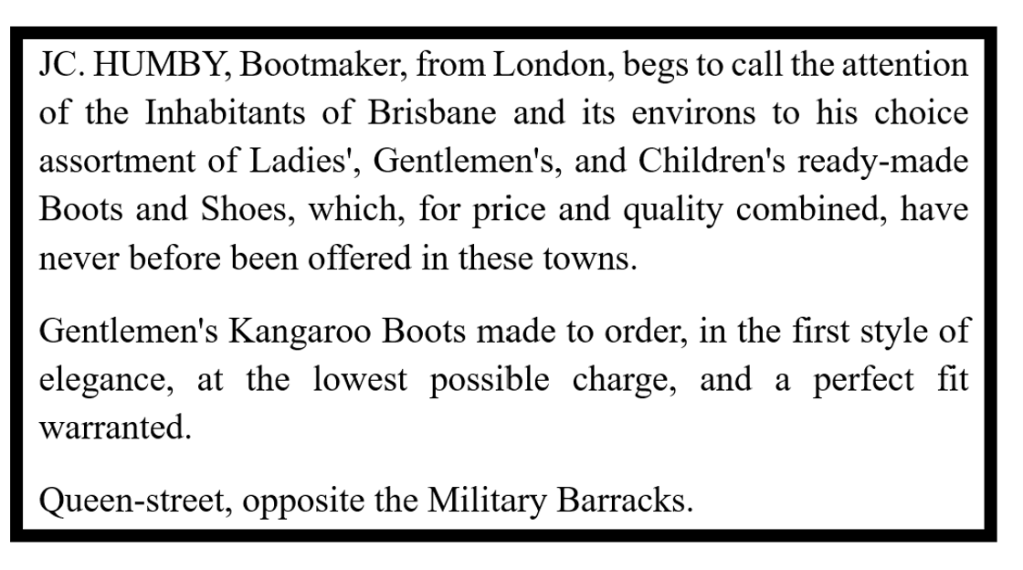
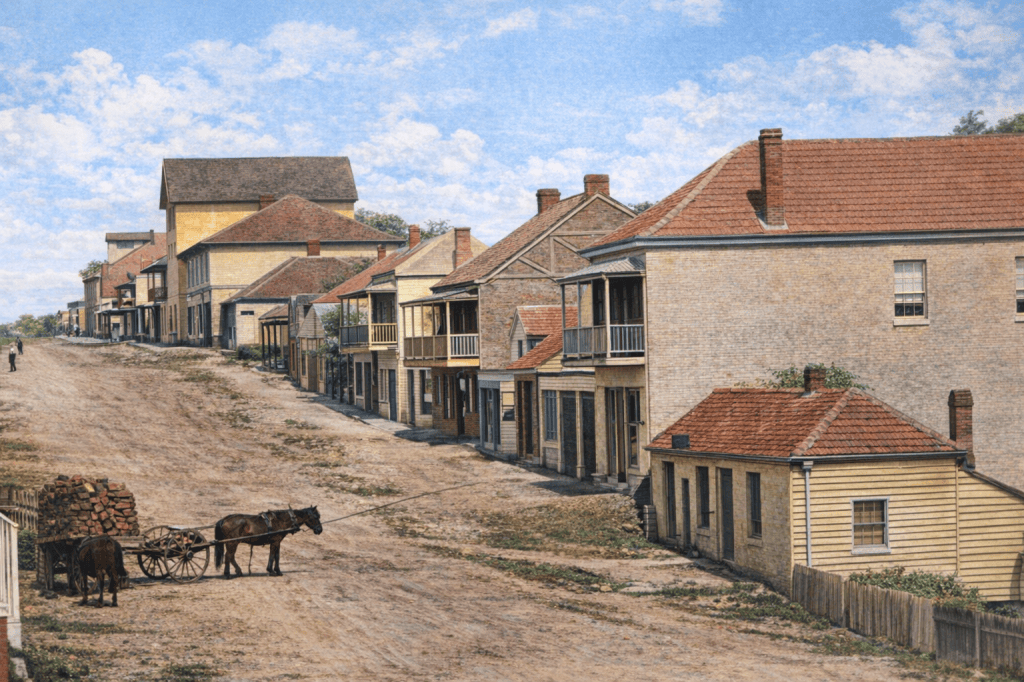
John Cross Humby was transported directly to Moreton Bay in the Mountstuart Elphinstone, landing at Brisbane Town on 1 November 1849. Mrs Humby arrived (separately, of course) around the same time. Within a month, JC Humby had set up a shoemaking business in Queen Street and was advertising his skill and wares.
Oddly enough, although he lived and worked directly opposite the police office, he was considered to be absent from the district – he had neglected to report for a convict muster, and his ticket of leave was cancelled. Embarrassed, he applied to the bench for a reinstatement.
John Cross Humby was a talented musician, particularly on the piano. His entrée into Brisbane’s more respectable quarters came through his music. At the School of Arts, he accompanied a lecture by Mr Poole on the “Pleasures and Advantages of Music.” Humby’s songs and demonstrations were the hit of the evening and were noted favourably by the Courier. (Mr Poole didn’t fare so well, particularly in the matter of his accent. As the Courier put it, “why, in the name of ‘eaven, ‘arrass our hears with ‘armony, ‘omes, and ‘earths, &c.?”)
Music Man
Well-received concerts and recitals continued throughout 1852 and 1853. JC Humby, now a local arts celebrity, branched out as a “Professor of Music,” selling musical instruments and offering lessons. However, a solo concert in November 1853 was poorly received. The Courier did not comment on the concert, but the musical correspondent of the Moreton Bay Free Press was merciless. Entertaining the School of Arts audience on his own was “a task beyond his powers.”
It appears that John Humby did not appear as a performer after that, but, having “publicly introduced Music into Moreton Bay,” he left shoemaking aside and in 1855 concentrated on music. He imported a beautiful piano, and purchased a stock of musical instruments, but, once again, found himself insolvent. He advertised to the bitter end, hoping to make sales and justify his investment in pricey stock in a small market. The final misery was a Sheriff’s Sale of his stock in late 1855.
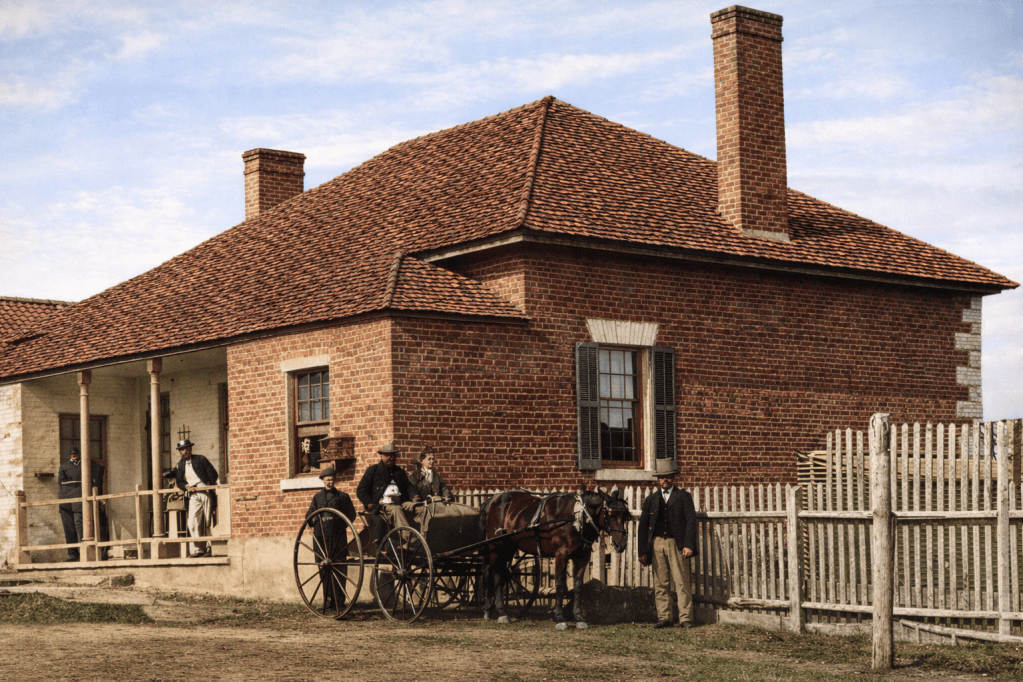
In April 1856, John Humby was admitted to Moreton Bay Hospital. He had been drinking for some time, soothing the pain of being a convict exile, and once again an insolvent. Dr Kearsey Cannan noted: “A man of intemperate habits, he cannot eat, is debilitated and trembling and cannot walk without a cane.” He remained an inpatient for a month before discharging himself “much relieved.” On July 25, Humby was readmitted, unable to walk without assistance, He had a terrible cough, could not eat, and insisted that he hadn’t had any drink that day. He rallied a little the following day, but gradually declined, dying at 5 am on July 28, 1856. His cause of death was listed as “gangrene of the lungs caused by exposure and intemperance.”
He was buried at the Church of England burying ground at North Brisbane. He was 42 years old.
- There was a marriage between Henry Humby and Ann Alexander on 14 June 1831, which took place in West Wickham, Kent. This may be the wife referred to in the indents. ↩︎
- According to Constance Petrie, the Humby home was in a part of York’s Hollow that became the central parade arena of the Brisbane Exhibition ground. ↩︎
- In the complicated matter of shoemaking, a shoemaker or cordwainer was the maker of new shoes from new leather. A mere cobbler was not permitted to make new shoes or use new leather. They were restricted to repairs of existing shoes. I’m sure there were any number of officious parties checking that cobblers weren’t tempted to use any nice, new leather in their trade. ↩︎
- Australian Convict Transportation Registers – Other Fleets & Ships, 1791-1868; 1833-1834.
- Deaths in the District of Brisbane, Moreton Bay, in the Colony of New South Wales, Registered by Robert Creyke. No.42. 1856, page 9.
- England 1841 Census, Middlesex St Olave Hart Street with St Nicholas in the Shambles District 13.
- England and Wales Criminal Registers, 1791-1892.
- England Select Births and Christenings, 1538-1975.
- England Select Marriages, 1538-1973.
- Hampshire, Church of England Baptisms, 1813-1921.
- New South Wales, Australia, Certificates of Freedom 1827-1867 NRS 12210
- Queensland State Archives. Admission Register, Males – Dunwich Benevolent Asylum, ITM298715
- Queensland State Archives. Register of Cases and Treatment in Moreton Bay Hospital, DR124175. From 30 June 1855 to 8 May 1856, page 445.
Images:
- East Maitland, NSW, Date c 1884. Mitchell Library, State Library of New South Wales
- Brickmaking East Maitland Pottery – East Maitland, NSW. Date c 1885. Mitchell Library, State Library of New South Wales
- Brisbane General Hospital George Street Brisbane 1865. QUT Digital Collections under Creative Commons Licence.
- All other images are from the digital collection of the State Library of Queensland and are out of copyright. AI colourisation by Copilot.

