
Moreton Bay Pilot, James Hexton.
Allow me for a few minutes to draw attention to an old colonial celebrity, the Pilot stationed at Stradbroke Island, the late Mr James Hexton. He’s dead now and has been for some years, having met a sailor’s death in the performance of his duty, meeting his sad fate in a manner of a brave seaman’s last encounters.
Tom Dowse.
In 1909, the Queenslander published an article and interview entitled, “The Oldest Living White Native.” The man they were profiling was James Rigby Hexton, who shared his boyhood memories of the Moreton Bay convict settlement and his father, the Amity Point Pilot, James Hexton.
James Rigby Hexton’s reminiscences were fascinating, although some details were demonstrably incorrect. He gave accounts of Captain Logan ruthlessly flogging convicts, although Logan had already died when Hannah Rigby (James’ mother), arrived in Brisbane.
From this article grew a legend that James Hexton senior had been a Royal Navy lieutenant who had a silver plate implanted in his skull to cover a head wound received in the Battle of Trafalgar.1
James Hexton senior was born around 1780 in Waterford, Ireland. In his youth, he may well have joined the navy, seen service, and suffered injuries. His name does not appear anywhere in the Trafalgar Rolls. The story about the silver plate in his head is doubtful because operations of this kind were not undertaken until later in the 19th century. And certainly not by naval surgeons in battle.
The most likely scenario is that he served for some time in the navy, had perhaps been injured, and took up life as a merchant seaman in the 1820s. After working on fishing and coastal voyages out of Sydney, James Hexton arrived at the Moreton Bay convict settlement in charge of the Regent Bird cutter on 7 February 1831. He was considered to be a good seaman and was recommended by the Master Attendant at Sydney for work on the cutters at the Bay.
Moreton Bay.
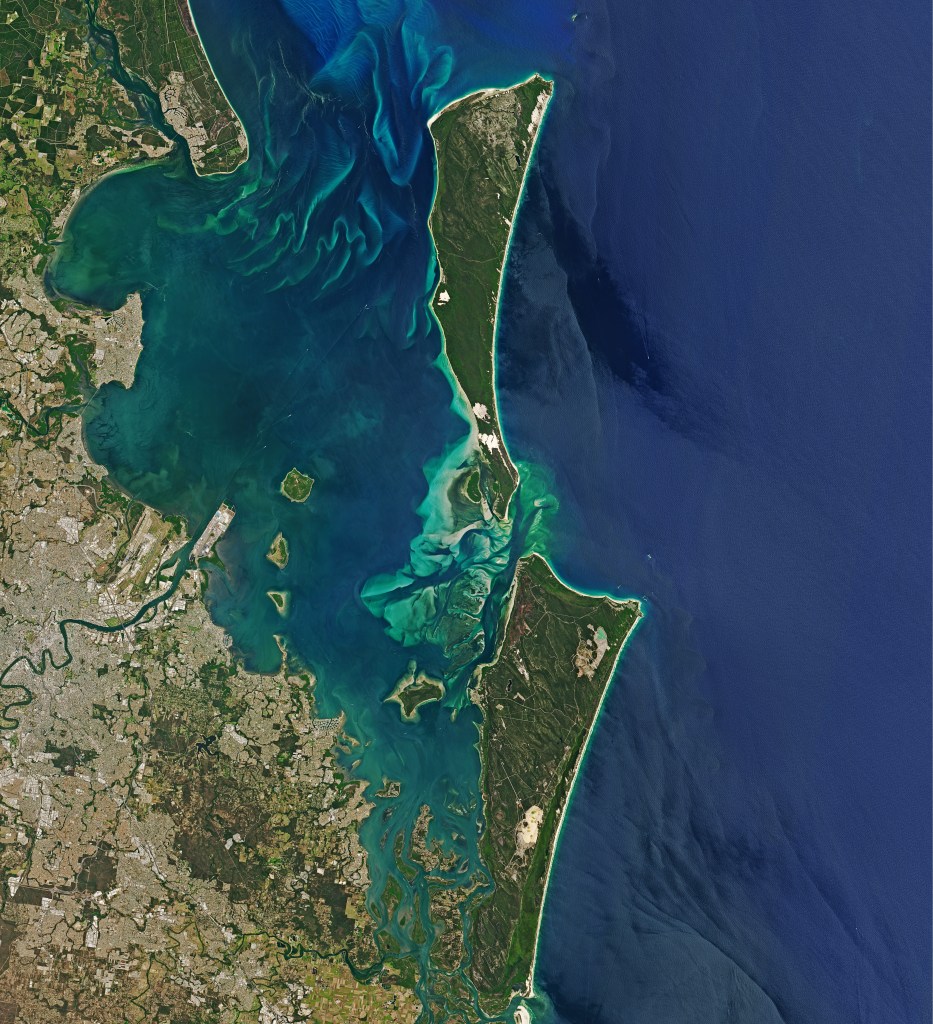
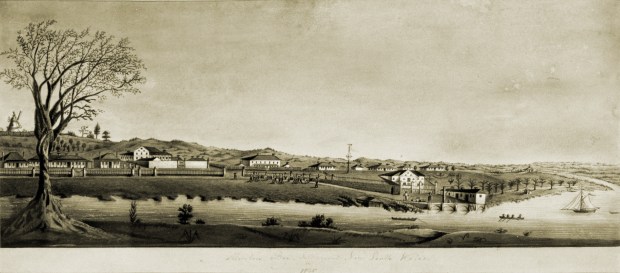
Between 1825 until 1842, the Moreton Bay convict settlement was cut off from the rest of the world. The only visitors (and residents) were British soldiers, officials and convicts. Any other person intending to go to Brisbane required a written authority from the Colonial Secretary. The only uninvited visitors were shipwreck survivors, who were rescued, cared for, and then sent promptly to Sydney.
Convict ships and supply ships travelled to and from Sydney, and were guided to anchorage in the Bay by the Amity Point pilot, who lived at a station at the tip of Stradbroke Island because of the irregular shipping arrival times. The pilot had a boats crew comprised of several convicts, and a small detachment of soldiers was stationed nearby, dealing with the secure arrival of convict vessels.
Three vessels travelled between the pilot station and the settlement on the Brisbane River. Two were helmed by free mariners and were trusted with bringing convicts and cargo to and from the settlement, and one by a convict (who was emphatically not trusted with valuable goods). When there was no ship in the Bay, the masters and crew of the smaller vessels could find themselves ferrying felled timber and farm produce from the various outstations. And, in James Hexton’s case, spending time with a female convict named Hannah Rigby. The result of that liaison was James Rigby Hexton, born at Brisbane on 27 September 1832.
James Hexton was supposed to have been in charge of the Regent Bird cutter, but Commandant Clunie put him in charge of a smaller boat and at a reduced rate of pay. When the error was discovered (by the Colonial Secretary), Clunie offered Hexton a return trip to Sydney, but Hexton preferred to stay in Brisbane – he could no longer undertake long sea voyages due to being “subject to scurvy.”
Between Hexton’s arrival in Brisbane in 1831, and his appointment as the Moreton Bay Pilot in 1834, two other pilots had operated at Amity Point – James Nelson and William Morris. Nelson was a replacement for an earlier pilot who had drowned. Nelson was relieved of his position after a couple of incidents involving drunkenness – including the piratical seizure of the Caledonia by convicts. William Morris succeeded Nelson, but became ill, and died in Brisbane in September 1834.
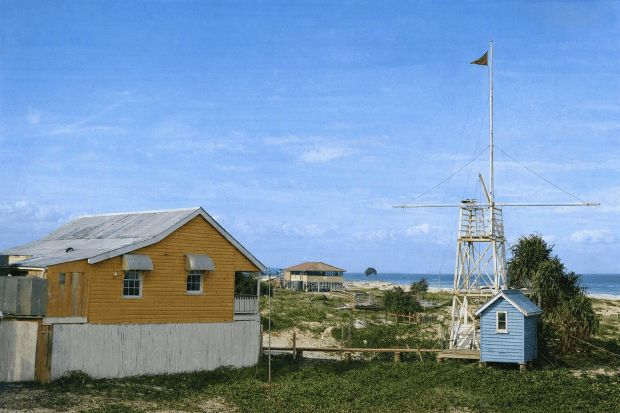
James Hexton was then installed in the Pilot Station, living and working in the small community of convict boatmen and soldiers. He remained at Amity Point until 1848, when beach erosion forced the establishment to be moved to Moreton Island. And there he remained until his death in April 1851.
The Pilot Station.
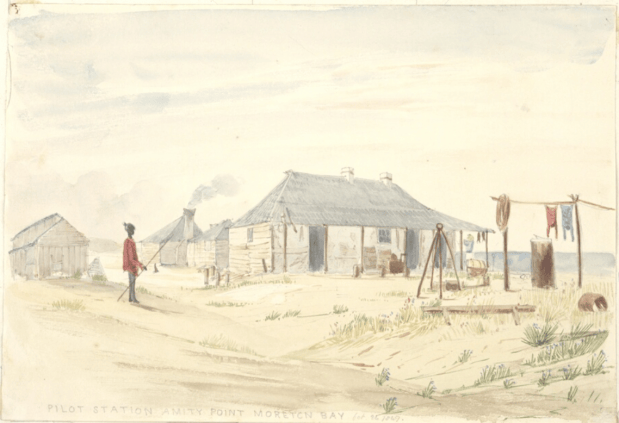
Living at Amity Point, Hexton kept a lookout for approaching vessels and their signals. He was in charge of a small group of convicts – one convict overseer, and several boatmen. If a supply or convict ship from Sydney appeared out to sea, Hexton and his crew would row the pilot boat out and steer the vessel around the sandbars and into the Bay.
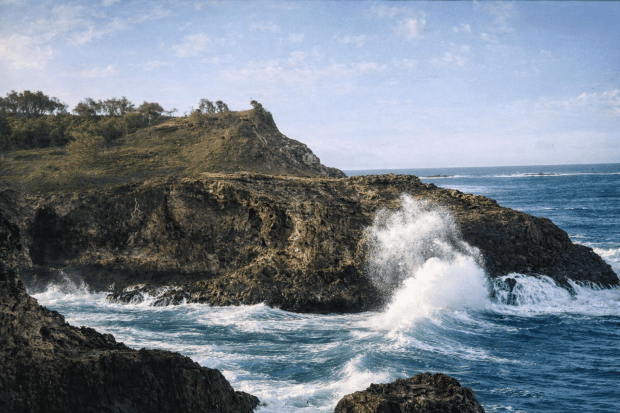
In a letter to the Colonial Secretary, Commandant Clunie described the hazards experienced when the pilot “has been obliged to go out when required eight or ten miles to sea, in an open boat over a dangerous bar where the former pilot Tosh was drowned.” 2
Another drawback to life at Amity Point was, according to Captain Clunie, “the miserable secluded place where he is forced to reside.” The rate of pay was such that, “I am afraid that few free seamen would submit to the seclusion and restraints of a penal settlement without expecting to derive some advantage from thefts or smuggling.” 3
Jemmy Hexton, the Pilot, was a quaint specimen of a thorough old salt, of the true colonial type, a good seaman but as obstinate at times as a pig. Hexton well knew the intricacies of the channels leading to and from the various points, consequently neither beacons or lights were by him considered necessary for the safe navigation of the waters of the Harbour or river.
Tom Dowse
Although Tom Dowse characterised James Hexton as a stubborn man who refused to allow signals and buoys, in fact Hexton had written to Captain Fyans asking for buoys in 1834, and then appealed to the Master Attendant’s office in 1843 for signal flags. The supply of buoys was finally granted in the late 1840s.
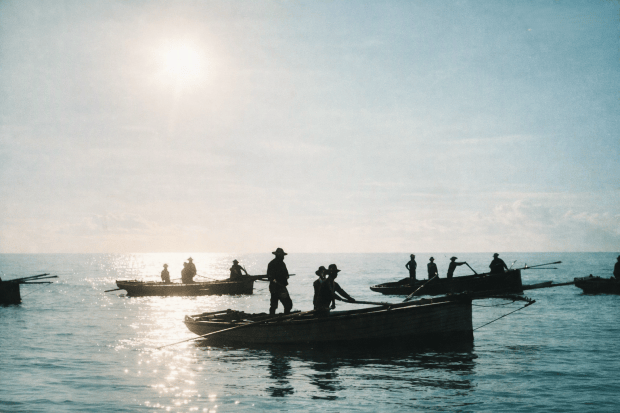
In 1836, Hexton was called upon to board a distressed passing ship, William, when its master reported that it was taking on water, and provisions were running out. The leak was located and stopped, but the master of the William rather ungratefully refused to enter the Bay and drop Hexton off at Amity. While Hexton was detained, the convict boatmen at the station took the opportunity to rob his property. Hexton’s health began to suffer on his unplanned journey to Sydney (he was prone to scurvy), and he wrote to the Governor to notify His Excellency of the situation and to ask that steps could be taken to prevent the situation occurring again. And to compensate him for his losses. Which would be nice, given his scant pay.
The closure of the penal settlement and the opening of the Bay and river for commercial vessels meant that the work of the pilot station would increase considerably. In 1842, James Hexton completed a survey of the Brisbane River as far as Redbank, taking soundings for future steamer traffic. By 1846, Hexton was paying an additional crewman from his own pocket to cope with the workload – a situation made worse still when the pilot boat was lost at the entrance to the bay.
The return of the pilot (Hexton) from Sydney, whither he had been taken by the Tamar, in consequence of the loss of his boat at the north entrance, has quieted the fears of many, who, knowing the old boy’s good qualities, I would not like to hear of his finding a watery grave after so many years’ buffeting on that element.
Sydney Morning Herald, December 1846.
The following December, the pilot boat again capsized, losing its oars, sails and mast. Fortunately, all hands were saved.
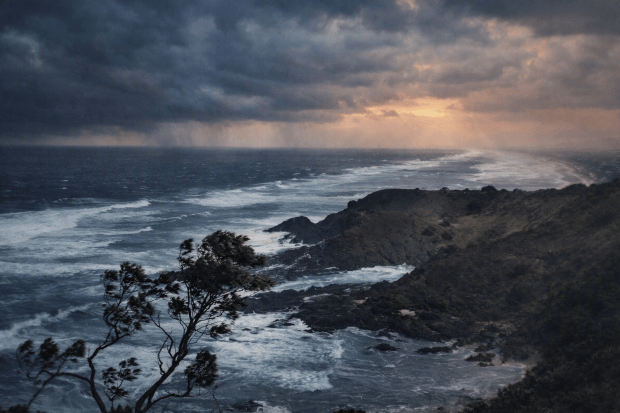
In March 1847, the steamer Sovereign met with rough seas at the South Passage bar, with the loss of 44 lives. Hexton had been working with the Tamar that morning and came upon the disaster when walking round from Cowan Cowan. He assisted with the recovery efforts and then took the survivors and rescuers back to the station, giving them shelter and food and supplies from his pantry. His kindness and generosity to those few survivors was rewarded with a grant from the Sovereign Relief Fund.
The Sovereign disaster, combined with the gradual erosion of the sand at Amity Point, caused the Government, in its marvellously unhurried fashion, to consider moving the pilot station to Moreton Island. By January 1848, a wag in the Moreton Bay Courier was suggesting that Hexton moor a boat to his roof and make his escape by the chimney in a pinch. A month later, the sea had done its work, and Hexton was forced to sleep out in the open further inland. The station on Moreton Island was completed later that year.
Living with the indigenous people.
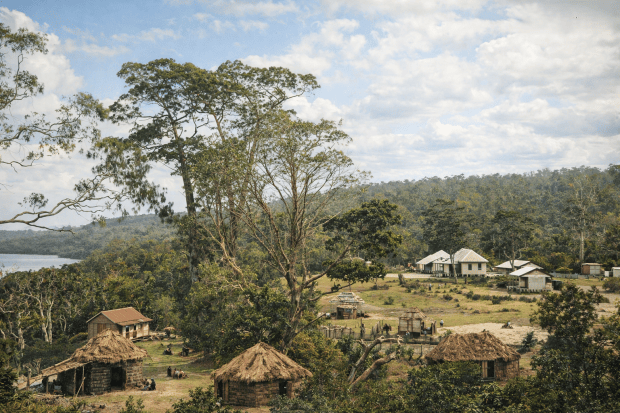
James Hexton, his convict crew and a small detachment of soldiers lived among the traditional owners of the land, the Nunukul people. The Nunukul had been kind and hospitable to John Finnegan and Thomas Pamphlett when they had been stranded there in 1823, and cordial relations were reported with the new pilot station from 1825.
By the early 1830s, relations between the Stradbroke Island people and the Europeans at the Bay had become hostile, and there had been retaliatory killings between the convicts and indigenous people. A violent military intervention occurred in 1832, which seems to have stopped the clashes, which were attributed to the depredations committed by convicts (and one suspects, many other white men) on young indigenous women and girls.
The Moreton Bay Trial Book contains two cases that bear out this view. In August 1835, a convict named John Phillips per Vittoria was brought before the Commandant by one of the soldiers of the 17th Regiment based at Amity Point. He was charged with insubordination and insolence to James Hexton, the pilot. Phillips had brought an indigenous woman along the beach to take to his hut for the night. Hexton forbade him to do this, and Phillips replied that he “would have one every night if he wished to have one.” He received 50 lashes and was removed from his duties at the pilot station. A month later, an indigenous girl at Amity Point, described as a “child,” made a complaint that she had been given a venereal disease after John Smith per Agamemnon had intercourse with her. The case was more to do with whether the prisoner had the disease and was concealing it. He had, and he did. Neither Assistant Surgeon Robertson, Commandant Clunie or Smith himself seemed to be troubled by the act of having intercourse with an indigenous child.
Missionaries and religious figures who visited Moreton Bay raised concerns about the behaviour of the boats crew towards indigenous women in the late 1830s and early 1840s. James Hexton, while he may have deplored the casual taking of women, did have a relationship with a Nunukul woman, and fathered a son by her. The boy was born in May 1839 and was named Edward Petrie Hexton. The pilot acknowledged the boy on his birth certificate but did not acknowledge the mother by name. Hexton paid child support for the boy, known as “Neddy,” who was raised in the Petrie family by his godparents.
In 1843 the Most Reverend Dr Polding appealed to Captain Wickham to stop the men at the pilot station interfering with the Nunukul women and girls. Wickham wrote to the Colonial Secretary that he had discussed the matter with Hexton, and it seemed that the men had been mixing with the indigenous women without Hexton’s knowledge. Given that Hexton’s own mixed-race son was living in Brisbane, the meeting must have been an awkward one.
In early 1847, the behaviour of the men at the pilot’s station was raised by WA Duncan as part of a wider enquiry into frontier violence at Moreton Bay. He stated that ten women were living with the boats crew, and that the men at Amity had used threats and firearms to take the women.
The Moreton Bay correspondent of the Sydney Morning Herald claimed that there was a “village” at Amity, with peaceful coexistence and cooperation between the races, and that the indigenous people “look upon Jemmy Hexton as a father, or rather, commandant of the island, upon which he has had his residence the last fifteen years.”
The reality was probably somewhere in between these points of view. It may well be the case that the end of the convict era, combined with Hexton’s hiring of indigenous men for his crew, eased racial tensions on Stradbroke Island during his tenure.
Families.
Hexton fathered two sons during his time at Moreton Bay. James Rigby was born in Brisbane to a convict woman named Hannah Rigby. Hexton’s name was not included on the birth certificate, which was understandable for a number of reasons. Hannah’s husband, George Page, was under sentence at Moreton Bay, and had been there since 1826. Hexton would probably fear some official repercussions if it was found that he was seeing a married convict woman when he was in town.
At the time of meeting James Hexton, Hannah was recorded as being forty years old, five feet tall, with brown hair and, rather oddly, “fresh” complexion and “sallow” eyes. Hannah arrived at Moreton Bay just after the death of Captain Logan, with her young son Samuel (conceived and born while her husband was at the Bay). James was travelling between the pilot station and Brisbane town with his vessel, and Hannah, presumably, was housed in the Female Factory in Queen Street.
James Rigby knew who his father was and took Hexton’s surname as his own in early adulthood. In later life, James junior recalled spending some time at Amity Point with his father.
Hannah Rigby was returned to Sydney in February 1837 but managed to find herself back at Moreton Bay under another sentence in October 1837. Hannah returned to Moreton Bay without her older children, and where James was during her absence is not recorded. In 1838, Hannah became an assigned as a servant to Dr Ballow, and remained in his service until his death in 1850. Hannah died in Brisbane in 1853.

Edward Petrie Hexton was born to James Hexton and an indigenous woman at Amity Point on 4 May 1839. James Hexton acknowledged the child on his birth certificate, but the name of Edward’s mother was not recorded, a sign of the times he was born in, sadly4. Edward, or “Neddy,” was taken to live with his godfather, Andrew Petrie, in Brisbane. James Hexton had made provision for Neddy’s future by purchasing land in Queen Street, and paid maintenance for the boy.5
Constance Petrie’s memoir of her father, Thomas Petrie, makes mention of a “half-caste” boy named Neddy as one of her father’s childhood companions, but does not explain the relationship or whether Neddy lived with the Petries. Neddy was working for Andrew Petrie as a carpenter when he passed away from tuberculosis in September 1858, aged only nineteen.
James Rigby Hexton’s recollections mention that his father had married and fathered children in New South Wales before coming to Brisbane. He may well have had a family in England or New South Wales, but I cannot find any record of this. Many families were separated by distance and poor communication in the 19th century, and second or third families were not unheard of.
The End.
On April 15, 1851, James Hexton and his boats crew were returning from piloting the Cape Horn out into the open water. A strong wind and heavy waves capsized their boat. James Hexton tried to cling to the steer oar, but was unable to maintain his hold on it, and disappeared into the turbulent water. The other men on the boat managed to get to shore. Hexton’s body was never found. After so many close escapes over the years, James Hexton lost his life to the sea he loved.

James Hexton preferred his life on the Bay Islands, away from the complications of society. He was known as a genial and generous host to those who found themselves at his station, and a steady and intelligent man, albeit rather prone to drinking.
Cocky and the Pilot.
The Petrie family had a pet cockatoo, who was an extraordinary mimic and an old Brisbane character in its own right. Constance Petrie records this exchange in her memoir of her father.
One day a pilot from the Bay came to Andrew Petrie’s house to talk over some business. Dinner was just about to be served, and he was taken in to have a meal with the family. He was a great drunkard, this pilot, and happened to be rather unsteady that day, so Mr. Petrie remonstrated, and lectured him for his bad habit.
Cocky generally, when there was a stranger in the room, perched himself as though to listen on the back of the chair the newcomer sat on, so here he was, of course, on the pilot’s chair. He seemed to listen to the lecture with head on one side, then, as the pilot promised to try and do better, “You ought to be ashamed of yourself!” he said. “So I ought, Cocky,” said the man, turning round.
“Ashamed of yourself” was a great expression with Cocky.
On this occasion all the family sat round the table; the only two who are now left-Mrs. Ferguson and Tom Petrie—remember the circumstance well.
- The use of metals dates back to antiquity, with a resurgence in the early 1900s. Metals were largely experimented with because they are strong, can be sterilized, and are malleable. Aluminium was the first metal used in the late 1800s but was prone to infection. Aluminium further proved to be a poor bone substitute because it irritates surrounding tissues, induces seizures, and undergoes a slow disintegration.4 Although gold did not demonstrate tissue reaction, it is unfavourable because of its high cost and softness. Silver became popularized by Sebileau in 1903, but it was found to be unsuitable as silver oxide reacts with surrounding tissues and discolours the scalp.24 Silver was also too soft and was unable to withstand trauma. Gold and silver were tested during World War I but were replaced during World War II with tantalum. Tantalum was resistant to tissue reaction, corrosion, and infection, in addition to being inert and nonabsorbable. However, tantalum was difficult to procure and was, hence, expensive. Another disadvantage with tantalum is that it conducted temperature very well, which led to temperature-dependent headaches. Given the aforementioned challenges of infection, corrosion, and epileptogenicity, focus was eventually shifted away from metals and toward acrylics. https://thejns.org/focus/view/journals/neurosurg-focus/36/4/article-pE19.xml ↩︎
- Pilot John Tosh and two of his boats crew were drowned in January 1830. ↩︎
- Hexton was suspected of smuggling by WA Duncan following the opening up of a Customs House at Brisbane in 1846. Duncan also had suspicions about James Powers, who became a local publican, and Andrew Petrie, who was so staunchly Presbyterian that smuggling would be completely out of character. ↩︎
- Indigenous life information was not recorded by the Government at the time. ↩︎
- Information provided by the Harry Gentle Resource Centre (see sources) ↩︎
Except where otherwise credited, all images are from the digital collection of the State Library of Queensland, and are out of copyright. AI colourisation by Copilot.

