The life and death of Peter Glynn.
Imagine the convict experience from the view of a child or a teenager. For whatever reason, usually poverty, you have committed a fairly minor robbery and have been caught. You are taken to Court and tried in a perfunctory way. The Judge exercises leniency, or so he says, and sentences you to be transported to the Colony of New South Wales.
You will never see your home country again. If you are incredibly lucky, perhaps a member of your family might be able to come out to the Colony to be with you, but if anyone in your family had any money, you’d never have stolen in the first place.
You endure a long sea journey in a stifling, reeking, creaking convict ship, and find yourself in an unusually hot place with one small city in a harbour. You are looked over like an offering in a butcher’s shop, then sent to work in miserable conditions for however many years you’ve been given. How will your life play out?
Some young convicts have talents, ambition and can reform and make successful lives – Thomas Dowse and William Wilkes come to mind.
Some fall prey to reoffending or absconding (or both) and meet haunting ends. John Reece and Henry Drummond are prime examples.
Introducing Peter Glynn.
Then there are convicts like Peter Glynn (also called Glenn), who reoffend and abscond, and live on the edge of society, barely tolerated by their peers. Glynn often pops up in the records attached to a larger story. He was servant to the first policeman and postmaster at Brisbane. He interpreted the committal hearings of the indigenous men accused of murdering the surveyor, Granville Stapylton. He took part in a search party for Dr. Leichhardt, and was badly injured in a frontier violence incident in 1857.
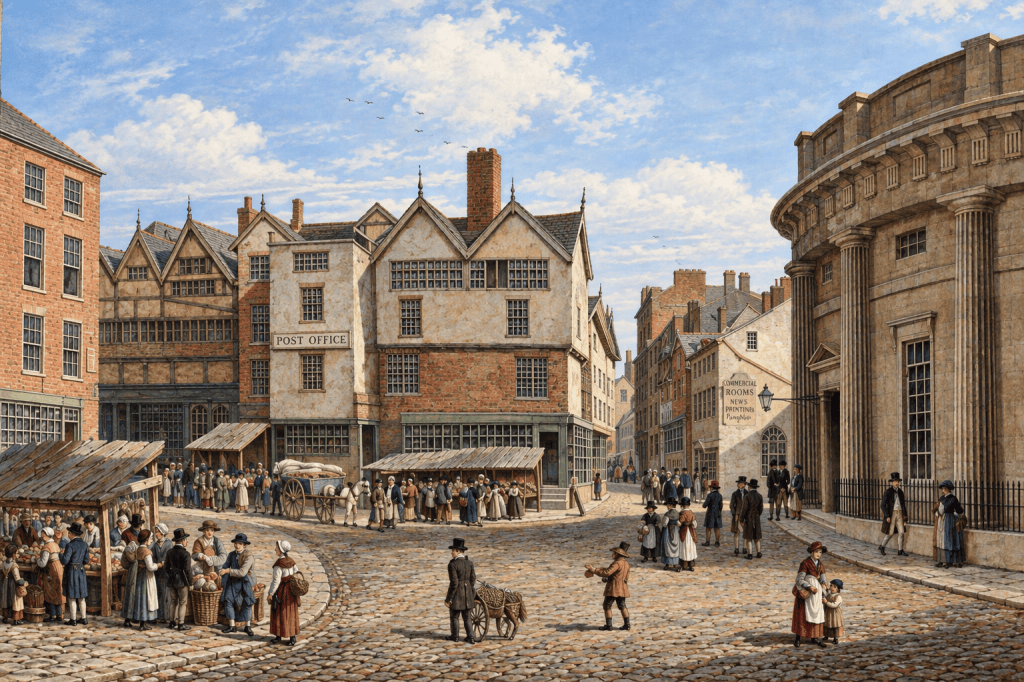
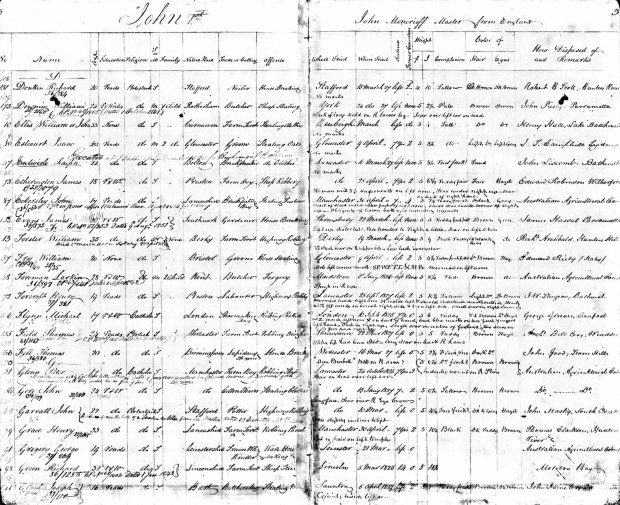
Peter Glynn was a 17-year-old farm boy who’d robbed a shop in his native Manchester, earning him a sentence of seven years’ transportation. Glynn was a short, dark-haired man, variously recorded as five feet and half an inch, or five feet one. After the voyage to Sydney in the John, Glynn was indentured to work with the Australian Agricultural Company. He’d served just over half his sentence when he decided to rob the Agricultural Company, which earned him a death sentence at Maitland Circuit Court in April 1830. The sentence was commuted to 14 years’ transportation, meaning either Moreton Bay or Norfolk Island. Neither prospect would have been appealing.
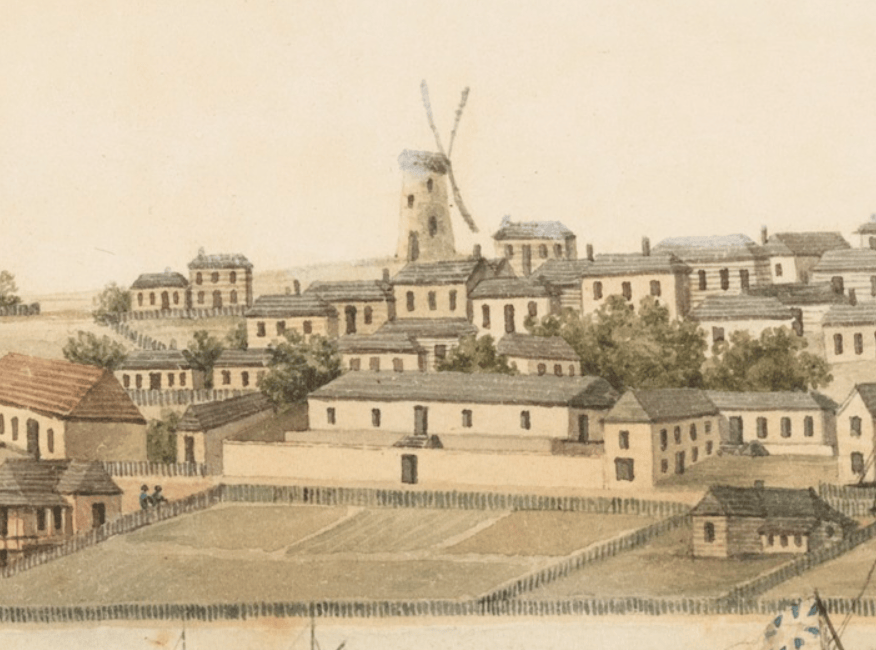
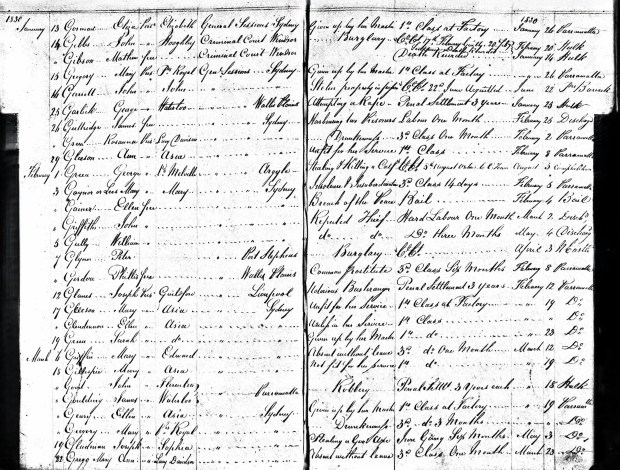
Glynn arrived at the Bay in June 1830 to witness the last months of Captain Logan’s term as Commandant. He was twenty years old. The settlement at Moreton Bay was becoming crowded, and outbreaks of dysentery and intermittent fever made it even more miserable. Convicts had taken to attacking their fellow labourers, in order to get to Sydney for a trial. There had been acts of violence between the local indigenous people and the prisoners.
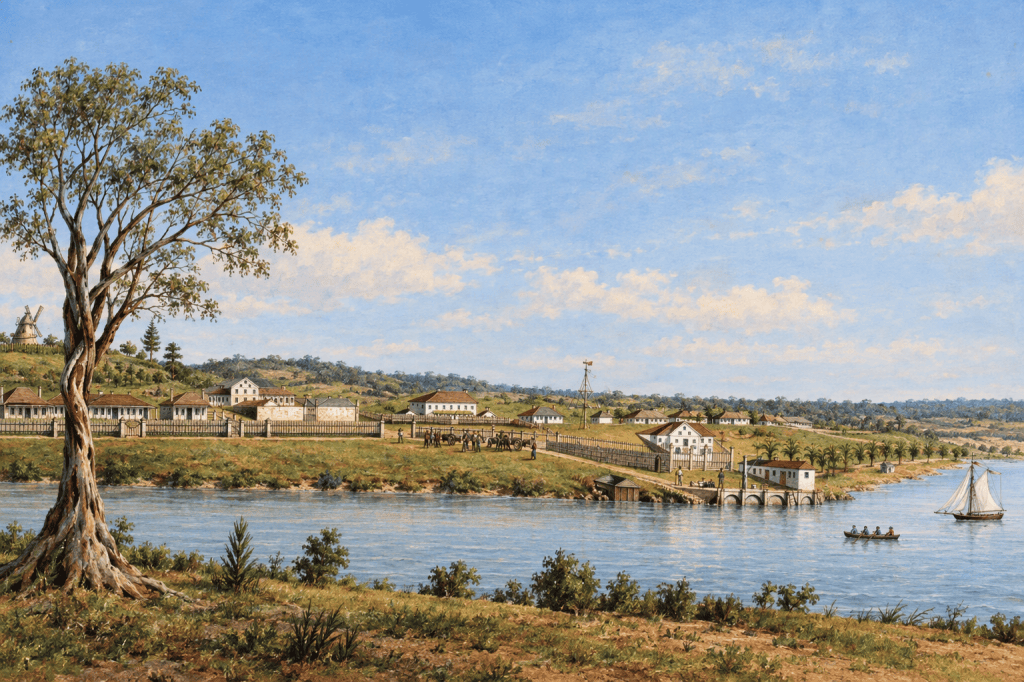
Still, Peter Glynn didn’t start absconding until 1832, but when he did, he was out close to three months. In 1833, he tried again, but was only away a fortnight, and then in 1835, he was out for a week. The estimate of his time out of custody is 122 days, and it appears that Glynn in that time became well acquainted with bushcraft, and the customs and languages of the indigenous people of the surrounding districts.
Factotum and man of all work.
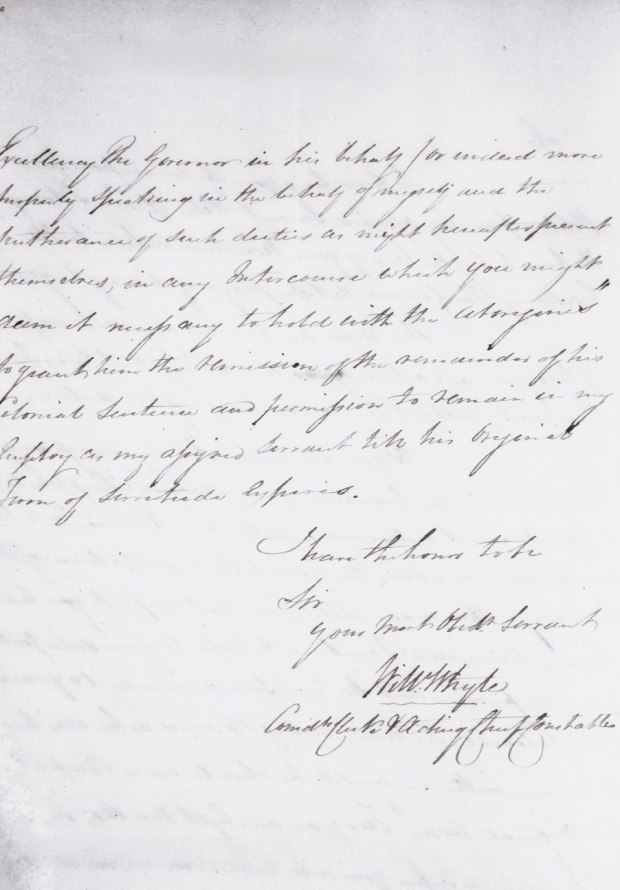
Once Glynn returned to the convict settlement, he found himself assigned to the service of the Commandant’s Clerk, William Whyte. Whyte, at the time Peter Glynn started working for him (1836), was in his third career. He had been in the military throughout the Napoleonic Wars, and in business in Tasmania until personal tragedy wiped out everything he had. He wrote to Governor Darling for any work, however humble, and was granted a position at Moreton Bay, first as overseer, then as Commandant’s Clerk. The pay was miserable, but he was grateful for the work, and his small cottage behind the soldier’s garden.
Peter Glynn found a very comfortable berth as servant to William Whyte. The two men got along well, the duties were not onerous, and Mr Whyte was increasingly fond of a libation after work.
When the convict settlement closed in 1839, William Whyte was returned to headquarters in Sydney, and Glynn still had a sentence to serve. He was assigned to the survey party of James Warner for a while, using his indigenous language skills to communicate with the indigenous guides.
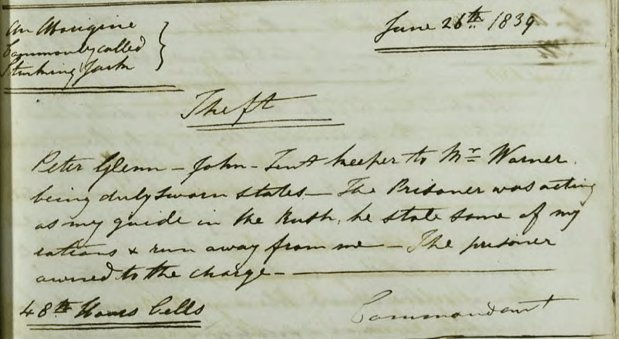
In June 1839, Peter Glynn was a victim of crime. An indigenous guide, who bore the deeply unflattering European nickname of Stinking Jack, stole some of Glynn’s rations. Mr Jack was brought back to the settlement and given 48 hours in the cells for his troubles.
Meanwhile, with the far-sighted planning that was the hallmark of the NSW Government at the time, William Whyte was returned to Moreton Bay to be Commandant’s Clerk, Chief Constable and Postmaster. Not a bad job of work for a man in increasingly poor health and rather fond of a drink.
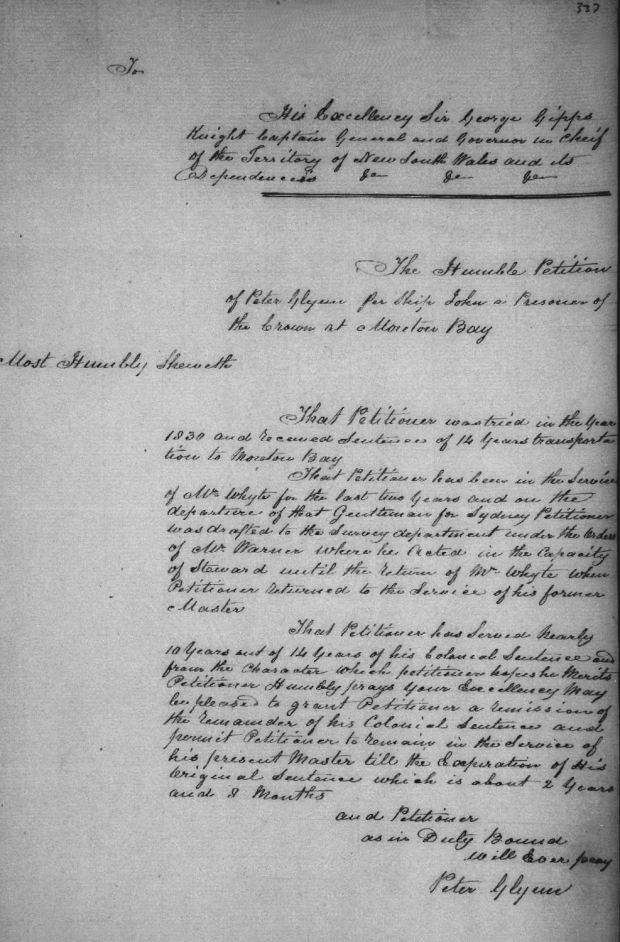
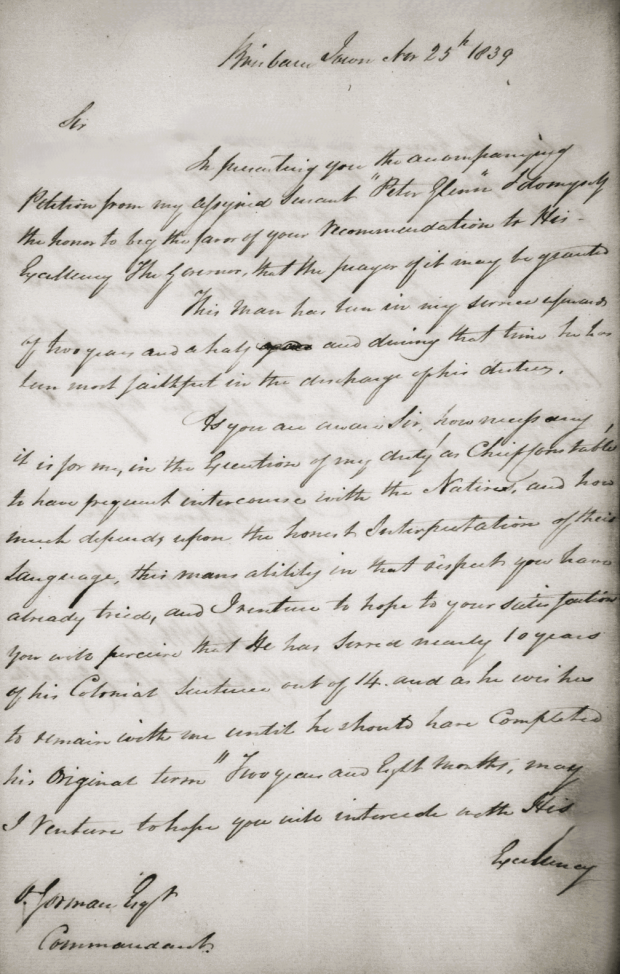
Whyte petitioned His Excellency to allow Peter Glynn to continue in his service, particularly due to his aboriginal language skills, as Whyte was now required to travel about the district, crime-stopping. His Excellency was pleased to remit two years from Glynn’s sentence, and to allow him to remain at Moreton Bay.
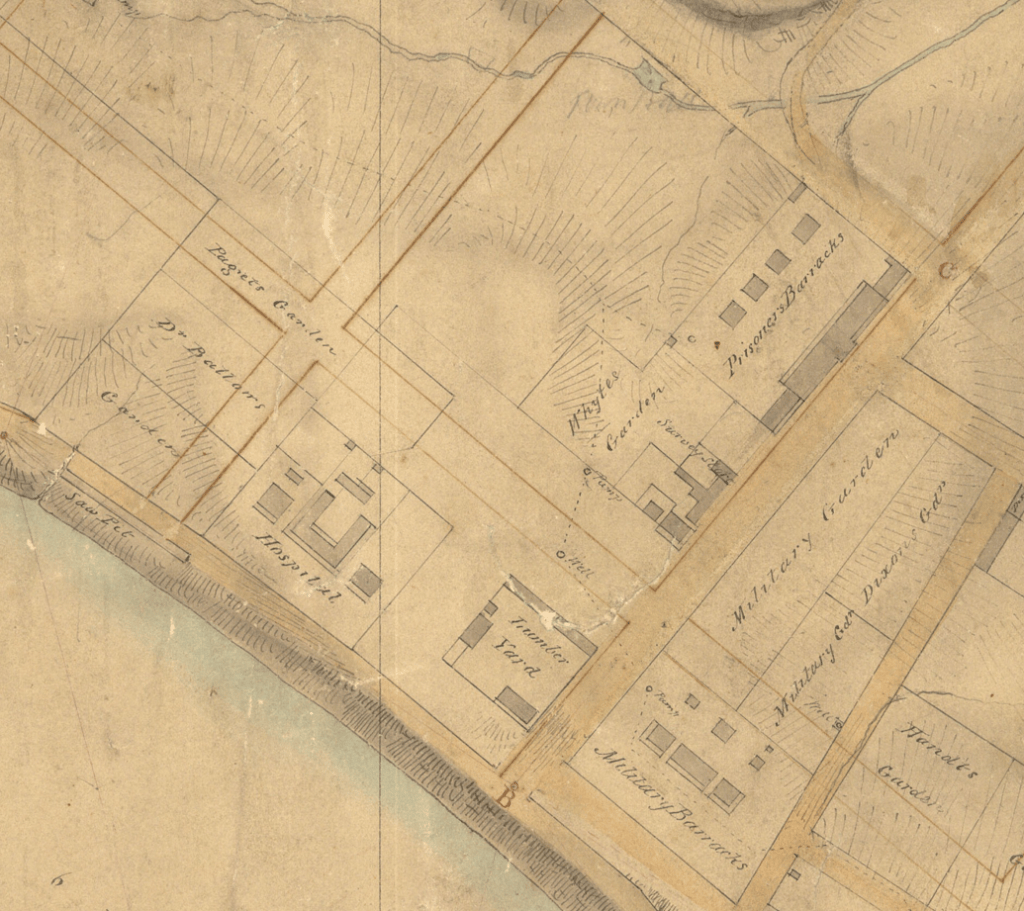
Whyte moved into a small brick cottage on what is now the corner of George and Queen Streets (the St George Bank building now). Next door was a survey store, and the Convict Barracks. Whyte had a nice big garden behind his cottage, and for a couple of years, Glynn was able to come and go, do some work, shoot some birds, and attend to his increasingly distracted boss.
In July 1840 Peter Glynn interpreted the committal proceedings for the indigenous men accused of murdering Granville Stapylton and his convict servant. Whyte and Glynn received a return trip to Sydney for the trial, with Whyte responsible for the prisoners and the witnesses.
Glynn and Whyte had another couple of years together until Whyte’s health broke down under the strain of age and the strain of three jobs. The Government kindly relieved Whyte of his duties but felt itself unequal to the task of providing for a sickly old man who had been living on a pittance for over a decade. Whyte died in February 1843, and Glynn found himself a free man working as a hired servant to various settlers in the Moreton Bay area. In 1845, his language skills were again used in a survey party organised by C Pemberton Hodgson to try and locate Dr Leichhardt, who had been missing for some time. (Dr Leichhardt would return from his mission, only to plan another excursion and be lost forever.)
Gross depravity.
In 1847, Glynn was working on David Peattie’s cutter the Nelson, when an incident occurred that showed everyone present in the worst possible light.
David Maconnel had chartered Peattie and his cutter for a journey to Stradbroke Island. On the return journey, an indigenous girl “about ten or eleven years of age,” had asked to come on board to visit her mother at Kangaroo Point. Maconnel agreed, and the party stopped at St Helena on the way back. That evening, the girl was found weeping, and saying, “Peter drunk.” Maconnel sent her below in the vessel. A few hours later, Peter Glynn took the girl back to shore. Maconnel told Glynn to stop, because he feared “he was doing something wrong with her.” Glynn refused in profane terms, and the party went onshore and demanded that he return the girl. He refused again in a combative manner. The rest of the party, presumably intimidated, chose to leave the child on St Helena with a drunk man who was abusing her. The next morning, a ferryman was able to pick the child up and take her back to Dunwich. When the party returned to Brisbane, the issue that occupied the minds of the Bench and the parties was the validity of Glynn’s work agreement. The Courier was shocked that Glynn hadn’t been charged with something more serious than insolence:
“There are two things to be noticed in this man’s conduct – the utter indifference he exhibited on being accused of committing an outrage on the person of a native female; and the open derision with which he treated the remonstrance of his employer.”
The time Glynn spent with the indigenous people of southeast Queensland had not generated in him any respect for their humanity, but it is unfortunately completely in step with the attitudes displayed by convicts and soldiers as reported by visiting missionaries.
In the following years, Glynn laboured on – in the service of Arthur Hodgson, and back with the surveying party of James Warner. Another court case about his service agreements ensued. He was basically asked to leave town :
“Time was, therefore, given him to proceed to the place from whence he came—an indulgence that individual promptly availed himself of, and quitted the office.”
Moreton Bay Courier.
Glynn retreated to work in the bush, and by the 1850s, he had become a well-known figure about Brisbane town, coming in from the bush to sell stuffed parrots, snakes, and other bush creatures. In 1854, he brought in to Brisbane a larger carpet snake than anyone had seen locally. It was eleven feet, two inches in length, and had consumed a wallaby and its joey as its last meal, according to Glynn. The Moreton Bay Courier was not terribly impressed, noting that larger snakes had been captured around Sydney. Still, it gave Mr Glynn his moment of glory.
The Caboolture River incident.
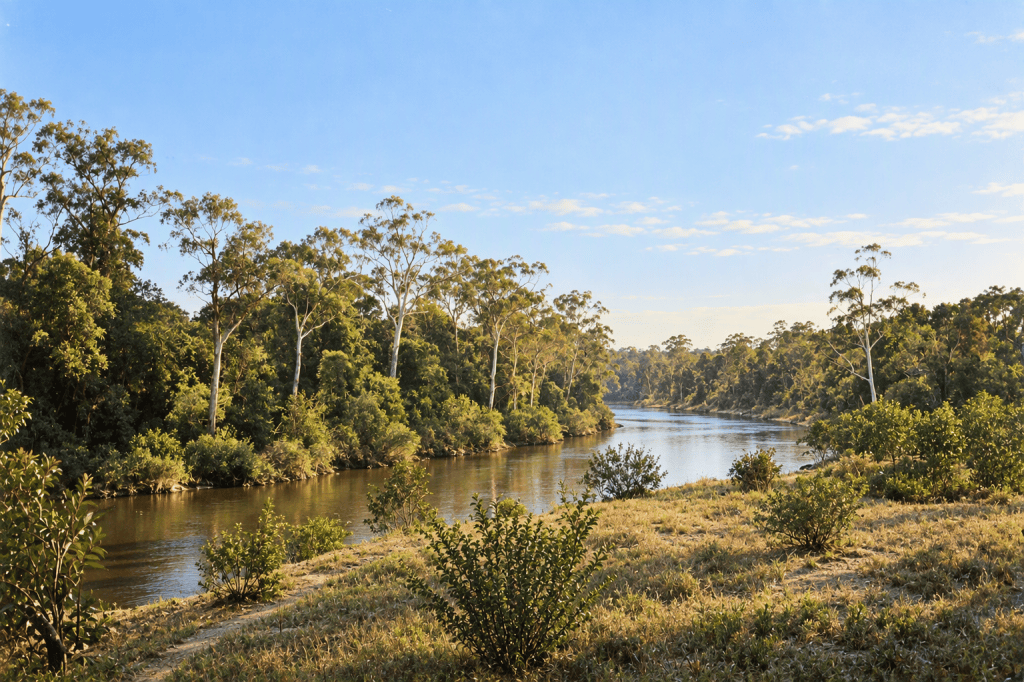
In 1857, Glynn accompanied another expedition – to the Pine River area to gather some of the cedar so abundant in the area. The party of five included two old Brisbanites, David Peattie and John Williams, along with Glynn, a man named Grant[i] and another named Moran.
After taking on indigenous guides, Grant and Glynn separated from the other members of the party, and for what happened afterwards there was only Glynn’s account. An altercation occurred, and there was a struggle with one of the indigenous guides, known as Ballow. Glynn’s gun went off, and Ballow may have been injured in his side. Grant was killed, and Glynn was badly injured in the ensuing fight. Glynn managed to crawl six miles to Mr Noble’s station over a period of two days. When he was brought to Brisbane Hospital, he was in such a bad way that Captain Wickham decided to take dying depositions from him, in case he didn’t recover.
An inquest on Grant’s body was held, and the indigenous people were blamed. There had been a murderous attack, and, during a struggle, Glynn’s gun went off. Thomas and George Petrie, who had been in the region looking for a missing boat, made contact with the indigenous people, and was told that Ballow was seriously injured at Bribie Island, and that the cedar-gathering party had been the aggressors. None of the newspapers decided to give any credence to that side of the story.
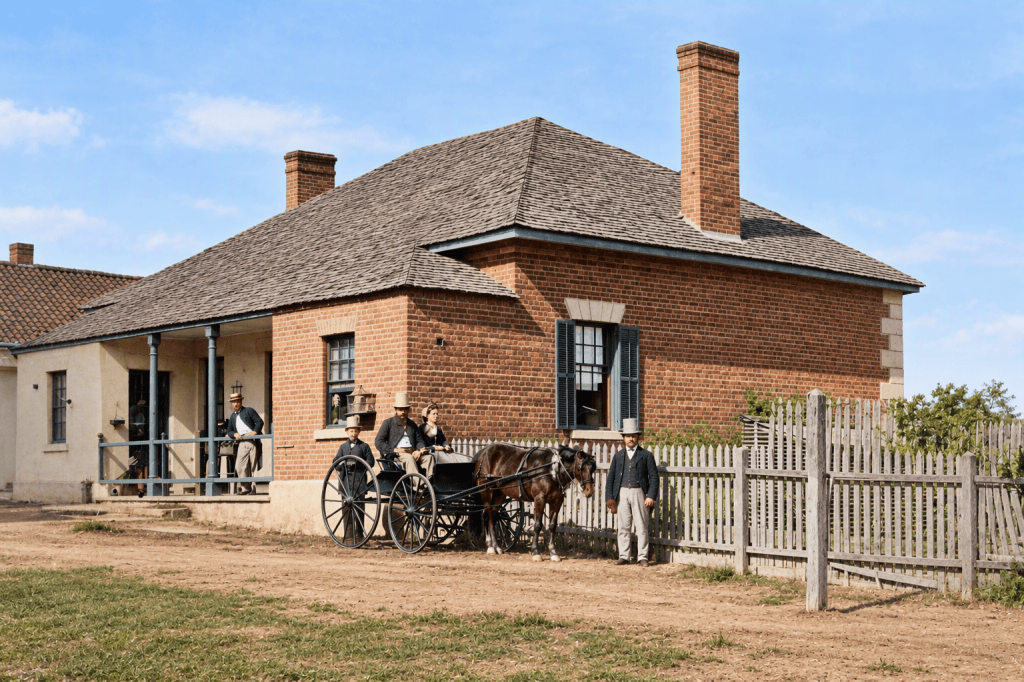
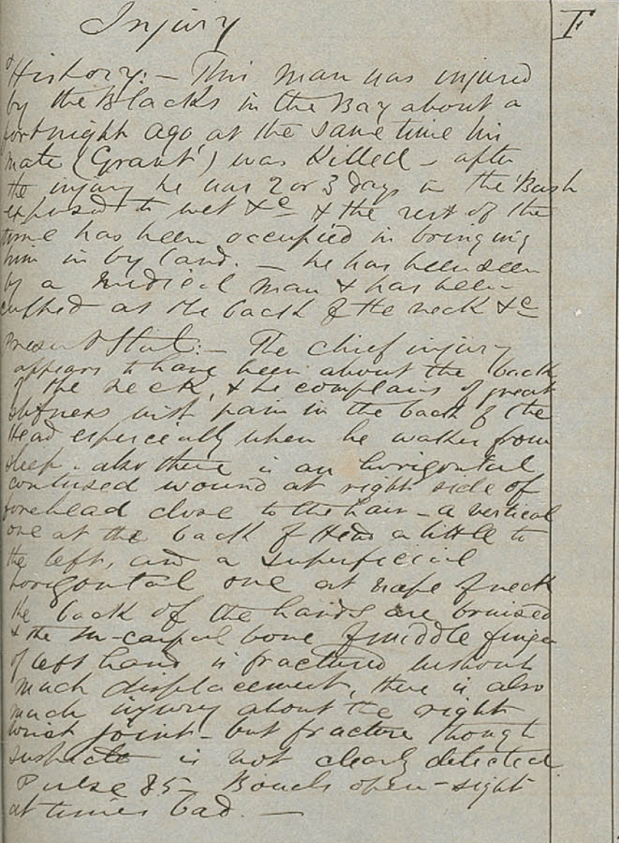
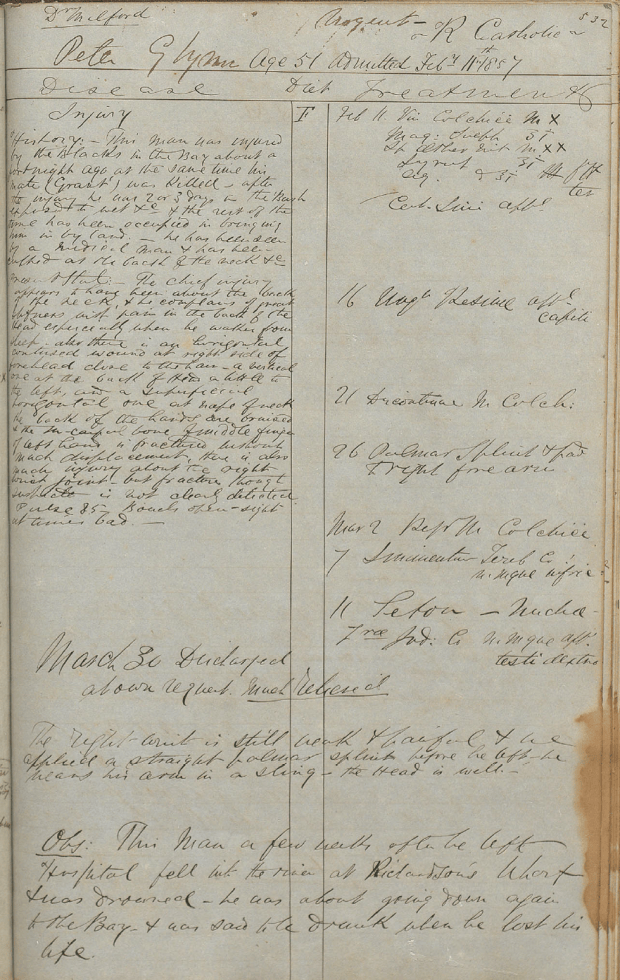
When Glynn was brought to the Brisbane Hospital on 11 February 1857, Dr Milford noted that the “chief injury appears to have been about the back of the neck, and he complains of great stiffness with pain in the back of the head.” There were other contused wounds about the head, and injuries to the right hand and a fracture on the right wrist.
Glynn’s condition improved enough after six weeks for him to request a discharge. His arm was in a sling with a splint, but his head injuries had improved. After all that time, Peter Glynn probably needed a stiff drink or three.
The end of Glynn’s career.
Peter Glynn left hospital on 30 March 1857, and he died on 5 May 1857. He had been engaged by Richard Warry to join another cedar-gathering party in the Bay, when he fell off a boat at Richardson’s wharf and drowned. It was presumed that he slipped or tripped on a chain, and the weakness in his right arm meant that he couldn’t grab on to the hull to save himself.
John Brydon, an old acquaintance, saw Glynn heading to Richardson’s wharf around 9:15pm. “He seemed to have had a glass but was quite capable of going anywhere.”
William Haines at the Customs House heard a chain rattle, and a cry for help.
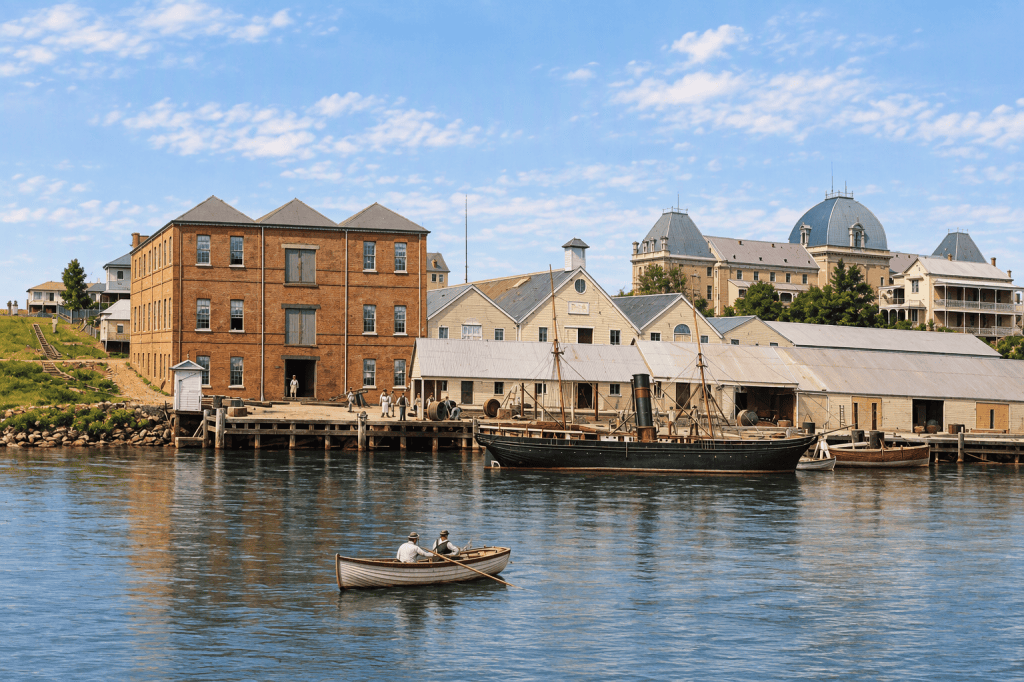
Robert Howe, the Kangaroo Point ferryman, had known Glynn for a few years, and recognised his voice. He heard Glynn call out that he was overboard and to bring the boat over. When Howe got to the wharf, all he could find was a hat.
Peter Glynn’s body was found on Sunday 10 May 1857 by a seaman belonging to the Rose lightship. An inquest was held at the Hospital, where it was found that Glynn’s features were still clearly identifiable. He had 2 shillings, 3 1/2 d in coppers, a pipe, a pair of spectacles “in an old-fashioned case,” and a loaded 6-shot revolver was attached to his belt.
And that was the last of Peter Glynn. His age, on admission to Brisbane Hospital was given as 51, which would have put his birth date around 1806, but every other record seems to point to a birth date around 1810. He would have been about 46 or 47.
Glynn was a good bushman and could interpret the indigenous languages and dialects of the region, but something in his character stopped him from being part of ordinary society, as demonstrated by his treatment of an indigenous child in 1847.
[i] Only one newspaper account of the incident mentions Grant’s first name – which it gave as Peter.
Documents relating to Peter Glynn.