
The Wool Industry A sheep station was set up in the district in 1863, and named Barcaldine Downs. The owner of that station had been a slaveholder in British Guiana, and employed South Sea Islander labour on the station in the early years. Presumably, the man had seen a successful business model in operation, andContinue reading “The early days of Barcaldine, in colour.”
Tag Archives: Historical Photographs
The early days of Allora, in colour.
Allora is a picturesque town in the Southern Downs region of Queensland. The district became home to two large squatting runs – Glengallen and Talgai – that were established through overland stock movement. Allora’s name is believed to come from the Giabal language word “gnarrallah,” or waterhole. The town was formally surveyed in the lateContinue reading “The early days of Allora, in colour.”
The early days of the Logan District, in colour.
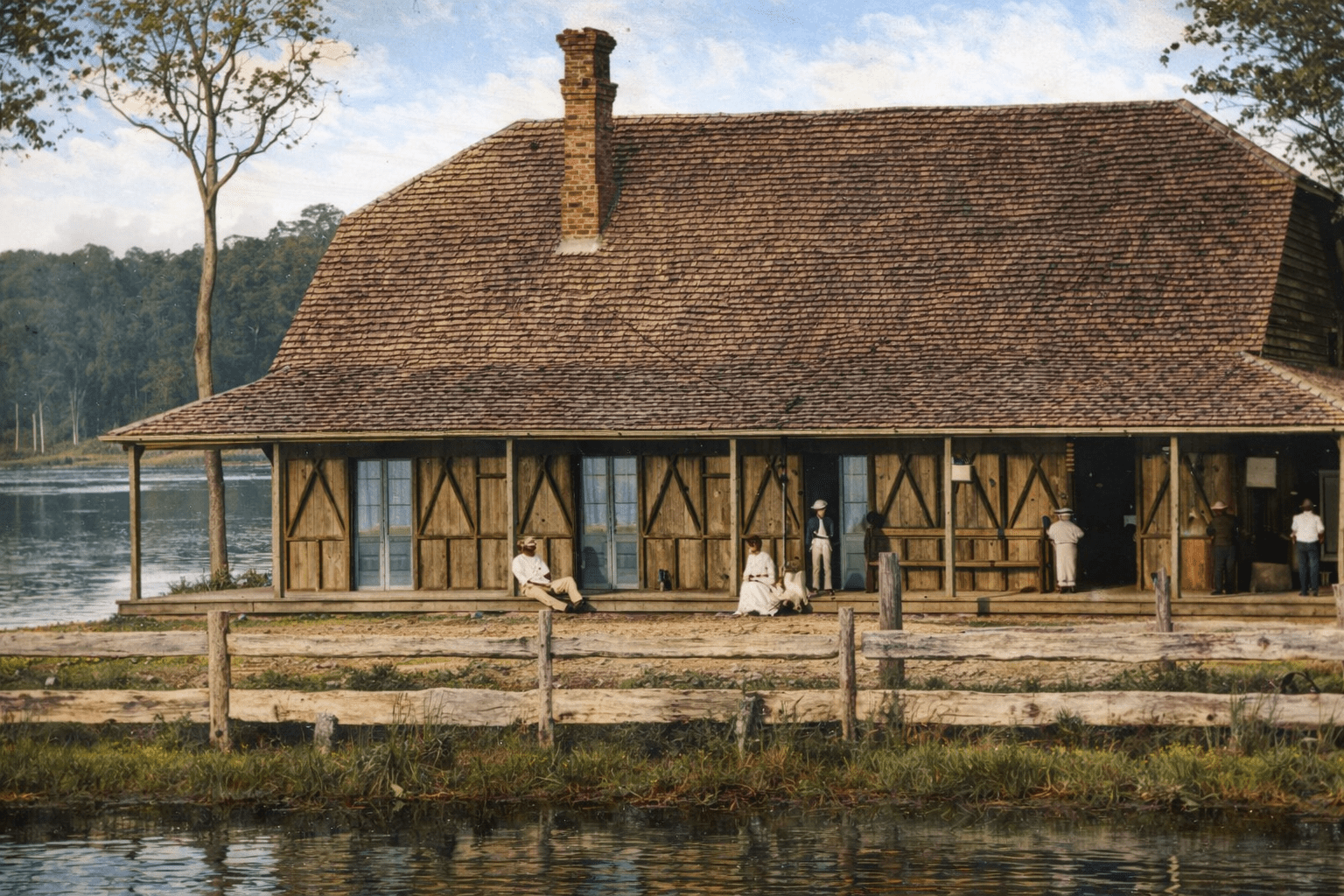
The Logan river was named for the most famous, or notorious, Commandant of the Moreton Bay penal settlement, Patrick Logan. The area was developed around sugar cultivation, farming, and the Logan river. The beauty of the district, with its river traffic and German farm holdings, is astonishing. Some of these images were taken by theContinue reading “The early days of the Logan District, in colour.”
The early days of Dalby, in colour.
The Dalby Races, 1859 Darling Downs Gazette and General Advertiser (Toowoomba, Qld.: 1858 – 1880), Thursday 11 August 1859, page 3 The Ipswich Observer and West Moreton Advocate (Qld.: 1870-1879), Saturday 10 June 1876, page 2. Festivities in Dalby. All images are from the digital collection of the State Library of Queensland and are outContinue reading “The early days of Dalby, in colour.”
The early days of Cooktown, in colour.
In 1770, the Endeavour, captained by James Cook, spent time in a harbour on the northern east coast of New Holland, undergoing repairs. The vessel was moored to a tree at that place, and that tree was still in situ when a settlement arose a century later. In January 1874, Mr Macmillan, the Government SurveyorContinue reading “The early days of Cooktown, in colour.”
The early days of Roma, in colour.
In the early 1860s, a family sits on the verandah of a neat little timber hut – the sturdiness and workmanship of which are belied by the rough-looking bark roof. On a nearby station, weary station-hands gather outside similar shelters. A few years later, a neat outback town grows out of the red soil. ThereContinue reading “The early days of Roma, in colour.”
Mr Slade’s Colourful Life.
George Milner Slade pops up briefly in early editions of the Moreton Bay Courier, as the postmaster of Brisbane Town. He was known to grow superb pineapples in the little garden attached to the post office. Slade was in poor health, and sought a leave of absence. Then, quite suddenly, he died in early 1848.Continue reading “Mr Slade’s Colourful Life.”
The A-Z of Old Brisbane in colour: Upper Kedron to Zillmere.
[Although there is a suburb in Brisbane called Upper Brookfield, the only images I’ve been able to find of it in the early days are included in the Brookfield post.] Upper Kedron Tucked alongside Keperra and Ferny Grove is a beautiful semi-rural, semi-residential suburb called Upper Kedron. It is, Wikipedia helpfully informs me, 13 kilometresContinue reading “The A-Z of Old Brisbane in colour: Upper Kedron to Zillmere.”
The A-Z of Old Brisbane: from New Farm to Nundah in colour.
New Farm New Farm is one of Brisbane’s oldest suburbs, close to the city and on the river. Many of the early New Farm residents were politicians. Sir Richard Jones, the first representative of Brisbane in the NSW Parliament to actually live in Brisbane, started the trend. Premiers Sir Robert Mackenzie, Sir Samuel Griffith andContinue reading “The A-Z of Old Brisbane: from New Farm to Nundah in colour.”
The A-Z of Old Brisbane: I and J in colour.
Indooroopilly Indooroopilly’s name origin is a little obscure. It may be an indigenous term meaning “gully filled with leeches” (eww), but it may be a European invention based on Yindurupilly “gully of running water.” I’d go with the running water over the leaches, thanks. At first, it was a place for country homes and farmland.Continue reading “The A-Z of Old Brisbane: I and J in colour.”

