
The Government commenced selling land in newly-christened Goondiwindi in 1860. A year later, a correspondent for the Darling Downs Gazette opined that, for all the difficulty of getting there, it might be well worth staying.
At present it is as much as one’s life is worth to attempt an adventure so desperate as that of going to Drayton from here. Now if we had one or two bridges over the principal creeks, between these township and which would certainly tend to the improvement of our town, I humbly opine we should go ahead surprisingly. Sceptics may smile at our presumption, nevertheless our wants are urgent, and well deserving the attention and assistance from the representatives of Western Downs. N.B. —Two pair of good sawyers would find a ready mart for their labour here; a tailor and a blacksmith would also receive every encouragement from both town and country.
The Courthouse.
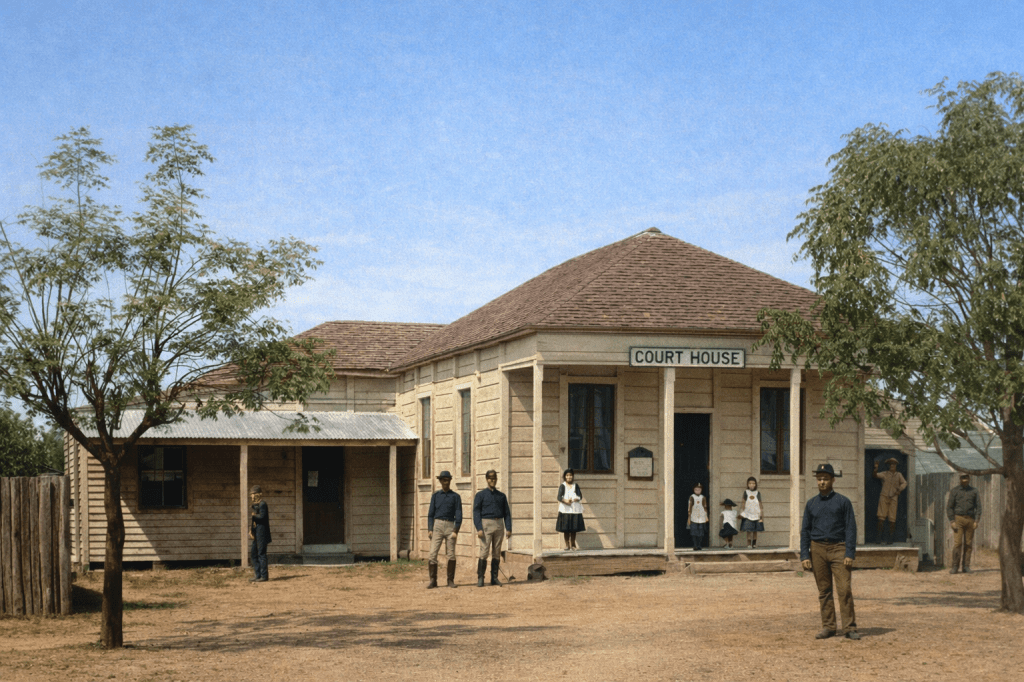
Sometimes, the doings at the local courthouse were the main source of entertainment for townsfolk:
Today has been quite a field day at the Court, the Bench appearing in full array. Several cases affecting the peace and good order of the town, and marking the leniency of the Bench, were disposed of, and resulted in the disapproval of their worships of undue hilarity on the part of Mr W Lucas, mine host of the Shamrock, by the infliction of a fine of 20s. and costs. The action of the police in this matter meets the approval of order-loving citizens – I mean villagers.
Dalby Herald, 1871.
1870 – swarms of mongrels invade the town. Apparently.
“The dog nuisance, notwithstanding the baits of their natural enemy, is on the increase in our little township. Swarms of mongrels of all degrees rush out from the Chinaman’s den upon the incautious horseman who dares to advance beyond a walk. Only this evening a young lady was thrown and much bruised and scratched from the above cause. Probably the police will look into the matter.“
Goondiwindi correspondent of the Brisbane Courier, 1871.
Life on the McIntyre River, Goondiwindi.
The punt here is now afloat, and a capacious and well-finished article she seems to be. People, however, who prefer substance to shadow, say, “She’s nae sae gude as she is bonnie.” She is anything but water-tight, and requiring three or four times pumping every day. Built of unseasoned material, the boards are expected to shrink very much – one half inch, say people who pretend to know, to every six inch board in width. If so, where will our punt be in two months hence? Certainly at the bottom, experienced men say, unless taken out of the water and re-caulked. It is supposed no one will be fool enough to tender for her as she is.
Queensland Times, 1868.
The great Goondiwindi climate anomaly of 1875.
On one particular day, two Goondiwindi correspondents filed strikingly different reports from the town, which was either about to welcome the glories of spring, or disappear under a deluge.
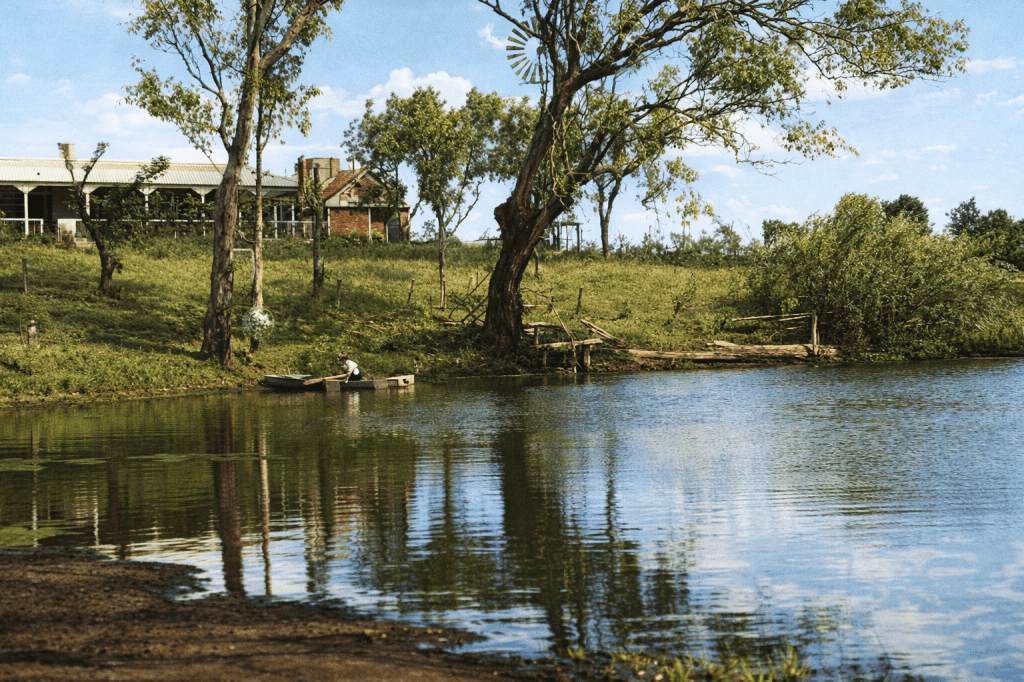
According to the Goondiwindi Correspondent of the Darling Downs Gazette on 31 July 1875, things were rather lovely:
One thing is certain, we may look forward with cheering prospects to an early spring. The ground is now saturated almost to excess; and when summer comes, grass and other vegetation will be bound to strike out with unusual vigor. There is a partial indication of spring at the present time; in some places in the district the young grass is to be seen, while the wild birds, by the tenor of their morning songs, announce to us the approach of smiling spring. Cattle don’t look so well as they did a little time back.
On the very same day, the Goondiwindi correspondent of the Queensland Times was also waxing poetic, but not quite as happily:
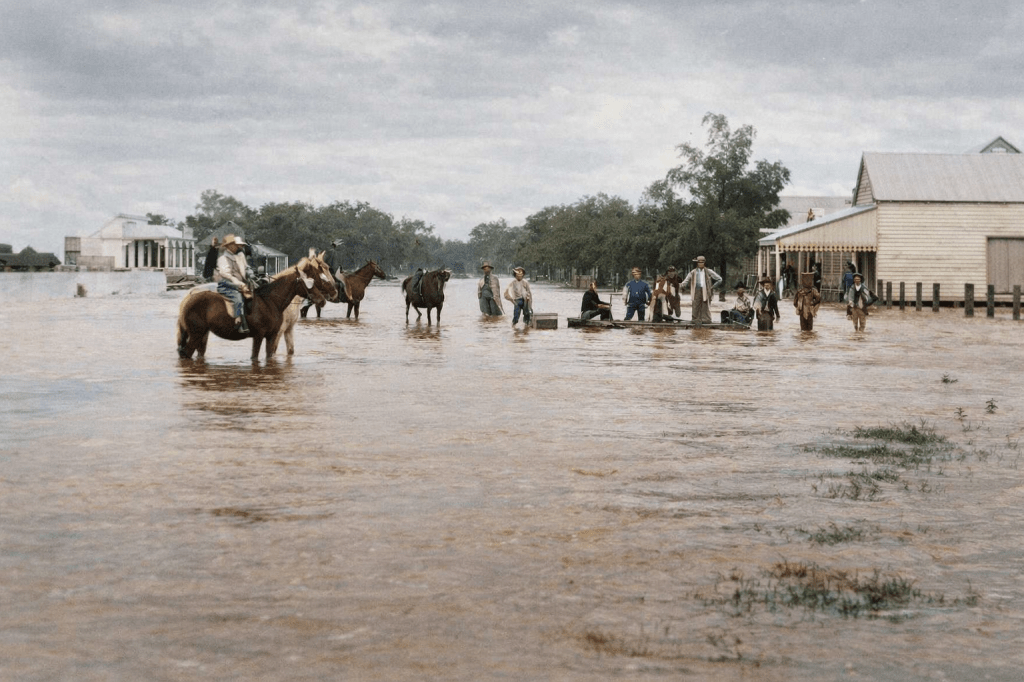
Rain! rain every day – rain, rain unceasing;
Mud! mud, mud and clay and evermore increasing;
Roads! roads, you cannot walk the roads the heart a-breaking;
Dirt! dirt, all efforts baulk to find the home you’re making;
Floods! floods on every side, rushing, gushing, roaring,
Foaming volumes deep and wide the deluge song encoring.
Perhaps it depended on one’s outlook on life.
The tribulations of mail delivery.
Goondiwindi’s mail run was a difficult prospect. The town was remote, roads were rough, and bushrangers lurked. In 1864, a very young man named Alfred Allwood robbed the Goondiwindi mail, starting off a life of crime with a long stretch that found him visiting every place of detention from Brisbane Gaol to Woogaroo to St Helena Island.
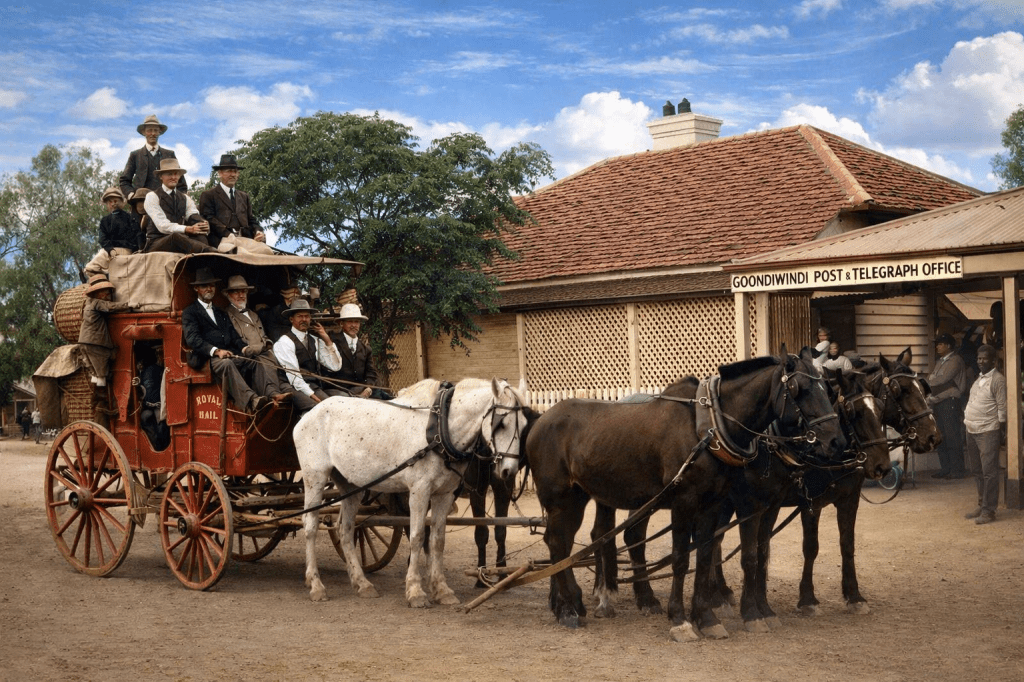
Extraordinary Energy and Endurance of a Mail Carrier. Mr. Henry Symes, who takes the mails to and from Toowoomba and Callandoon, has followed that occupation for the last seven years, during which period he has traversed about 135 000 miles (or within 5000 miles of five times the circumference of the earth.) The distance he had to travel between the extreme points of his journey, until a post office was established at Goondiwindi, was 200 miles, but since that period the distance has been 184½ miles. With the exception of once or twice each year he has taken the mails the whole distance himself, leaving Toowoomba on Thursday mornings, arriving at Callandoon on Saturday afternoons, and leaving Callandoon on the return trips on Monday mornings, arriving in Toowoomba on the afternoons of Wednesday. It will therefore be seen that during the whole of that long period Mr. Symes has travelled nearly 400 miles per week, a feat which, if not unexampled, has at least few equals in any part of the world.
The Courier, 1864
We understand that the Goondiwindi mail, which was lost in the scrub near Cecil Plains some months since, was found on Saturday last, and forwarded to Goondiwindi. Particulars have not yet arrived, but it is stated the contents of the mail bags are all right.
The Queenslander, 1870
Darling Downs Gazette and General Advertiser (Toowoomba, Qld. : 1858 – 1880), Thursday 25 July 1861, page 3
Dalby Herald and Western Queensland Advertiser (Qld: 1866-1879), Saturday 25 November 1871, page 3.
The Darling Downs Gazette and General Advertiser (Toowoomba, Qld.: 1858-1880), Saturday 31 July 1875, page 3. Goondiwindi.
Queensland Times, Ipswich Herald and General Advertiser (Qld.: 1861-1908), Saturday 31 July 1875, page 3. Goondiwindi.
The Brisbane Courier (Qld.: 1864-1933), Friday 22 April 1870, page 3. Goondiwindi.
Queensland Times, Ipswich Herald and General Advertiser (Qld: 1861-1908), Thursday 24 September 1868, page 3.
The Queenslander (Brisbane, Qld.: 1866-1939), Saturday 15 January 1870, page 10.
Courier (Brisbane, Qld.: 1861 – 1864), Tuesday 15 March 1864, page 4
All images are taken from the digital collection of the State Library of Queensland, and are out of copyright. AI colourisation by Copilot.
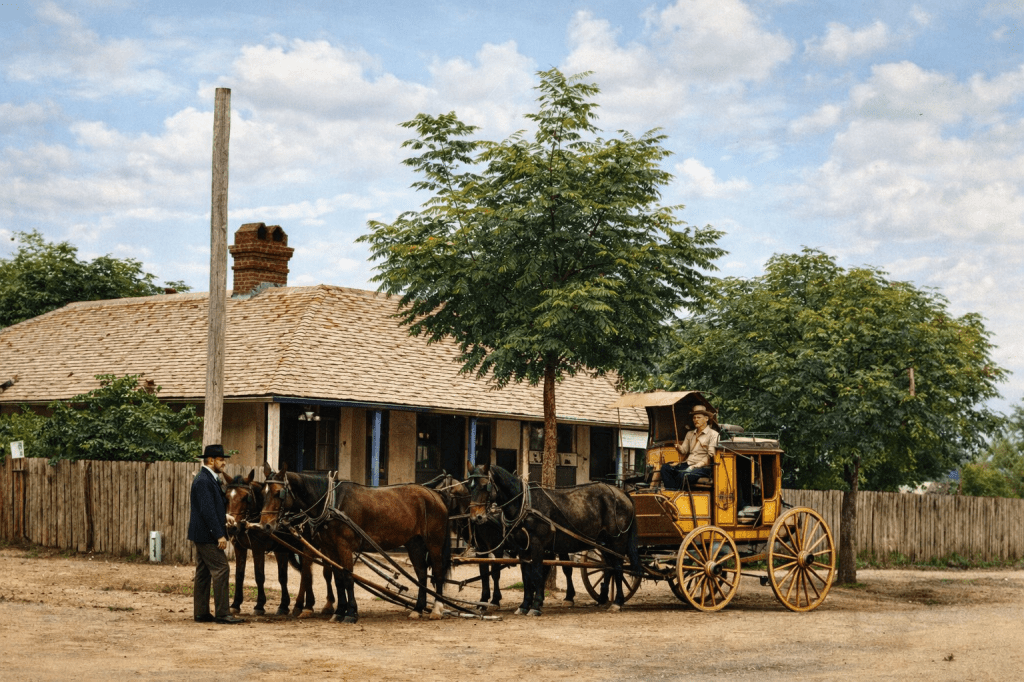
Cobb and Co coach outside the Goondiwindi Post Office, ca. 1908.
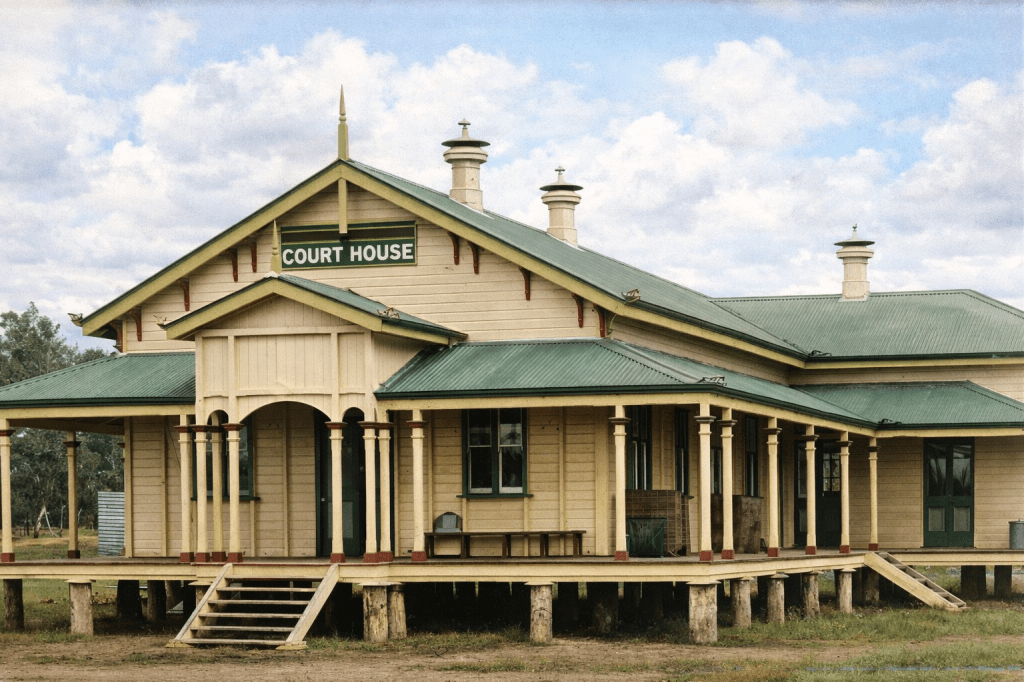
Courthouse at Goondiwindi, ca. 1890.
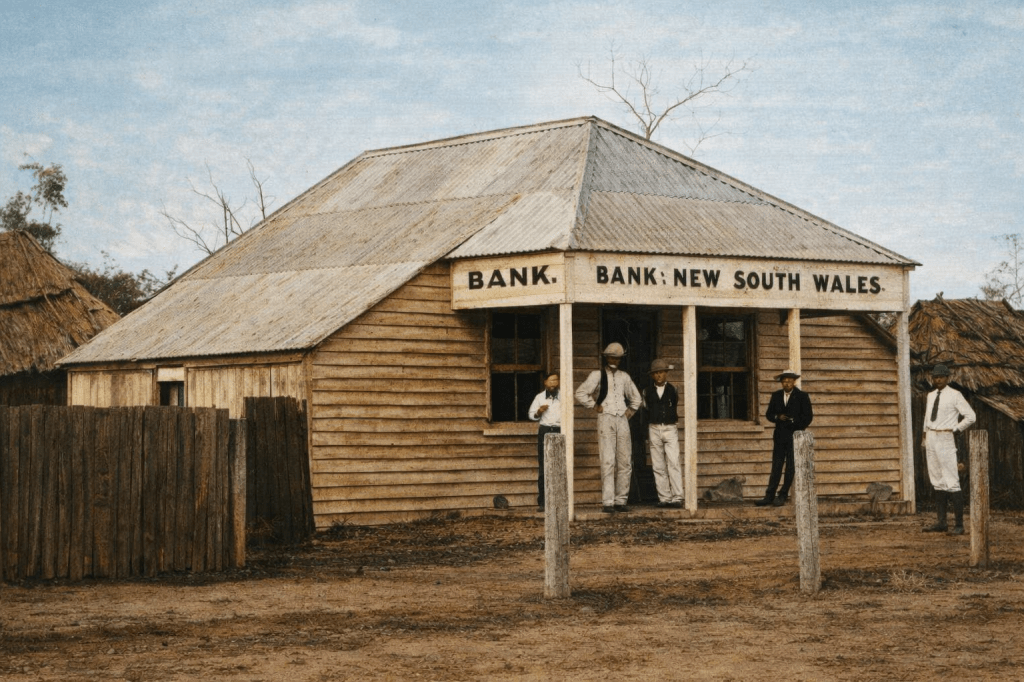
First premises of the Bank of New South Wales, Goondiwindi, ca. 1880.
Floods in the town of Goondiwindi, 1890.
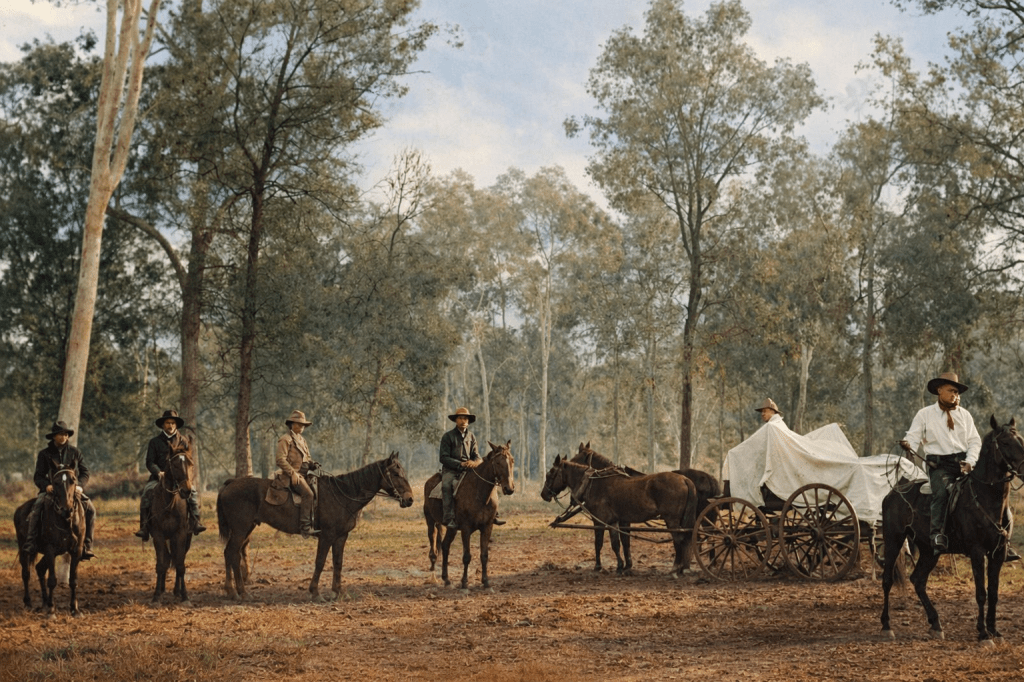
Group of drovers on their horses in the Goondiwindi area, ca. 1875.
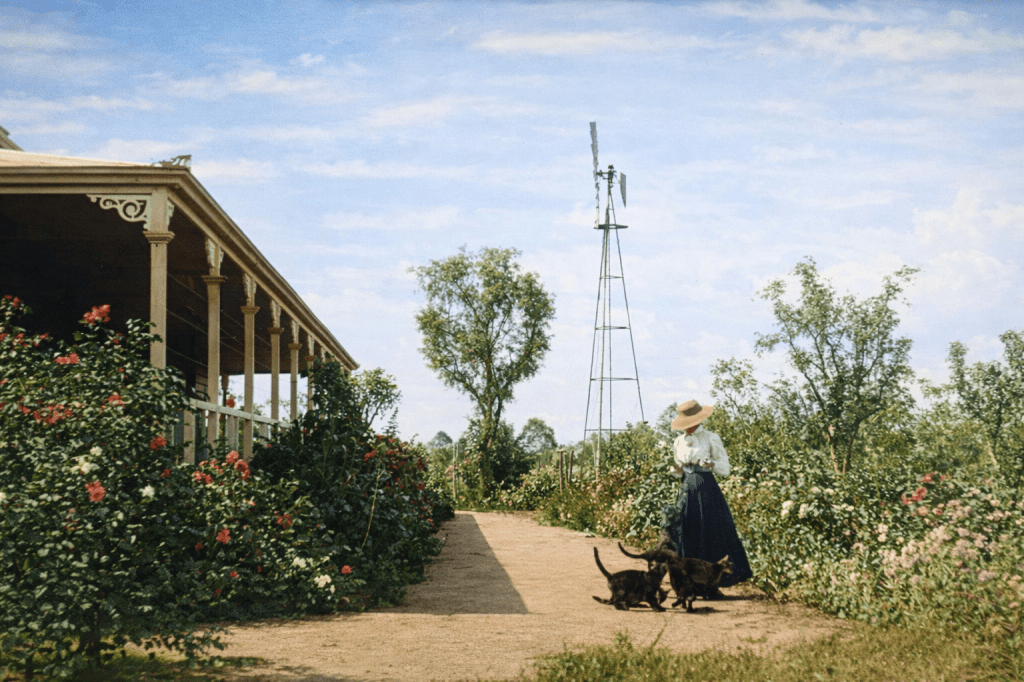
Mabel Shannon with several cats in the garden at Umbercollie homestead, Goondiwindi, early 1900s.
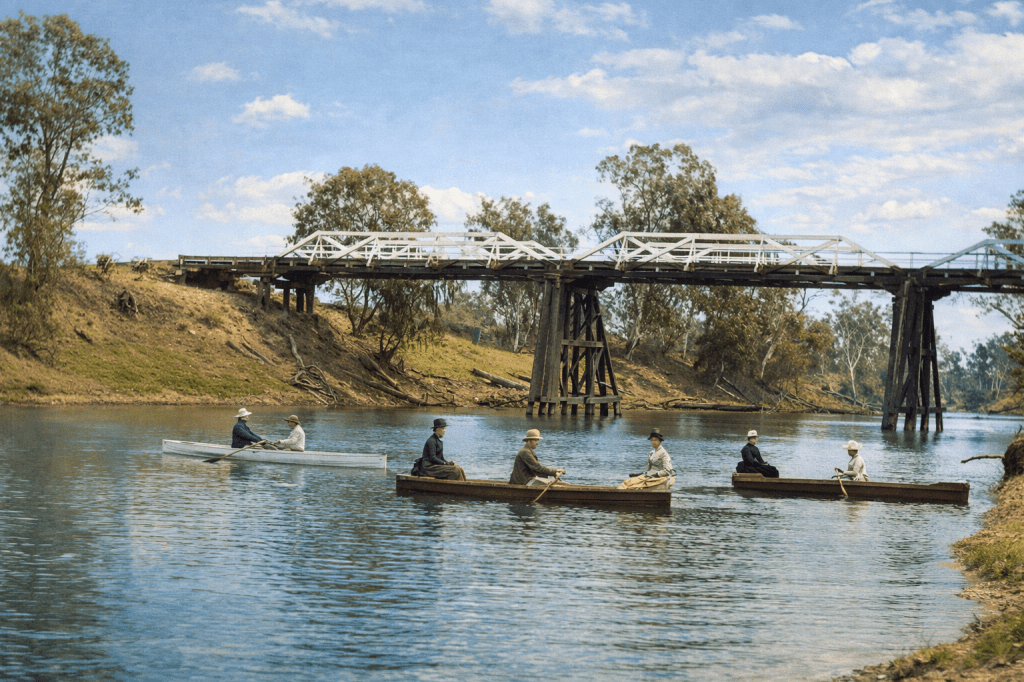
McIntyre Bridge over the McIntyre River in the Goondiwindi area, ca. 1882.
Milling around the Court House, Goondiwindi, ca. 1865.
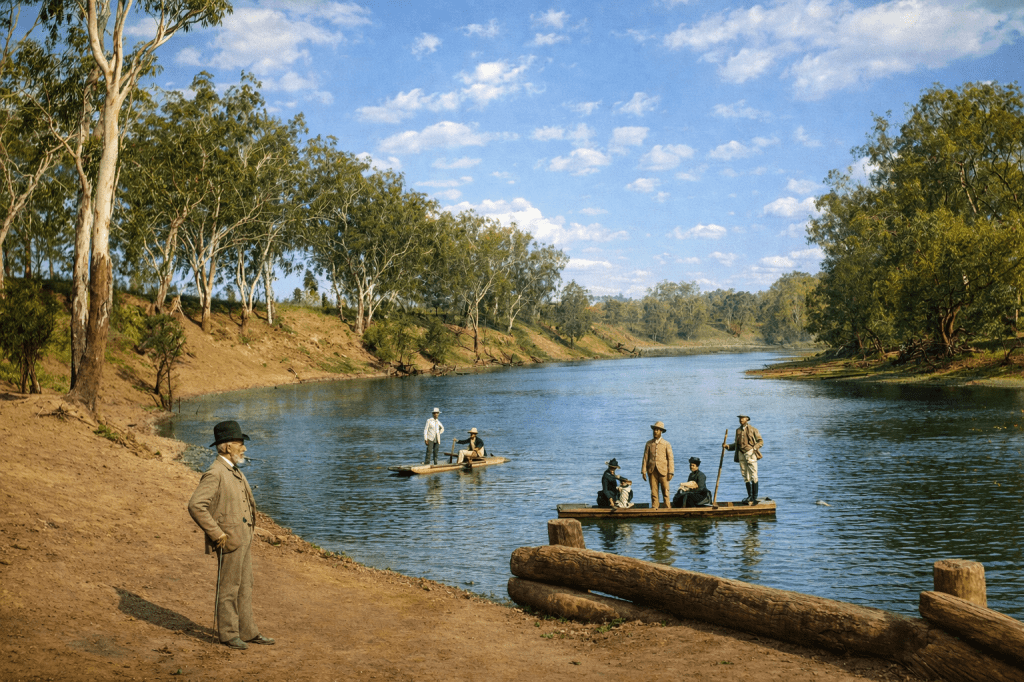
On the banks of the McIntyre River, ca. 1880.
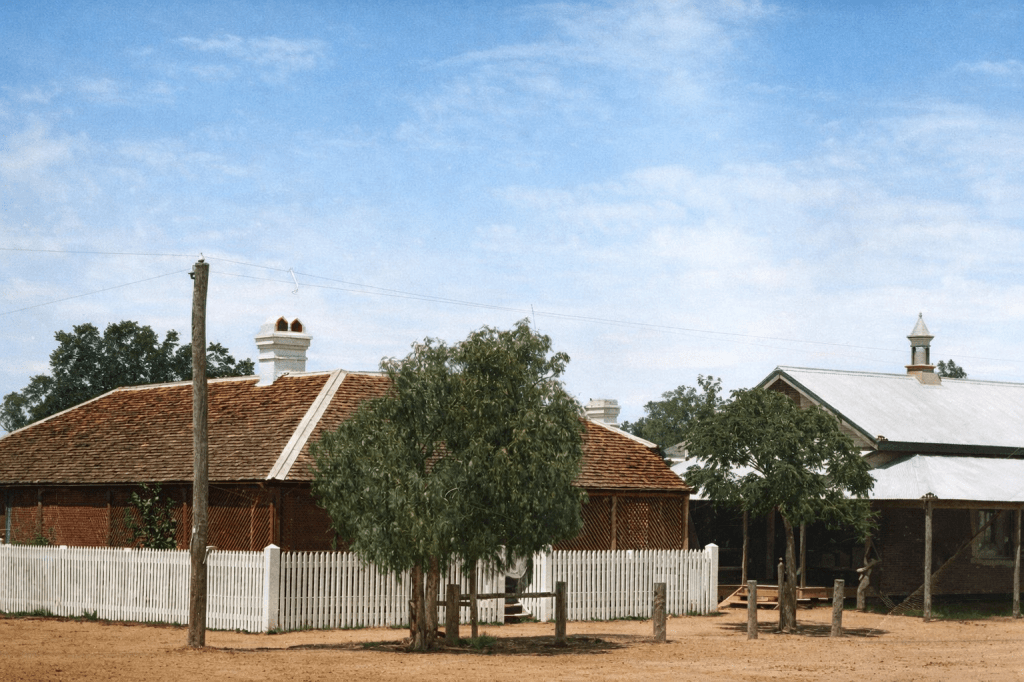
Postmaster’s residence, surrounded by a white picket fence, Goondiwindi, ca. 1909.
Stagecoach and horse team outside the post office, Goondiwindi, ca. 1893.
Umbercollie Station homestead and the creek in the foreground, ca. 1900.
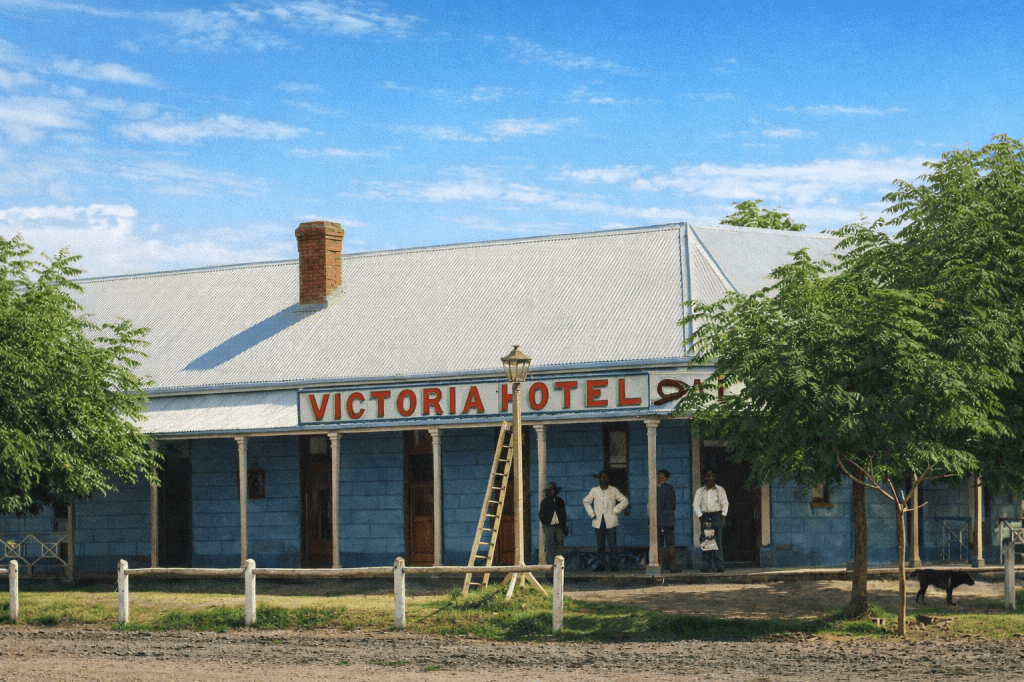
Victoria Hotel in Goondiwindi, Queensland c 1880.
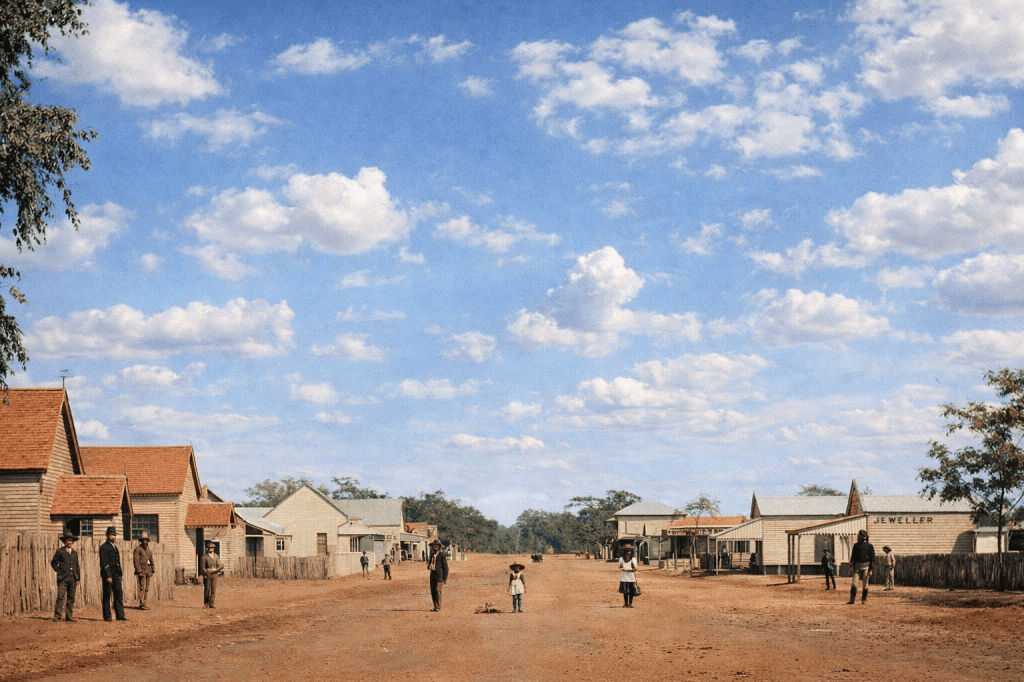
View of Marshall Street, Goondiwindi, ca. 1885.
 Moreton Bay and More